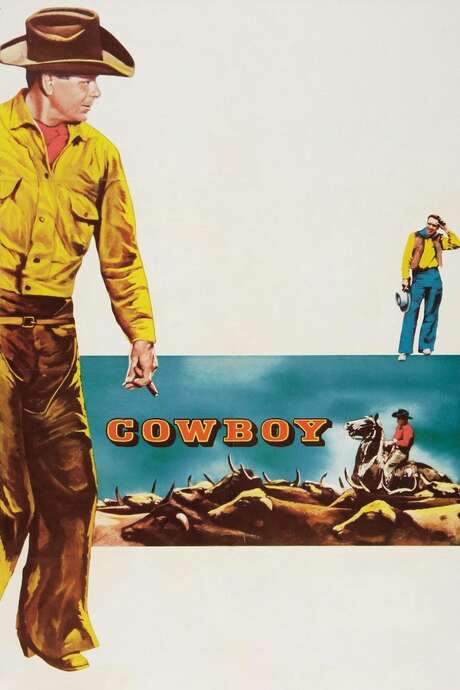
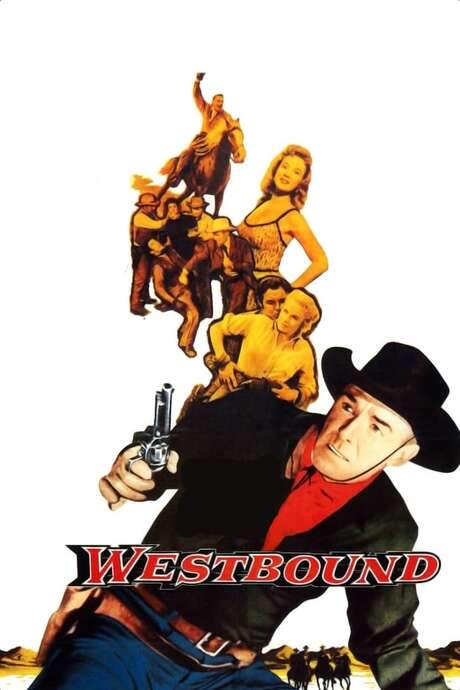
Union officer Kerry Bradford stages an escape from Confederate Libby Prison, a facility run by the merciless commandant, Vance Irby. After breaking out, Bradford reports back to Union headquarters and is assigned a dangerous mission: travel to Virginia City, a dusty Nevada mining town, to uncover where a vast stash of gold—five million dollars—has been moved under the noses of Southern sympathizers who intend to carry it to the crumbling Confederacy. The treasure hunt is more than a simple heist; it’s a strategic move that could influence the outcome of the war, and Bradford is determined to interrupt it.
On the westbound stagecoach that carries Bradford, he encounters Julia Hayne, a woman who instantly captivates him. Unbeknownst to Bradford, Julia is not just a stage performer; she works as a rebel spy, placed by Jefferson Davis to help shepherd the gold by wagon train. The tension between loyalty and romance threads through their budding relationship as danger closes in. Also riding along is John Murrell, a ruthless gang leader posing as a gun salesman, whose own plans for the gold threaten to collide with Bradford’s mission.
When the stage reaches Virginia City, Julia manages to slip away to warn Gen. George Meade’s garrison, who are now charged with preventing the wagons from leaving town. Bradford, ever wary, tails Irby’s operations and discovers a hidden rebel base behind a false wall in a blacksmith’s shop, where the gold is supposed to be moved. The moment he arrives, the gold has already shifted, and a tense cat-and-mouse game begins between Union forces and the Confederate cabal.
Back at the town, the Union garrison is put on high alert, and the stage is set for Irby’s scheme to unfold. While Irby negotiates with a sympathetic town doctor, Murrell makes a bold appearance, and Irby tries to secure Bradford’s capture by leveraging Julia to arrange a meeting between the two men. The plan intensifies when Irby offers Murrell ten thousand dollars to have his banditos strike the garrison, drawing away the soldiers so the gold can be smuggled out in the wagons’ false bottoms. Bradford’s position tightens as he becomes a direct obstacle to this plan.
The rebels’ caravan is halted at a Union outpost. At first, it seems they might be allowed to pass, but as the wagons struggle through soft dirt, soldiers become suspicious and attempt a formal inspection. A firefight erupts as Southerners open fire, killing several soldiers. In the chaos, Bradford manages a spectacular escape, and Irby’s men pursue him as he races down a steep incline, tumbling from his horse in a dramatic somersault. Believing Bradford dead, the rebels push on toward Texas, while the Union outpost regroups the effort.
Bradford survives and returns to the outpost, sending a telegraph to reinforce the pursuit. Major Drewery, the garrison commander, arrives with cavalry, but his initial skepticism of Bradford’s instincts clouds judgment, and he follows a false trail that slows the pursuit. Bradford insists on proving his case and is allowed to take a small detachment to follow a hunch that could alter the course of the chase.
Bradford and his men close in on the caravan as it becomes trapped in a canyon, where Murrell’s banditos press the assault to seize the gold. Irby is wounded in the ensuing gunfight, but Bradford’s tactical skill and the rebels’ long-range weapons eventually drive the attack back. In a pivotal turn, Irby, dying, designates Bradford to take charge of the caravan and its precious cargo. That night, Bradford makes a hard decision: he removes the gold from the wagons and buries it in the canyon, opting to prevent its capture even as the threat of a larger pursuit looms come morning.
When dawn arrives, Drewery and his troops rally to crush the renewed assault. Murrell is killed in the fighting, and Bradford refuses to divulge the exact location of the buried treasure. He is put on trial for high treason, where he defends his controversial actions. He argues that, as a soldier, he understood that the gold could have been used to fund the Confederacy, but, as a man, he believes it should belong to the South’s people and economy in the aftermath of war. The court finds him guilty, sentencing him to death on April 9, 1865.
The day before the execution, Julia pleads with Abraham Lincoln for mercy. Lincoln reveals a historic moment: with Lee and Grant meeting at Appomattox Courthouse to end the war, the national landscape is shifting toward reconciliation. In a symbolic gesture of North-South unity, Lincoln pardons Bradford, allowing him to live and serving as a hopeful note of national healing as the country moves past the conflict. The story closes on this note of reconciliation, even as Bradford bears the weigh of his choices and the scars of a war-torn era.