Plot Explained Spoilers guaranteed!
Plot Explained

Browse by genre

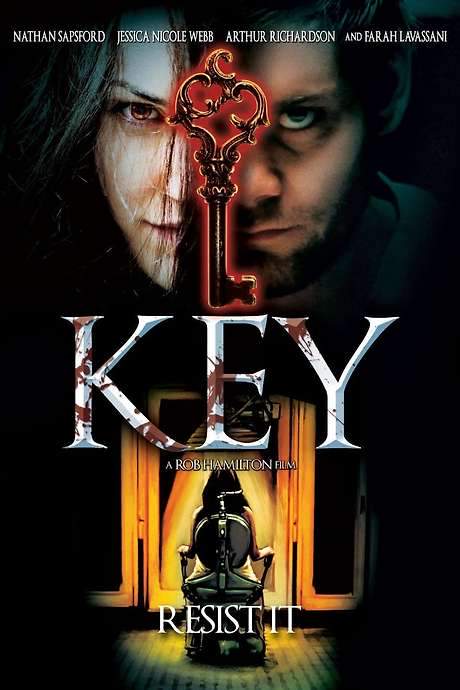
Key (2011) movie poster

Timeline

Key (2011) Timeline Explained – Every Event in Order

Release, runtime and language
2011 · 85 mins · Telugu
Loading streaming availability…
Directed by
Nagendra Prasad
Starring
Jagapati Babu, Sampath Raj, Sukumar, Swapna, Deepthi Vajpayee

A 2011 Telugu psychological thriller produced by Sukumar Reddy for Dream Theater Entertainments and directed by Nagendra Prasad, starring Jagapathi Babu in the lead. Vijay Kurakula provides the film’s score. The story adapts the premise of the English film Exam, delivering tense, mind‑bending challenges for its characters.

On this page (6)
  1. 1 Where to watch
  2. 2 Events in order (13)
  3. 3 Timeline questions answered
  4. 4 Movie threads
  5. 5 Categories
  6. 6 Every angle
Loading streaming availability…

13 events in order · contains spoilers

Key Timeline: Events in Chronological Order

Every key event of Key (2011) in order, scene by scene, with when and where it takes place. Use it to untangle flashbacks, time jumps and parallel storylines, to refresh your memory before the sequel or to find the exact scene you are thinking of.

  1. Examination setup and opening rules

    The Invigilator begins a high-stakes test inside a closed room for a prestigious post. Nine candidates must avoid talking to the Invigilator or Security, must not leave, and must not spoil their paper, all within 90 minutes. The room is locked, and the contestants realize a blank paper has replaced the question.

    When
    0 minutes
    Where
    Closed examination room
  2. Blank paper and early disqualification

    A candidate is deemed ineligible when he spoils the paper by writing God's name. The absence of a question on the page puzzles everyone, forcing them to rethink the challenge.

    When
    0-5 minutes
    Where
    Closed examination room
  3. Candidates introduce themselves

    The participants reveal their professions to offset bias and evince their strengths. The lineup includes a Criminal Lawyer, Professor, Psychologist, Optic Engineer, Scientist, MBA Graduate, Business Consultant, and Journalist.

    When
    0-5 minutes
    Where
    Closed examination room
  4. Team strategy and collaboration

    They choose to work as a team rather than competing, using each member's specialty to deduce the hidden question. They communicate and build trust while adhering to the rules.

    When
    5-15 minutes
    Where
    Closed examination room
  5. Optic Engineer eliminated for tearing the paper

    The Optic Engineer tears the sealed paper in a move that disqualifies him. The group recognizes the breach of rules and removes him from the competition.

    When
    15-25 minutes
    Where
    Closed examination room
  6. Lawyer's backstabbing and eliminations

    The Criminal Lawyer betrays the MBA Graduate and the Business Consultant, removing them from consideration. His suspicion is that only one finalist will remain, so he acts to eliminate potential rivals.

    When
    25-40 minutes
    Where
    Closed examination room
  7. Journalist confronts the Lawyer; medication issue arises

    The Journalist strikes the Lawyer as tensions rise and takes hold of the situation. The Lawyer relies on hourly medication, but it is withheld, sending him toward a dangerous collapse.

    When
    40-55 minutes
    Where
    Closed examination room
  8. Psychologist seeks help from the Invigilator

    The Lawyer's coercion targets the Psychologist, who had previously been a firm employee. She speaks with the Invigilator to de-escalate and safeguard the others.

    When
    55-60 minutes
    Where
    Closed examination room
  9. Professor intervenes and stabilizes the situation

    The Professor remains steady, recovers the medication, and uses wit to turn the situation around. She helps stabilize the Lawyer and maintains a steady course for the group.

    When
    60-75 minutes
    Where
    Closed examination room
  10. Climax: the gun and the standoff

    The Lawyer steals the guard's revolver and warns everyone to leave. He fires at the Journalist, but the shot is revealed as a dummy bullet when the Journalist resumes activities, and the Scientist exits while the Professor pretends to be shot.

    When
    75-85 minutes
    Where
    Closed examination room
  11. Ejection and regrouping

    The guard ejects the Lawyer; the Journalist regains composure as the fake bullet is revealed. The room settles into a tense quiet, signaling the shifting balance of power.

    When
    85-90 minutes
    Where
    Closed examination room
  12. Invigilator’s verdict and recognition

    The Invigilator arrives to congratulate the Professor and states that he was not asking questions but assessing traits, abilities, and crisis management. The Professor emerges as the winner.

    When
    90 minutes
    Where
    Closed examination room
  13. Appointment and ending

    In the final scene, the Invigilator and the CEO appoint the Professor to the post. The film ends with the Professor's victory and the recognition of her leadership.

    When
    End
    Where
    CEO's office

Last updated: November 22, 2025 at 15:59

Was this helpful?

Timeline questions answered

Key Timeline Explained: Your Questions Answered

When does it happen, and why in that order? The questions people ask about the chronology of Key (2011): time jumps, flashbacks, cause and effect between scenes and the correct order of events, each answered with spoilers.

Q1

Why is the paper blank and what question are the candidates supposed to answer?

The paper is intentionally blank because the real test is not about finding a correct answer but about demonstrating leadership and crisis management. The company uses the blank paper as a psychological puzzle to observe how candidates react to ambiguity, collaborate under pressure, and make decisions when there is no clear problem to solve. The candidates must figure out that the test is about their response to uncertainty rather than solving a traditional question.

Foreshadowing: Early in the test, the Invigilator emphasizes discipline and warns that the paper must not be spoiled, hinting that the paper itself is the test.

  • blank paper test
  • riddle
  • exam
  • puzzle
  • candidates
  • crisis
Q2

Why was the first candidate immediately disqualified for writing God on the paper?

The candidate was disqualified because one of the four explicit rules states that candidates 'may not spoil their paper either intentionally or accidentally.' Writing anything on the blank paper, even the word 'God,' constitutes spoiling the paper. This immediate elimination serves as a stark warning to all other candidates about the strict interpretation of the rules.

Foreshadowing: The Invigilator clearly states the four conditions at the beginning, making the penalty predictable for anyone who violates them.

  • disqualification
  • rule violation
  • God
  • paper
  • eliminated
Q3

How does the Professor win and what qualities make her stand out from other candidates?

The Professor wins because she demonstrates exceptional leadership, calm under pressure, strategic thinking, and ethical behavior throughout the crisis. While others engage in betrayals and violence, she maintains composure, helps stabilize the dying Lawyer by recovering his medication, and uses wit to outmaneuver dangerous situations. The Invigilator explains that he was not looking for someone who could answer a question, but someone who could handle crisis, demonstrate ethics, and show leadership - qualities the Professor displays consistently.

Foreshadowing: The Professor remains the voice of reason throughout the film, often intervening to stabilize situations and help other candidates.

  • Professor
  • winner
  • victory
  • leadership
  • CEO appointment
Q4

What is the Invigilator actually testing the candidates for?

The Invigilator is testing candidates for executive-level traits rather than academic or technical abilities. He explains at the end that he was not asking questions but reading the room through their actions, ethics, and crisis management capabilities. The company wants to hire someone who can handle high-pressure situations, make ethical decisions under duress, lead teams, and stay composed when everything goes wrong - essentially testing who is CEO material.

Foreshadowing: The Invigilator emphasizes discipline and watches every action carefully from the beginning, suggesting ongoing evaluation rather than a traditional test.

  • Invigilator
  • assessment
  • CEO selection
  • traits
  • evaluation
Q5

Why does the Journalist discard the Lawyer's medication?

The Journalist discards the Lawyer's medication because she believes the rules demand a clear, unassailable path to victory with no room for mercy or special considerations. Seeing an opportunity to eliminate a rival who was actively threatening others, she takes the pragmatic - though morally gray - approach of removing his only chance of survival. Her reasoning is that the test requires pure competition without external factors like medical needs interfering.

Foreshadowing: The Journalist is established as relentlessly pragmatic, always looking for advantages and sensing both opportunity and danger.

  • Journalist
  • medication
  • Lawyer
  • eliminated
  • betrayal
Q6

Why does the Criminal Lawyer turn against the MBA Graduate and Business Consultant?

The Criminal Lawyer betrays the MBA Graduate and Business Consultant because he believes only one finalist will remain, so he acts to eliminate potential rivals he perceives as threats. His suspicious, competitive nature drives him to remove anyone who might outshine him, making a blunt, morally gray move to secure what he thinks is his path to victory.

Foreshadowing: The Lawyer's profession as a Criminal Lawyer hints at his willingness to use aggressive, rule-bending strategies.

  • Criminal Lawyer
  • betrayal
  • MBA Graduate
  • Business Consultant
  • eliminated
Q7

What happens during the gun standoff and why is the bullet revealed as dummy?

In the climax, the desperate Lawyer steals the guard's revolver and warns everyone to leave, then fires at the Journalist. The bullet is revealed as a dummy when the Journalist resumes activities immediately after, and the Scientist calmly steps out of the line of fire. The entire threat was staged - the gun contained only blank cartridges. This moment exposes the Lawyer's brittle bravado and desperate manipulation, after which the guard ejects him from the examination room.

Foreshadowing: The Lawyer's declining health and increasingly aggressive behavior throughout the film foreshadow his desperate final act.

  • gun
  • standoff
  • dummy bullet
  • Lawyer
  • climax
Q8

Why is the Optic Engineer eliminated for tearing the paper?

The Optic Engineer is eliminated because tearing the sealed paper violates one of the four core rules: candidates 'may not spoil their paper either intentionally or accidentally.' His attempt to examine the paper more closely by tearing the seal crosses the invisible line of permitted actions, resulting in immediate disqualification. This elimination removes the technical perspective from the group and demonstrates that even clever problem-solving approaches can fail if they break the explicit rules.

Foreshadowing: The rules are stated clearly at the beginning, and the first disqualification for writing on the paper already establishes the zero-tolerance policy.

  • Optic Engineer
  • eliminated
  • torn paper
  • rule violation
Q9

Why do the candidates decide to introduce themselves and reveal their professions?

The candidates reveal their professions to move beyond caste, community, numerology, and color bias in pursuit of the truth. By sharing their backgrounds - including Criminal Lawyer, Professor, Psychologist, Optic Engineer, Scientist, MBA Graduate, Business Consultant, and Journalist - they aim to leverage their diverse expertise for collaborative problem-solving. This strategy allows them to approach the mystery from multiple angles using each person's specialized knowledge.

Foreshadowing: The decision to collaborate openly contrasts with the competitive nature of the test, establishing the team dynamics that drive the story.

  • professions
  • collaboration
  • team strategy
  • expertise
  • candidates
Q10

What does the Professor do to help stabilize the crisis situation?

The Professor remains steady throughout the escalating conflict and takes key actions to stabilize the situation. She recovers the critical medication that the Journalist discarded, helping the dying Lawyer. Using her wit and composure, she turns dangerous situations around and maintains a steady course for the group. Even during the gun standoff, she pretends to be shot to defuse the tension. Her calm resilience and strategic interventions consistently help the group survive the crisis.

Foreshadowing: The Professor is established early as the voice of reason who keeps her wits even as conflict escalates.

  • Professor
  • medication
  • stabilize
  • crisis
  • leadership
Q11

Why does the Psychologist approach the Invigilator for help?

The Psychologist approaches the Invigilator when the Lawyer's coercion targets her and the situation becomes dangerous for the other candidates. Using her knowledge of human behavior, she recognizes an opportunity to de-escalate by engaging with the Invigilator directly - something no other candidate attempts. Her intervention shifts the balance of power just enough to challenge the Lawyer's deteriorating momentum and protect the remaining candidates.

Foreshadowing: As a Psychologist, her approach to problem-solving is through understanding human behavior and finding strategic openings.

  • Psychologist
  • Invigilator
  • de-escalate
  • strategy
  • help
Q12

What does the Invigilator mean when he says he does not ask questions but reads the room?

The Invigilator means that the entire examination is designed to assess candidates' character, ethics, and crisis response rather than their ability to answer a traditional question. By creating an impossible scenario with a blank paper, he forces candidates to reveal their true selves through their actions - how they collaborate, make decisions under pressure, treat others, and handle moral dilemmas. His statement clarifies that the test is about identifying leadership potential and executive readiness through behavioral observation.

Foreshadowing: From the beginning, the Invigilator emphasizes discipline and watches the candidates closely rather than explaining the test parameters.

  • Invigilator
  • questions
  • assessment
  • character
  • reading the room

Movie threads

More Movies Like Key, by Mood & Story

Curated lists built around what makes Key tick: the same mood, the same kind of story or the same emotional payoff. Each list explains why these movies belong together.

Locked Room Puzzle Thrillers like Key

Characters are trapped and must outsmart a complex challenge to earn their freedom. If you enjoyed the tense, cerebral challenges in Key, you'll like these movies. This list features similar high-stakes thrillers where characters are trapped and must use their intelligence to survive a deadly or life-altering game, creating a suspenseful and strategic viewing experience.

  • claustrophobic
  • suspenseful
  • strategic
  • cerebral
  • high-stakes
  • anxious
  • Tone: tense, cerebral
  • Pacing: steady, methodical
Why these movies?

The story pattern: Stories in this thread typically begin with a group of individuals being confined and presented with a mysterious set of rules or a puzzle. The plot unfolds as they decipher clues, form and break alliances, and are systematically eliminated, leading to a final showdown where the most cunning protagonist triumphs.

Why they belong together: These films are grouped together because they share a core premise of intellectual survival within a constrained space. They generate a specific kind of anxiety through strategic mind games, a methodical pace, and a focus on cerebral conflict over physical action, appealing to viewers who enjoy logic-based tension.

Movies about Tests of Character like Key

Stories that place ordinary people in extreme situations to reveal their true nature. Fans of Key who appreciated its exploration of ethics and leadership under duress will find similar themes here. These movies feature ordinary people in extraordinary circumstances, testing their morals, ingenuity, and will to succeed against daunting psychological odds.

  • tense
  • psychological
  • moral ambiguity
  • high-stakes
  • cerebral
  • leadership
  • Tone: tense, morally ambiguous
  • Pacing: steady, character-driven
Why these movies?

The story pattern: The narrative pattern involves introducing a stressful scenario that functions as a crucible for the characters. As the pressure mounts, true personalities emerge—alliances shift, moral compromises are made, and the story becomes a study in human behavior, often concluding with a clear demonstration of who was truly worthy.

Why they belong together: These films are united by their focus on the human psyche under extreme duress. They share a tense tone and a steady pace that allows for deep character scrutiny, exploring themes like moral ambiguity, leadership, and the definition of merit in a high-stakes environment.

Categories

Movie Lists Featuring Key

Key appears in these hand-built movie categories. Each one groups movies by a specific mood, theme or story type, with their plot summaries and endings explained.

View all movie categories

Every angle

Key (2011) Explained: Plot, Timeline & Characters

Everything about Key in one place: what happens in the plot summary, the timeline in chronological order, the characters and meaning and a spoiler-free summary. What's After the Movie adds the cast, box office and post-credit scenes.

Coming soon on iOS and Android

The Plot Explained Movie Summary App

Plot summaries, endings explained and timelines on your phone. Catch up on any movie in minutes, save your favorites and never miss a twist again.

Be the first to know when we launch. Your email stays private, always.

Learn more about the app