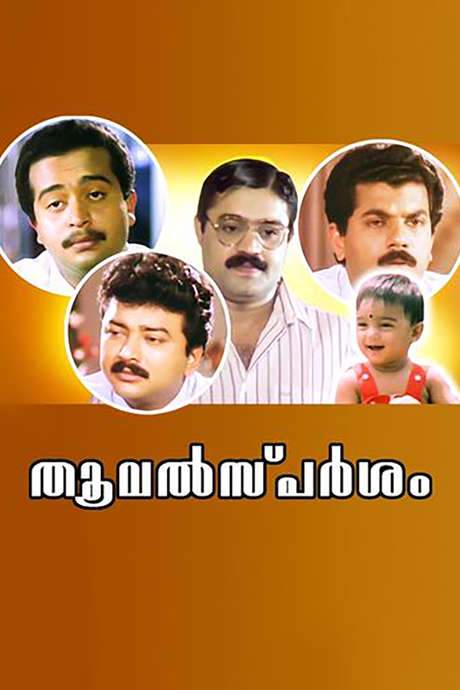
Raghuraman is a straightforward man who tends to estates and runs his own business in the cool hills of Ooty. When he meets Sudhakar, a newcomer in Coonoor with a young daughter, he senses a kinship in the father-daughter dynamic and begins a calm, reflective conversation about life, choices, and the path he has walked. The tale unfolds as Raghuraman narrates his own story to Sudhakar, revealing a man who prioritizes family even when the world around him presses for different priorities, and who wears a gentle exterior that hides a fierce devotion to those he loves.
Anu Raghuraman enters his life when he marries his cousin without their parents’ consent, and together they welcome a daughter who becomes the center of his universe: Abhi Raghuraman. Abhi is the world to him, and as she grows, the home becomes a place where love and conflict mingle—Raghuraman’s protective instinct often clashes with Anu’s more modern approach to parenting. He narrates how he would move mountains to keep Abhi safe, even when his own heart trembles at the thought of losing her to the ordinary dangers of growing up.
As the years pass, Abhi’s life expands the family in surprising ways. She adopts a beggar, a child she calls Ravi Shasthri, who comes to live with them and treats Abhi as his mother. This act mirrors the tenderness that threads through the household and shows a softer, almost lyrical, side of Raghuraman’s world. Her bond with the orphan echoes through the home, and Dhamu, a close friend of the family, accepts Abhi’s influence as a guiding force in his own life, cementing the house as a haven for found family and chosen kin.
When Abhi expresses a desire to study in Delhi, Raghuraman initially throws a tantrum, clinging to the familiar safety of home. Yet his love for Abhi ultimately softens his resistance, and he agrees to let her pursue her studies. The separation is bittersweet for a man who has tied his happiness to his daughter’s presence, but he finds a way to support her leap into the world beyond Ooty. The moment Abhi returns home and reveals that her love has taken root in someone from Delhi, Raghuraman’s careful facade cracks with a mix of concern, curiosity, and a reluctant acceptance.
The man Abhi loves is a Sikh from Delhi, Joginder Singh, a name that sits at once foreign and familiar to Raghuraman’s wary heart. Anu is open to the match, but Raghuraman’s initial reaction is protective skepticism. He watches Joginder on television alongside the Prime Minister and feels a cautious admiration stir in him, even as he guards his daughter’s future with quiet vigilance. The atmosphere thickens when a large crowd—whom Raghuraman mistakenly believes to be Joginder’s relatives—arrives at his home, and he vents his frustration at Anu. Abhi hears the outburst and is hurt, testing the delicate balance of love and authority within the family.
Yet Abhi reveals a deeper truth: the people gathered are not relatives of Joginder but a group of broken souls whom he has chosen to care for. She shares stories of their struggles, and suddenly Raghuraman’s heart swells with pride for the man she loves. In a moment of overwhelmed joy, he shouts and even screams, not in anger but in a raw, unguarded happiness that makes others worry he has lost his mind. He confesses to Anu that he is truly at peace with the wedding, trusting in Abhi’s happiness and in the man she has found.
The wedding itself becomes a tapestry of blessings and new bonds. Abhi and Joginder marry, with Raghuraman and Anu giving their blessing, and even Ravi’s own journey intertwines with the larger circle as he and Jasbeer Kaur acknowledge their love. The reception becomes a celebration of family, community, and the tender, transformative power of love, with Dhamu and his wife embracing the couple’s happiness and even planning to adopt a child of their own, a hopeful echo of the family’s evolving story.
The next day at the airport, Abhi and her parents share a deeply emotional goodbye. Abhi clings to her father, but Raghuraman does not shed a tear; he smiles through his own ache and sends her off with a heart full of pride and a quiet, enduring strength. He tells Anu that daughters are the sweetest blessings from God and that time flies by real quickly, urging them to savor every moment with their child. The farewell becomes a bridge to the present, where Raghuraman brings Sudhakar back to his home and shares the late-night truth that life, in all its rush, should be measured by the joy of parenthood, not by fear.
In the present, the family’s circle widens further: Ravi has married Jasbeer Kaur, and Raghuraman reinforces the timeless lesson that daughters—and the families they build—are the true compass of a life well lived. He speaks softly to Sudhakar about the need to seize every moment with one’s child, and when Abhi calls from Delhi, the room fills with a contagious warmth. Sudhakar, now a new father, looks at his own little daughter with a smile that promises a future where love and responsibility walk hand in hand.
Through it all, the film holds a steady, honest mirror up to family, tradition, and change, balancing humor with tenderness and testing the boundaries of control with the quiet courage of a man who loves deeply. The final moments linger on the tiny miracle of a daughter’s smile returning to her father, a note of hopeful continuity that suggests life, after every storm, keeps moving forward with grace.