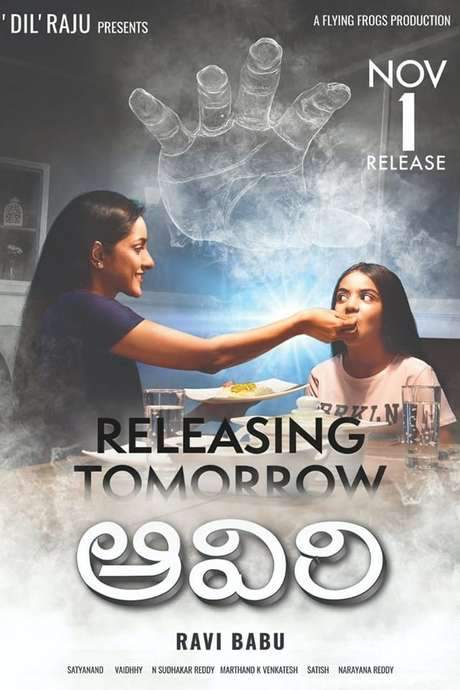
In the forested hills of Andhra Pradesh, a tribe lives under the tight grip of Dora, a ruler who forbids anyone from entering or leaving the village without his permission. Violators are punished, and at times killed, by Dora’s henchman Sambadu. The tribe clings to the belief that Dora is a benevolent god-like guardian, and they measure life by his decrees. Giddadu—Rangadu’s son and the tribe’s sheep herder—one day stumbles upon a radio and trades it for a lamb, unaware of the trouble it will stir. Sambadu roars in anger that the lamb was traded without his knowledge and viciously assaults Giddadu. The tribe’s priest cannot heal him, so everyone prays to their unknown god and follows the radio’s murmuring instructions, which the villagers take as divine talk. The discovery of the radio—an object they do not truly understand—begins to blur the lines between magic and machine, belief and manipulation.
Meanwhile, Dora’s own child lies in a hospital bed, ravaged by jaundice. The tribe gathers to seek permission to build a temple for their newly discovered “God.” When word reaches Dora that this God saved Giddadu, he consents—yet with a grim motive: the promise to save his child comes at the price of sacrificing Giddadu. He erects a painted electrical pole as the temple’s Dhwaja Stambham, and the people celebrate as the makeshift shrine rises on the hill. Dora and his aide Lingayya initially laugh at the notion that the radio is a divine presence, but the mood shifts as the tribe’s faith intensifies. In a cruel turn, Giddadu is kidnapped and prepared for sacrifice. The tribe witnesses a light ascend the hill and believes God is taking Giddadu away. Rangadu begs for divine intervention, and the radio answers with a directive to stop the light before it reaches the top. Rangadu races to the hill, but the light arrives first. On the way back, he encounters Chandram, Chandram Master, and Srinu after they’ve survived an accident and brings them to the village for care. The tribe, wary of outsiders, is nonetheless reminded by the radio to treat their kin with kindness. Chandram exposes Dora’s grasp over the villagers by revealing Dora’s involvement in illegal cannabis cultivation, a revelation that shakes the community—but many still resist seeing Dora as evil, until a broader struggle escalates.
As tensions escalate, Dora’s men abduct Chandram and Srinu to the hilltop, intending to kill them. Chandram awakens during the transport—fighting off the driver as the tractor roars up the hill. The tribe sees a light returning down the hill and interprets it as a sign that Chandram was sent back by God. With the people’s faith unsettled but revived, Chandram reframes the struggle by telling the tribe the story of Hiranyakashipu and Prahlada, using their radio to recount the myth and positioning Dora as the evil Hiranyakashipu and the tribe’s people as the devout Prahlada. He proclaims that he has met the God who commanded him to rid the village of Dora, and the tribe begins to rally around this new, empowering narrative. In the midst of this, Dora’s own child dies, and Sambadu complains that they have lost their hold over the tribe due to the radio’s influence.
Dora and his men launch a full-on assault against the growing resistance. The tribe fights back, and Sambadu even destroys the radio in a bid to cut the source of the tribe’s awakening. Rangadu responds with quiet resolve and eliminates Sambadu in retaliation. Dora, furious and cornered, strikes from behind and dares God to strike back. A bolt of lightning—striking the electric pole at the moment Dora stands beneath it—ends the conflict with Dora’s death, and the tribe is left to contemplate the delicate balance between faith, power, and the forces that govern their fate.