


Plot Explained Spoilers guaranteed!
Plot Explained

Browse by genre

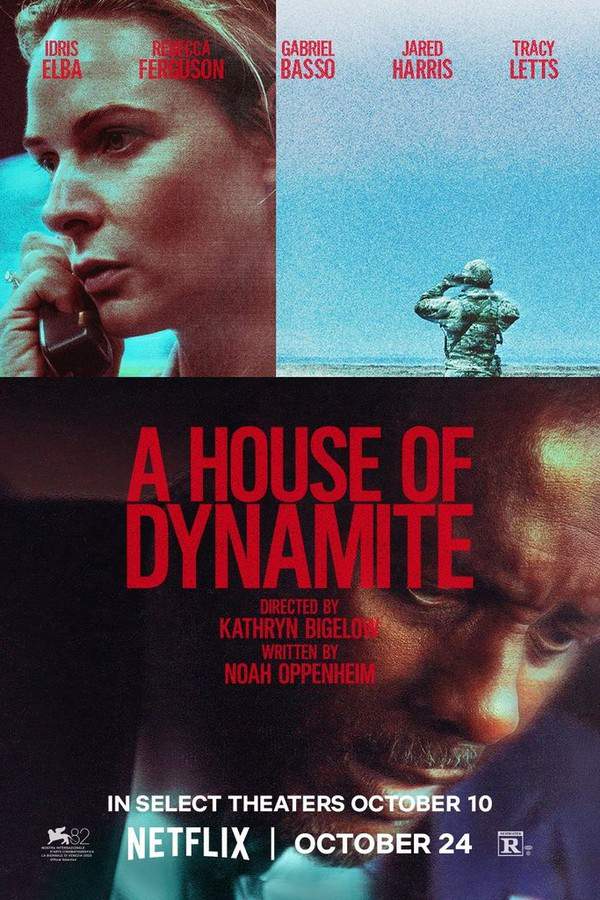
A House of Dynamite (2025) movie poster

Ending Explained

A House of Dynamite (2025) Ending Explained – Final Scene & Meaning

Release, runtime and language
2025 · 1 h 52 m · English
Echo score 66
JustWatch #2,858 70
Directed by
Kathryn Bigelow
Starring
Moses Ingram, Rebecca Ferguson, Idris Elba, Anthony Ramos, Greta Lee, Jared Harris

Academy Award‑winning director Kathryn Bigelow helms this tense thriller about a mysterious, unclaimed missile that strikes the United States. As panic spreads, a frantic race ensues among intelligence teams, political leaders, and military officials to identify the perpetrator and decide the nation’s response before the situation escalates further.

On this page (7)
  1. 1 Where to watch
  2. 2 What happens at the end
  3. 3 Final events in order
  4. 4 Ending questions answered
  5. 5 Movie threads
  6. 6 Movies like A House of Dynamite
  7. 7 Every angle

Where to watch

Where to Watch A House of Dynamite (2025)

Where can you watch A House of Dynamite? Stream, rent or buy it in the US, including on Netflix and Netflix Standard: current JustWatch availability with up-to-date prices.

Streaming availability powered by JustWatch

Ending explained · contains spoilers

What Happens at the End of A House of Dynamite?

How A House of Dynamite (2025) ends, what the final scene means, which earlier moments set it up and how to read the ending if the film leaves it open. The full ending explained, with every spoiler.

The final minutes of A House of Dynamite lock the audience in the tense war‑room where three perspectives converge: Captain Olivia Parker in the White House Situation Room, General Anthony Brady at STRATCOM, and the President himself. An ICBM has been confirmed on a collision course with Chicago. The first exo‑atmospheric kill vehicle pierces the warhead but does not destroy it, and the second EKV never launches, leaving the impact inevitable.

With the nation’s most valuable assets already sequestered in a deep‑bunkered complex, the President is left with a stark binary: order an immediate nuclear retaliation against the presumed aggressor—or hold fire, investigate the launch’s origin, and risk the devastation of a major U.S. city. The film freezes on his hesitation, handing the launch codes to General Brady but refusing to give the final command. No missile is launched, and the screen cuts before the ICBM reaches its target, leaving the fate of Chicago—and the world—intentionally unknown.

The ambiguity is deliberate. By not revealing whether the missile is a dud or whether the United States unleashes a retaliatory strike, the story forces viewers to confront the weight of such a decision. If the President had fired, a cascade of nuclear responses would likely have followed, extinguishing billions of lives. If he had held fire and the missile struck, the tragedy would expose the United States as a victim of a calculated provocation, possibly a trap laid by a rival such as North Korea. Either outcome illustrates the film’s central warning: leaders who act without pause become instruments of annihilation, while those who hesitate risk being labeled weak.

Underlying the tense standoff is a broader indictment of the nuclear arms race. The opening crawl reminds us that post‑Cold‑War treaties promised “fewer” weapons, yet nations have continued to inflate their arsenals, converting fear into endless budgetary excess. The President’s indecision, therefore, embodies the film’s plea for restraint—the only thing that can stop a world poised on the brink is a leader willing to think, not just react.

Last updated: December 10, 2025 at 15:51

Was this helpful?

The last 4 events

How A House of Dynamite Ends: The Final Events in Order

The last events of A House of Dynamite (2025) in chronological order, the run-up to the ending explained above. The complete timeline has all 12 events, scene by scene.

Open the full timeline
  1. GBI failure and presidential evacuation

    The two GBIs fail to intercept the approaching ICBM, prompting the president's airlift by Marine One to an undisclosed location. In flight, he reaffirms his nuclear authority with Brady, is briefed on Baerington's conversation with the Russian foreign minister, and informs the First Lady, who is in Kenya, of the looming disaster.

    When
    Moments before impact
    Where
    Marine One / in transit
  2. Secretary Baker's suicide

    Secretary of Defense Reid Baker commits suicide by jumping from the rooftop helipad. His death underscores the personal toll and the pressure on leadership during a nuclear crisis.

    When
    During crisis
    Where
    Pentagon rooftop helipad
  3. Raven Rock and Fort Greely actions

    Rogers and Park enter the Raven Rock Mountain Complex to coordinate continuity of government operations. In Alaska, Major Gonzalez kneels outside Fort Greely as the defense posture tightens.

    When
    Crisis escalation
    Where
    Raven Rock Mountain Complex; Fort Greely, Alaska
  4. Two retaliation options presented; final dilemma

    Reeves presents two major retaliation options drawn from the OPLAN to the President. The President remains torn between Baerington's non-retaliation stance and Brady's pro-retaliation stance, describing the situation as living in a 'house of dynamite' and weighing the consequences of each choice.

    When
    Final decision moment
    Where
    Washington, D.C.

Ending questions answered

A House of Dynamite Ending: Your Questions Answered

The questions people ask most about the ending of A House of Dynamite (2025): what the final scene means, how the twist works, what happens to each character and how to read the ending. Each answer contains spoilers.

Q1

Does the missile hit Chicago at the end?

No, the screen cuts before the ICBM reaches Chicago, leaving its fate intentionally unknown. The film never reveals whether the warhead detonates over the city or whether the President ultimately ordered a retaliatory strike. This ambiguity is the core of the ending, forcing viewers to sit with the uncertainty that real-world nuclear crises create.

  • chicago icbm
  • missile strike
  • impact
  • attack outcome
Q2

Why doesn't the President give the final order to launch?

The President hesitates because he recognizes the catastrophic consequences of either choice. Ordering immediate nuclear retaliation would likely trigger a cascade of global nuclear responses, potentially killing billions. Holding fire risks the destruction of Chicago but could expose the attack as a calculated provocation, possibly a trap by a rival nation. His hesitation represents the film’s argument that leaders must think before acting.

  • president decision
  • launch codes
  • hesitation
  • nuclear response
Q3

What happens to General Brady at the end?

General Brady receives the launch codes from the President but never receives the actual launch order. The President hands over the codes, indicating he's prepared to authorize a strike, but stops short of giving the final command. Brady waits for an order that never comes, and the film ends with the general still holding the codes as the missile approaches Chicago.

  • general brady
  • stratcom
  • launch codes
  • order
Q4

Why does the second kill vehicle never launch?

The second exo-atmospheric kill vehicle (EKV) fails to launch, leaving the warhead on its collision course with Chicago. This technical failure represents the fragility of defense systems and underscores how quickly circumstances can spiral beyond control. With both interceptors failed, the nation’s only remaining options become political and military retaliation or diplomatic restraint.

  • ekv
  • interceptor failure
  • missile defense
  • second launch
Q5

What is the meaning of the ambiguous ending?

The ambiguous ending serves as the film’s central warning about nuclear decision-making. By refusing to show whether Chicago is destroyed or whether the US launches a retaliatory strike, the film forces viewers to confront the unbearable weight of these choices. Either outcome, mass civilian casualties or global nuclear war, represents an unimaginable tragedy, illustrating how leaders who act without pause become instruments of annihilation.

  • ambiguous ending
  • meaning
  • interpretation
  • thematic message
Q6

Is the missile attack a trap or provocation?

The ending suggests the attack may have been a deliberate provocation designed to draw the US into a nuclear response. If the President had fired, it would have justified a massive retaliatory strike against the presumed aggressor, possibly North Korea, triggering global nuclear war. If the missile was a dud or the attack was false, holding fire would expose the US as a victim of manipulation. The film presents this as a calculated trap either way.

  • provocation
  • trap
  • north korea
  • aggressor
  • false flag
Q7

Why does the movie end without showing the outcome?

The film ends without resolution because depicting either outcome, a nuclear exchange or a city destroyed, would undermine the story’s message. By cutting to black before the ICBM reaches Chicago, the movie forces viewers to experience the same paralysis as the President: stuck between two unbearable possibilities with no “right” answer. This mirrors real-world nuclear brinkmanship where decisions carry unimaginable consequences.

  • ending resolution
  • no resolution
  • cut to black
  • final scene
Q8

What threatens Chicago at the end of the movie?

An ICBM (intercontinental ballistic missile) armed with a nuclear warhead is on a direct collision course with Chicago. The first exo-atmospheric kill vehicle pierces the warhead but fails to destroy it, and the second interceptor never launches at all. With all defensive options exhausted, the ICBM continues toward the city as the President faces his final decision.

  • icbm chicago
  • nuclear warhead
  • inbound missile
  • threat
Q9

What is the film’s message about nuclear weapons?

The film delivers a stark warning about the nuclear arms race and the dangers of reflexive leadership. The opening crawl notes that post-Cold-War treaties promised “fewer” weapons, yet nations have continued expanding arsenals. The President’s indecision embodies the film’s plea for restraint: the only thing that can prevent global annihilation is a leader willing to think, not just react. The film argues that hesitation, however agonizing, is preferable to catastrophic overreaction.

  • nuclear weapons
  • arms race
  • message
  • thematic warning
  • restraint

Movie threads

More Movies Like A House of Dynamite, by Mood & Story

Curated lists built around what makes A House of Dynamite tick: the same mood, the same kind of story or the same emotional payoff. Each list explains why these movies belong together.

Real-Time High-Stakes Thrillers like A House of Dynamite

Movies where a tense, world-altering event unfolds in frantic real time. If you liked the unrelenting tension of A House of Dynamite, this list features other movies with a fast-paced, real-time crisis narrative. Discover more thrillers where characters race against the clock to prevent a major disaster.

  • urgent
  • suspenseful
  • claustrophobic
  • anxious
  • high-stakes
  • desperate
  • Tone: tense, grim, urgent
  • Pacing: fast, relentless
Why these movies?

The story pattern: Narratives in this thread are often linear and propulsive, driven by an imminent deadline or a threat that grows more severe with each passing minute. The plot focuses on the procedural and psychological aspects of crisis management, where every decision is critical and second-guessing is a luxury no one can afford.

Why they belong together: These films are grouped together because they share an intense, fast-paced structure that creates a palpable sense of urgency and claustrophobia. They immerse the viewer in the 'situation room' experience, characterized by high stress, moral dilemmas, and the grim weight of responsibility.

Movies with Heavy Moral Dilemmas Like A House of Dynamite

Stories where leaders face impossible choices with devastating consequences. Fans of the grim ethical challenges in A House of Dynamite will appreciate these films. Explore more stories where characters face impossible decisions under extreme pressure, dealing with themes of sacrifice, responsibility, and devastating consequences.

  • grim
  • sobering
  • desperate
  • uncertain
  • moral dilemma
  • heavy
  • Tone: grim, tense, sobering
  • Pacing: fast, steady
Why these movies?

The story pattern: The narrative pattern follows a protagonist, often a leader or expert, who is forced to weigh lives, principles, and geopolitical stability against each other. The journey is emotionally heavy, leading to an ambiguous or bleak conclusion that reflects the impossible nature of the choices made.

Why they belong together: These movies are connected by their profound emotional weight and focus on ethical quandaries. They share a somber, suspenseful tone and prioritize the psychological toll of decision-making over simple action, leaving the viewer with a sobering and thought-provoking experience.

If you liked this

Movies Like A House of Dynamite

Similar movies to A House of Dynamite: the same genre, themes or kind of story. Each one comes with its own plot summary, timeline and ending explained.

Browse all movie summaries

Every angle

A House of Dynamite (2025) Explained: Plot, Ending, Timeline & Characters

Everything about A House of Dynamite in one place: what happens in the plot summary, the timeline in chronological order, the characters and meaning, the ending explained and a spoiler-free summary. What's After the Movie adds the cast, box office and post-credit scenes.

Coming soon on iOS and Android

The Plot Explained Movie Summary App

Plot summaries, endings explained and timelines on your phone. Catch up on any movie in minutes, save your favorites and never miss a twist again.

Be the first to know when we launch. Your email stays private, always.

Learn more about the app