













Plot Explained Spoilers guaranteed!
Plot Explained

Browse by genre

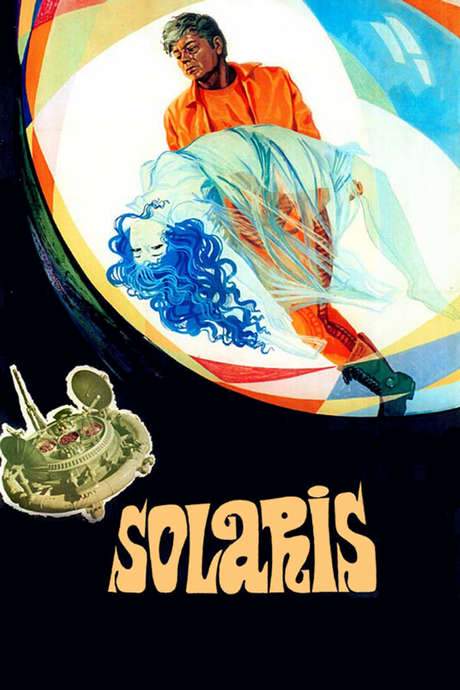
Solaris (1972) movie poster

Timeline

Solaris (1972) Timeline Explained – Every Event in Order

Release, runtime and language
1972 · 167 mins · Russian
JustWatch #7,334 14
Directed by
Andrei Tarkovsky
Starring
Donatas Banionis, Jüri Järvet, Natalya Bondarchuk, Olga Barnet, Olga Kizilova, Tatyana Malykh

A psychologist is dispatched to a space station orbiting the mysterious planet Solaris to investigate a doctor’s death and the crew’s unsettling mental disturbances. He discovers that the planet’s ocean acts like a sentient brain, manifesting the astronauts’ repressed memories and obsessions, turning their deepest nightmares into reality.

On this page (7)
  1. 1 Where to watch
  2. 2 Events in order (14)
  3. 3 Timeline questions answered
  4. 4 Movie threads
  5. 5 Movies like Solaris
  6. 6 Categories
  7. 7 Every angle

Where to watch

Where to Watch Solaris (1972)

Where can you watch Solaris? Stream, rent or buy it in the US, including on HBO Max, Plex and Shout! Factory TV: current JustWatch availability with up-to-date prices.

Streaming availability powered by JustWatch

14 events in order · contains spoilers

Solaris Timeline: Events in Chronological Order

Every key event of Solaris (1972) in order, scene by scene, with when and where it takes place. Use it to untangle flashbacks, time jumps and parallel storylines, to refresh your memory before the sequel or to find the exact scene you are thinking of.

  1. Kelvin's last day on Earth

    Psychologist Kris Kelvin spends his last day with his elderly father and his friend Burton, preparing for the mission to Solaris. The scene establishes the emotional stakes and hints at Burton's troubled memory of the planet. The conversation frames the isolation and moral weight of the evaluation ahead.

    When
    Day before departure
    Where
    Earth
  2. Burton's revelation about the child

    Burton explains that the haunting child on Solaris resembles one who was orphaned when an explorer vanished. He warns that what Kelvin might encounter could be a trick of memory or something more. The memory of loss colors Kelvin's expectations of the mission.

    When
    Before departure
    Where
    Earth
  3. Kelvin arrives at Solaris

    Kelvin lands at the disordered Solaris station and quickly learns that Gibarian has killed himself. The remaining crew members Snaut and Sartorius are unstable, and strange visitors seem to appear. The station's atmosphere is already saturated with tension and mystery.

    When
    Upon arrival
    Where
    Solaris station
  4. Gibarian's farewell video

    Kelvin finds Gibarian's cryptic video message, which shows a little girl aboard the station and asks if Kelvin has seen her. The message hints that the visitors are real to some extent and warns that Kelvin may not be sane if more strange events occur. The video deepens the sense of ominous uncertainty.

    When
    Early after arrival
    Where
    Solaris station
  5. First Hari appearance and replica experiment

    Kelvin wakes to find Hari, his deceased wife, in his quarters. He destroys a replica of Hari by launching it into space, shocked by the uncanny resemblance. Snaut explains that the visitors arose after radiation experiments on Solaris.

    When
    First night on station
    Where
    Kelvin's quarters on Solaris
  6. Hari's second arrival and acceptance

    Hari reappears and Kelvin gradually accepts her, inviting an intimate sleep together. When Kelvin briefly leaves, Hari injures herself, but the wounds heal before his eyes, revealing she is a memory-made guest. The line between memory and personhood becomes increasingly blurred.

    When
    That night
    Where
    Kelvin's quarters
  7. Guests' nature and annihilator

    Snaut and Sartorius explain that the guests are not physical beings but manifestations born from human memories. They speculate about destroying them with a device called the annihilator, raising questions about reality and responsibility.

    When
    Subsequent days
    Where
    Solaris station
  8. Kelvin's brainwave attempt

    Snaut proposes beaming Kelvin's brainwave patterns at Solaris to communicate and perhaps calm the visitors. The plan reflects the scientists' hope that Solaris will understand their human mind and stop the hauntings.

    When
    Early after Hari's appearances
    Where
    Solaris station
  9. Hari's humanity grows; original Hari's history revealed

    Hari becomes more human and capable of existing away from Kelvin. Sartorius reveals the original Hari killed herself ten years earlier, deepening the mystery of the guests and their link to Kelvin's memories.

    When
    Between nights
    Where
    Solaris station
  10. Birthday party and existential crisis

    Kelvin, Hari, Snaut, and Sartorius gather for a birthday party that devolves into a philosophical argument. Sartorius reminds Hari she isn't real, triggering despair as she drinks liquid oxygen and resurrects minutes later.

    When
    Birthday scene
    Where
    Solaris station
  11. Ocean swirls on Solaris

    On the planet's surface, the ocean begins to swirl into a funnel, signaling a looming, tangible change in Solaris itself. The crew watches as the environment mirrors the turmoil inside the station.

    When
    Following the party
    Where
    Solaris surface
  12. Kelvin's illness and revelation

    Kelvin falls ill and dreams of his mother, who washes away dirt from his arm. He awakens to Hari's absence, and Snaut reveals that Kelvin's brainwaves have been broadcast into Solaris, which has halted the visits and allowed islands to form on the planet.

    When
    Shortly after dream
    Where
    Solaris station / Solaris surface
  13. Decision: stay or return

    Kelvin debates whether to return to Earth or remain with the haunting in a strange, expanding world. The film leaves his choice open as he contemplates the possibility of continuing the mission or choosing personal memory over exposure to the unknown.

    When
    End of film
    Where
    Solaris station
  14. Ending reveal: Solaris island

    Kelvin appears to be at his family home, only to reveal that they are on a Solaris island. The final image renders the reality as a loop between memory and material, underscoring the film's themes of grief and the unknowable.

    When
    Ending scene
    Where
    Earth family home / Solaris island

Last updated: October 09, 2025 at 11:07

Was this helpful?

Timeline questions answered

Solaris Timeline Explained: Your Questions Answered

When does it happen, and why in that order? The questions people ask about the chronology of Solaris (1972): time jumps, flashbacks, cause and effect between scenes and the correct order of events, each answered with spoilers.

Q1

Why did Dr. Gibarian commit suicide on the station?

Gibarian killed himself after witnessing the manifestations created by Solaris. His cryptic farewell video shows two appearances of a little girl and urges Kelvin to trust what he experiences, suggesting Gibarian was overwhelmed by the boundary between reality and memory collapsing. He could no longer distinguish between genuine human experience and the planet's projections.

  • gibarian
  • suicide
  • death
  • space station
  • farewell video
Q2

Why did the strange visitors start appearing after the radiation experiments?

The visitors began appearing after the scientists conducted radiation experiments on Solaris in an attempt to understand its nature. The planet's ocean appears to function as a sentient, brain-like entity that responds to human consciousness. When the scientists directed radiation at it, they somehow triggered the ocean to manifest the astronauts' repressed memories and obsessions as physical beings.

  • radiation
  • experiments
  • visitors
  • guests
  • solaris ocean
  • manifestation
Q3

Who is the little girl shown in Gibarian's farewell video?

The little girl appears to be connected to Burton's earlier expedition to Solaris. Burton revealed that he saw a four-meter-tall child on the planet's surface and later recognized the child's face as belonging to someone orphaned when a Solaris explorer vanished. Whether this is the same entity or a separate manifestation remains ambiguous, but the repeated appearance suggests it represents a collective guilt or loss.

Foreshadowing: Burton had described seeing a tall child on Solaris years earlier

  • little girl
  • child
  • gibarian video
  • burton
  • vision
  • hallucination
Q4

What are the 'guests' appearing on the station?

The guests are not physical beings but manifestations born from human memories. Dr. Snaut and Dr. Sartorius explain that Solaris creates these beings from the astronauts' repressed thoughts, deepest fears, and unresolved obsessions. They think and feel as if human but are constructs of memory given form by the planet's ocean, which acts as a sentient, brain-like entity.

  • guests
  • visitors
  • manifestations
  • memory
  • solaris ocean
  • sentience
Q5

Why does Hari, Kelvin's deceased wife, appear on the station?

Hari appears because she represents Kelvin's deepest unresolved grief and guilt. His wife died by suicide ten years earlier, and the planet's ocean manifests her from Kelvin's memories of their marriage. The original Hari killed herself, and the manifested version is an artificial being created from Kelvin's recollections of his wife.

Foreshadowing: Kelvin's last day on Earth establishes his emotional connection to his past

  • hari
  • kelvin
  • wife
  • death
  • grief
  • guilt
  • memory
  • manifestation
Q6

What caused the original Hari to commit suicide ten years earlier?

The original Hari took her own life ten years before Kelvin's arrival at Solaris, though the exact reasons remain somewhat unclear. Sartorius reveals this history during the birthday party confrontation, suggesting her suicide was linked to the same emotional struggles and feelings of inadequacy that the manifested Hari experiences. The film implies issues within their marriage and possibly Kelvin's emotional distance contributed to her despair.

  • hari
  • suicide
  • death
  • ten years
  • sartorius
  • revelation
Q7

What happens when Kelvin's brainwaves are beamed at Solaris?

When Snaut beams Kelvin's brainwave patterns at Solaris, the planet responds dramatically. The visitors cease appearing on the station, and islands begin forming on Solaris's surface. This suggests that direct communication with the ocean's consciousness can alter its behavior. The planet seems capable of understanding and responding to human consciousness, though the exchange fundamentally changes both the visitors and the planet itself.

  • brainwaves
  • broadcast
  • solaris
  • islands
  • communication
  • snaut
Q8

Why does Hari resurrect after drinking liquid oxygen?

Hari drinks liquid oxygen during the birthday party after Sartorius tells her she is merely a memory, not a real person. She dies from the extreme cold but then experiences a painful, immediate resurrection. This demonstrates that the guests, while manifestations, possess some form of existence that allows them to return even after fatal injuries, suggesting Solaris sustains them regardless of physical destruction.

  • hari
  • liquid oxygen
  • death
  • resurrection
  • birthday party
  • sartorius
Q9

What does the ending reveal about Kelvin's location?

In the final scene, Kelvin appears to be at his family home on Earth with his father, creating the impression he has returned safely. However, the setting slowly shifts to reveal they are actually on one of the islands that formed on Solaris. This ambiguous ending blurs the line between memory and reality, suggesting Kelvin may have chosen to remain within the planet's created world rather than return to Earth.

Foreshadowing: The islands formed after Kelvin's brainwaves were broadcast

  • ending
  • island
  • earth
  • family home
  • reality
  • ambiguity
  • kelvin father
Q10

How does Solaris's ocean create these manifestations?

Solaris's ocean appears to function as a massive, sentient entity resembling a brain. It can directly read and respond to human consciousness, extracting thoughts, memories, and emotional obsessions from the astronauts' minds. The ocean then materializes these into physical forms, the visitors, suggesting it has some form of telepathic or psychokinetic capability that operates on a planetary scale.

  • solaris ocean
  • brain
  • sentience
  • manifestation
  • memory
  • consciousness
  • telepathy
Q11

What is the 'annihilator' device and why is it suggested?

Sartorius proposes using a device called 'the annihilator' to destroy the visitors, suggesting they might be fragile but potentially dangerous beings. This raises ethical questions about whether these memory-based entities have rights or are simply projections. The annihilator represents the scientists' attempt to regain control over their environment by eliminating the manifestations rather than understanding them.

  • annihilator
  • device
  • destruction
  • sartorius
  • visitors
  • danger
Q12

Why do islands appear on Solaris at the end of the film?

The islands begin forming on Solaris after Kelvin's brainwaves are broadcast into the planet. This physical transformation of the planet's surface coincides with the cessation of visitor appearances, suggesting that when Solaris receives direct human consciousness data, it responds by creating tangible landforms rather than intangible manifestations. The islands may represent the planet's attempt to create a reality that satisfies human longing for connection and place.

Foreshadowing: The brainwave broadcast occurs shortly before the islands appear

  • islands
  • solaris
  • formation
  • brainwaves
  • surface
  • transformation
Q13

Why does Kelvin accept the manifested Hari despite knowing she isn't real?

Kelvin accepts Hari because he is desperate to confront and resolve his guilt over his wife's real suicide. Even after learning she is a memory construct, he continues the relationship because she provides the emotional connection he lost. His acceptance represents a choice to embrace illusion over painful reality, exploring themes of whether authentic experience requires physical existence or merely emotional truth.

  • kelvin
  • hari
  • acceptance
  • memory
  • reality
  • guilt
  • relationship

Movie threads

More Movies Like Solaris, by Mood & Story

Curated lists built around what makes Solaris tick: the same mood, the same kind of story or the same emotional payoff. Each list explains why these movies belong together.

Philosophical Sci-Fi Movies Like Solaris

Stories where science fiction explores the labyrinth of human memory and guilt. A collection of movies like Solaris, where sci-fi concepts serve as metaphors for exploring grief, memory, and what it means to be human. If you liked the intellectual and emotional depth of Solaris, you'll find similar journeys here.

  • philosophical
  • existential
  • melancholic
  • introspective
  • unsettling
  • solemn
  • Tone: melancholic, philosophical, solemn
  • Pacing: slow, contemplative
Why these movies?

The story pattern: Narratives in this thread often involve characters confronting manifestations of their own psyche—be it memories, fears, or desires—triggered by an alien intelligence or advanced technology. The central conflict is internal, a battle with guilt, loss, and the nature of reality itself, rather than an external threat.

Why they belong together: These films are grouped by their shared commitment to using the sci-fi genre for profound philosophical inquiry. They prioritize mood, existential themes, and character psychology over fast-paced plots, creating a similarly heavy, thought-provoking, and melancholic viewing experience.
Slow Burn Psychological Dread Like in Solaris

Unsettling stories where tension builds from internal anguish and claustrophobic settings. Discover movies that share Solaris's methodical pacing and atmosphere of profound psychological unease. These films use a slow burn to build a deep sense of dread, isolation, and emotional weight, perfect if you appreciated the tense, introspective vibe of Solaris.

  • slow burn
  • unsettling
  • claustrophobic
  • psychological
  • dread
  • introspective
  • Tone: unsettling, melancholic, claustrophobic
  • Pacing: slow burn, deliberate
Why these movies?

The story pattern: Stories unfold gradually, focusing on the deterioration of a character's sanity or the unraveling of a haunting mystery. The plot is secondary to the immersive experience of a creeping, often inescapable dread, frequently culminating in an ambiguous or bleak resolution that lingers with the viewer.

Why they belong together: They are connected by a specific approach to tension: it's not about jump scares, but a pervasive, slow-building dread rooted in psychological distress, grief, or existential horror. The shared elements are a slow pace, a heavy emotional weight, and a consistently melancholic or bleak tone.

If you liked this

Movies Like Solaris

Similar movies to Solaris: the same genre, themes or kind of story. Each one comes with its own plot summary, timeline and ending explained.

Browse all movie summaries

Categories

Movie Lists Featuring Solaris

Solaris appears in these hand-built movie categories. Each one groups movies by a specific mood, theme or story type, with their plot summaries and endings explained.

View all movie categories

Every angle

Solaris (1972) Explained: Plot, Timeline & Characters

Everything about Solaris in one place: what happens in the plot summary, the timeline in chronological order, the characters and meaning and a spoiler-free summary. What's After the Movie adds the cast, box office and post-credit scenes.

Coming soon on iOS and Android

The Plot Explained Movie Summary App

Plot summaries, endings explained and timelines on your phone. Catch up on any movie in minutes, save your favorites and never miss a twist again.

Be the first to know when we launch. Your email stays private, always.

Learn more about the app