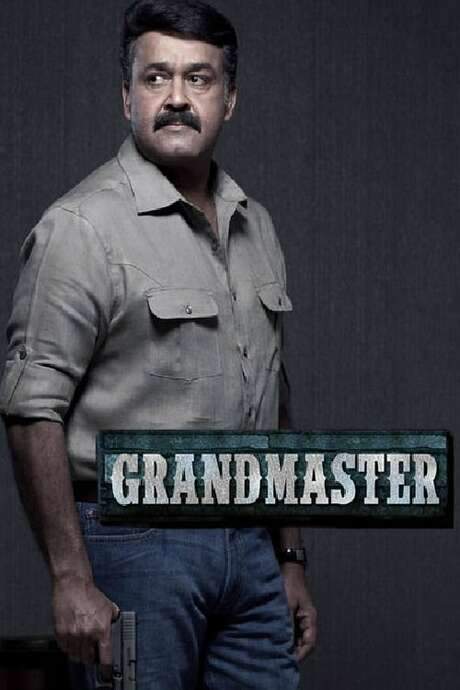
A painting smuggled from abroad surfaces at a road checkpoint, triggering a careful intervention by ACP Benjamin Joshua in Kochi who moves the artwork into a highly encrypted location. Months later, on a Bengaluru-bound bus, a young, obsessive gamer named Sunny shares a carriage with a quiet fellow passenger, Aryan Achary, who appears to be an accountant on his way to the same city. A casual look at Aryan’s laptop quickly reveals that things aren’t as they seem: Aryan is not who he claims to be. His identity leaks, and he finally speaks up, introducing himself as John — a name that carries weight and hidden history.
John is more than a mysterious traveler. He’s a former police forensic professional who is on sabbatical for reasons tied to a tangled past, and he happens to be Benjamin Joshua’s childhood friend. The story widens its circle in Kochi as a shadowy gang of robbers begins to terrorize the city with a chilling method: they disguise themselves and steal strangely valuable items. Their crimes don’t feel random; they follow a pattern that looks suspiciously like a video game. Each time an officer from Benjamin’s team is chosen, a clue appears that must be cracked before the loot is taken. Time and again, Benjamin’s squad falls just short, and the robberies proceed unchecked.
Recognizing a common enemy, John steps in to assist. His arrival brings a sharpened, game-inspired line of thinking to the investigation, and he helps Benjamin connect the dots in ways his own team could not. The criminals don’t just steal; they play with the police, even using Benjamin’s own family as leverage. They lure Benjamin’s young son with a Mario-themed game set, a tactic that rattles the household and tests Benjamin’s resolve, as he warns his son to stay away from that dangerous lure. The tension between enforcing law and protecting family becomes a central thread as the case deepens.
When one suspect is captured, the police extract little, and the suspect remains unyielding under pressure. Yet John’s experience allows him to reinterpret the evidence as part of a broader “gameplay” that mirrors what the gang is doing in the real world. It turns out that Benjamin’s son, who shares a gamer’s curiosity, has quietly been involved in this puzzle more than anyone realizes. With the boy’s insights and the help of a few playable clues hidden in plain sight, John and Benjamin begin to crack the final level of the case. Their investigation leads them toward the tangible prize of the loot — the hidden painting — which is now kept under tight watch in a high-profile customs office in Kochi.
To shield the painting, John devises a formidable security scheme, an electric lock that promises to mask the artwork from even the most determined intruders. Sunny, who has grown increasingly confident in his own hacking prowess, challenges John’s confidence by claiming that a fearless hacker could easily bypass such a lock. John accepts the test, and Sunny breaks through the lock after a tense hacking sequence, leaving him astonished but exhilarated by what his skills can achieve.
The pursuit then shifts to Bangalore, where the two men part ways: Sunny plans to reunite with an Instagram girlfriend he met along the road, while John continues with his own path. But the story doesn’t settle there. Later, news breaks that John Caesar — the man who helped the police — has been arrested in Kerala in connection with the very lock he designed. Sunny, hearing the name and seeing the headlines, rushes back to Kochi to uncover the truth behind the arrest and the evolving web of deception.
Back in court, Benjamin fights to clear John’s name, but a crucial revelation interrupts the proceedings: the man arrested as John Caesar is not the same John who assisted the police; he is another childhood friend of Benjamin who had secretly helped with the serial robbery case. The truth becomes harder to untangle as Sunny discovers Jovita, a girlfriend he had met in Bangalore, in a car in Kochi and follows her to a hideout. What unfolds is a multi-front confrontation: Sunny confronts Jovita’s group, overpowering them, only to come face-to-face with the gang’s leader — a loud, eccentric figure who calls himself Bazooka or Mr. Mario. He is a fanatical gamer whose obsession has fueled years of trickery and crime, the same man whom Benjamin and the real John had been pursuing all along.
Bazooka explains the underlying motive: Benjamin’s prior act of locking up his painting, which hid a hidden treasure, had provoked Bazooka’s anger and driven him to unleash a string of robberies designed to torment the police and force a reckoning. Yet the real John Caesar has been a step ahead at every turn, crafting plans that made it nearly impossible for Bazooka to seize the painting. In a twist, Bazooka masquerades as John, selecting Sunny as the target of his latest gambit — using Sunny’s own hacking skills as the means to crack the painting’s lock and claim the treasure for himself. The exchange leaves Sunny disoriented, unsure of who is real and who is merely a reflection of Bazooka’s manipulations. With the truth still concealed and Bazooka’s unpredictable insanity on display, Sunny chooses to walk away, leaving the immediate danger behind but realizing the extent of the gang’s reach. The loot is dumped back in front of the police, a symbolic reassertion of control after an elaborate game of cat and mouse.
Bazooka’s plan culminates in a dramatic departure toward Dubai, where Benjamin and Sunny are shown as his fellow passengers on the same flight. In the moment of reunion and confrontation, Benjamin resolves to bring Bazooka to justice once and for all, and Bazooka rises to the challenge with a taunt that hints at a possible sequel: meet me in Dubai, and then we’ll see who truly holds the power. As the film closes, the audience is left with a suspended yet satisfying sense of completion — the painting is still under watch, the criminals are exposed or at least contained for now, and the characters carry the heavy residue of their choices as they head toward uncertain futures. The final image lingers on Bazooka’s smirk and the quiet determination of Benjamin, a duo whose clash has woven truth, deception, and gaming into a single, sprawling chase.
In the end, the narrative threads converge on a theme of identity — who people pretend to be, who they truly are, and how games and real life collide when the stakes involve art, treasure, and the fragile line between order and chaos. The film lingers on the idea that every puzzle has a second layer, every confession hides a counterconfession, and every victory is tempered by the cost of trust. It’s a story about how a city’s law and a gamer’s instincts interlock in a dangerous cat-and-mouse game, where art, loyalty, and the thrill of the chase push ordinary people to extraordinary measures, and where the promise of a sequel hints at even more intricate games to come.