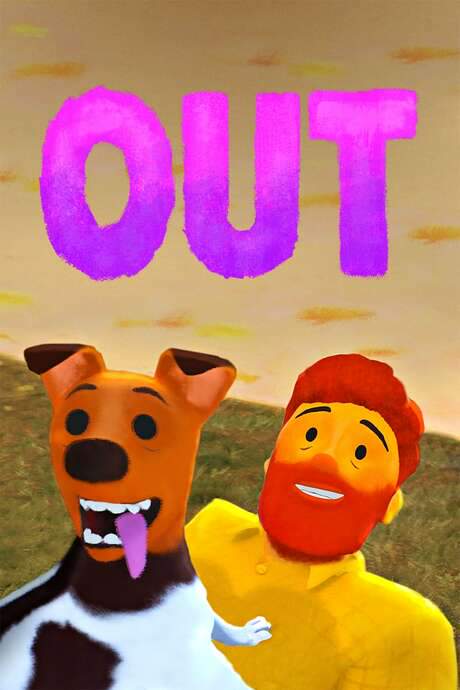
A magical cat and dog appear outside Greg’s townhouse just as he and his boyfriend Manuel are packing up to move. The cat’s enchantment lands on the collar of Greg’s dog, Jim, imbuing it with a strange, shimmering power. The moment the collar glows, a sense of anticipation hangs in the air, as if the house itself recognizes that something transformative is happening. The scene shifts from the quiet, moving-day hustle to a gentle, almost fable-like moment where wonder slips into everyday life.
Inside, Greg and Manuel pause to look at a photo of the two of them together, a small, stubborn reminder of the life they’re trying to secure in a new place. Manuel, with quiet seriousness, urges Greg to consider coming out to his parents, to share a part of himself that he has kept close for fear of judgment. The visit of Greg’s parents, who arrive unexpectedly to help with the move, adds a layer of tension and tenderness to the moment. Greg’s instinct is to protect the photo—the tangible memory that anchors him to the life he’s leaving behind—and he hides it away, hoping to delay a conversation that feels fraught with consequences. Manuel, sensing the weight of Greg’s hesitation, quietly slips out the back door, leaving Greg alone with the growing quiet of the house and the soft jingling of Jim’s collar.
With the collar in his hand and the photo momentarily out of sight, Greg voices a wish that seems both reckless and sincere: he wishes to become a dog. In the blink of an eye, the world shifts. Greg and Jim have swapped minds, and the two animals-turned-human become keenly aware of the surprising gravity and humor of their new circumstances. Greg, now inhabiting Jim’s body, bolts outside to test his new form, sprinting across the yard with a blend of canine enthusiasm and human curiosity. The moment is funny and unsettled at once, as the yard becomes a stage for the misadventures of a dog embodying a man’s memories and a man learning to see through a dog’s senses.
Out in the yard, Greg-as-a-dog encounters his stoic father as he lights the grill, a simple, almost Spartan ritual that now feels loaded with unspoken meaning. Jim, inhabiting Greg’s mind, tries to reach the father with a mixture of urgency and gentleness, while also trying to keep the anxious human side of him from revealing the hidden photo to the mother, who remains in the kitchen with a soft, watchful eye. The father’s calm routine contrasts with the chaos of a dog-who-is-a-man and a man-who-is-a-dog learning to navigate a world where every action carries new weight.
Back inside, Greg’s mother sits with a quiet honesty that is both painful and hopeful. She speaks aloud of her sadness about her son moving away, of missing the everyday moments that define a family. The moment becomes a rare, intimate exchange in which the mother articulates a longing for happiness for Greg, even if it means sacrificing a perfectly orderly plan for his future. Jim, listening in Greg’s place, realizes something profound: his mother doesn’t only accept the possibility that Greg is gay, she understands that love and happiness matter more than conformity. The realization is gentle, warming the room with a sense of acceptance that seems almost tangible. For a brief, tender moment, Jim comforts the mother in a way that only a child could—focusing on care, presence, and the shared dream of a life where her son can be his true self.
Then the moment of truth arrives as Greg, back in his own voice, chases down his dog-self—both trying to reconcile the night’s revelations with the practical realities of a family about to witness a revelation. The two minds switch back, and the air shifts from comic mischief to a meaningful turning point. Greg discovers the power of his own truth in the simplest of moments: a father who hugs Manuel spontaneously, a family beginning to understand that love is bigger than fear, bigger than timelines, and big enough to hold both tradition and authenticity.
That evening, as the sun sinks and the house settles, Greg introduces Manuel to his parents with a quiet confidence that comes from honest vulnerability. The father’s spontaneous hug signals a new kind of welcome, a bridge between two worlds that had seemed incompatible just hours before. The magical cat and dog, having completed their whimsical mission, watch from a distance as their rainbow exit marks a hopeful beginning rather than a finale. The story closes on a note of quiet magic—the sense that love can find a way to fit into even the most unexpected shapes, and that a family’s doorway can open wider when faced with truth, tenderness, and a little bit of enchantment. The cat and dog disappear into a brilliant arc of color, leaving Greg, Manuel, and their evolving family poised to start anew with a deeper sense of belonging.