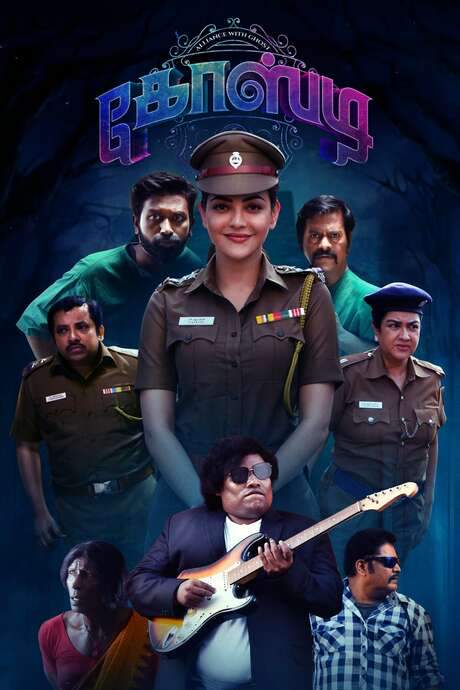
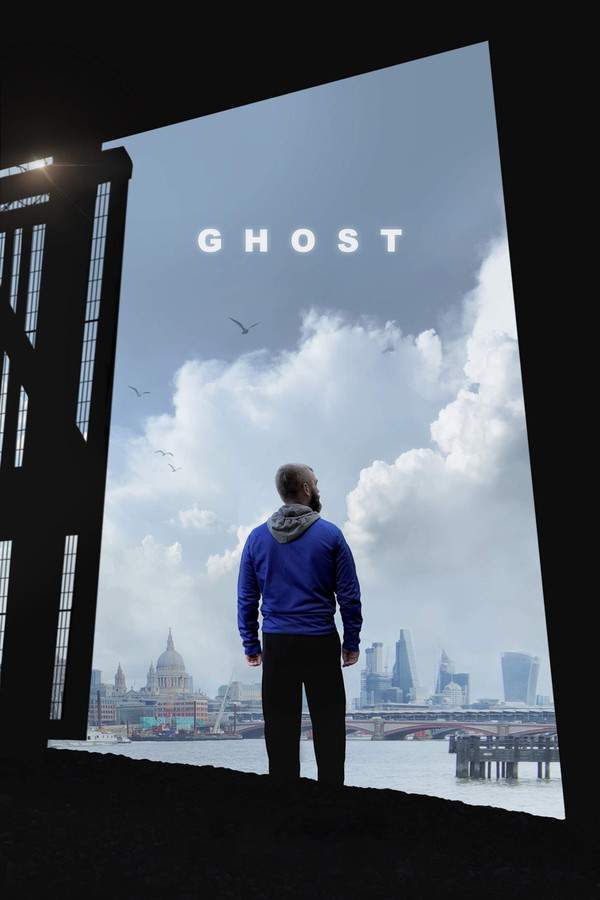
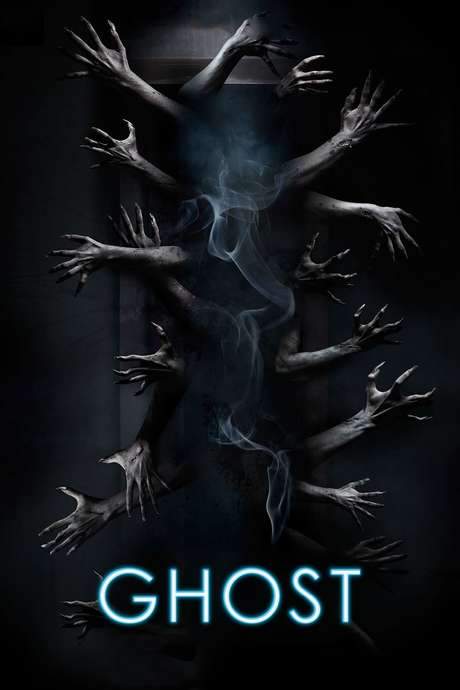
In the film, Karan Khanna, a politician living in the United Kingdom, finds himself accused of murdering his wife. To defend himself, he claims that a spirit committed the crime and insists that the spirit must stand trial. The story explores the complexities of his situation and the extraordinary legal implications that arise from his assertion.
Warning: spoilers below!
Haven’t seen Ghost yet? This summary contains major spoilers. Bookmark the page, watch the movie, and come back for the full breakdown. If you're ready, scroll on and relive the story!
Read the complete plot breakdown of Ghost (2019), including all key story events, major twists, and the ending explained in detail. Discover what really happened, and what it all means.
The film opens with Barkha Khanna, Gayathri Iyer, the wife of Karan Khanna, a prominent political figure based in England, supposedly killed by a vengeful ghost in her room. This chilling beginning sets off a high-stakes inquiry as the Metropolitan Police arrest Karan on murder charges, framing him as the prime suspect in Barkha’s mysterious death. The mood is tense and clinical, with investigators weighing motives, alibis, and the ominous possibility that something supernatural might be at play.
Enter Simran Singh, a lawyer wrestling with her own burdens—stress, a dependence on morphine, and the emotional toll of recent losses, including her father’s death and a painful breakup with her judge boyfriend. When Karan’s campaign manager pushes for representation, Simran agrees to take the case, even as she doubts her own capacity to manage it. Her decision ignites a reluctant partnership that will test both her professional boundaries and her personal strength. Alongside Simran, the case threads through political intrigue and personal secrets, painting a picture of a couple whose public image masked private turbulence.
As the investigation unfolds, the evidence mounts against Karan: CCTV footage places him in his apartment at odd hours—2 am to 4 am—the time Barkha is believed to have died—followed by another entry at 6 am. The defense insists the night is shrouded in uncertainty and that he spent time at Bob Anand’s apartment, unable to drive. Yet the conflicting timelines, the tension between Barkha and Karan, and the discovery of a locket on Barkha’s person drive the narrative toward a deeper, more ominous explanation. The case takes a dangerous turn when Bob, the campaign manager who urged Simran to take the case, departs for a mental institute in Leeds and then vanishes in a manner that suggests the very ghost they hunt has eyes on every corner of their world. A chilling phone call reveals Bob’s last warning, hinting that the truth may be more perilous than anyone anticipated.
Simran’s pursuit of the truth leads to unsettling discoveries about Karan’s night of supposed alibi. She learns that Karan was with a girl on the night Barkha died, a detail tucked away in a police report and then inexplicably erased from the record. Seeking answers, she turns to a demonologist who unveils a terrifying twist: the girl involved was possessed, and so was Karan himself, under a force that strips away ordinary memory and will. The revelation reframes Barkha’s death as not merely a crime of passion but a possession-driven act, complicating the narrative of guilt and innocence.
As the investigation deepens, the film uncovers a hidden history: Barkha was in a covert lesbian relationship with another woman, a truth she married Karan to hide for fame and money. When that lover manipulated Barkha to reveal the truth, Barkha was taken to the mental institute. There, a fateful encounter connected to Simran’s own father—a doctor—helps explain how the ghost’s power travels through ties of betrayal and secrecy. The missing girl’s suicide becomes a recalibrating force, a murderous act designed to avenge the wrongs done to her and those around them, a revenge that reaches into the lives of Barkha, Karan, and Simran.
The supernatural layer intensifies as the trio—Barkha’s ambitions, Karan’s fears, and the girl’s spectral grievance—collide. The exorcism is carried out with the aid of Simran and the help of her ex-boyfriend, culminating in a visceral moment when the ghost seizes control of Karan. In a tense confrontation, Simran destroys the locket just as the possession reaches its peak, breaking the chain of the spirit’s influence and saving Karan from a fate tied to the crime. With the immediate danger dispelled, Karan is exonerated, and the long-simmering charge against him dissolves under the weight of new, supernaturally informed evidence. The couple’s relationship shifts from fragile alliance to genuine connection as they confess their love for each other, choosing to face the future together.
The story closes with a flicker of unease rather than a tidy victory. After a victory party for Karan’s election, a cellmate from Barkha’s past delivers a box to him. Inside lies only a broken fragment of the locket, a stark reminder that the curse may not be finished. The final image lingers on the broken relic, suggesting that the past’s shadows may still be at work in the present, and that some secrets refuse to stay buried.
Last updated: February 25, 2026 at 08:18
Explore frequently asked questions about Ghost (2019) with spoiler-rich answers covering the full plot summary, major story beats, character motivations, hidden details, and ending meaning. This movie summary FAQ helps explain confusing scenes, plot twists, and narrative decisions in clear, searchable detail.
Karan Khanna was arrested because investigators found him at the scene during the murder window. CCTV footage showed him entering Barkha's apartment at 2 a.m., leaving at 4 a.m., and returning at 6 a.m., the exact timeframe when Barkha died. Combined with marital tensions and his unclear alibi, police concluded he was the prime suspect.
The film opens with the murder scene, immediately framing Karan as the primary suspect.
The CCTV footage placed Karan in Barkha's apartment multiple times during the night she died. He entered at 2 a.m., left at 4 a.m., and re-entered at 6 a.m. This timeline aligned with the estimated time of death, making him the sole suspect despite his claim that he spent part of the night at his campaign manager Bob's apartment.
The demonologist revealed that the girl who was with Karan on the night Barkha died was possessed by a supernatural force. More shocking, Karan himself was also possessed at the time, which explained his memory gaps and bizarre behavior. This possession was the true cause of Barkha's death, not a deliberate act by Karan.
Earlier scenes hint at Karan's missing memories and strange actions that didn't match his personality.
Barkha was in a secret lesbian relationship with the missing girl. She married Karan purely for fame and money, using their political image to hide her true sexual orientation. When the girl blackmailed Barkha to reveal their relationship, Barkha had her committed to a mental institute, triggering the girl's path toward revenge and suicide.
The Valentine's Day locket sent to Barkha first hints at her hidden affair.
The missing girl committed suicide at the mental institute to become a vengeful ghost. She wanted revenge on Barkha for betraying her and on Karan for being an unknowing participant in her humiliation. Her spirit targeted all three, Barkha, Karan, and later Simran, through the supernatural power of a locket she gave to Simran's father before dying.
Bob's mysterious death and warning phone call establish the ghost's deadly reach.
The locket contained the ghost's supernatural power. The missing girl gave it to Simran's father at the mental institute, asking him to deliver it to Barkha after her death. When Simran finally destroyed the locket during the exorcism, she broke the ghost's hold over Karan and ended the possession. The broken piece shown at the end suggests the curse may not be fully vanquished.
The Valentine's Day locket appears early as a key plot device connecting all characters.
Simran's father was a doctor at the mental institute where the missing girl was held. He became the link between the vengeful spirit and the Khanna family when the girl gave him the locket to deliver to Barkha after her suicide. This connection explains why the ghost eventually targeted Simran, her father's involvement made her part of the curse's web.
During the exorcism performed by Simran with help from her ex-boyfriend, the ghost seized control of Karan's body as the ritual reached its peak. At the critical moment when possession threatened to consume him completely, Simran smashed the locket, breaking the supernatural chain and freeing Karan from the ghost's influence. This act allowed him to prove his innocence.
Karan was exonerated after the exorcism revealed the supernatural truth. With the ghost's possession confirmed and Simran's evidence showing the true cause of death, the legal case transformed. The possession explained his presence at the scene and his missing memories, clearing him of criminal intent. The court could no longer convict him when supernatural forces were proven to be the actual culprit.
Bob, Karan's campaign manager who convinced Simran to take the case, went to the mental institute in Leeds to investigate the truth. He discovered critical information about the ghost's identity and called Karan to reveal the culprit. Before he could name the ghost, the spirit killed him, demonstrating the ghost's ability to reach anyone who gets close to uncovering its secrets.
Bob notices something off about Karan before his departure, foreshadowing his doom.
The ending suggests the curse is not fully over. After Karan's election victory party, a cellmate of the deceased girl sends him a box containing only a broken fragment of the locket. This ominous final image implies the ghost's revenge may continue, and some secrets, like the lingering power of the spirit, refuse to stay buried despite the apparent victory.
Discover curated groups of movies connected by mood, themes, and story style. Browse collections built around emotion, atmosphere, and narrative focus to easily find films that match what you feel like watching right now.
Where courtrooms and curses collide, blurring the lines between justice and the paranormal.Explore movies like Ghost where lawyers and detectives face paranormal adversaries. These films blend tense courtroom drama with supernatural horror, creating a unique category of thrillers for fans of legal mysteries with a ghostly twist.
These narratives often follow a protagonist—typically a lawyer, investigator, or accused person—who must prove the existence of a supernatural entity in a skeptical, evidence-based world. The plot unfolds through investigations, courtroom battles, and escalating paranormal threats, creating a clash between rationalism and the occult.
Movies in this thread are grouped by their central conflict: using human legal frameworks to combat supernatural antagonists. They share a tense, investigative mood and blend procedural elements with horror, offering a unique 'what if' scenario that challenges conventional logic.
Descent into a world where trust is futile and the truth is a fragile, shifting nightmare.If you liked the tense, tragic atmosphere of Ghost, discover more movies where characters are consumed by paranoia and wrongful accusations. These films create a heavy, suspenseful mood with bleak, often unresolved endings.
The journey is one of psychological unraveling. A central character, often isolated and disbelieved, faces a mounting external threat (supernatural or human) while battling internal despair. The plot methodically strips away their safety and sanity, leading to an emotionally draining climax that may not provide clear victory.
This thread connects films defined by a heavy, oppressive tone of paranoia and a tragic emotional core. They share a steady pacing that builds inexorable dread, a high intensity of suspense, and a focus on a protagonist's desperate fight against an unseen or misunderstood force.
Don't stop at just watching - explore Ghost in full detail. From the complete plot summary and scene-by-scene timeline to character breakdowns, thematic analysis, and a deep dive into the ending - every page helps you truly understand what Ghost is all about. Plus, discover what's next after the movie.
Track the full timeline of Ghost with every major event arranged chronologically. Perfect for decoding non-linear storytelling, flashbacks, or parallel narratives with a clear scene-by-scene breakdown.
Discover the characters, locations, and core themes that shape Ghost. Get insights into symbolic elements, setting significance, and deeper narrative meaning - ideal for thematic analysis and movie breakdowns.
Discover movies like Ghost that share similar genres, themes, and storytelling elements. Whether you’re drawn to the atmosphere, character arcs, or plot structure, these curated recommendations will help you explore more films you’ll love.
Ghost (2019) Scene-by-Scene Movie Timeline
Ghost (2019) Movie Characters, Themes & Settings
Ghost (2019) Spoiler-Free Summary & Key Flow
Movies Like Ghost – Similar Titles You’ll Enjoy
Ghost Lab (2021) Full Movie Breakdown
The Ghost Writer (2010) Ending Explained & Film Insights
Ghost Stories (2018) Ending Explained & Film Insights
Ghost (1990) Movie Recap & Themes
Haunted (2017) Complete Plot Breakdown
Ghost Writer (2019) Detailed Story Recap
Ghost Wife (2018) Full Movie Breakdown
Ghost Image (2007) Full Movie Breakdown
Ghost Hunters (1987) Detailed Story Recap
Ghost Busting (1989) Movie Recap & Themes
The Ghosting (1991) Film Overview & Timeline
The Ghost Camera (1933) Plot Summary & Ending Explained
The Ghost and the Guest (1943) Complete Plot Breakdown
The Ghost (1963) Spoiler-Packed Plot Recap
Ghosty (2023) Spoiler-Packed Plot Recap