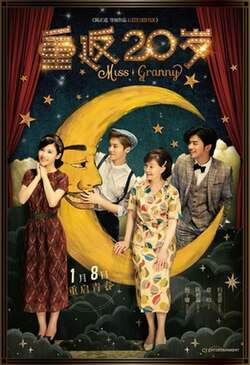
Shen Meng Jun is a crotchety, prideful 70-year-old widow who constantly finds fault with everyone around her. She takes pride in how she raised her son almost single-handedly, enduring poverty during the Cultural Revolution to shepherd him into a position as a professor at a prestigious university. Her nuanced love for her grandson Xiang Qian Jin, who dreams of becoming a musician, reveals a personal hunger—the dream of a life she herself could never realize. Meng Jun’s devotion to her grandson sits in quiet contrast with the sharper disdain she often shows toward her daughter-in-law, Yang Qin, and granddaughter Xin Ran, who openly challenge Meng Jun’s demeanor and the way she treats her own mother. The pressure of these tensions culminates in Yang Qin fainting, a moment that becomes a catalyst for a family decision: Meng Jun should leave the household and enter a nursing home.
Feeling abandoned and forlorn, Meng Jun wanders the streets and stumbles upon a photo studio where she impulsively decides to have one last portrait taken. It is there, in a moment that feels almost lit by fate, that she experiences a startling reversal of time: she is suddenly back in her 20s. This remarkable turn of events grants her a magical second chance at youth, and she adopts a new identity: Meng Li Jun. The transformation is not just physical but also existential, as she contemplates what it means to be young again and to pursue possibilities that once seemed out of reach.
With her new life carved out, Meng Li Jun resolves to keep the change a secret from those who might not understand or accept it. She moves into a modest room, renting from her trusted friend and former loyal servant, Li Dahai. The arrangement provides a stable base from which she can explore this second youth while quietly watching the world she left behind. Her days take on a new texture as she navigates the dynamics of Dahai’s circle and the rhythms of ordinary street life, now seen through the fresh lens of youth.
The plot thickens when Meng Li Jun accompanies Dahai to a local senior recreation center, a place where age and vitality mingle in surprising ways. It is there that she encounters a longtime rival, a flirtatious senior woman whose approach to life and performance provides a sharp contrast to Meng Li Jun’s own approach. In a bold and electrifying moment, the two women engage in an epic singing battle. Li Jun’s voice carries with it a charisma and warmth that win over the crowd, and she rises to the occasion in a way that feels both earned and exhilarating. The audience is swept up by her performance, and the moment is a clear turning point: Meng Li Jun has not only proven that she still has power on stage, but also that her youth has awakened a sense of possibility she thought she had left behind.
As the crowd cheers, the film hints at a new door opening for Li Jun. A music director enters the scene, drawn by the verve and sincerity of her voice, and offers her a chance of a lifetime. The encounter signals the beginning of a new chapter—one where a woman who once faced the limits of aging and circumstance might finally pursue a dream with renewed purpose. The narrative invites viewers to consider how a single choice, made at the intersection of memory and reinvention, can reshape a life and alter relationships with the people who matter most.
Throughout this journey, the story stays grounded in its intimate, human core. It explores how pride, forgiveness, and longing intersect with the unpredictable spell of youth, and it asks what it means to seize an opportunity when time itself seems to bend. Meng Li Jun’s voyage from a fraught elder to a vibrant young performer offers a thoughtful meditation on identity, family, and the enduring pull of music as both art and salvation.