Plot Explained Spoilers guaranteed!
Plot Explained

Browse by genre

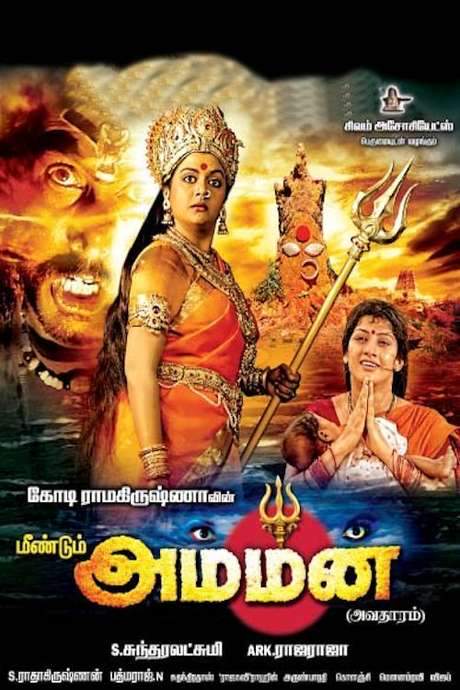
Avatharam (2014) movie poster

Timeline

Avatharam (2014) Timeline Explained – Every Event in Order

Release, runtime and language
2014 · 130 mins · Telugu
Directed by
Kodi Ramakrishna
Starring
Prudhviraj, Annapoorna, Satya Prakash, Richard Rishi, Bhanupriya, Radhika Kumaraswamy

When Karkotakudu, a monster, attempts to destroy Earth to take control of the planet, Rajeshwari, a devotee of Goddess Akkamma, decides to fight the behemoth.

On this page (4)
  1. 1 Events in order (12)
  2. 2 Timeline questions answered
  3. 3 Movie threads
  4. 4 Every angle

12 events in order · contains spoilers

Avatharam Timeline: Events in Chronological Order

Every key event of Avatharam (2014) in order, scene by scene, with when and where it takes place. Use it to untangle flashbacks, time jumps and parallel storylines, to refresh your memory before the sequel or to find the exact scene you are thinking of.

  1. Simha Rashi birth and devotion to Akkamma

    Rajeshwari is born under the Simha Rashi zodiac and develops a deep, unwavering faith in Goddess Akkamma from an early age. Her belief shapes her choices and sets her on a path tied to cosmic balance. Her childhood promises a larger destiny that the film will unfold.

    When
    Birth
    Where
    Earth
  2. Karkotakudu lands on Earth to destroy it

    A demon named Karkotakudu arrives with destructive intent, triggering a cosmic crisis. The backstory explains that to protect the world, Goddess Akkamma must expose herself to arrest by a supernatural force. The looming threat frames the rest of the narrative.

    When
    Prologue
    Where
    Earth
  3. Akkamma's arrest to maintain balance

    To preserve universal balance, Akkamma must undergo arrest by a supernatural element. The only way this can be achieved is through the sacrifice of a Simha Rashi-born individual. This backstory sets Rajeshwari on a destiny linked to sacrifice.

    When
    Backstory
    Where
    Cosmic balance / Temple
  4. Rajeshwari can kill Karkotakudu

    It is revealed that Karkotakudu can be killed by Rajeshwari, which prompts the demon to repeatedly threaten her life. Her unique power becomes the focal point of Karkotakudu's attempts to eliminate her. The tension drives the central conflict.

    When
    Ongoing threat
    Where
    Earth
  5. Marriage to Prasad and mistreatment

    Rajeshwari marries Prasad, heir to a wealthy family who treats him badly and drugs him to siphon his wealth. The cruel family dynamic introduces the first major external obstacle to her life. Despite this, Rajeshwari's divine nature begins to reveal itself.

    When
    Early marriage
    Where
    Wealthy family home
  6. Rajeshwari protects Prasad and grows in divinity

    Rajeshwari shields Prasad from his family's evil deeds and, through these trials, her divine powers expand. She uses her strength to safeguard him and slowly rises as a protective, virtuous force in the household. Her steadfast love deepens the bond between them.

    When
    After marriage
    Where
    Prasad's family home
  7. Rajeshwari becomes a mother

    Rajeshwari gives birth to a child, bringing new hope into the household. The motherhood strengthens her resolve to confront the surrounding darkness. Her role as a mother intertwines with her spiritual mission.

    When
    Post-birth
    Where
    Prasad's home
  8. Karkotakudu's final assault; Akkamma intervenes

    Karkotakudu makes one last powerful attempt to kill Rajeshwari, and Akkamma appears in human form to rescue her. The confrontation tightens the narrative and tests Rajeshwari's faith. The scene underscores the personal stakes of the cosmic struggle.

    When
    Final confrontation
    Where
    Rajeshwari's home
  9. Sarpa-matsya dosha and its erasure

    Prasad suffers sarpa-matsya dosha due to the demon's influence, and Rajeshwari, with Akkamma's help, eradicates it. The episode highlights the magical remedies that shape the healing arc of the story. It also showcases Rajeshwari's competence in protecting her husband.

    When
    After assault
    Where
    Prasad's home
  10. Child killed; villagers mislead about Rajeshwari

    The family forcibly kills the child and then misleads the villagers to blame Rajeshwari for the tragedy. The community's perception turns against her, amplifying her sense of isolation. The misdirection deepens the central injustice she faces.

    When
    After birth
    Where
    Village / family home
  11. Exile and widow symbolism

    The evil family drives Rajeshwari out, removing kumkuma and mangalsutra and forcing her to wear white to symbolize widowhood. This marks a deep fall from grace despite her innocence and unwavering love. She becomes socially rejected as the world around her turns against her.

    When
    Exile
    Where
    Family home
  12. Final sacrifice and rebirth as Narasimhi

    With Akkamma under arrest, the Simha Rashi must sacrifice itself to restore balance. Other goddesses donate symbols of marriage to reinstate Rajeshwari's status, and she leaps into the sacred fire, transforming into Narasimhi and killing Karkotakudu. The arrest ends, Akkamma's child is revealed alive, and Prasad recovers as the couple begins anew.

    When
    Final battle
    Where
    Sacred Fire / Temple

Last updated: October 09, 2025 at 16:05

Was this helpful?

Timeline questions answered

Avatharam Timeline Explained: Your Questions Answered

When does it happen, and why in that order? The questions people ask about the chronology of Avatharam (2014): time jumps, flashbacks, cause and effect between scenes and the correct order of events, each answered with spoilers.

Q1

Why does Rajeshwari have the power to kill Karkotakudu?

Rajeshwari was born under the Simha Rashi zodiac sign, which gives her the unique ability to defeat Karkotakudu. This is why the demon repeatedly attempts to kill her throughout the film. Her zodiac sign is the only thing that can break Akkamma's arrest and destroy the demon.

Foreshadowing: The film's opening establishes Rajeshwari's zodiac sign as her defining trait that sets her on her destined path.

  • simha rashi
  • karkotakudu
  • rajeshwari power
  • demon killing
Q2

Why does Goddess Akkamma need to be under arrest?

Akkamma voluntarily undergoes supernatural arrest to protect the world from Karkotakudu. This arrest can only be lifted when a person born under Simha Rashi sacrifices themselves in fire. The cosmic balance requires this sacrifice to restore Akkamma's freedom and grant her the power to defeat the demon.

Foreshadowing: The backstory at the film's opening explains this cosmic mechanism that drives the entire narrative.

  • akkamma arrest
  • cosmic balance
  • sacrifice
  • simha rashi fire
Q3

Why do Prasad's family force Rajeshwari to wear white and remove her kumkuma?

Prasad's cruel family removes Rajeshwari's kumkuma (vermilion) and mangalsutra (marriage necklace) and forces her to wear white, painting her as a widow. This is done to shame and exile her after they kill her child and spread false rumors blaming her for the tragedy. The removal of these symbols also weakens her spiritual protection, as these tokens represent her married status and the power of a wife's love.

Foreshadowing: Earlier in the film, the haldi and kumkuma are established as symbols of wifely protection that shield Prasad from harm.

  • kumkuma
  • mangalsutra
  • widow
  • white cloth
  • exile
Q4

How does Rajeshwari transform into Goddess Narasimhi?

Rajeshwari transforms into Narasimhi, the fierce feminine form of Lord Narasimha, by leaping into the sacred fire as the Simha Rashi sacrifice. Before she can complete the sacrifice, other goddesses restore her married woman status by returning her kumkuma, mangalsutra, red sari, and other symbols of marriage. This ritual reinstates her identity as a wife, allowing the sacrifice to be accepted and releasing Akkamma from arrest. The divine energy from the fire then transforms Rajeshwari into Narasimhi, giving her the power to defeat Karkotakudu.

Foreshadowing: Earlier scenes establish that the power of a wife's love and the marriage symbols provide spiritual protection.

  • narasimhi
  • transformation
  • fire sacrifice
  • goddess power
Q5

Is Rajeshwari's child really dead?

No, Rajeshwari's child is not actually dead. After Akkamma is released from arrest, she reveals that she protected the child and watched over him the entire time. The child is returned to the family, completing the emotional resolution of the story.

Foreshadowing: The film never shows the actual death on screen, and Akkamma's earlier intervention to save Rajeshwari hints at her protective nature.

  • child alive
  • akkamma reveals
  • returned child
Q6

What is sarpa-matsya dosha and why does Prasad get it?

Sarpa-matsya dosha is a mythical curse affecting Prasad that manifests due to Karkotakudu's demonic influence. It represents a spiritual affliction that weakens Prasad. Rajeshwari, with Akkamma's divine intervention, eliminates this dosha from her husband, showcasing her growing powers and protective role.

Foreshadowing: The dosha appears after Karkotakudu's assault, directly linking it to the demon's malevolent influence.

  • sarpa-matsya dosha
  • prasad curse
  • demonic influence
Q7

Why do other goddesses help restore Rajeshwari's marriage symbols?

Other goddesses donate their symbolic tokens, kumkuma, mangalsutra, red sari, jasmine, rings, kohl, toe rings, necklaces, and bangles, to restore Rajeshwari's identity as a married woman. This is necessary because the sacrifice of a widow is not accepted by the cosmic powers. Only a married woman's sacrifice can break Akkamma's arrest, so the goddesses collectively re-anchor Rajeshwari's wife status before she enters the fire.

Foreshadowing: Earlier, the removal of these symbols is shown to weaken Rajeshwari's spiritual protection.

  • marriage symbols restored
  • goddess help
  • wife sacrifice accepted
Q8

Why does Prasad's family drug him and mistreat him?

Prasad's family is cruel and manipulative. They drug him to control him and steal his inheritance as the heir to a wealthy family. Their motive is purely financial, they want to seize his wealth rather than let him enjoy it. This explains why they oppose Rajeshwari and ultimately plot against her.

Foreshadowing: The marriage introduces the family conflict early, establishing their greedy nature from the start.

  • prasad drugged
  • family greed
  • inheritance theft
Q9

How is Karkotakudu finally defeated?

Karkotakudu is defeated when Rajeshwari, after being restored as a married woman through the goddess symbols, sacrifices herself in the sacred fire. This sacrifice breaks Akkamma's arrest and transforms Rajeshwari into Goddess Narasimhi. The divine power of Narasimha, channeled through Rajeshwari, destroys the demon permanently.

Foreshadowing: The film establishes early on that only Rajeshwari can kill Karkotakudu, making this outcome inevitable.

  • karkotakudu defeated
  • narasimhi power
  • demon destroyed
Q10

Why do the villagers believe Rajeshwari killed her own child?

Prasad's villainous family forcibly kills the child and then spreads false rumors throughout the village blaming Rajeshwari for the tragedy. Under Karkotakudu's influence, they label her as bad luck, turning the community against her. This conspiracy leads to her exile from the village.

Foreshadowing: The family's earlier cruelty and manipulation set the stage for this framing.

  • village rumors
  • child death blamed
  • rajeshwari framed

Movie threads

More Movies Like Avatharam, by Mood & Story

Curated lists built around what makes Avatharam tick: the same mood, the same kind of story or the same emotional payoff. Each list explains why these movies belong together.

Movies like Avatharam about triumphant faith

Stories where unwavering faith overcomes immense supernatural evil and earthly despair. If you liked Avatharam for its story of a devout woman defeating a cosmic demon, you'll find similar movies here. These films feature epic battles between good and evil, where faith and sacrifice lead to a hopeful, triumphant ending against overwhelming supernatural forces.

  • mythological
  • devotional
  • intense
  • hopeful
  • spiritual
  • tragic
  • Tone: dark, hopeful
  • Pacing: steady, building
Why these movies?

The story pattern: These narratives typically follow a righteous but tested individual who confronts a powerful supernatural antagonist. The protagonist endures severe earthly hardships and personal tragedies that strengthen their resolve, culminating in a climactic, often miraculous, confrontation where their faith directly translates into victory.

Why they belong together: Movies in this thread share a core pattern of devout protagonists overcoming apocalyptic evil through spiritual strength. They blend high-intensity drama with dark fantasy, maintaining a steady pace that builds towards a cathartic and happy resolution, making the emotional weight feel meaningful rather than bleak.

Mythological martyrdom stories similar to Avatharam

Heroic figures endure brutal betrayal and sacrifice to be reborn as divine avengers. For viewers who enjoyed Avatharam's arc of wrongful suffering leading to divine power, this section finds movies with similar narrative patterns. These films feature protagonists who endure profound betrayal and loss, culminating in a dramatic rebirth and victory.

  • tragic
  • oppressive
  • hopeful
  • mythological
  • intense
  • resurrection
  • Tone: oppressive, tragic, hopeful
  • Pacing: steady, methodical
Why these movies?

The story pattern: The narrative arc involves a virtuous character being brutally tested by both supernatural foes and human betrayal. They experience a 'death'—either literal, symbolic, or social—which serves as a crucible. From this nadir, they are resurrected with enhanced power or purpose to confront and defeat their tormentors.

Why they belong together: These films are grouped by their shared focus on the martyr-hero archetype. They combine dark, oppressive themes of injustice with a strong undercurrent of spiritual hope. The pacing is steady, methodically building the protagonist's suffering to make their subsequent resurrection and victory feel earned and cathartic.

Every angle

Avatharam (2014) Explained: Plot, Timeline & Characters

Everything about Avatharam in one place: what happens in the plot summary, the timeline in chronological order, the characters and meaning and a spoiler-free summary. What's After the Movie adds the cast, box office and post-credit scenes.

Coming soon on iOS and Android

The Plot Explained Movie Summary App

Plot summaries, endings explained and timelines on your phone. Catch up on any movie in minutes, save your favorites and never miss a twist again.

Be the first to know when we launch. Your email stays private, always.

Learn more about the app