





Plot Explained Spoilers guaranteed!
Plot Explained

Browse by genre

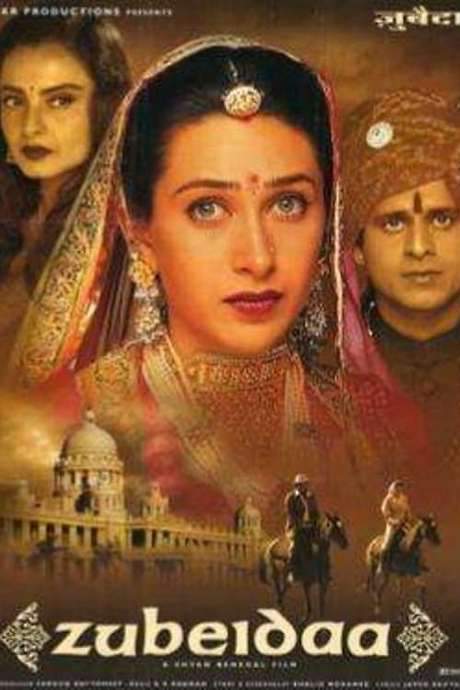
Zubeidaa (2001) movie poster

Characters & Themes

Zubeidaa (2001) Characters, Setting & Themes Explained

Release, runtime and language
2001 · 150 mins · Hindi
Directed by
Shyam Benegal
Starring
Surekha Sikri, Lillete Dubey, Rajit Kapoor, Harish Patel, Seema Bhargava, Shakti Kapoor

Zubeidaa, a determined Muslim actress, agrees to become the second wife of a Hindu prince, hoping to secure her future. The marriage thrusts her into a realm of royal expectations and cultural tension, and her strained relationship with the prince, combined with her inner turmoil, drives her toward a desperate decision that ends in tragedy for everyone involved.

On this page (8)
  1. 1 Where to watch
  2. 2 Characters explained (7)
  3. 3 Where & when it takes place
  4. 4 Themes & meaning (5)
  5. 5 Character & meaning questions
  6. 6 Movie threads
  7. 7 Movies like Zubeidaa
  8. 8 Every angle

Where to watch

Where to Watch Zubeidaa (2001)

Where can you watch Zubeidaa? Stream, rent or buy it in the US, including on Brew, Plex and Tubi TV: current JustWatch availability with up-to-date prices.

Streaming availability powered by JustWatch

7 main characters · contains spoilers

Zubeidaa Characters Explained: Who Is Who

The main characters of Zubeidaa (2001), heroes and villains: what drives them, how they change over the course of the story and what each of them reveals about the film's bigger ideas.

  • Fayyazi (Surekha Sikri)

    Riyaz’s maternal grandmother, a steadfast keeper of family memory. She blends warmth with a firm sense of tradition, guiding her grandson on a careful path to understanding his mother. Her quiet resilience keeps the family history intact, even as it becomes emotionally complicated. Through her, the film foregrounds memory, loyalty, and the endurance of love across generations.

    • 👵 Family
    • 🧠 Memory
    • 🎭 Art
    • 🏛️ Royalty
  • Zubeidaa (Karisma Kapoor)

    Daughter of Suleiman Seth who hides her film work and navigates an imposed marriage for family propriety. Her life unfolds between duty and a personal passion for acting, culminating in a dangerous romance with Vijendra Singh. She embodies the struggle for artistic expression within a rigid social system. Her choices reveal the costs and courage of choosing her own path.

    • 🎬 Film
    • 🎭 Actress
    • ❤️ Love
    • 🧭 Identity
  • Raja Vijendra Singh (Manoj Bajpayee)

    Maharaja of Fatehpur whose courtly life is entangled in politics and propriety. His romance with Zubeidaa challenges palace conventions and highlights the fragility of personal happiness within monarchical duties. He embodies the conflict between desire and governance, where love can threaten political alliances. His choices illuminate the human cost of ruling a ceremonial realm.

    • 👑 Royalty
    • 💘 Forbidden love
    • 🏛️ Court politics
  • Mandira Devi (Rekha)

    The queen and Vijendra Singh’s wife, a figure who wields memory and influence in the palace. She embodies both strength and constraint, safeguarding her own status while confronting cultural expectations. Her perspective on Zubeidaa’s life provides a protective, sometimes ambiguous counterpoint to the public narrative. Her presence frames the balance of loyalty, duty, and legacy in the royal circle.

    • 👑 Royalty
    • 🧭 Duty
    • 💔 Heartbreak
  • Suleiman Seth (Amrish Puri)

    Zubeidaa’s father, a filmmaker who secretly champions art but publicly upholds patriarchal control. His influence over his daughter’s life and career catalyzes the central conflict between creative freedom and social expectation. The tension between artistic passion and familial authority drives much of the drama. His actions set in motion the events that reshape the family’s destiny.

    • 🎬 Filmmaker
    • 🧭 Patriarchy
    • 📜 Legacy
  • Riyaz Masud (Rajit Kapoor)

    Zubeidaa’s son, who grows up under his grandmother’s care and embarks on a patient, painful quest to know his mother. His journey to Fatehpur to uncover truth leads to conflicting testimonies and memories. He becomes the narrative’s moral center, balancing memory, love, and the burden of truth. His persistence ultimately reveals the resilience of maternal memory.

    • 🌟 Narrator
    • 🧭 Discovery
    • 📚 Memory
  • Uday Singh (Rahul Singh)

    The brother-in-law who pushes for his own desires and tests the limits of palace propriety. His scheming highlights the undercurrents of ambition within the royal circle. He represents the disruptive force that challenges the established order and complicates relationships. His actions contribute to the tension between personal ambition and duty.

    • 🧭 Duty
    • 💡 Ambition
    • ⚖️ Power

Last updated: October 03, 2025 at 10:18

Was this helpful?

Setting

Where and When Does Zubeidaa Take Place?

The setting of Zubeidaa (2001): the year and time period, the places and locations, and how they shape the characters, the mood and the tension of the story.

Time period

1930s-1940s

The narrative unfolds in the late colonial era, a time when traditional royal privilege coexisted with growing calls for modernity. Arranged marriages and dynastic duties dominate social life, while art and personal ambition begin to test the boundaries of convention. Public life and private desire collide as the era’s politics and social change press in on the palace. The period setting frames the characters' choices and the costs of pursuing passion.

Location

Fatehpur Palace, Fatehpur, India

The story centers on Fatehpur Palace, a grand seat of power where court life, ceremonial duty, and dynastic politics shape every choice. The palace atmosphere embodies tradition, strict codes, and public scrutiny that constrain personal longing. Outside the walls, the surrounding city and court politics ripple through the lives of Zubeidaa, Vijendra Singh, and their families.

  • 👑 Royalty
  • 🏛️ Palace
  • 🗺️ History

Last updated: October 03, 2025 at 10:18

Was this helpful?

5 major themes

Zubeidaa Meaning: Themes & Message Explained

What is Zubeidaa (2001) really about? The emotional, social and philosophical themes the film keeps returning to, its symbolism and the message beneath the surface.

  • Love vs Duty

    Love and duty sit at the heart of the drama, forcing characters to choose between personal happiness and social obligation. Zubeidaa’s romance with Vijendra Singh challenges the palace’s strict codes and questions the price of自由. The narrative tracks how power structures shape intimate decisions, often leaving love to contend with public judgment. This theme probes whether true fulfillment can exist within rigid traditions.

  • Memory & Secrets

    Riyaz’s quest to know his mother uncovers contested histories and hidden chapters of the past. The grandmother’s memories coexist with silences and selective retellings that complicate the truth. Journals and recovered traces threaten to rewrite family mythology and reveal what the public never saw. The tension between remembrance and erasure drives the film’s emotional core.

  • Art & Autonomy

    Zubeidaa’s artistic talent becomes a beacon of autonomy in a restrictive world. Her secret pursuit of acting challenges patriarchal controls and public stereotypes. The cinema becomes both a personal outlet and a political act, shaping identity and social perception. The narrative reveals how art can resist confinement and redefine a woman’s life on her own terms.

  • Power & Gender in Court

    Palace politics reveal how gender and status govern every decision, from marriages to loyalties. Suleiman Seth’s authority and Mandira Devi’s position demonstrate the complex web of influence that keeps the royal system intact. The story critiques traditional power dynamics while acknowledging the social fabric that sustains them. Personal desires collide with dynastic duty in a world where reputation rules.

  • Cinema as Truth

    The film within the film becomes a testament to unshackled truth, preserving Zubeidaa’s voice beyond history’s margins. The missing tape symbolizes memory’s fragile yet enduring power to validate a life lived for art. As Riyaz uncovers the past, cinema emerges as a witness to what was silenced. The ending suggests that storytelling can redeem a life that society chose to overlook.

Last updated: October 03, 2025 at 10:18

Was this helpful?

Character & theme questions

Zubeidaa Characters & Meaning: Your Questions Answered

The questions people ask about Zubeidaa (2001): who the characters really are, their relationships, what the symbols mean, where it takes place and what the movie is really about. Each answer contains spoilers.

Q1

Where is the story set?

The film takes place primarily at Fatehpur Palace, a grand royal residence in Fatehpur, India. This ornate palace serves as both a seat of power and a restrictive world where court life, ceremonial duty, and dynastic politics shape every character's choices. The contrast between the palace's public grandeur and private suffocation defines the story's emotional landscape.

  • fatehpur palace
  • royal court
  • indian palace
  • setting
Q2

When does the movie take place?

The narrative unfolds during the late colonial era, specifically the 1930s-1940s, a period when traditional royal privilege coexisted with growing calls for modernity. This historical context frames the characters' impossible choices, arranged marriages and dynastic duties dominate social life while art and personal ambition begin to challenge conventional boundaries.

  • 1930s
  • 1940s
  • colonial era
  • historical period
  • india
Q3

Who is Zubeidaa?

Zubeidaa is the film's protagonist, a talented Muslim actress who secretly pursues a career in film while navigating an imposed marriage to a Hindu prince. Daughter of filmmaker Suleiman Seth, she embodies the struggle between artistic expression and social conformity, ultimately choosing a dangerous romance that challenges the palace's strict codes.

  • zubeidaa
  • karisma kapoor
  • actress
  • protagonist
Q4

Who is Vijendra Singh?

Vijendra Singh is the Maharaja of Fatehpur, whose courtly life is entangled in politics and propriety. His romance with Zubeidaa directly challenges palace conventions and highlights the fragility of personal happiness within monarchical duties. He represents the conflict between desire and governance, where love can threaten carefully maintained political alliances.

  • vijendra singh
  • manoj bajpayee
  • maharaja
  • prince
Q5

What is the central theme of love versus duty?

Love and duty sit at the heart of the drama, forcing characters to choose between personal happiness and social obligation. Zubeidaa's romance with Vijendra Singh challenges the palace's strict codes and questions the price of freedom. The narrative explores how power structures shape intimate decisions, often leaving love to contend with public judgment and whether true fulfillment can exist within rigid traditions.

  • love
  • duty
  • sacrifice
  • tradition
  • choice
Q6

How does the film explore art and autonomy?

Zubeidaa's artistic talent becomes a beacon of autonomy in a restrictive world. Her secret pursuit of acting challenges patriarchal controls and public stereotypes about women's proper roles. Cinema becomes both a personal outlet and a political act, allowing her to shape her identity and social perception on her own terms, even as it leads to tragic consequences.

  • acting
  • cinema
  • autonomy
  • freedom
  • art
  • patriarchy
Q7

How does the film portray power and gender in the royal court?

Palace politics reveal how gender and status govern every decision, from marriages to loyalties. Suleiman Seth's authority over his daughter and Mandira Devi's position as queen demonstrate the complex web of influence that maintains the royal system. The story critiques traditional power dynamics while acknowledging the social fabric that sustains them, where personal desires collide with dynastic duty.

  • royal court
  • gender
  • power
  • palace politics
  • patriarchy
Q8

What role does memory play in the story?

Riyaz's quest to know his mother uncovers contested histories and hidden chapters of the past. The grandmother's memories coexist with silences and selective retellings that complicate the truth. Journals and recovered traces threaten to rewrite family mythology and reveal what the public never saw, exploring the tension between remembrance and erasure.

  • memory
  • secrets
  • family history
  • journals
  • past
Q9

How is cinema used as a metaphor in the film?

The film within the film becomes a testament to unshackled truth, preserving Zubeidaa's voice beyond history's margins. The missing tape symbolizes memory's fragile yet enduring power to validate a life lived for art. As Riyaz uncovers the past, cinema emerges as a witness to what was silenced, suggesting that storytelling can redeem a life that society chose to overlook.

  • cinema
  • truth
  • film
  • memory
  • legacy
  • storytelling
Q10

Who is Riyaz and what is his journey?

Riyaz Masud is Zubeidaa's son, who grows up under his grandmother Fayyazi's care and embarks on a painful quest to uncover his mother's true story. His journey to Fatehpur leads to conflicting testimonies and memories that he must carefully navigate. He becomes the narrative's moral center, balancing memory, love, and the burden of revealing truth.

  • riyaz
  • son
  • investigation
  • truth
  • memory
Q11

Who is Mandira Devi?

Mandira Devi is the queen and Vijendra Singh's wife, portrayed by Rekha. She wields memory and influence within the palace, embodying both strength and constraint. She safeguards her own status while confronting cultural expectations about royal loyalty and duty. Her perspective on Zubeidaa's life provides a complex, sometimes ambiguous counterpoint to the public narrative.

  • mandira devi
  • rekha
  • queen
  • palace
  • rival
Q12

What cultural tensions arise from the marriage?

The marriage between Zubeidaa, a Muslim actress, and Vijendra Singh, a Hindu prince, creates significant cultural tension. Her role as a second wife thrusts her into a world of royal expectations and religious difference. The union highlights the-era's complex social dynamics where personal choice collides with community expectations and the rigid boundaries of religious and class identity.

  • interfaith marriage
  • cultural tension
  • religion
  • muslim
  • hindu
  • royal

Movie threads

More Movies Like Zubeidaa, by Mood & Story

Curated lists built around what makes Zubeidaa tick: the same mood, the same kind of story or the same emotional payoff. Each list explains why these movies belong together.

Melancholic tragic romance movies like Zubeidaa

Stories of love overshadowed by societal pressure and inevitable sorrow. Explore movies like Zubeidaa that delve into tragic love stories constrained by societal norms. If you were moved by the poignant and bittersweet romance in Zubeidaa, you'll find similar films about doomed relationships and the heavy cost of love against tradition.

  • melancholic
  • tragic
  • poignant
  • oppressive
  • nostalgic
  • lonely
  • Tone: melancholic, tragic, poignant
  • Pacing: slow, contemplative
Why these movies?

The story pattern: The narrative typically follows a passionate but ill-fated love affair, where external forces—like royal customs, patriarchy, or family honor—create an oppressive atmosphere. The story builds slowly towards a tragic climax, often involving death or profound loss, leaving a lingering sense of melancholy and what could have been.

Why they belong together: These films are grouped by their shared tone of deep melancholy, heavy emotional weight, and bittersweet endings. They prioritize mood and emotional resonance over plot twists, creating a contemplative and deeply moving experience centered on love, sacrifice, and memory.

Movies about memory and identity search like Zubeidaa

Characters piecing together a fractured past to understand themselves. Discover films similar to Zubeidaa that feature a character's quest to uncover the truth about a mysterious past. If you enjoyed the reflective journey and piecing together Zubeidaa's story through her son's investigation, you'll appreciate these narratives about memory, truth, and searching for identity.

  • reflective
  • introspective
  • nostalgic
  • search for truth
  • emotional discovery
  • fractured memory
  • Tone: reflective, introspective, bittersweet
  • Pacing: slow, deliberate
Why these movies?

The story pattern: These stories often employ a dual timeline, alternating between a present-day investigation and flashbacks to the past. The protagonist, usually a relative or someone connected to the central figure, acts as a detective of emotions, sifting through subjective memories and artifacts to reconstruct a life and find closure.

Why they belong together: The unifying element is the narrative structure and thematic focus. They share a slow, deliberate pacing that matches the thoughtful nature of the quest, a moderate complexity from weaving two timelines, and a deeply reflective, introspective mood that prioritizes emotional truth over action.

If you liked this

Movies Like Zubeidaa

Similar movies to Zubeidaa: the same genre, themes or kind of story. Each one comes with its own plot summary, timeline and ending explained.

Browse all movie summaries

Every angle

Zubeidaa (2001) Explained: Plot, Timeline & Characters

Everything about Zubeidaa in one place: what happens in the plot summary, the timeline in chronological order, the characters and meaning and a spoiler-free summary. What's After the Movie adds the cast, box office and post-credit scenes.

Coming soon on iOS and Android

The Plot Explained Movie Summary App

Plot summaries, endings explained and timelines on your phone. Catch up on any movie in minutes, save your favorites and never miss a twist again.

Be the first to know when we launch. Your email stays private, always.

Learn more about the app