Plot Explained Spoilers guaranteed!
Plot Explained

Browse by genre

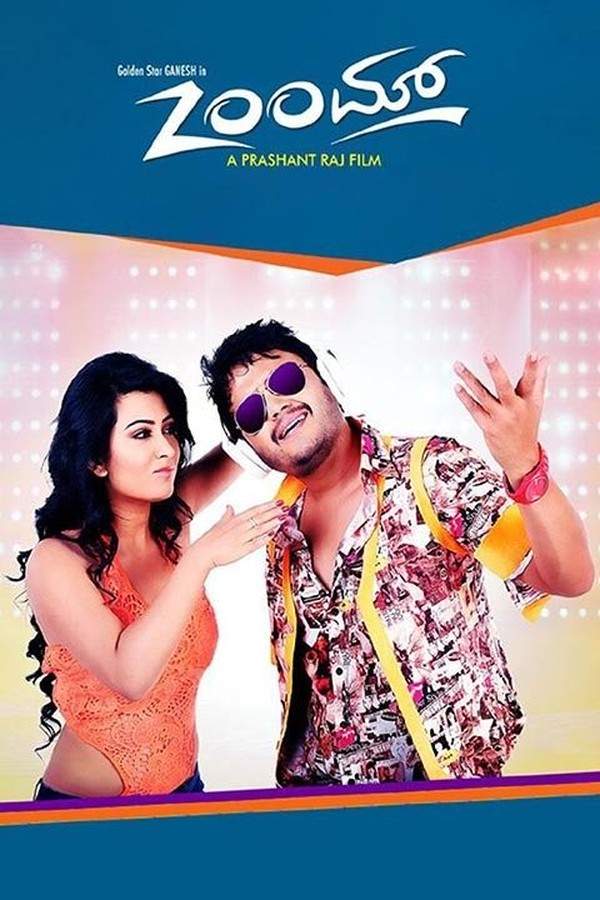
Zoom (2016) movie poster

Plot Summary

Zoom (2016) Plot Summary Explained

Release, runtime and language
2016 · 96 min · Kannada
Loading streaming availability…
Directed by
Pedro Morelli

Two people with very different personalities and viewpoints unexpectedly find themselves drawn to each other. Their evolving relationship is filled with comical misunderstandings and touching moments as they learn to appreciate and overcome their differences, ultimately forging a strong and unexpected connection.

On this page (6)
  1. 1 Where to watch
  2. 2 What happens: full plot
  3. 3 Plot questions answered
  4. 4 Movie threads
  5. 5 Movies like Zoom
  6. 6 Every angle
Loading streaming availability…

Full plot summary · contains spoilers

What Happens in Zoom: Full Plot Summary

The whole story of Zoom (2016) explained, from the opening scene to the final frame: every key event, every twist and what it all adds up to. Read it as a quick recap before the sequel, to check a scene you missed, or to finally understand what really happened.

The film unfolds as a rich, metafictional tapestry that sits at the crossroads of three distinct creative lives, each living in a separate reality yet actively shaping the others. It presents a layered interface where a comic artist, a novelist, and a film director each author a version of one another, blurring lines between imagination, flesh, and cinema. This is not a single story so much as a conversation between worlds, where control and vision travel across mediums as characters debate, undermine, or reinforce one another.

In one thread, the artist is Emma Boyles, a graphic storyteller who labor fascinates the mind as much as the body. Working in a sex doll factory in Toronto, she harbors a private and intimate fantasy about having larger breasts. She pursues augmentation, hoping to become the version of herself she imagines on the page. However, the procedure leaves her unsettled, and the promised transformation proves elusive, feeding a sense of regret and disquiet that reverberates through her creative work. As her personal body story collides with the hallucinated panels of her comic book, the boundaries between reality and representation begin to crumble. Emma’s frustration with being unable to control her own body becomes a catalyst that drags her and her friend Bob into increasingly dangerous territory—where drug deals and shootouts intrude on their daily lives, complicating everything she thought she understood about power, agency, and consequence. The more her drawings influence her world, the more the line between creator and character dissolves, leaving Emma to navigate a maze where choices in one realm ripple across all others.

Meanwhile, the film’s second axis follows Edward Deacon, a successful action movie director who aspires to pivot toward arthouse cinema even as he has long relied on his sexual charisma to bend circumstances to his will. Edward’s career is defined by momentum—fast cuts, high stakes, and the swagger of a man who can command scenes and bodies alike. Yet Emma’s evolving frustration and the implications of her comics begin to seep into his projects. In a provocative turn, Emma’s graphic storytelling literalizes inside his world when she uses her craft to alter the content of his film alongside his desire for control—specifically, in her comic book she changes the scale of Edward’s own persona, dramatically reducing the symbolic power of his body. This act destabilizes the movie he’s trying to marshal, provoking a slide from auteur intent into mounting studio interference. The more Edward tries to preserve his cinematic integrity, the more his control erodes, revealing how the pressures of production and the pressures of desire can rewrite a director’s own vision.

On the third axis, there is Michelle, a model who is also climbing the ladder of fiction as a novelist. Her goal is to establish herself in the literary world, but she discovers that the film about her life—being built by Edward and populated by Emma’s drawings—has become a living thing that doesn’t always honor her voice. As Edward’s movie about Michelle shifts toward a traditional Hollywood blockbuster, her ability to write feels compromised; the characters she creates in her pages begin to act with a vitality that complicates her original intentions. Michelle’s attempts to steer Emma’s story back toward coherence grow increasingly adventurous and improbable, as if every quiet moment of prose is pulled into a louder, more sensational television or cinema cadence. The friction between authentic authorship and mass-market spectacle becomes a central tension, forcing Michelle to contend with how much of her narrative still belongs to her when external forces start rewriting the plot from the outside in.

Together, these three threads form a dense, interlocking web where each creator’s act of making a story becomes the material for another. The film treats reality as something negotiable, mediated by the pages of a comic, the chapters of a novel, and the takes of a director’s camera. Characters attempt to shape not only their own destinies but the destinies of the others, creating a continuous feedback loop where invention affects reality and vice versa. The result is a contemplative, multi-dimensional experience that stays grounded in human emotion—desire, frustration, and the longing for control—while exploring how art can both illuminate and complicate the lives it seeks to repurpose.

If you’re drawn to stories about how creators influence reality, this film offers a patient, thoughtful exploration of power dynamics across three art forms. It invites you to notice how small changes in one medium can cascade into large, sometimes destabilizing shifts in another, all while maintaining a steady, even-handed tone that remains curious rather than sensational. The narrative never simplifes its questions; instead, it deepens them, inviting audiences to consider what it means for art to govern life—and for life to govern art—in a world where the lines between authors and characters are perpetually in flux.
Last updated: February 24, 2026 at 14:18

Was this helpful?

Plot questions answered

Zoom Plot Explained: Your Questions Answered

The questions people ask most about Zoom (2016): what happens in the confusing scenes, why the characters do what they do, the twists, hidden details and what the ending means. Each answer contains spoilers.

Q1

Why does Emma regret getting breast implants?

Emma undergoes breast augmentation hoping to become the version of herself she imagines in her comic book panels. However, the procedure leaves her feeling unsettled and unable to control her own body. The promised transformation fails to materialize emotionally, and she experiences regret that reverberates through her creative work, fueling her frustration throughout the film.

Foreshadowing: Earlier, Emma fantasizes about having a different body while working at the sex doll factory, foreshadowing her decision to pursue surgery.

  • emma breast implants
  • body image
  • regret
  • surgery
Q2

How does Emma's comic book affect Edward in real life?

In her comic book, Emma dramatically reduces the size of Edward Deacon's penis as a symbolic act of retaliation against male power and control. This fictional alteration literally crosses into Edward's reality, destabilizing his cinematic projects and contributing to his loss of artistic control. The act represents her frustration with lacking agency over her own body.

Foreshadowing: Emma's growing frustration with her own body image directly fuels the aggressive way she portrays Edward in her comic.

  • emma comic
  • edward
  • penis reduction
  • metafiction
Q3

Why do drug deals and shootouts appear in Emma's normal life?

As Michelle's novel plotting becomes increasingly dangerous and implausible, those fictional underworld elements begin bleeding into Emma's reality. Her friend Bob becomes entangled in drug deals and shootouts that mirror Michelle's extreme storytelling, demonstrating how one creator's fiction can directly impact another's physical reality.

Foreshadowing: The timeline shows Michelle's plotting 'spiraling into danger' before the consequences appear in Emma's world.

  • drug deals
  • bob
  • underworld
  • fiction bleeding into reality
Q4

What is the connection between Emma, Edward, and Michelle?

The three are creators who each author versions of one another across different mediums: Emma is a comic artist, Edward is a film director, and Michelle is a novelist. Emma draws characters inspired by Edward, Michelle writes about Emma, and Edward films a movie about Michelle. Their creative works continuously influence each other's realities, forming an interlocking feedback loop where authorship and characterhood blur.

Foreshadowing: The film establishes early on that all three are actively shaping each other's stories through their respective art forms.

  • emma
  • edward
  • michelle
  • creators
  • metafiction
  • three storylines
Q5

Why does Edward lose control of his movie?

Edward begins losing control of his film project because Emma's comic book depiction of him has crossed into reality, reducing his symbolic power and sexual charisma. As his personal authority erodes, studios sense weakness and impose mandated notes and commercial demands. The more he tries to preserve his artistic vision, the more his control unravels under industry pressure.

Foreshadowing: Emma's act of reducing his symbolic potency in her comic directly precedes his professional decline.

  • edward
  • lost control
  • studio interference
  • arthouse film
Q6

How does Michelle's novel influence Emma's story?

Michelle attempts to resolve Emma's storyline within her own novel, but her resolutions become increasingly improbable and chaotic. As Michelle's writing pulls toward Hollywood-style spectacle, Emma's reality becomes more dangerous and unpredictable. The more Michelle tries to control Emma's narrative, the more the boundaries between author and character dissolve.

Foreshadowing: The timeline shows Michelle's plotting becoming more dangerous before those elements manifest in Emma's world.

  • michelle novel
  • emma story
  • authorship
  • control
Q7

What does the ending mean for the three characters?

The film concludes with Emma, Michelle, and Edward recognizing they are co-authors of each other's stories. Each character has lost control over their own narrative while simultaneously gaining power over another's. The ending acknowledges that their combined creations define the shared world they inhabit, leaving the nature of their reality genuinely ambiguous.

Foreshadowing: Throughout the film, each character's attempts to control another directly lead to their own loss of control.

  • ending
  • ambiguous
  • resolution
  • three creators
  • shared fiction
Q8

Why does Emma target Edward in her comic book?

Emma targets Edward in her comic because her frustration with lacking control over her own body (after her regretted augmentation) manifests as aggression toward male power and sexual authority. Edward represents the type of man who uses sexual charisma to command control, so Emma uses her art as a tool to diminish that power symbolically.

Foreshadowing: Emma's dissatisfaction with her body and her job at the sex doll factory establish her resentment toward physical power dynamics.

  • emma
  • edward
  • revenge
  • comic book
  • power dynamics
Q9

How do the three separate realities in the film connect?

The three realities (Emma's Toronto, Edward's Hollywood, and Michelle's modeling world) interconnect through the characters' creative works. Emma's drawings appear in Edward's film sets, Michelle's novel plots manifest in Emma's streets, and Edward's camera captures scenes that influence Michelle's writing. The boundaries between imagination and reality continuously collapse as each creator's work feeds into the others.

Foreshadowing: The metafictional premise establishes early that each character exists within and shapes the others' creative worlds.

  • three realities
  • interconnected
  • boundaries
  • collapse
  • metafiction
Q10

Why does Michelle struggle to maintain control over her novel?

Michelle struggles because Edward's film about her life shifts toward Hollywood blockbuster format, overriding her literary intentions. Additionally, the characters she creates in her novel begin acting with vitality that complicates her original plans. As her writing gets pulled into a louder, more sensational cinematic cadence, her authentic authorship becomes compromised.

Foreshadowing: The tension between Michelle's literary ambitions and Edward's commercial filmmaking builds throughout the narrative.

  • michelle
  • novel
  • authorship
  • control
  • blockbuster
Q11

What role does body image play in the story?

Body image serves as a central theme through Emma's obsession with having larger breasts and her subsequent regret after augmentation. This personal insecurity drives much of her creative output and frustration. The film uses her physical transformation to explore feelings of powerlessness and the desire to control one's own form, which then extends into how she depicts male bodies in her comic.

Foreshadowing: Emma's fantasies about her body begin at the sex doll factory, establishing body image as an early concern.

  • body image
  • breast augmentation
  • insecurity
  • power
  • control
Q12

Why is the film called Zoom?

The title 'Zoom' likely references the dynamic movement between the three distinct realities and creative mediums. The narrative constantly 'zooms' between Emma's drawings, Michelle's prose, and Edward's film footage, with each transition representing a shift in perspective and creative authority. The title captures the film's thematic focus on how art can magnify, distort, or compress reality.

  • title
  • zoom
  • meaning
  • metafiction

Movie threads

More Movies Like Zoom, by Mood & Story

Curated lists built around what makes Zoom tick: the same mood, the same kind of story or the same emotional payoff. Each list explains why these movies belong together.

Meta-narrative movies with interconnected stories like Zoom

Where characters and creators blur the lines between different layers of story. If you enjoyed the layered realities and creator-character dynamics of Zoom, you'll like these movies. This list features films that play with metafiction, where stories-within-stories and the act of creation are central to the plot, perfect for viewers who like clever, structurally complex narratives.

  • metafictional
  • playful
  • introspective
  • clever
  • surreal
  • thought-provoking
  • Tone: whimsical, satirical, introspective
  • Pacing: variable, unpredictable
Why these movies?

The story pattern: These narratives typically revolve around a core concept of a creator and their creation, or multiple interconnected storylines that influence each other. The plot structure is often non-linear or nested, creating a puzzle-like experience where the viewer pieces together how the different layers of reality connect and collide.

Why they belong together: Movies in this thread share a fascination with the mechanics of narrative. They are grouped together because they all feature characters who are authors, artists, or protagonists aware of their own fictionality, leading to a unique blend of intellectual playfulness and thematic depth about identity and control.

Quirky character-driven comedies and dramas like Zoom

Eccentric characters navigating identity with humor and heart. For viewers who liked the quirky characters and exploration of identity in Zoom, this list highlights movies with a similar blend of comedy and depth. You'll find stories about eccentric individuals dealing with self-image and relationships in uniquely humorous and touching ways.

  • quirky
  • introspective
  • frustrated
  • playful
  • satirical
  • touching
  • Tone: quirky, playful, contemplative
  • Pacing: variable, character-driven
Why these movies?

The story pattern: The narrative follows characters with distinct, often awkward or obsessive personalities as they collide with the world or another person. The journey involves comedic friction, moments of connection, and a gradual, often ambiguous, evolution of self-understanding, rather than a traditionally tidy resolution.

Why they belong together: These films are united by their focus on quirky, deeply human characters who feel authentic in their imperfections. They share a tone that is both whimsical and thoughtful, using humor to explore serious themes of identity and insecurity without becoming overly heavy.

If you liked this

Movies Like Zoom

Similar movies to Zoom: the same genre, themes or kind of story. Each one comes with its own plot summary, timeline and ending explained.

Browse all movie summaries

Every angle

Zoom (2016) Explained: Plot, Timeline & Characters

Everything about Zoom in one place: what happens in the plot summary, the timeline in chronological order, the characters and meaning and a spoiler-free summary. What's After the Movie adds the cast, box office and post-credit scenes.

Coming soon on iOS and Android

The Plot Explained Movie Summary App

Plot summaries, endings explained and timelines on your phone. Catch up on any movie in minutes, save your favorites and never miss a twist again.

Be the first to know when we launch. Your email stays private, always.

Learn more about the app