Year: 1997
Runtime: 96 min
Language: English
Director: Steven Soderbergh
This quirky comedy presents a unique challenge to the audience, inviting them to piece together a story of mistaken identity and unconventional humor. The film blends linguistic puzzles with the complexities of office politics, creating a deliberately disorienting and playful narrative. It showcases the filmmaker's experimental style and reputation for pushing creative boundaries, offering a deliberately ambiguous and thought-provoking experience.
Warning: spoilers below!
Haven’t seen Schizopolis yet? This summary contains major spoilers. Bookmark the page, watch the movie, and come back for the full breakdown. If you're ready, scroll on and relive the story!
Read the complete plot breakdown of Schizopolis (1997), including all key story events, major twists, and the ending explained in detail. Discover what really happened—and what it all means.
Although the film lacks a linear storyline, it does present an intricate structure that relays the same tale from three distinct viewpoints. At the outset, Soderbergh addresses the audience in a manner reminiscent of Cecil B. DeMille’s introduction to The Ten Commandments.
Fletcher Munson is an office worker under the leadership of Theodore Azimuth Schwitters, the head of a self-help organization known as Eventualism. The first segment of the film offers insight from Fletcher’s perspective, highlighting his ability to detect the deeper significance in various situations. He becomes increasingly focused on meaning rather than mere words, leading to a growing disconnect from those around him. This culminates in a tense home environment where Fletcher communicates with his wife by interpreting their conversations. Following the death of his co-worker Lester Richards, Fletcher takes over his role as a speechwriter, which unfortunately deteriorates his personal life. As Fletcher withdraws from his wife, she turns to infidelity as a coping mechanism.
In parallel, we encounter Elmo Oxygen, an exterminator who traverses from home to home, engaging in affairs with the wives of those who work for Schwitters. He captures explicit images of himself using the cameras found at these residences, while conversing with the women in a bizarre, coded language. Fletcher’s life takes a surreal turn when he discovers that his car key doesn’t work; upon investigation, he finds that his actual vehicle is merely a short distance away, identical to the one he attempted to enter. Just as he prepares to enter his own car, he witnesses a man—his exact double—get inside. Fletcher follows this doppelgänger to his home, closes his eyes, and inexplicably becomes him.
The narrative then shifts to Fletcher’s doppelgänger, Dr. Jeffrey Korchek, a dentist who is characterized by his distinctive jogging suit and his fondness for Muzak. Not only is he the secret lover of Fletcher’s wife, but he also encourages her to leave Fletcher for him.
The following morning, Korchek has breakfast with his brother, who is battling heroin addiction. Despite his brother’s pleas for financial assistance and shelter, Korchek admonishes him to steer clear of drug dealers, asserting that he has access to drugs. At work, he encounters Attractive Woman Number 2, who resembles Mrs. Munson. Instantly smitten, Korchek confesses his feelings in a letter. Upon returning home, he confronts the harsh reality that Mrs. Munson has left Fletcher and acknowledges his own infatuation.
The next day, Korchek’s life spirals as he faces unexpected consequences, including a contentious interaction that revolves around the phrase, “Your brother, eight hours, fifteen thousand dollars.” His day takes a darker turn when he opens a letter revealing that Attractive Woman Number 2 is filing a sexual harassment suit against him, and learns that his brother has stolen his money. Eventually, he leaves work only to be shot dead. Meanwhile, Elmo encounters a couple urging him to abandon his role to pursue stardom in an action show, marking a shift in Elmo’s timeline unlike the others.
The story then retells events through the eyes of Mrs. Munson, capturing her journey as a mother intertwined with her relationships with both Fletcher and Dr. Korchek. While the events remain consistent, the dialogues are rendered in a nonsensical manner akin to the previous generic phrases. Following her departure from Korchek, Mrs. Munson reconciles with Fletcher, and they return home together. Fletcher completes Schwitters’ speech, leading to Schwitters delivering an impassioned oration. Just as he receives applause with a simple “Thank you,” Elmo bursts in and shoots Schwitters in the shoulder. While Schwitters survives the ordeal, Elmo is apprehended and faces interrogation.
Moving to a shopping mall, Fletcher provides a reflection on the remainder of his life. Later, Soderbergh reappears before a blank screen, inquiring if the audience has any questions. After dispelling several inquiries, he exits the stage as the camera pans out, revealing he has been addressing an empty auditorium. The film notably lacks both opening and closing credits. A man dressed solely in a black T-shirt is seen at the beginning and end, chased by white-coated figures through a field. Initially, the shirt displays the film’s title, later transitioning to the phrase, “The End.”
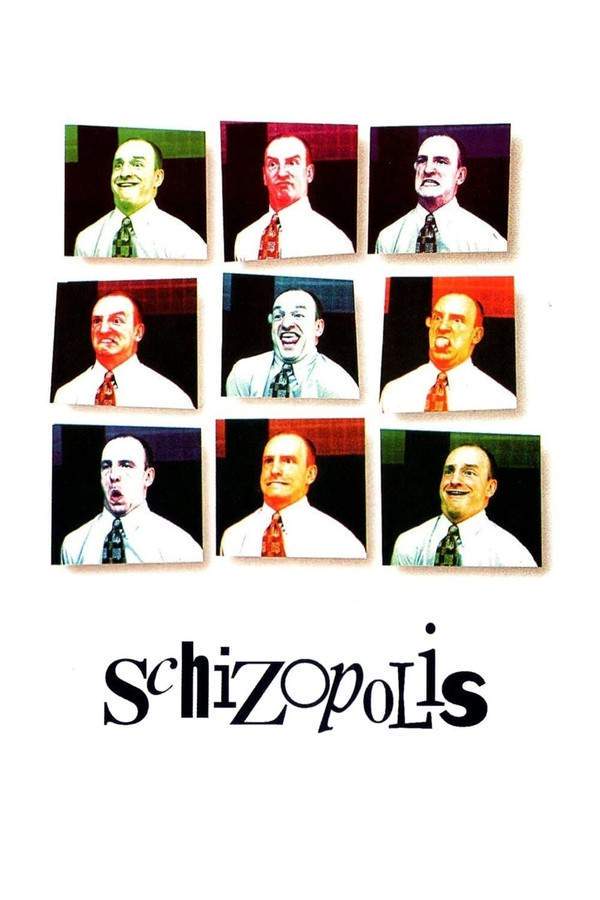
Last Updated: November 16, 2024 at 11:43
Discover curated groups of movies connected by mood, themes, and story style. Browse collections built around emotion, atmosphere, and narrative focus to easily find films that match what you feel like watching right now.
Films that break narrative conventions with humor and self-aware experimentation.Explore movies like Schizopolis that use self-referential humor and unconventional narratives. If you enjoyed the meta-commentary and breaking of the fourth wall, you'll find similar quirky and intellectually playful films here.
Narratives in this thread subvert expectations, often featuring non-linear structures, direct address to the camera, and plots that comment on the nature of storytelling itself. The journey is intellectual and playful, prioritizing inventive form over straightforward resolution.
These films are grouped by their shared commitment to playful experimentation, a whimsical tone that winks at the audience, and a light emotional weight that makes their conceptual puzzles enjoyable rather than taxing.
Stories where language itself becomes a source of comedy and conflict.Find films similar to Schizopolis that satirize language and communication. If you liked the bizarre dialogue and exploration of how words shape reality, this section highlights other quirky and thought-provoking stories.
The central conflict often revolves around miscommunication, with characters trapped in systems of jargon or struggling to express themselves. The plot unfolds through a series of misunderstandings, revealing the inherent comedy and alienation found in everyday and institutional language.
These movies share a focus on language as a thematic cornerstone, a satirical edge aimed at bureaucracy or social norms, and a quirky, disorienting vibe that comes from seeing the world through a linguistic funhouse mirror.
Don't stop at just watching — explore Schizopolis in full detail. From the complete plot summary and scene-by-scene timeline to character breakdowns, thematic analysis, and a deep dive into the ending — every page helps you truly understand what Schizopolis is all about. Plus, discover what's next after the movie.
Track the full timeline of Schizopolis with every major event arranged chronologically. Perfect for decoding non-linear storytelling, flashbacks, or parallel narratives with a clear scene-by-scene breakdown.
Discover the characters, locations, and core themes that shape Schizopolis. Get insights into symbolic elements, setting significance, and deeper narrative meaning — ideal for thematic analysis and movie breakdowns.
Get a quick, spoiler-free overview of Schizopolis that covers the main plot points and key details without revealing any major twists or spoilers. Perfect for those who want to know what to expect before diving in.
Visit What's After the Movie to explore more about Schizopolis: box office results, cast and crew info, production details, post-credit scenes, and external links — all in one place for movie fans and researchers.
Discover movies like Schizopolis that share similar genres, themes, and storytelling elements. Whether you’re drawn to the atmosphere, character arcs, or plot structure, these curated recommendations will help you explore more films you’ll love.
Schizopolis (1997) Scene-by-Scene Movie Timeline
Schizopolis (1997) Movie Characters, Themes & Settings
Schizopolis (1997) Spoiler-Free Summary & Key Flow
Movies Like Schizopolis – Similar Titles You’ll Enjoy
Stranger Than Paradise (1984) Film Overview & Timeline
Delicatessen (1992) Story Summary & Characters
Dinner for Schmucks (2010) Movie Recap & Themes
Watching the Detectives (2008) Ending Explained & Film Insights
Madhouse (1990) Story Summary & Characters
Schnitzel Paradise (2005) Full Summary & Key Details
Zelig (1983) Ending Explained & Film Insights
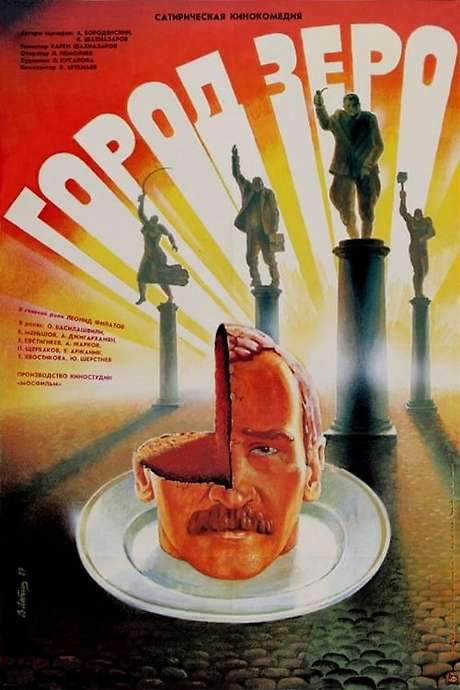
Zerograd (1988) Complete Plot Breakdown
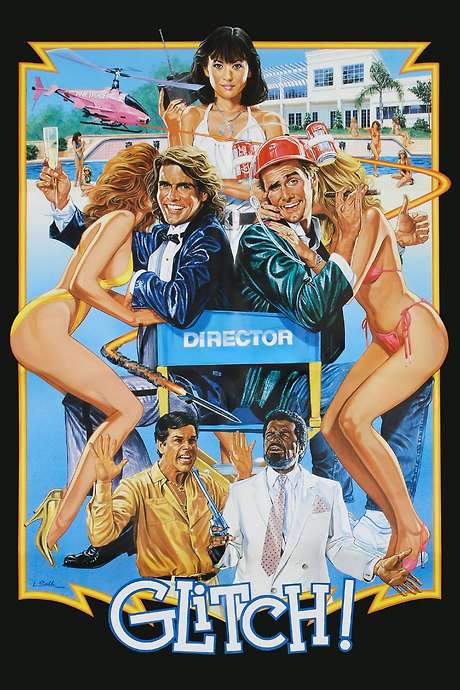
Glitch! (1988) Full Movie Breakdown
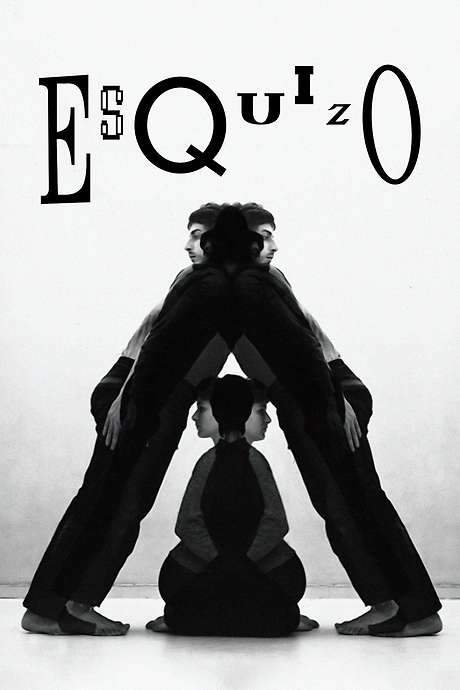
Esquizo (1970) Complete Plot Breakdown
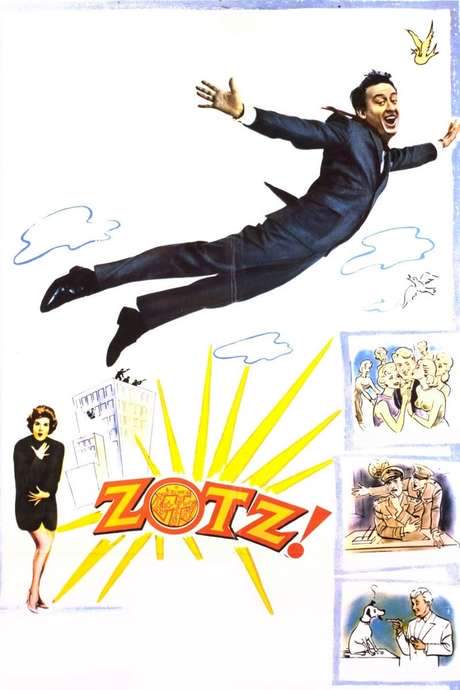
Zotz! (1962) Spoiler-Packed Plot Recap
The Comedy of Terrors (1963) Ending Explained & Film Insights
Stroszek (1977) Plot Summary & Ending Explained
Fear City: A Family-Style Comedy (1994) Film Overview & Timeline
Schlock (1973) Film Overview & Timeline