Year: 2016
Runtime: 159 mins
Language: Tamil
Director: Shiv Mohaa
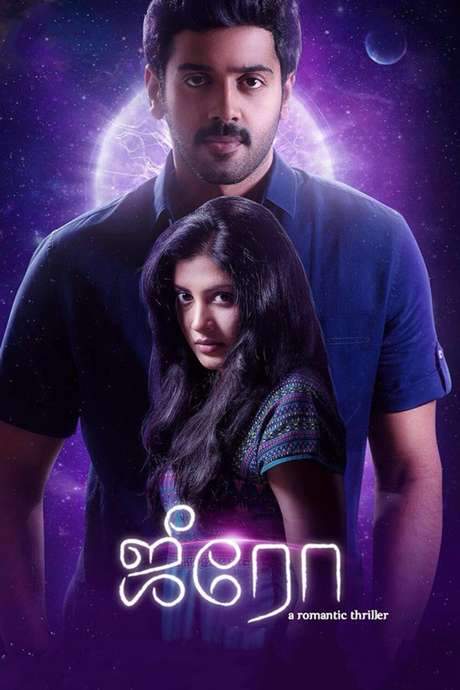
A newly married couple's happiness is shattered when the wife begins exhibiting increasingly erratic behavior. Haunted by the memory of her deceased mother’s mental instability, the husband questions whether his wife is suffering a similar fate. As her actions become more disturbing, he begins to suspect a more sinister explanation may be at play, threatening their marriage and his own sanity.
Warning: spoilers below!
Haven’t seen Zero yet? This summary contains major spoilers. Bookmark the page, watch the movie, and come back for the full breakdown. If you're ready, scroll on and relive the story!
Read the complete plot breakdown of Zero (2016), including all key story events, major twists, and the ending explained in detail. Discover what really happened, and what it all means.
The movie opens with a brief, mythic prologue about God creating Adam and Eve, a celestial prelude that sits in contrast to the human drama that follows. In the present, a newly wedded couple Balaji alias Bala Ashwin Kakumanu and Priya Sshivada Nair move into their new apartment, starting a life together built on love and trust. Yet Bala’s father, Vijay Kumar Ravi Raghavendra, remains wary, unsettled by Priya’s family history of mental illness. Despite this looming shadow, Bala’s devotion to Priya is unwavering, and he chooses to stand by her side through the early, intimate challenges of their marriage.
Not long after settling in, a small incident unsettles the couple: Priya shops for lipsticks but claims she doesn’t remember taking them, sparking a tense encounter with the security guard before she leaves. Back home, she confides in her neighbour, a moment that exposes deeper secrets about her past and her struggle with pregnancy. She refuses to meet Bala’s father, and she shares a painful truth with the neighbor, hinting at a life shadowed by fear and misunderstanding. Shortly after, Priya drifts into a dreamlike state where she speaks with her mother, recounting how, in the eyes of others, she was branded a thief. She also reveals a quiet, almost childlike affinity for the color pink and how she finds joy in it.
What follows is a descent into a world that blurs the line between dreams and waking life. Priya begins sleepwalking at night, and a sense of unease spreads through the home as eerie visions and unsettling incidents accumulate. The most disturbing turn arrives when Priya becomes possessed by a malevolent force: Lilith [Andreanne Nouyrigat], a Biblical demon who gains control of her body. Bala, terrified by the turn of events, seeks help from Solomon [J. D. Chakravarthi], an occult expert who can speak with ghosts and reveal hidden truths.
Solomon confronts the possession, and when Lilith, inhabiting Priya, touches him, he is drawn into a revelation about the being’s origins. Lilith was created before Eve, with Adam, but she rebelled and was cursed with childlessness. Over the ages, Lilith conceived repeatedly with the devil’s progeny, yet most children died or were stillborn; Priya becomes the only child who escaped death. Lilith’s torment turns her toward a plan to destroy the world, a mission she pursues with unyielding resolve.
The narrative makes clear that the Devil himself, in the form of a snake, has sent Lilith to fulfill this apocalyptic mission. Bala becomes a key obstacle to Lilith’s plan, and the Devil hints that if Lilith touches Bala, her powers could be stripped away. The bond between Priya and Bala—described as a soulmate connection through seven births—adds a powerful dimension to their struggle, suggesting their love may be the only force strong enough to withstand Lilith’s havoc. Solomon gathers exorcists from around the world, three professionals who join the effort, but their combined power initially fails to wrest Lilith from Priya’s body.
In a tense moment, Lilith tries to choke Bala, prompting a physical contact that rekindles Priya’s memories of their life together. She is momentarily unpossessed and returns to the waking world, where Bala and Solomon stand beside her. As Lilith readies another surge of possession, a divine intervention occurs: God freezes time and intervenes to save the world, blessing Priya with pregnancy and underscoring a larger, cosmic purpose for their union. The film then reveals that God chose this couple to be the parents of His child and, with Lilith defeated, the immediate threat is vanquished.
The closing image leaves a chilling echo: the Devil, still seeking to fulfill his ancient mission, returns in the snake’s form and transforms back into a towering human figure, vowing to complete his plan alone. This final note hints at a possible continuation—Zero-2—leaving audiences with a sense of unfinished business in the broader struggle between divine and demonic forces.
Last updated: October 09, 2025 at 15:53
Explore frequently asked questions about Zero (2016) with spoiler-rich answers covering the full plot summary, major story beats, character motivations, hidden details, and ending meaning. This movie summary FAQ helps explain confusing scenes, plot twists, and narrative decisions in clear, searchable detail.
Priya's erratic behavior begins because she becomes possessed by Lilith, a biblical demon. The possession manifests gradually through sleepwalking, memory gaps (like the lipstick incident), and increasingly disturbing actions. Her family history of mental illness initially makes everyone believe she's experiencing similar symptoms, but the truth is a supernatural entity controlling her body.
The lipstick theft she cannot remember foreshadows the loss of her own agency as Lilith takes control.
Lilith is a biblical demon created before Eve, born from Adam in ancient mythology. She rebelled against Adam and was cursed with childlessness by God. Over centuries, she conceived repeatedly with the Devil's offspring, but most children died or were stillborn. Priya is the only child who escaped death, making her the perfect vessel for Lilith's return and her mission to destroy the world.
The film's opening creation myth establishes Lilith's origins before the human drama begins.
The Devil, appearing as a snake, sends Lilith to possess Priya as part of an apocalyptic mission to destroy the world. Priya being the only surviving child of Lilith's bloodline makes her the ideal vessel for the demon. The Devil tasks Lilith with fulfilling this destructive plan, using the centuries-old grudge between Lilith and humanity as leverage.
The opening creation prologue foreshadows the cosmic battle between divine and demonic forces.
When Lilith tries to choke Bala, physical contact between them triggers a powerful reaction. Because Bala and Priya are soulmates connected through seven births, their bond is strong enough to momentarily override Lilith's control. This contact restores Priya's memories of their life together, allowing her to briefly reclaim her body before Lilith's possession resumes.
Solomon explains earlier that the seven-birth soulmate bond gives Bala unique power against Lilith.
God intervenes when Lilith's possession threatens to destroy the world. He freezes time to stop the demonic takeover and reveals that Bala and Priya were chosen to be the parents of His child, a divine purpose that makes their union cosmically significant. The pregnancy serves as both a blessing and a permanent seal against Lilith's destruction, fulfilling a larger celestial plan.
The creation prologue establishes divine involvement in human destiny from the start.
Three professional exorcists from different parts of the world attempt to remove Lilith but fail because the demon's power is too great. Lilith has existed for millennia and possesses immense strength from her ancient origins. Only the combined intervention of divine power and the sacred soulmate bond between Bala and Priya proves capable of defeating her.
Solomon warns early on that this is no ordinary possession but a demonic entity of biblical proportions.
The ending shows the Devil, still in snake form, transforming back into a towering human figure and vowing to complete his mission alone. This establishes that while Lilith has been defeated and the immediate threat is over, the cosmic battle is far from finished. The post-credits tease directly hints at a sequel titled Zero-2, suggesting the Devil will continue pursuing his apocalyptic goal through new means.
The divine intervention stops Lilith but does not eliminate the Devil himself.
Priya's mother went mad during pregnancy and died giving birth to Priya, creating a family history of mental illness that initially explains Priya's strange behavior to others. However, this is revealed to be a red herring, the true cause is supernatural possession by Lilith, not inherited mental instability. The parallel between mother and daughter serves to mislead characters and viewers alike.
Bala's father's disapproval of the marriage stems from this family history, adding realistic doubt to the supernatural explanation.
Priya takes lipstick from a store but has no memory of doing so, causing a confrontation with a security guard. This incident marks the first sign that Priya is losing control of her own actions. It foreshadows the larger theme of possession where her body acts independently of her will, and it serves as an early clue that something supernatural is affecting her mind and behavior.
Later, in her dream state, Priya recounts being branded a thief by others, connecting this incident to her deeper psychological trauma.
Discover curated groups of movies connected by mood, themes, and story style. Browse collections built around emotion, atmosphere, and narrative focus to easily find films that match what you feel like watching right now.
Stories where a loving union is tested by an encroaching, inexplicable evil.If you enjoyed Zero's story of a couple fighting a demonic threat, you'll find similar tension in these movies. This list features horror and thriller films where a marriage or family is the primary target of a supernatural entity, creating a desperate struggle to survive together.
The narrative follows a strong relationship that is slowly infiltrated and corrupted by a malevolent presence. The conflict begins with subtle, unsettling changes in one partner's behavior, escalating into a full-blown supernatural crisis. The story is as much about saving the relationship as it is about defeating the external threat, forcing characters to question reality and their trust in one another.
These movies are grouped by their shared focus on using a supernatural plot to examine the strength of a core relationship. They blend emotional drama with horror, creating a uniquely personal and high-stakes form of terror where the enemy is often unseen and attacks through a loved one.
Tense stories that blur the line between mental breakdown and paranormal events.Fans of Zero's questioning of mental illness versus demonic possession will appreciate these films. Discover similar thrillers and horror movies where the nature of the threat is ambiguous, leaving you to debate whether the horror is supernatural or stems from a fractured mind.
The narrative is built on a central mystery: the true source of the terrifying events. The plot presents evidence supporting both a rational, psychological explanation and an irrational, supernatural one. This duality drives the tension, as characters and viewers alike grapple with doubt, fear, and the stigma often associated with mental health, leading to a climax that may or may not provide a definitive answer.
They are grouped by their masterful use of ambiguity to fuel dread. This shared narrative device creates a specific, cerebral kind of horror that is less about jump scares and more about a slow-building, pervasive fear of the unknown—both external and internal.
Don't stop at just watching - explore Zero in full detail. From the complete plot summary and scene-by-scene timeline to character breakdowns, thematic analysis, and a deep dive into the ending - every page helps you truly understand what Zero is all about. Plus, discover what's next after the movie.
Track the full timeline of Zero with every major event arranged chronologically. Perfect for decoding non-linear storytelling, flashbacks, or parallel narratives with a clear scene-by-scene breakdown.
Discover the characters, locations, and core themes that shape Zero. Get insights into symbolic elements, setting significance, and deeper narrative meaning - ideal for thematic analysis and movie breakdowns.