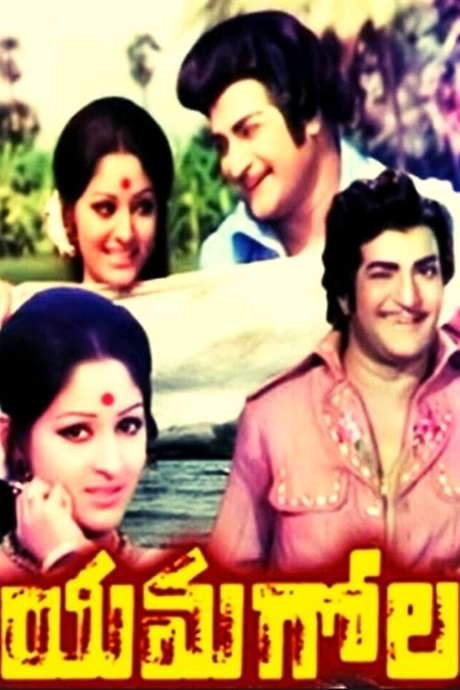
Year: 1977
Runtime: 150 mins
Language: Telugu
Director: Rama Rao Tatineni
Leader Satyam, President, opposes ex‑president Rudrayya. He loves Rudrayya’s daughter Savithri and plans marriage, so Rudrayya hires a hitman. After Satyam’s death he reaches heaven, angers Indra, and is sent to hell, where he rallies workers against Yama, shuts down hell and returns to Earth. Yama and Chitragupta visit Earth, Satyam, a name, teaches Rudrayya a lesson.
Find where to stream, rent, or buy Yamagola (1977) in the US with current JustWatch availability, up-to-date pricing, and platform listings for subscription, rental, and digital purchase options.
Warning: spoilers below!
Haven’t seen Yamagola yet? This summary contains major spoilers. Bookmark the page, watch the movie, and come back for the full breakdown. If you're ready, scroll on and relive the story!
Trace every key event in Yamagola (1977) with our detailed, chronological timeline. Perfect for unpacking nonlinear stories, spotting hidden connections, and understanding how each scene builds toward the film’s climax. Whether you're revisiting or decoding for the first time, this timeline gives you the full picture.
Last updated: August 19, 2025 at 05:14
Find frequently asked questions about the Yamagola (1977) timeline, including chronological order, nonlinear jumps, cause-and-effect links, and scene sequence clarifications. This timeline FAQ helps explain when key events happen, how moments connect, and why the story unfolds in that specific order.
Satyam's soul was mistakenly transported to heaven due to a celestial error. Since he was a righteous person who worked for his community's welfare, his soul was automatically routed to heaven, but his disruptive behavior there (causing chaos among celestial beings) caught Indra's attention, leading to his transfer to hell.
The error hints at the film's fantasy tone and sets up the divine consequences that follow.
Satyam organized a rebellion among the hell soldiers, directly challenging Yama and Chitragupta's authority. His defiant actions and negotiations forced Yama to agree to reform the strict afterlife laws, ultimately leading to the divine figures descending to Earth to implement changes.
This rebellious act establishes Satyam's character as someone who confronts authority regardless of the consequences.
Yama and Chitragupta descended to Earth in human form to implement reforms to the afterlife's laws after agreeing to Satyam's demands. They also declared a temporary lockout of hell during their mission.
Their descent sets up the comedic divine intervention that follows on Earth.
Satyam was restored to life with one condition: he had to return to the afterlife once Yama and Chitragupta completed their reforms on Earth. This temporary resurrection allowed him to resolve his earthly conflicts.
The condition creates tension for the final act, leading Satyam to devise a plan to escape death.
When Savitri respectfully asked Yama and Chitragupta for blessings for her marriage, the divine visitors granted her wish for a long and happy marriage. This blessing inadvertently extended Satyam's lifespan, allowing him to escape his death sentence.
This ironic moment turns the divine blessing into Satyam's salvation through his own clever planning.
Yes, Satyam wakes up at the end to reveal the entire divine intervention, the trip to heaven, the hell rebellion, Yama's descent, and the blessing, was all a vivid dream. In reality, Ram Sastry was Satyam's friend Ramana Murthy, and the whole elaborate scenario was a planned scheme to expose Rudrayya.
The dream revelation fundamentally shifts the film's tone, removing stakes from earlier events.
Rudrayya hired Ram Sastry to murder Satyam because he discovered Satyam's relationship with his daughter Savitri and viewed him as a threat to his authority. He wanted to eliminate Satyam discreetly by disguising the murder as part of a traditional ritual.
This act sets the entire plot in motion and establishes Rudrayya as the main antagonist.
After being resurrected, Satyam disguised himself as Sundaram, a different person entirely. Rudrayya, unaware of the true identity, actually hired this Sundaram to impersonate Satyam, not knowing both roles were played by the same person.
The disguise creates the comedic confusion that drives much of the film's humor.
Impatient with waiting for Ram Sastry's demonic prayers to complete, Rudrayya took matters into his own hands and buried Satyam's body in his backyard, believing the murder was finalized. This hasty decision contributed to the supernatural events that followed.
Rudrayya's impatience directly leads to the celestial mix-up that sends Satyam's soul to heaven.
While on Earth in human form to implement afterlife reforms, Yama and Chitragupta faced various challenges and were eventually arrested by the police. Satyam later intervened to free them, demonstrating his loyalty to the divine beings.
This arrest creates tension and allows Satyam to prove his worth to the gods.
Satyam cleverly concealed himself under the bridal veil during the wedding ceremony. When Yama blessed the couple with a long life, the blessing was directed at the hidden figure under the veil, allowing Satyam to receive the divine favor while evading his death sentence.
This clever tactic directly leads to Satyam's ultimate escape from death.
Yes, the reveal at the end shows that Ram Sastry, the hired killer, was actually Satyam's good friend Ramana Murthy. The entire murder scenario was part of an elaborate plan between them to expose Rudrayya's crimes.
This connection explains how the plan worked and ties up the narrative neatly.
Discover curated groups of movies connected by mood, themes, and story style. Browse collections built around emotion, atmosphere, and narrative focus to easily find films that match what you feel like watching right now.
Mythological realms become a playground for comedic rebellion and chaos.If you enjoyed the playful rebellion in hell in Yamagola, you'll like these other movies where characters explore heaven, hell, or other mythological realms with a comedic touch. These films blend fantasy and humor for an uplifting and fantastical experience.
Stories typically involve a protagonist entering an afterlife realm, often by accident or after death. Instead of facing solemn judgment, they find themselves in a whimsical bureaucracy ripe for satire. The plot revolves around the character challenging the established order, leading to chaotic but ultimately harmless fun before a return to the living world or a happy resolution.
These films are grouped together by their unique blend of fantasy mythology and comedy. They share a lighthearted tone that treats the afterlife as a source of adventure rather than fear, focusing on playful characters, satirical takes on gods and demons, and an overall uplifting feel.
True love triumphs through magical, humorous, and unconventional obstacles.Fans of the humorous and magical love story in Yamagola will enjoy these other romantic fantasy films. Discover movies where true love overcomes absurd, fantastical, or comedic challenges, leading to a happy and uplifting ending.
The narrative follows a couple whose path to union is blocked by a significant, often absurd, obstacle—be it a disapproving parent, a magical curse, or even a trip to the afterlife. The conflict is resolved not through intense drama, but via a series of whimsical, comedic, or magical events that teach a lesson and bring everyone together, culminating in a joyful resolution for the lovers.
This thread connects films that prioritize a light, cheerful tone in their romantic storytelling. They blend elements of fantasy and comedy to make the love story feel like a delightful adventure, ensuring the emotional ride is fun and the payoff is satisfying without heavy drama.
Don't stop at just watching - explore Yamagola in full detail. From the complete plot summary and scene-by-scene timeline to character breakdowns, thematic analysis, and a deep dive into the ending - every page helps you truly understand what Yamagola is all about. Plus, discover what's next after the movie.
Read a complete plot summary of Yamagola, including all key story points, character arcs, and turning points. This in-depth recap is ideal for understanding the narrative structure or reviewing what happened in the movie.
Discover the characters, locations, and core themes that shape Yamagola. Get insights into symbolic elements, setting significance, and deeper narrative meaning - ideal for thematic analysis and movie breakdowns.
Discover movies like Yamagola that share similar genres, themes, and storytelling elements. Whether you’re drawn to the atmosphere, character arcs, or plot structure, these curated recommendations will help you explore more films you’ll love.
Yamagola (1977) Plot Summary & Movie Recap
Yamagola (1977) Scene-by-Scene Movie Timeline
Yamagola (1977) Spoiler-Free Summary & Key Flow
Movies Like Yamagola – Similar Titles You’ll Enjoy
Dharma Prabhu (2019) Story Summary & Characters
Yajamana (2000) Plot Summary & Ending Explained
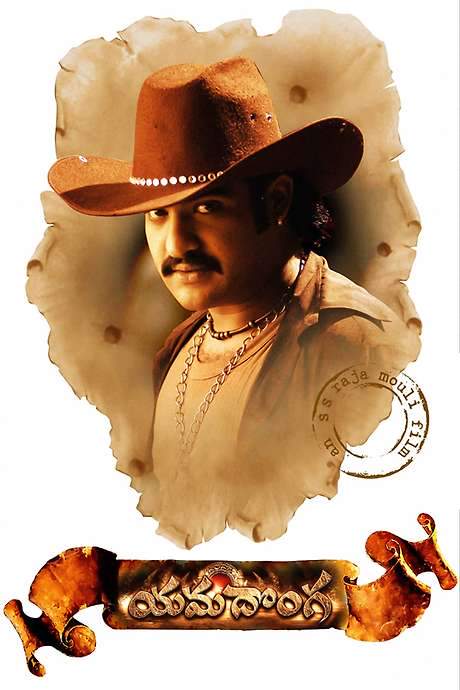
Yamadonga (2007) Movie Recap & Themes
Yodha (1991) Full Movie Breakdown
Yateem (1988) Movie Recap & Themes
Yamudiki Mogudu (1988) Ending Explained & Film Insights
Attaku Yamudu Ammayiki Mogudu (1989) Film Overview & Timeline
Mangalyam (2022) Ending Explained & Film Insights
Govindha Govindha (1993) Detailed Story Recap
Yejaman (1993) Full Movie Breakdown
Yeshwant (1997) Full Movie Breakdown
Ammoru (1995) Ending Explained & Film Insights
Taqdeerwala (1995) Complete Plot Breakdown
Gaayam (1993) Complete Plot Breakdown
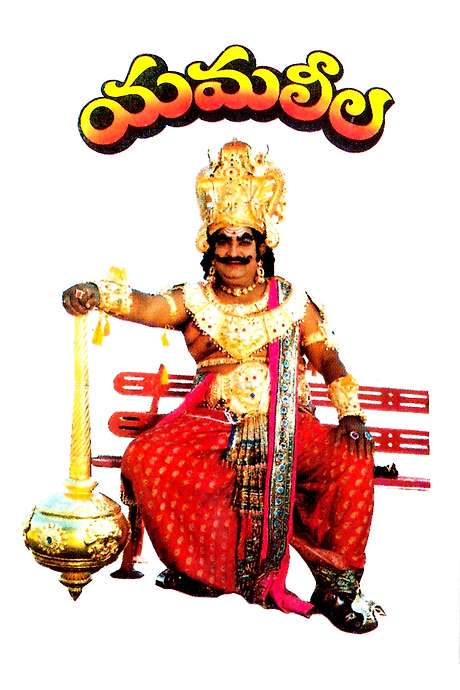
Yamaleela (1994) Film Overview & Timeline