Plot Explained Spoilers guaranteed!
Plot Explained

Browse by genre

Witness to Murder (1954) movie poster

Timeline

Witness to Murder (1954) Timeline Explained – Every Event in Order

Release, runtime and language
1954 · 83 mins · English
Loading streaming availability…
Directed by
Roy Rowland
Starring
Claude Akins, Jesse White, George Sanders, Barbara Stanwyck, Harry Shannon, Gary Merrill

THE SUSPENSE SHOCK OF THE YEAR! A woman fights to convince the police that she witnessed a murder while looking out her bedroom window.

On this page (6)
  1. 1 Where to watch
  2. 2 Events in order (15)
  3. 3 Timeline questions answered
  4. 4 Movie threads
  5. 5 Movies like Witness to Murder
  6. 6 Every angle
Loading streaming availability…

15 events in order · contains spoilers

Witness to Murder Timeline: Events in Chronological Order

Every key event of Witness to Murder (1954) in order, scene by scene, with when and where it takes place. Use it to untangle flashbacks, time jumps and parallel storylines, to refresh your memory before the sequel or to find the exact scene you are thinking of.

  1. Cheryl witnesses the murder

    Cheryl looks out her bedroom window and witnesses a young woman being strangled to death. She rushes to report it to the police, hoping to stop the killer. When detectives arrive downstairs, Albert Richter moves the body before their eyes, making it seem like nothing happened.

    Where
    Cheryl's bedroom window
  2. Police arrive; no body found

    The police arrive at Albert Richter's door, but no body is found and nothing confirms Cheryl's account. Albert acts nonchalant, as if the incident were a troubling dream. The officers remain skeptical and Cheryl's credibility is questioned.

    Where
    Albert Richter's residence
  3. The body is disposed

    The next day, Albert puts the body in a trunk and leaves to dispose of it. Cheryl's mounting mistrust grows as she pieces together the potential cover-up, even as others dismiss her story.

    Where
    Moving around the city
  4. Cheryl discovers potential clues in the building

    Cheryl notices an apartment for rent on the same floor and is shown a tour by the building manager. She finds torn drapery and a pair of earrings that look familiar, hinting at a hidden connection to the case.

    Where
    Apartment building on Cheryl's floor
  5. Cheryl heads to the police with the earrings

    Cheryl drives away to the police department with the earrings, hoping to clear her name. Meanwhile Albert phones the police to pre-emptively undermine the investigation, and Cheryl is accused of robbery.

    Where
    From Cheryl's home to the police department
  6. Confrontation at the police station

    Cheryl and Albert confront each other at the police station, and Albert decides not to press charges. The scene leaves Lt. Lawrence Mathews suspicious of Cheryl and her account.

    Where
    Police station
  7. Lt. Mathews reveals Albert's past

    Lt. Mathews goes to Cheryl's apartment and reveals that Albert is an ex-Nazi who has been denazified and is now an unsuccessful author planning to marry a wealthy heiress.

    Where
    Cheryl's apartment
  8. Joyce Stewart's murder resurfaces

    A body is found in Griffith Park, later identified as Joyce Stewart. Cheryl's account begins to gain credibility in Lawrence's eyes, though he remains cautious about whether what she saw was real.

    Where
    Griffith Park
  9. Cheryl is committed on a frame-up

    Albert secretly types threatening letters from Cheryl's name to frame her as unstable. As a result, Cheryl is forcibly admitted to an insane asylum.

    Where
    Insane asylum
  10. Investigation stalls after release

    After Cheryl's release, Lawrence and a fellow policeman go to the building of the deceased woman to see if anyone recognizes Albert, but no one does and the case stalls.

    Where
    Miss Joyce Stewart's building
  11. Albert confesses to the murder

    Albert returns to Cheryl's home and confesses that he killed the woman because she was insignificant to him and he did not want his future wealth threatened. He believes Cheryl's supposed insanity will protect him.

    Where
    Cheryl's home
  12. Suicide note ruse and chase

    Albert presents a purported suicide note attributed to Cheryl and tries to push her out of her window. A policewoman buzzes at the door, and Cheryl flees, pursued by Albert and the police who think she is suicidal.

    Where
    Cheryl's apartment
  13. Cheryl climbs to the top of a high-rise

    Cheryl runs up a high-rise under construction and reaches the top, cornered by Albert. She fights to survive as he closes in.

    Where
    High-rise under construction
  14. Final confrontation on the edge

    Albert pushes Cheryl toward the edge, but she is saved by construction planks underneath. Lawrence arrives and grapples with Albert; in the ensuing struggle, Albert falls to his death. With the killer dead, the police begin to believe Cheryl's account.

    Where
    Top of the tower
  15. Resolution and vindication

    Lawrence rescues Cheryl and the police now believe her story. Cheryl's memory of the night is vindicated, and the danger is over.

    Where
    City

Last updated: October 09, 2025 at 11:05

Was this helpful?

Timeline questions answered

Witness to Murder Timeline Explained: Your Questions Answered

When does it happen, and why in that order? The questions people ask about the chronology of Witness to Murder (1954): time jumps, flashbacks, cause and effect between scenes and the correct order of events, each answered with spoilers.

Q1

Why did the police dismiss Cheryl's witness account?

The police dismissed Cheryl's account because when they arrived at Albert Richter's apartment, no body was found. Albert had quickly moved the murder victim's body before the detectives arrived, and he greeted them with unsettling calm. With no physical evidence and Albert appearing respectable, the officers concluded Cheryl must have imagined the murder or experienced a vivid nightmare. Her credibility was further undermined when Albert planted evidence suggesting she was unstable.

Foreshadowing: Earlier, the film shows Albert noticing the detectives arriving downstairs and acting with calculated speed to hide the body, establishing his ability to manipulate the scene before police intervention.

  • police disbelief
  • witness credibility
  • no body found
  • albert richter
Q2

How did Albert move the body so quickly after the murder?

Albert moved the body within minutes because he spotted the police arriving at his building while he was still in his apartment. Using a hallway that connected to the stairwell, he carried the body out through a back entrance before the detectives could reach his door. The film establishes he was physically capable and prepared to act fast, disposing of the evidence before any search could occur.

Foreshadowing: The timeline shows Cheryl reported the murder immediately after witnessing it, giving Albert only a narrow window to act before police presence made movement impossible.

  • body disposal
  • police arrival
  • albert richter
  • evidence cover-up
Q3

Why did Albert frame Cheryl by committing her to an insane asylum?

Albert framed Cheryl by having her committed to an insane asylum because it permanently destroyed her credibility as a witness. He typed threatening letters and planted them to make it appear Cheryl was mentally unstable and potentially dangerous. With authorities believing she was delusional, her testimony about witnessing the murder became legally worthless, allowing Albert to operate freely without fear of being identified.

Foreshadowing: Before this, Albert had already successfully convinced police that Cheryl might be imagining things when no body was found, establishing a pattern of psychological manipulation.

  • insane asylum frame
  • threatening letters
  • credibility destruction
  • albert richter scheme
Q4

Why was Cheryl accused of robbery after finding the earrings?

Cheryl was accused of robbery because Albert preempted her by calling the police and claiming she had stolen the earrings from his apartment. When Cheryl arrived with the earrings as evidence of the murder, the police, already suspicious of her story, interpreted her possession of the jewelry as proof she was either stealing or delusional about where she obtained them. Albert's calculated phone call turned her evidence against her.

Foreshadowing: Earlier, Cheryl discovers the earrings in the vacant apartment and recognizes they might link the victim to someone in the building, not knowing Albert would use them to counter her claim.

  • earrings evidence
  • false robbery accusation
  • albert richter manipulation
Q5

What was Albert's motivation for killing the woman?

Albert killed the woman, later identified as Joyce Stewart, because she had become a nuisance that threatened his plans to marry a wealthy heiress. During his confession to Cheryl, he explained he needed to eliminate anyone who might interfere with his path to wealth and respectability. As a denazified ex-Nazi trying to reinvent himself as an author, he couldn't afford any scandal or complication that might derail his ambitions.

Foreshadowing: The film establishes early that Albert is an ex-Nazi author planning to marry a wealthy heiress, suggesting his new identity and status were paramount to him.

  • albert richter motive
  • wealth ambitions
  • marriage scheme
  • joyce stewart murder
Q6

How did Cheryl survive the final confrontation at the construction site?

Cheryl survived the final confrontation because when Albert pushed her toward the edge of the high-rise under construction, she landed on planks and debris below that broke her fall. The construction materials provided a narrow but crucial buffer between her and death. When Lawrence arrived and struggled with Albert, Albert fell to his own death while attempting to push Lawrence off, ending the threat permanently.

Foreshadowing: Earlier, the film shows Cheryl running up the construction site with Albert in pursuit, with the unfinished building providing both a trap and a potential safety net.

  • construction site fall
  • albert death
  • cheryl survival
  • lawrence rescue
Q7

Why did the police finally believe Cheryl's story?

The police finally believed Cheryl because Albert's death removed the source of the deception, and his aggressive pursuit of Cheryl through the construction site while officers tried to capture her proved he was the aggressor, not her. With Albert dead and no longer able to manipulate the narrative, the physical evidence and Cheryl's consistent testimony aligned. The officers could finally see her warnings as legitimate rather than the ravings of a mentally unstable woman.

Foreshadowing: Throughout the film, Lt. Lawrence Mathews grows increasingly suspicious of Albert despite initial doubt, and his investigation keeps the case alive even when official channels dismissed Cheryl.

  • police vindication
  • albert death
  • cheryl cleared
  • lt lawrence mathews
Q8

What was the significance of the torn drapery Cheryl found?

The torn drapery was significant because it represented the struggle during the murder that Cheryl had witnessed. When Albert previously confronted Cheryl about her account, he had faked the torn drapery in his own apartment to mock her story. However, when Cheryl toured the vacant apartment, she found the actual torn drapery from the real struggle, suggesting the murder had occurred there and that Albert had staged the previous scene to discredit her.

Foreshadowing: Albert's earlier confrontation with Cheryl included him showing his undamaged drapery as proof her story was false, making the discovery of actual torn drapery in another unit crucial evidence.

  • torn drapery
  • murder evidence
  • albert staging
  • apartment search
Q9

Why did Albert confess to Cheryl even though she had been declared insane?

Albert confessed to Cheryl because he believed her status as a institutionalized, mentally unstable woman made her legally incredible, he assumed no court would ever trust her testimony. He visited her home confident that her supposed insanity acted as a shield, allowing him to brag about his crime without consequence. His overconfidence in the effectiveness of her discrediting proved his fatal mistake.

Foreshadowing: Albert had successfully orchestrated Cheryl's commitment to the asylum, making him overconfident that his frame job was foolproof.

  • albert confession
  • cheryl frame
  • insane asylum
  • overconfidence
Q10

How did the suicide note factor into Albert's final plan?

The suicide note was Albert's attempt to make Cheryl's death appear as a voluntary act rather than murder. By presenting a note supposedly written by Cheryl declaring she wanted to end her life, he intended to push her from her window while making it look like suicide. When a policewoman buzzed just as he attempted this, the plan unraveled, forcing Albert to pursue Cheryl directly rather than stage her death convincingly.

Foreshadowing: Earlier, Albert had successfully used written documents to frame Cheryl, planting threatening letters that led to her asylum commitment.

  • suicide note frame
  • murder staging
  • albert final plan
  • policewoman interruption

Movie threads

More Movies Like Witness to Murder, by Mood & Story

Curated lists built around what makes Witness to Murder tick: the same mood, the same kind of story or the same emotional payoff. Each list explains why these movies belong together.

Movies where a witness isn't believed, like Witness to Murder

A single witness fights to be believed against a system of doubt and manipulation. If you enjoyed the desperate struggle for credibility in Witness to Murder, this section features similar stories of lone witnesses and victims fighting against doubt and gaslighting. These suspenseful crime thrillers and psychological dramas capture the intense anxiety of knowing a terrible secret that no one else will accept.

  • paranoid
  • gaslighting
  • psychological manipulation
  • desperate
  • unsettling
  • suspenseful
  • Tone: tense, paranoid, anxious
  • Pacing: fast, escalating
Why these movies?

The story pattern: The narrative pattern follows an individual who uncovers a crime or danger, only to have their account dismissed by authorities or loved ones. The antagonist often manipulates the situation to frame the protagonist as unstable or untrustworthy, creating a claustrophobic battle of wits where proving the truth becomes a matter of survival.

Why they belong together: These films are grouped together because they share the core experience of psychological isolation and the intense, paranoid mood that comes from being disbelieved. They feature similar pacing, driven by escalating attempts to discredit the protagonist and rising stakes that force them to act alone.
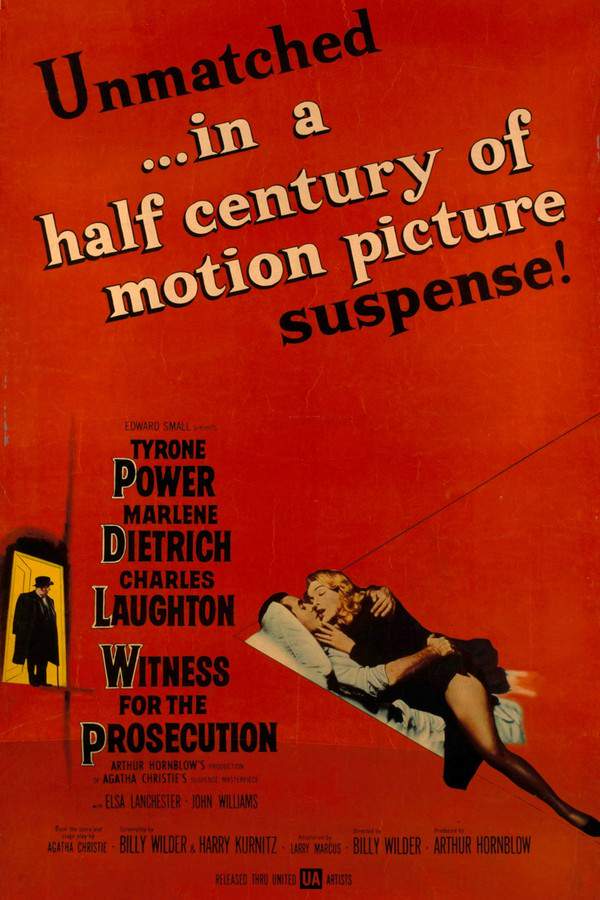

Fast-paced crime thrillers with manipulative killers, like Witness to Murder

A desperate cat-and-mouse game where a clever killer frames their prey. For viewers who liked the cat-and-mouse tension in Witness to Murder, this collection highlights similar suspenseful crime stories with clever, obsessive killers. These films share a fast pace, high intensity, and a focus on psychological manipulation, where the hero must outsmart a villain who is always one step ahead.

  • suspenseful
  • fast-paced
  • cunning villain
  • obsession
  • survival
  • desperate chase
  • Tone: tense, suspenseful, fearful
  • Pacing: fast, relentless
Why these movies?

The story pattern: The narrative unfolds as a direct, linear confrontation between an ordinary person and a highly intelligent, methodical killer. The antagonist doesn't just evade capture; they proactively sabotage the protagonist's life, creating a series of escalating crises. The story is a race against time to expose the killer before they succeed in their frame-up or final attack.

Why they belong together: These movies are united by their dominant tone of relentless tension and a fast-paced, straightforward plot structure centered on survival. They deliver a similar viewing experience of high anxiety, psychological dread, and the cathartic relief of a final confrontation against a formidable foe.

If you liked this

Movies Like Witness to Murder

Similar movies to Witness to Murder: the same genre, themes or kind of story. Each one comes with its own plot summary, timeline and ending explained.

Browse all movie summaries

Every angle

Witness to Murder (1954) Explained: Plot, Timeline & Characters

Everything about Witness to Murder in one place: what happens in the plot summary, the timeline in chronological order, the characters and meaning and a spoiler-free summary. What's After the Movie adds the cast, box office and post-credit scenes.

Coming soon on iOS and Android

The Plot Explained Movie Summary App

Plot summaries, endings explained and timelines on your phone. Catch up on any movie in minutes, save your favorites and never miss a twist again.

Be the first to know when we launch. Your email stays private, always.

Learn more about the app