


Plot Explained Spoilers guaranteed!
Plot Explained

Browse by genre

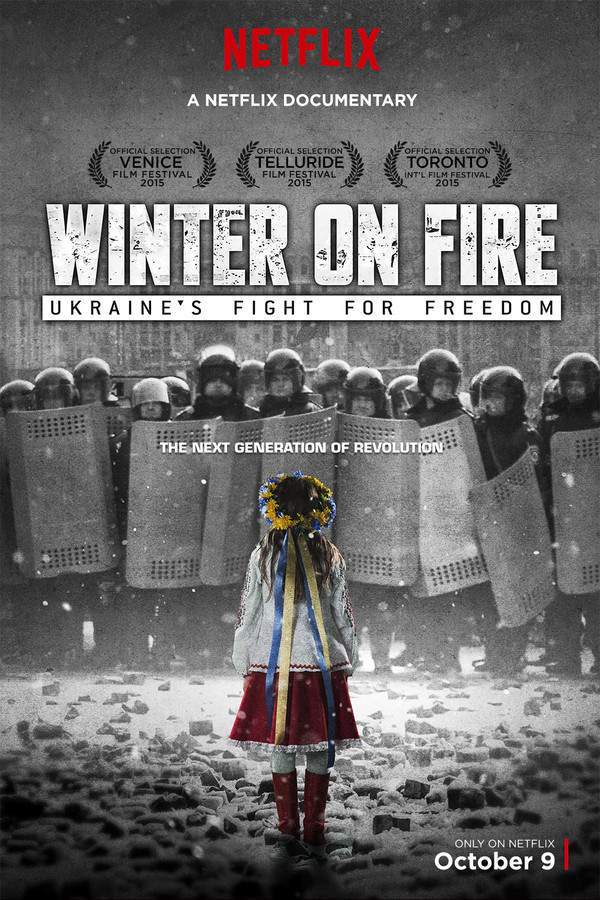
Winter on Fire: Ukraine's Fight for Freedom (2015) movie poster

Timeline

Winter on Fire: Ukraine's Fight for Freedom (2015) Timeline Explained – Every Event in Order

Release, runtime and language
2015 · 102 min · Ukrainian
JustWatch #25,718 1
Directed by
Evgeny Afineevsky

During a harsh winter, student protests escalate into a full-scale uprising in Ukraine. As the streets fill with flames, the movement sparks a nationwide insurrection fueled by passion and defiance. The film documents the resilience of the people as they confront the turmoil and fight for their freedom.

On this page (6)
  1. 1 Where to watch
  2. 2 Events in order (11)
  3. 3 Timeline questions answered
  4. 4 Movie threads
  5. 5 Movies like Winter on Fire: Ukraine's Fight for Freedom
  6. 6 Every angle

Where to watch

Where to Watch Winter on Fire: Ukraine's Fight for Freedom (2015)

Where can you watch Winter on Fire: Ukraine's Fight for Freedom? Stream, rent or buy it in the US, including on Netflix and Netflix Standard: current JustWatch availability with up-to-date prices.

Streaming availability powered by JustWatch

11 events in order · contains spoilers

Winter on Fire: Ukraine's Fight for Freedom Timeline: Events in Chronological Order

Every key event of Winter on Fire: Ukraine's Fight for Freedom (2015) in order, scene by scene, with when and where it takes place. Use it to untangle flashbacks, time jumps and parallel storylines, to refresh your memory before the sequel or to find the exact scene you are thinking of.

  1. Proposed Trade Agreement

    The tumultuous events of the Maidan Uprising begin with anticipation surrounding a proposed trade agreement between the European Union and Ukraine. Many Ukrainians believed that this agreement would elevate the nation's prospects and align it closer to Europe.

    When
    2013
    Where
    Kyiv
  2. Shift to Russian Deal

    The hopes for a European pathway are dashed when the agreement with the EU is abruptly replaced with a deal that favors Russia. This unexpected shift ignites outrage among pro-European citizens who feel betrayed by their government.

    When
    2013
    Where
    Kyiv
  3. Mass Protests Initiate

    In response to the discontent, large-scale protests erupt in the streets of Kyiv. Citizens, fueled by their passion for a European future, begin to organize massive occupations at Maidan Nezalezhnosti, the symbolic heart of the capital.

    When
    Late 2013
    Where
    Maidan Nezalezhnosti, Kyiv
  4. Escalation of Standoff

    As winter sets in, the protests escalate, and the protesters set up fierce barricades to maintain their presence. The government responds to this growing movement with increasing force, heightening tensions across the city.

    When
    January 2014
    Where
    Kyiv
  5. Violent Confrontations

    The situation takes a turn for the worse as violent confrontations break out between protesters and the police. The authorities employ brutal tactics to disperse the crowds, resulting in alarming casualties among the demonstrators.

    When
    February 2014
    Where
    Kyiv
  6. Deadly Police Shootings

    In a tragic escalation, police begin to shoot at the protesters, leading to several fatalities. This horrifying act of violence galvanizes the protesters, further solidifying their resolve to continue fighting for their rights.

    When
    February 2014
    Where
    Kyiv
  7. Intensification of the Movement

    As the bloodshed continues, the protestors chant, "We will not be silenced," summoning a spirit of determination. The movement gains momentum, drawing support from citizens across the country who join in solidarity.

    When
    February 2014
    Where
    Kyiv
  8. Vow to Dismantle the Government

    With the situation reaching a breaking point, the leaders of the uprising pledge to dismantle the government by any means necessary. Their commitment to overthrowing the current regime intensifies with each passing day of violence.

    When
    February 2014
    Where
    Kyiv
  9. President Yanukovych Flees

    Amidst the upheaval, pro-Russia President Viktor Yanukovych makes the pivotal decision to flee the country. Departing in the early hours, he escapes to Russia, leaving behind a chaotic political landscape.

    When
    February 2014
    Where
    Kyiv
  10. Aftermath of Yanukovych's Departure

    With Yanukovych gone, new elections are on the horizon, signaling a potential shift in Ukraine's political landscape. The hopes for a reimagined nation begin to emerge, with aspirations directed towards a future anchored in European ideals.

    When
    February 2014
    Where
    Kyiv
  11. Reimagining Ukraine's Future

    Post-uprising, the nation grapples with its identity and the promises of a better future. Citizens from all walks of life engage in discussions about Ukraine's direction, hoping to weave a new tapestry based on democracy and European integration.

    When
    2014

Last updated: November 16, 2024 at 14:22

Was this helpful?

Timeline questions answered

Winter on Fire: Ukraine's Fight for Freedom Timeline Explained: Your Questions Answered

When does it happen, and why in that order? The questions people ask about the chronology of Winter on Fire: Ukraine's Fight for Freedom (2015): time jumps, flashbacks, cause and effect between scenes and the correct order of events, each answered with spoilers.

Q1

Why did Ukraine abandon the EU trade agreement?

Ukraine was expected to sign a trade agreement with the European Union that would have aligned the country more closely with Europe. However, in 2013, the government unexpectedly rejected this deal and instead signed an agreement favoring Russia. This sudden shift away from Europe sparked outrage among pro-European citizens and directly triggered the mass protests that would escalate into the Maidan Uprising.

Foreshadowing: This reversal dashed hopes for European integration and set the stage for the uprising.

  • eu deal
  • trade agreement
  • euromaidan
  • yanukovych
  • ukraine-russia
Q2

What was Maidan Nezalezhnosti and why did protests center there?

Maidan Nezalezhnosti is Independence Square in central Kyiv, the symbolic heart of Ukraine's capital. The protests centered there because it had long served as a public gathering space for political demonstrations. When citizens began organizing against the government's decision to abandon the EU deal, they occupied the square as a permanent protest camp, making it the visible epicenter of resistance against the regime.

Foreshadowing: The square would become the focal point of violent confrontations throughout the uprising.

  • maidan
  • independence square
  • kyiv
  • protest location
  • revolution
Q3

How did the peaceful protests turn violent?

The protests began as peaceful occupations and demonstrations in late 2013. As winter arrived in January 2014, tensions escalated when protesters built barricades to maintain their presence. The government responded with increasing force, leading to violent confrontations in February 2014. Police used brutal tactics to disperse crowds, ultimately crossing a critical line when they began shooting at protesters, resulting in fatalities and transforming the movement into an armed struggle for survival.

Foreshadowing: The escalating violence hardened protester resolve and intensified demands for government removal.

  • violence
  • police brutality
  • protests
  • escalation
  • maidan
Q4

Why did President Yanukovych flee to Russia?

President Viktor Yanukovych, who was pro-Russia, fled to Russia in the early hours of February 2014 as the uprising reached its bloodiest point. With protesters vowing to dismantle the government by any means necessary after the deadly police shootings, Yanukovych determined that remaining in Ukraine had become untenable. His departure left a power vacuum that paved the way for new elections and a government oriented toward European integration.

Foreshadowing: This escape marked the beginning of Ukraine's political transformation.

  • yanukovych
  • president
  • flee
  • russia
  • president resignation
Q5

What triggered the police to shoot protesters?

The police shootings occurred in February 2014 as the culmination of weeks escalating confrontation. After protesters erected barricades and refused to leave Maidan Nezalezhnosti, authorities attempted violent dispersal. When this failed to break the movement, security forces opened fire on demonstrators, killing many. This extreme escalation was likely intended to crush the uprising through fear, but instead galvanized the remaining protesters and turned public opinion firmly against the government.

Foreshadowing: The killings directly preceded the leaders' vow to overthrow the government by any means.

  • shootings
  • fatalities
  • police
  • violence
  • deaths
  • maidan
Q6

Why did protesters continue fighting despite the violence?

Protesters continued because the violence, particularly the police shootings, had transformed their demands from economic grievances about the EU deal to fundamental issues of human rights and dignity. The chant 'We will not be silenced' embodied their refusal to accept government violence as a way to suppress dissent. With each passing day of brutality, their resolve intensified, and they became willing to risk their lives rather than accept the old regime's oppression.

Foreshadowing: The movement's momentum grew stronger even as casualties increased.

  • protesters
  • courage
  • determination
  • maidan
  • uprising
  • sacrifice
Q7

What happened to Ukraine after Yanukovych fled?

After Yanukovych fled to Russia in February 2014, Ukraine entered a transitional period with new elections on the horizon. The uprising succeeded in removing the pro-Russia president, and the country began reimagining its future with hopes centered on European integration. However, this victory came at a profound human cost, with numerous lives lost. The nation then faced the challenge of rebuilding while grappling with its identity and the promises of a democratic, European-oriented future.

Foreshadowing: The aftermath set the stage for ongoing political struggles and eventual conflict.

  • aftermath
  • new elections
  • europe
  • future
  • government
  • transition
Q8

How did winter affect the Maidan protests?

Winter played a significant role in the uprising's intensity and symbolism. As temperatures dropped, the protests did not dissipate but instead grew more determined, with protesters building barricades and maintaining their camp in harsh conditions. The bitter cold became a test of endurance, with the phrase 'winter on fire' capturing the paradox of icy conditions paired with the burning barricades and passionate resistance. Winter conditions also contributed to the stark visual contrast between the freezing protesters and the heated confrontations with police.

Foreshadowing: The harsh winter became inseparable from the visual identity of the revolution.

  • winter
  • cold
  • weather
  • maidan
  • conditions
  • fire

Movie threads

More Movies Like Winter on Fire: Ukraine's Fight for Freedom, by Mood & Story

Curated lists built around what makes Winter on Fire: Ukraine's Fight for Freedom tick: the same mood, the same kind of story or the same emotional payoff. Each list explains why these movies belong together.

Intense Documentaries of Civil Unrest like Winter on Fire: Ukraine's Fight for Freedom

Gripping real-life stories of popular movements challenging oppressive power. For viewers seeking movies like Winter on Fire, this collection features gripping documentaries about political revolutions and mass protests. These films share a high-intensity, tense viewing experience, documenting real-life struggles for freedom with heavy emotional weight and a focus on resilience in the face of state violence.

  • urgent
  • defiant
  • chaotic
  • resilient
  • sobering
  • gripping
  • Tone: tense, urgent, defiant
  • Pacing: steady, chronological build
Why these movies?

The story pattern: Narratives in this thread typically follow a linear, chronological path from spark to climax, detailing the escalation of protests, the government's violent response, and the ultimate, often bittersweet, outcome. The journey is one of a collective protagonist—the people—facing overwhelming odds, marked by key events like standoffs, crackdowns, and moments of tragic sacrifice that fuel the movement's momentum.

Why they belong together: These movies are grouped by their shared immersive quality and journalistic approach to high-stakes real-world conflict. They deliver a consistent vibe of tense urgency, grounded in factual events, and are united by themes of defiance, national identity, and the heavy price of freedom. The pacing is steady, building pressure event by event toward a consequential conclusion.
Movies with Bittersweet Victories like Winter on Fire: Ukraine's Fight for Freedom

Stories where hard-won success is shadowed by profound loss. If you appreciated the complex ending of Winter on Fire, this thread features movies where success comes at a significant cost. These films share a bittersweet ending feel and heavy emotional weight, often following intense journeys where triumph is inseparable from tragedy, similar to stories of revolution or profound personal sacrifice.

  • bittersweet
  • sorrowful
  • hopeful
  • resilient
  • tragic
  • sobering
  • Tone: bittersweet, heavy, reflective
  • Pacing: steady, consequential
Why these movies?

The story pattern: The narrative pattern involves a long, difficult struggle against formidable opposition, punctuated by significant setbacks and losses. The climax achieves the primary goal—overthrowing a regime, winning a battle, achieving justice—but the resolution is contemplative, emphasizing the scars, the fallen, and the ambiguous nature of the win. The emotional journey is a pendulum swinging between hope and despair, culminating in a reflective, rather than purely celebratory, ending.

Why they belong together: These films are connected by their distinctive emotional conclusion, which avoids simple categorization as happy or sad. They resonate with audiences because they reflect the complicated reality of major struggles. The shared elements are a high-stakes central conflict, a heavy emotional journey, and an ending that acknowledges both achievement and sacrifice, creating a powerfully memorable and thought-provoking experience.

If you liked this

Movies Like Winter on Fire: Ukraine's Fight for Freedom

Similar movies to Winter on Fire: Ukraine's Fight for Freedom: the same genre, themes or kind of story. Each one comes with its own plot summary, timeline and ending explained.

Browse all movie summaries

Every angle

Winter on Fire: Ukraine's Fight for Freedom (2015) Explained: Plot, Timeline & Characters

Everything about Winter on Fire: Ukraine's Fight for Freedom in one place: what happens in the plot summary, the timeline in chronological order, the characters and meaning and a spoiler-free summary. What's After the Movie adds the cast, box office and post-credit scenes.

Coming soon on iOS and Android

The Plot Explained Movie Summary App

Plot summaries, endings explained and timelines on your phone. Catch up on any movie in minutes, save your favorites and never miss a twist again.

Be the first to know when we launch. Your email stays private, always.

Learn more about the app