Plot Explained Spoilers guaranteed!
Plot Explained

Browse by genre

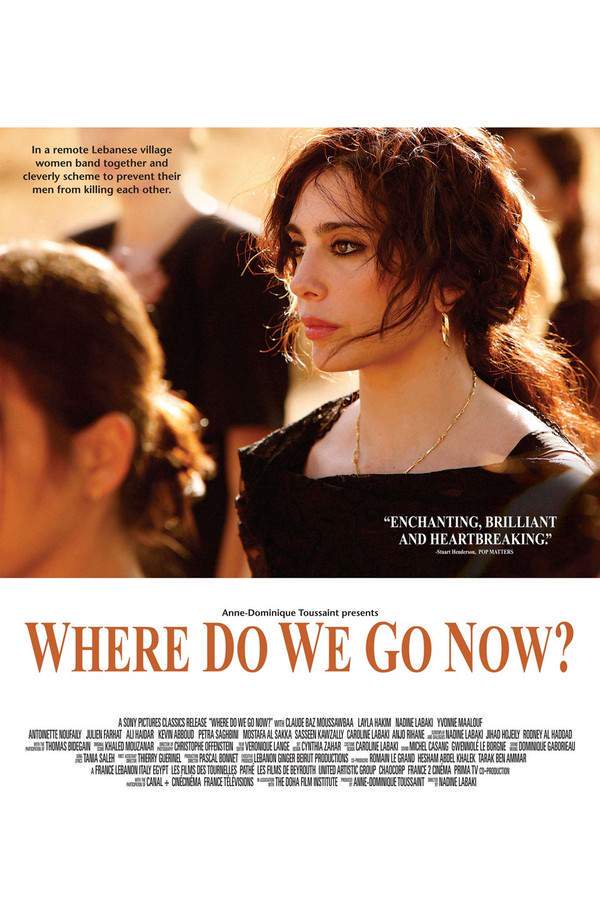
Where Do We Go Now? (2012) movie poster

Plot Summary

Where Do We Go Now? (2012) Plot Summary Explained

Release, runtime and language
2012 · 110 min · Arabic
Loading streaming availability…
Starring
Nadine Labaki, Claude Baz Moussawbaa, Leyla Hakim, Yvonne Maalouf

In a Lebanese village where Christians and Muslims live side-by-side, the women devise elaborate schemes to prevent conflict between the two communities. When tensions rise due to a dispute over a valuable olive tree, the women resort to increasingly outlandish tactics to maintain the fragile peace. Their methods range from staging miraculous events to importing distractions, all in an effort to keep the men from escalating the situation into a full-blown feud and preserve the village’s unique harmony.

On this page (6)
  1. 1 Where to watch
  2. 2 What happens: full plot
  3. 3 Plot questions answered
  4. 4 The book behind the movie
  5. 5 Movie threads
  6. 6 Every angle
Loading streaming availability…

Full plot summary · contains spoilers

What Happens in Where Do We Go Now?: Full Plot Summary

The whole story of Where Do We Go Now? (2012) explained, from the opening scene to the final frame: every key event, every twist and what it all adds up to. Read it as a quick recap before the sequel, to check a scene you missed, or to finally understand what really happened.

Where Do We Go Now? unfolds the poignant tale of a secluded Lebanese village, where both Muslims and Christians coexist. This village, encircled by landmines and accessible solely by a narrow bridge, becomes a microcosm of the civil unrest plaguing the country. The women of this village embark on a mission, employing various strategies with mixed results, to keep their men oblivious to the escalating conflict. They sabotage the village radio and eventually destroy the community's only television.

The narrative kicks off with a young boy named Roukoz, who, accompanied by his cousin Nassim, undertakes the crucial task of venturing outside the village to retrieve essential supplies such as soap, utensils, and newspapers. Roukoz resides with Nassim's family, mourning the loss of Nassim's father. In a moment of unfortunate clumsiness, Roukoz attempts to repair the church speakers but falls, shattering the cross in the process.

As the plot unfolds, we meet several pivotal characters: the village mayor and his wife Yvonne](/actor/yvonne-maalouf), the cafe owner Amal, who captivates the attention of Rabih, the village painter, and Nassim's brother Issam along with his wife Aida, not to mention the village priest and the imam. During a Sunday mass, the priest addresses the congregation, emphasizing the need for church repairs while attributing the broken cross to the wind. He reassures the attendees, reminding them that their fellow Muslims are not at fault.

Tensions rise when the imam discovers goats roaming the mosque, pleading with his community not to blame the Christians. Despite his efforts, a confrontation arises as a Muslim man points fingers at the Christians, igniting a brief altercation.

As the village teeters on the brink of chaos, the women cleverly band together to prevent their men from escalating the violence. They go so far as to hire Ukrainian dancers for entertainment. However, tragedy strikes when Nassim falls victim to interfaith violence, causing the women to confront their most significant challenge yet. In a bold move to regain control, they concoct sweet pastries laced with hashish for the men, confiscating their weapons in the process. Upon waking, the men are met with a startling sight: all the Christian women disguised in Muslim garb and vice versa. This audacious act presents a daunting challenge to their husbands and sons, forcing them to confront their sectarian prejudices.

To everyone's astonishment, Nassim's funeral proceeds peacefully, culminating in a transformed dynamic where the men look to the women for guidance and direction, hinting at the possibility of unity amidst division.

Last updated: November 08, 2024 at 02:44

Was this helpful?

Plot questions answered

Where Do We Go Now? Plot Explained: Your Questions Answered

The questions people ask most about Where Do We Go Now? (2012): what happens in the confusing scenes, why the characters do what they do, the twists, hidden details and what the ending means. Each answer contains spoilers.

Q1

Why do the women destroy the village television and radio?

The women sabotage the village's only television and radio because these media outlets are spreading news about the escalating civil conflict outside the village. By cutting off this information, the women hope to prevent their husbands, brothers, and sons from learning about the growing sectarian violence and becoming agitated or motivated to join the fighting.

  • television
  • radio
  • media
  • peace
  • distraction
Q2

What triggers the conflict between Christians and Muslims in the village?

Tensions rise after two incidents: Roukoz accidentally breaks the church cross while fixing speakers, and goats are found inside the mosque. Although both are accidents, some villagers use these events to blame the other religious group, sparking confrontations between the communities.

Foreshadowing: The broken cross and the goats in the mosque are presented early, creating suspicion that builds throughout the film.

  • cross
  • mosque
  • goats
  • sectarian
  • tension
Q3

How do the hashish pastries help the women's peace efforts?

After Nassim's death, the women bake pastries laced with hashish and serve them to the men. The drugs incapacitate the men overnight, giving the women time to confiscate all the village weapons. When the men wake up disoriented and weaponless, they are forced to confront the women dressed in each other's religious clothing, breaking down their prejudices.

  • hashish
  • weapons
  • pastries
  • drugs
  • disguise
Q4

Why do the women dress in each other's religious clothing?

After drugging the men with hashish pastries, the women appear before their husbands and sons wearing the opposite group's religious attire, Christian women in Muslim hijabs and vice versa. This shocking visual forces the men to confront how meaningless religious differences are when they cannot even recognize their own wives and mothers, breaking down their sectarian biases.

  • disguise
  • religion
  • clothing
  • prejudice
  • unity
Q5

What happens to Nassim and why is his death important?

Nassim, the young cousin of Roukoz, becomes a victim of interfaith violence, dying in the conflict between Christians and Muslims. His death is the turning point that drives the women to their most extreme measures, the hashish pastry scheme. It demonstrates that the sectarian tensions have already claimed a life, making the women's peace mission urgently necessary.

Foreshadowing: Nassim's earlier journey outside the village establishes him as a vulnerable character vulnerable to the violence brewing around them.

  • Nassim
  • death
  • murder
  • violence
  • turning point
Q6

Why do the women hire Ukrainian dancers to perform in the village?

The women hire Ukrainian dancers as a distraction to keep the men entertained and prevent them from focusing on the outside conflict or local tensions. By providing amusement, the women hope to maintain peace and stop the men from escalating disputes into violence.

  • Ukrainian
  • dancers
  • distraction
  • entertainment
Q7

What happens when Roukoz breaks the church cross?

When Roukoz falls while trying to repair the church speakers, he accidentally breaks the cross. The priest covers for him during Sunday mass, telling the congregation it was damaged by wind and urging them not to blame Muslims. However, this incident contributes to the growing suspicion between religious groups and serves as a symbol of how easily perceived insults can be weaponized.

Foreshadowing: The priest's quick cover-up suggests he knows how dangerous even accidental incidents can become in the tense atmosphere.

  • cross
  • church
  • Roukoz
  • accident
  • blame
Q8

What changes in the village after the disguise scene?

After the women confront their men disguised in opposite religious clothing, the village undergoes a transformation. Nassim's funeral proceeds peacefully, and the men begin looking to the women for guidance rather than conflict. The dynamic shifts toward cooperation and unity, with the villagers showing commitment to moving beyond their divisions.

  • funeral
  • unity
  • peace
  • transformation
  • leadership
Q9

Why is the village surrounded by landmines and accessible only by a bridge?

The village is secluded and surrounded by landmines, reachable only by a narrow bridge, representing its isolation from the civil unrest consuming the rest of Lebanon. This physical isolation creates a fragile microcosm where the community must coexist, while the outside world's conflicts constantly threaten to breach their sanctuary.

  • landmines
  • bridge
  • isolation
  • village
  • safety
Q10

What is the film's message about sectarian conflict?

The film suggests that peace requires creative, unconventional approaches when rational arguments fail. It highlights how women, often excluded from political and religious conflicts, can act as bridges between divided communities. The hopeful ending implies that unity is possible even after tragedy, though it requires challenging deep-rooted prejudices.

  • peace
  • unity
  • sectarian
  • conflict
  • message

Movie threads

More Movies Like Where Do We Go Now?, by Mood & Story

Curated lists built around what makes Where Do We Go Now? tick: the same mood, the same kind of story or the same emotional payoff. Each list explains why these movies belong together.

Community peacemaking stories like Where Do We Go Now?

Stories where a tight-knit community creatively works to overcome internal divisions. If you liked the collective spirit and ingenious schemes in Where Do We Go Now?, explore more movies about communities banding together. These films feature villages, towns, or neighborhoods using creativity and heart to overcome religious, political, or social divisions and maintain their fragile peace.

  • communal
  • hopeful
  • tense
  • quirky
  • determined
  • satirical
  • Tone: hopeful, communal, satirical
  • Pacing: steady, character-driven
Why these movies?

The story pattern: Stories in this thread typically follow a closed community facing a fracture along ideological lines. The plot is driven not by a single hero but by the collaborative, sometimes clandestine, actions of the community members—often the women—who devise clever, unconventional methods to de-escalate tensions and remind everyone of their shared humanity, often leading to a hopeful resolution.

Why they belong together: These movies are grouped by their shared focus on a microcosm of society, a steady pacing that builds community atmosphere, and a tone that balances serious themes with hopeful, often humorous, resilience. They explore how collective action and cleverness can triumph over entrenched conflict.

Movies about feminine ingenuity like Where Do We Go Now?

Films where women use wit and unconventional tactics to subvert conflict. For viewers who enjoyed the clever, subversive women in Where Do We Go Now?, this list highlights films where female characters use humor, strategy, and solidarity to cleverly navigate and de-escalate male-driven conflicts, creating a mix of serious themes and uplifting resolve.

  • determined
  • quirky
  • satirical
  • hopeful
  • tense
  • urgent
  • Tone: hopeful, satirical, determined
  • Pacing: steady
Why these movies?

The story pattern: The narrative pattern revolves around a group of women who perceive a looming threat that the men in their world are blind to or fueling. The plot unfolds through their escalating, often secretive plans—which can range from strategic lies to orchestrated distractions—to protect their community and families. The journey emphasizes collective female wisdom and the power of non-confrontational resistance.

Why they belong together: These films share a specific character dynamic: a focus on female-led strategies for peacemaking. They are united by a tone that finds hope and humor in dark circumstances, a medium emotional weight that balances gravity with levity, and a thematic core of using unconventional 'feminine' methods to achieve serious goals.

Every angle

Where Do We Go Now? (2012) Explained: Plot, Timeline & Characters

Everything about Where Do We Go Now? in one place: what happens in the plot summary, the timeline in chronological order, the characters and meaning and a spoiler-free summary. What's After the Movie adds the cast, box office and post-credit scenes.

Coming soon on iOS and Android

The Plot Explained Movie Summary App

Plot summaries, endings explained and timelines on your phone. Catch up on any movie in minutes, save your favorites and never miss a twist again.

Be the first to know when we launch. Your email stays private, always.

Learn more about the app