


Plot Explained Spoilers guaranteed!
Plot Explained

Browse by genre

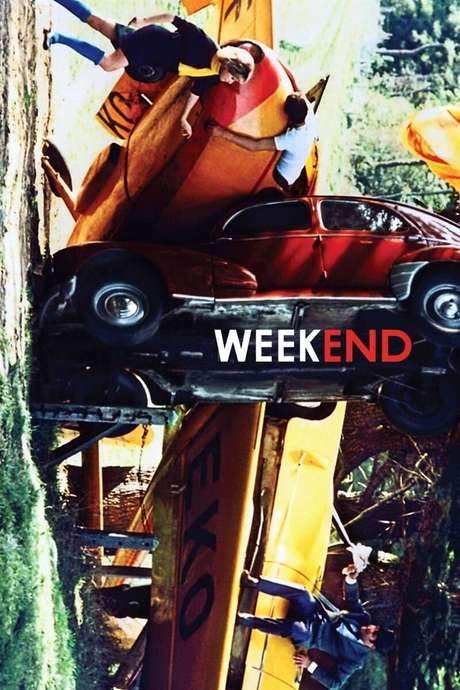
Weekend (1967) movie poster

Timeline

Weekend (1967) Timeline Explained – Every Event in Order

Release, runtime and language
1967 · 104 mins · French
JustWatch #14,546 20
Directed by
Jean-Luc Godard
Starring
Juliet Berto, Jean Eustache, Anne Wiazemsky, László Szabó, Jean Yanne, Georges Staquet

The film follows a seemingly peaceful weekend getaway to the French countryside that quickly devolves into a relentless nightmare of endless traffic snarls, revolution, gruesome cannibalism and brutal murders, exposing the collapse of bourgeois complacency under its own consumerist excesses.

On this page (6)
  1. 1 Where to watch
  2. 2 Events in order (10)
  3. 3 Timeline questions answered
  4. 4 Movie threads
  5. 5 Movies like Weekend
  6. 6 Every angle

Where to watch

Where to Watch Weekend (1967)

Where can you watch Weekend? Stream, rent or buy it in the US, including on HBO Max: current JustWatch availability with up-to-date prices.

Streaming availability powered by JustWatch

10 events in order · contains spoilers

Weekend Timeline: Events in Chronological Order

Every key event of Weekend (1967) in order, scene by scene, with when and where it takes place. Use it to untangle flashbacks, time jumps and parallel storylines, to refresh your memory before the sequel or to find the exact scene you are thinking of.

  1. Conspiracy and inheritance plans

    Roland and Corinne Durand are presented as a bourgeois couple hiding secret lovers, each nursing a plan to murder the other. They resolve that killing the other may be necessary to secure Corinne's inheritance. They set out to drive to Corinne's parents' country home, hoping distance and strangers might mask their schemes.

    Where
    France – en route to Corinne's parents' country home
  2. Troubled road trip begins

    From the outset the journey is tense, with whispered accusations and sly plots bubbling beneath polite conversation. The couple speaks of inheritance and murder in hushed tones while pretending normalcy on the road. The trip marks the start of a chaotic, episodic odyssey through the French countryside.

    Where
    French countryside road
  3. The Facel-Vega collision

    Their Facel-Vega is involved in a violent collision, destroying the car and throwing their plans into further disarray. The crash strips away any veneer of control and thrusts them into a string of strangers and surreal encounters. The roadside wreck serves as the film's literal and metaphorical breaking point.

    Where
    Country road
  4. A string of society vignettes

    They wander through a sequence of vignettes that parody class struggles and social hierarchies. Among these episodes are encounters with figures from literature and history, including Saint-Just and Emily Brontë, which blur the line between fiction and reality. The episodes function like interludes that destabilize the couple's purpose and drive.

    Where
    French countryside
  5. Metafictional reflections emerge

    A metafictional thread emerges as characters become self-aware about their role in a film. A driver asks Roland whether they are in a film or in reality, highlighting the artificiality of their situation. Interspersed intertitles reinforce Godard's signature commentary on cinema.

    Where
    On the road
  6. Film form interrupts the journey

    Scenes alternate between in-car dialogue and frame-breaking interruptions as intertitles appear, signaling a formal turn in Godard's style. The duo searches for a car to Oinville, yet the narrative never settles into a conventional plot. The Italian co-production is referenced within the dialogue, underscoring the film's production context.

    Where
    On the road; searching for a car to Oinville
  7. Arrival at the parents' house

    They finally reach Corinne's parents' place only to discover her father has died. The mother refuses to share the inheritance, souring the couple's hopes. The moment shifts the tone from satire to grim consequence.

    Where
    Corinne's parents' house
  8. Murder of the mother

    The couple murders Corinne's mother to claim a portion of the spoils and continue their journey. The act underscores the collapse of their plan and the fragility of their social pretensions. They drive away into an increasingly fractured world.

    Where
    Corinne's parents' house
  9. Encounter with revolutionary extremists

    On the road again, they fall into the hands of a group of hippie revolutionaries calling themselves the Seine and Oise Liberation Front. The group supports themselves through theft and cannibalism, reflecting the film's radical shift into violence and political theater. The couple's precarious position deepens as law and order blur into chaos.

    Where
    French countryside, with the revolutionary group
  10. Roland's gruesome end

    During an escape attempt, Roland is killed by the group. His body is chopped up and cooked, delivering a brutal and shocking finale to the couple's road-bound collapse. The film closes on a note of violence that underscores its anti-bourgeois critique.

    Where
    Hippie group hideout

Last updated: February 03, 2026 at 07:41

Was this helpful?

Timeline questions answered

Weekend Timeline Explained: Your Questions Answered

When does it happen, and why in that order? The questions people ask about the chronology of Weekend (1967): time jumps, flashbacks, cause and effect between scenes and the correct order of events, each answered with spoilers.

Q1

Why are Roland and Corinne planning to kill each other?

Both Roland and Corinne each keep a secret lover and want to murder their spouse to secure Corinne's inheritance from her dying father. They view murder as a necessary tool to claim the fortune, viewing the trip as an opportunity to carry out their plans under the guise of a normal weekend visit.

Foreshadowing: Early in the film, their whispered discussions about inheritance and murder reveal their mutual deception before they even leave.

  • Roland
  • Corinne
  • murder plot
  • inheritance
  • secret lovers
  • conspiracy
Q2

What happens to the Facel-Vega car?

Their Facel-Vega is destroyed in a violent collision on the road to Corinne's parents' home. This crash serves as both a literal and metaphorical breaking point, it strips away their remaining control and thrusts them into a series of strange encounters, marking the shift from tense plotting to chaotic unraveling.

Foreshadowing: The journey begins with tension and whispered accusations, building toward this violent disruption of their plans.

  • Facel-Vega
  • car crash
  • collision
  • road trip
  • breakdown
Q3

What is the significance of characters asking if they are in a film?

The film deliberately incorporates metafictional moments where characters question whether they are in a film or reality. A driver directly asks Roland this question, and intertitles appear to comment on the action. This is Godard's signature style, breaking the fourth wall to highlight the artificiality of cinema and the constructed nature of the narrative itself.

Foreshadowing: The self-aware moments increase as the story becomes more chaotic, reinforcing the film's critique of bourgeois theater.

  • metafiction
  • film within film
  • Godard
  • reality
  • fourth wall
Q4

Why do Roland and Corinne murder Corinne's mother?

After arriving at the house, they discover Corinne's father has died, but her mother refuses to share any inheritance with them. Frustrated and having traveled so far, they murder the mother to claim their portion of the spoils and continue their journey. The act represents the complete collapse of their pretensions and the fragility of family bonds.

Foreshadowing: Their earlier discussions about murder being necessary foreshadows this willingness to kill even family.

  • Corinne's mother
  • murder
  • inheritance
  • family
  • killing
Q5

Who are the hippie revolutionaries in the film?

They encounter a group calling themselves the Front de Libération de la Seine et Oise, hippie revolutionaries who sustain themselves through theft and cannibalism. Led by Le Chef, they represent the film's extreme critique of bourgeois society, turning the couple's consumerist violence back on them in the most brutal way possible.

Foreshadowing: The film progressively shifts from satirical comedy to increasingly grim violence as the couple descends further from their privileged world.

  • revolutionaries
  • cannibals
  • hippies
  • Front de Libération
  • Le Chef
  • political violence
Q6

What happens to Roland at the end?

During an escape attempt from the revolutionary group, Roland is killed. His fate is particularly gruesome, the group chops him up and cooks him, literally consuming him as food. This brutal conclusion delivers the film's starkest critique of bourgeois complacency, showing the upper class literally devoured by the forces their own excesses have created.

Foreshadowing: The revolutionaries' cannibalism is established earlier as their method of survival, making this outcome inevitable once they capture the couple.

  • Roland death
  • cannibalism
  • cooked
  • eaten
  • gruesome ending
  • fate
Q7

What is the purpose of the surreal vignettes and historical figures like Saint-Just?

After the car crash, Roland and Corinne wander through a series of bizarre encounters that parody class struggles and social hierarchies. They meet figures from literature and history, including Saint-Just and Emily Brontë, which blur the line between fiction and reality. These surreal vignettes function as destabilizing interludes that critique French society and its historical violence while reflecting the couple's psychological unraveling.

Foreshadowing: These episodes establish the film's shift from realistic satire to something more nightmarish and unpredictable.

  • surreal
  • vignettes
  • Saint-Just
  • Emily Brontë
  • class struggle
  • historical references
Q8

What is Weekend criticizing about society?

The film serves as a relentless critique of bourgeois complacency and consumerist excess. Roland and Corinne embody the corrupt elite, each plotting murder for money while maintaining polite social facades. Their journey through the French countryside exposes the violence inherent in class society, culminating in their destruction by the very radical forces their privileged lifestyle has created. The cannibalism literalizes the metaphorical consumption of the masses by the bourgeoisie.

Foreshadowing: The couple's murder plot and inheritance greed establish their role as representatives of a corrupt system.

  • critique
  • bourgeois
  • consumerism
  • class
  • society
  • capitalism
  • social commentary
Q9

Why does the film have such a fragmented, unconventional structure?

Godard's Weekend deliberately abandons traditional narrative coherence, using intertitles, self-aware characters, and episodic vignettes to challenge cinematic conventions. This fragmented form mirrors the breakdown of social order depicted in the story, nothing stays controlled, including the film itself. The lack of resolution reflects the film's bleak philosophy: there is no escape from the violence and decay of bourgeois society.

Foreshadowing: The metafictional elements from early on establish that conventional storytelling rules do not apply.

  • structure
  • Godard
  • fragmented
  • narrative
  • unconventional
  • art film

Movie threads

More Movies Like Weekend, by Mood & Story

Curated lists built around what makes Weekend tick: the same mood, the same kind of story or the same emotional payoff. Each list explains why these movies belong together.

Movies about misanthropic social collapse like Weekend

Stories depicting the violent and chaotic unraveling of modern civilization. For viewers who enjoyed the savage breakdown of society in Weekend, this list features films with similar themes of anarchic violence, bourgeois decay, and nihilistic despair. Discover more movies that explore the brutal end of civilization with unflinching, satirical eyes.

  • misanthropic
  • anarchic
  • nihilistic
  • brutal
  • satirical
  • chaotic
  • Tone: dark, nihilistic, satirical
  • Pacing: variable, escalating chaos
Why these movies?

The story pattern: Narratives in this thread typically follow characters, often from a privileged or complacent background, as they are thrust into a rapidly deteriorating world. The journey is one of descent, moving from order to chaos, exposing the thin veneer of civilization and culminating in a bleak, often hopeless, outcome.

Why they belong together: These films are grouped by their shared commitment to a dark, misanthropic worldview. They use intense violence, surreal imagery, and satirical critique to explore the idea that societal order is a fragile construct, and its collapse reveals humanity's underlying savagery.
Surreal satirical nightmare movies similar to Weekend

Bizarre and brutal journeys that use absurdity to critique society. If you liked the absurd traffic jams and cannibalistic bourgeoisie in Weekend, explore this collection of surreal satires. These movies use bizarre narratives and shocking violence to critique consumerism, class, and modernity, creating a uniquely unsettling viewing experience.

  • surreal
  • satirical
  • absurd
  • unsettling
  • bizarre
  • dark humor
  • Tone: satirical, dark, surreal
  • Pacing: variable, dreamlike
Why these movies?

The story pattern: The narrative pattern is less about traditional plot and more about a thematic descent. The story unfolds like a fever dream, moving through a series of escalating, bizarre vignettes that challenge the protagonist's and viewer's perception of reality. Logic is secondary to metaphor, leading to a conclusion that reinforces the central cynical argument.

Why they belong together: These movies are united by their method: they use surrealism and satire as primary tools. The combination of absurd situations with a darkly comedic, yet brutally serious, tone creates a specific niche of film that is both intellectually stimulating and viscerally disturbing.

If you liked this

Movies Like Weekend

Similar movies to Weekend: the same genre, themes or kind of story. Each one comes with its own plot summary, timeline and ending explained.

Browse all movie summaries

Every angle

Weekend (1967) Explained: Plot, Timeline & Characters

Everything about Weekend in one place: what happens in the plot summary, the timeline in chronological order, the characters and meaning and a spoiler-free summary. What's After the Movie adds the cast, box office and post-credit scenes.

Coming soon on iOS and Android

The Plot Explained Movie Summary App

Plot summaries, endings explained and timelines on your phone. Catch up on any movie in minutes, save your favorites and never miss a twist again.

Be the first to know when we launch. Your email stays private, always.

Learn more about the app