Plot Explained Spoilers guaranteed!
Plot Explained

Browse by genre

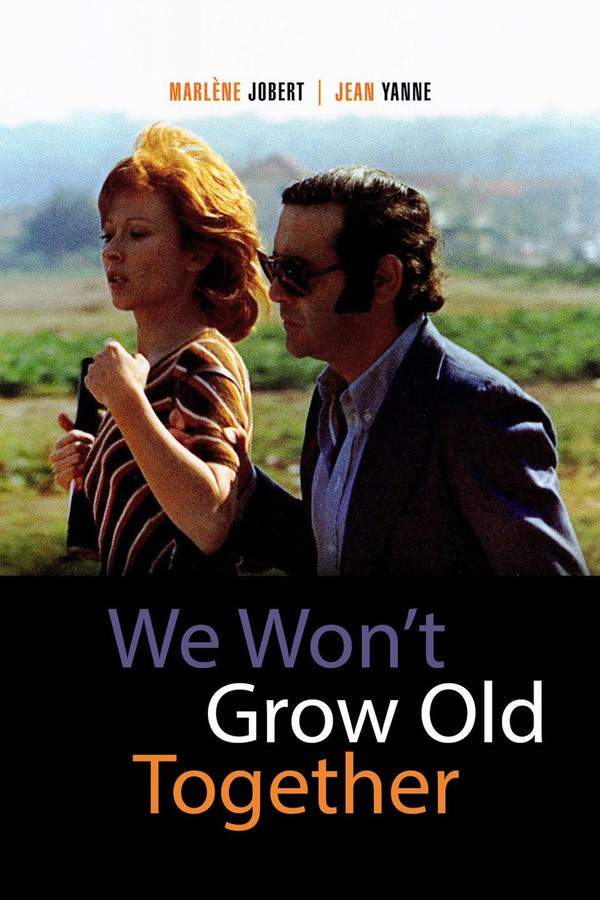
We Won’t Grow Old Together (1972) movie poster

Timeline

We Won’t Grow Old Together (1972) Timeline Explained – Every Event in Order

Release, runtime and language
1972 · 110 mins · French
Directed by
Maurice Pialat
Starring
Macha Méril, Jean Yanne, Maurice Risch, Marlène Jobert, Muse Dalbray, Patricia Pierangeli

Jean, a married 40‑year‑old filmmaker, and his young working‑class lover Catherine, navigate a repeatedly cyclical relationship marked by spectacular blow‑ups and tentative reunions. Their contrasting backgrounds and Jean’s marriage heighten the tension, while a relentless mutual desire reignites their passion again and again.

On this page (5)
  1. 1 Events in order (12)
  2. 2 Timeline questions answered
  3. 3 Movie threads
  4. 4 Movies like We Won’t Grow Old Together
  5. 5 Every angle

12 events in order · contains spoilers

We Won’t Grow Old Together Timeline: Events in Chronological Order

Every key event of We Won’t Grow Old Together (1972) in order, scene by scene, with when and where it takes place. Use it to untangle flashbacks, time jumps and parallel storylines, to refresh your memory before the sequel or to find the exact scene you are thinking of.

  1. Opening argument

    The film opens in the middle of a fierce argument between Jean and Catherine, immediately signaling the volatile nature of their affair. They exchange sharp critiques and uneasy displays of care, revealing a relationship built on tension as much as longing.

    Where
    Jean and Catherine's apartment
  2. Cycle of passion and instability

    Their relationship moves in repeating cycles of impulsive trips, quiet dinners, and emotional breakdowns, with Jean often turning from affection to cruelty. Catherine clings to moments of tenderness, even as the underlying instability keeps pulling them apart. The pattern underscores how little real commitment there is between them.

  3. Catherine seeks independence

    Catherine grows tired of waiting for Jean to change and starts envisioning a life beyond their affair. She visits her family and feels warmth and support that contrasts with Jean's volatility. The seeds of a possible escape from the relationship begin to take root.

    Where
    Catherine's family home
  4. Confronting life outside Jean

    She contemplates what an independent future might look like and questions whether staying with Jean is worth the cost. Her increasingly self-directed choices push the boundaries of their bond. The possibility of leaving becomes more than a rumor in her mind.

  5. Jean's apparent freedom

    At one point, Jean separates from his wife Françoise, seemingly fulfilling a long-standing promise. The split makes his situation feel newly liberated, yet it also exposes the emptiness of leaving without genuine commitment. Catherine's position in his life hangs on his ability to follow through.

  6. A healthier option emerges

    Catherine begins dating a new man who is kind, calm, and emotionally available. The contrast with Jean's erratic behavior becomes more pronounced, highlighting what a stable relationship could look like. She lets herself imagine real companionship rather than endless hope.

  7. Jean's flaws become clearer

    The presence of the new partner makes Jean's instability even more evident. His self-centered worldview clashes with the needs of a growing, independent Catherine. The gap between what he offers and what she deserves widens.

  8. He claims to love, but cannot commit

    Jean clings to the idea that he loves Catherine, yet his behavior remains unstable and uncommitted. The conflict between his words and actions intensifies. Catherine begins to recognize the fundamental mismatch in their relationship.

  9. Clarity about life apart from Jean

    Catherine's reflection on her growing independence deepens as she weighs what life could be without Jean. The possibility of a future beyond their affair feels more tangible. She starts to choose her own happiness over clinging to a flawed partnership.

  10. The final attempt to win her back

    In their last meeting, Jean tries to rescue the relationship by insisting that being 'free' now will bring Catherine back. He assumes his freedom changes everything she has waited for. Catherine listens, but her resolve hardens.

  11. The turning point

    Catherine is no longer the person who waited by the phone for scraps of attention. She asserts boundaries and recognizes her own worth. The transformation makes her decision feel anchored rather than emotional impulse.

  12. Catherine walks away

    Quietly but firmly, Catherine refuses to return to the old dynamic and chooses a life beyond Jean. She walks away from the relationship and from the man she once waited for, marking a final, decisive break.

Last updated: December 04, 2025 at 15:33

Was this helpful?

Timeline questions answered

We Won’t Grow Old Together Timeline Explained: Your Questions Answered

When does it happen, and why in that order? The questions people ask about the chronology of We Won’t Grow Old Together (1972): time jumps, flashbacks, cause and effect between scenes and the correct order of events, each answered with spoilers.

Q1

Why does Catherine finally leave Jean for good?

Catherine leaves because she has fundamentally changed during their relationship. By the time Jean finally separates from his wife, Catherine no longer needs him to be free, she's already built an independent life with her family's support and a new partner who is kind and emotionally available. She realizes she was only waiting for scraps of attention, and she recognizes her own worth. Jean's freedom comes too late; she's already moved on.

Foreshadowing: Earlier scenes show Catherine visiting her family and beginning to envision life outside Jean's orbit, planting the seeds of her eventual departure.

  • catherine
  • jean
  • breakup
  • independence
  • liberation
  • ending
Q2

Why does Jean finally leave his wife Françoise?

Jean separates from Françoise not out of genuine love for Catherine, but because he's unable to maintain the facade of his failing marriage any longer. His marriage had long fallen into routine and detachment. However, his decision is more about his own convenience than real commitment, his pattern of instability and self-centeredness suggests he leaves mainly to escape his own dissatisfaction, not to truly commit to Catherine.

Foreshadowing: The film opens with Jean's volatile behavior toward Catherine, showing his inability to provide stability long before he leaves his wife.

  • jean
  • françoise
  • marriage
  • separation
  • affair
Q3

Why does Catherine refuse Jean after he finally becomes free?

Catherine refuses because Jean's freedom doesn't change what was always broken between them. She waited six years for him to change, enduring his cruel outbursts and emotional instability. Now that she's built a life without him and found someone who actually offers stability, Jean's separation comes too late. His timing reveals his selfishness, he only left his wife when it benefited him, not when Catherine needed him.

Foreshadowing: Jean vacillates between affection and cruelty throughout the film, demonstrating his inability to truly commit even when Catherine was still waiting.

  • catherine
  • jean
  • refusal
  • commitment
  • timing
Q4

What causes Catherine to change her mindset about leaving Jean?

Catherine's transformation comes from multiple factors: spending time with her supportive family who offer warmth she doesn't receive from Jean, meeting a new man who demonstrates what a healthy relationship looks like, and gradually recognizing her own worth. As she sees contrast between her stable potential future and Jean's erratic behavior, she stops believing his empty promises and starts believing she deserves better.

Foreshadowing: Catherine's visit to her family home marks a turning point where she first imagines life beyond Jean.

  • catherine
  • transformation
  • growth
  • independence
  • family
Q5

Why do Jean and Catherine keep getting back together?

Their cycle repeats because neither can fully break free, Catherine clings to rare moments of tenderness while Jean uses affection and cruelty interchangeably to maintain control. Jean pleads for her to stay, they settle into fragile peace, then the pattern fractures again. This codependent dynamic keeps them trapped: Catherine hopes he'll change, and Jean needs someone to lean on emotionally despite being unable to truly give himself.

Foreshadowing: The film opens mid-argument, immediately showing they're locked in a pattern of conflict and reconciliation.

  • cycle
  • toxic
  • pattern
  • codependency
  • breakup
  • reconciliation
Q6

What role does Catherine's new boyfriend play in the story?

Catherine's new boyfriend serves as a mirror to Jean's failures. He's kind, calm, and emotionally available, everything Jean is not. This contrast makes Catherine see her situation more clearly and reinforces that she deserves stability. The healthier relationship option makes Jean's instability impossible to ignore, accelerating her decision to leave.

Foreshadowing: Before meeting this man, Catherine questions whether staying with Jean is worth the cost, showing she's already questioning the relationship.

  • new boyfriend
  • contrast
  • stability
  • alternative relationship
Q7

Why is Jean cruel to Catherine if he loves her?

Jean oscillates between affection and cruelty because he's emotionally unstable and self-centered rather than genuinely loving. His cruelty stems from insecurity and an inability to be vulnerable. He claims to love Catherine but his actions, vacillating between tenderness and cruelty, demonstrate he's incapable of real commitment. His pattern suggests he may not fully understand what love means beyond needing someone to depend on.

Foreshadowing: From the opening argument, Jean shows he can shift quickly from affection to condescension to cruelty.

  • jean
  • cruelty
  • love
  • instability
  • emotional abuse
Q8

Why does Catherine stay with Jean for six years despite his behavior?

Catherine stays because she loves Jean deeply and hopes he'll change, clinging to rare moments of tenderness. Her self-worth is tied to their relationship, and she likely feels trapped by the emotional intensity of their dynamic. Additionally, she may lack the confidence or resources to leave until she builds support through her family and the new relationship.

Foreshadowing: The opening argument shows Catherine exhausted from waiting for change, indicating her long-suffering patience.

  • catherine
  • patience
  • hope
  • dependency
  • six years
Q9

Is Catherine's departure a happy ending?

Catherine's departure is bittersweet but ultimately represents liberation. She escapes a toxic, codependent relationship that offered only emotional instability and conditional affection. While the film has a melancholic tone, her choice to walk away firmly is portrayed as her moment of self-assertion. She chooses a life of her own rather than continuing to wait for Jean to become someone he's incapable of being.

Foreshadowing: The film's melancholy tone frames her departure not as tragedy but as a necessary, earned transformation.

  • ending
  • liberation
  • freedom
  • happy ending
  • independence

Movie threads

More Movies Like We Won’t Grow Old Together, by Mood & Story

Curated lists built around what makes We Won’t Grow Old Together tick: the same mood, the same kind of story or the same emotional payoff. Each list explains why these movies belong together.

Movies about toxic relationships like We Won’t Grow Old Together

Unflinching looks into dysfunctional, obsessive, and emotionally destructive romances. If you were captivated by the raw and painful dynamic in We Won’t Grow Old Together, this list features similar movies about toxic relationships. Discover other films that explore emotional abuse, obsessive love, and the difficulty of leaving a destructive partnership with the same unflinching honesty.

  • raw
  • painful
  • oppressive
  • uncomfortable
  • frustrating
  • anxious
  • Tone: melancholic, raw, tense
  • Pacing: slow, character-focused
Why these movies?

The story pattern: Stories in this thread typically follow a central, dysfunctional couple locked in a repetitive cycle of blow-ups, reconciliations, and diminishing hope. The narrative is often character-driven, focusing on the psychological dynamics and power imbalances that keep the characters bound together, usually leading to a sad or bittersweet conclusion of separation or resigned acceptance.

Why they belong together: These films are grouped together because they share a commitment to depicting the harsh realities of love gone wrong. They prioritize emotional authenticity over romantic idealism, creating a specific and intense viewing experience defined by high emotional weight, a melancholic or tense tone, and a focus on psychological struggle.
Slow burn emotional dramas like We Won’t Grow Old Together

Character studies where tension and sadness build gradually to a powerful climax. For viewers who appreciated the gradual, immersive build-up of emotion in We Won’t Grow Old Together, this section highlights similar slow burn emotional dramas. Find movies that use a deliberate pace to explore heavy themes, complex characters, and deliver a powerful, often somber, emotional payoff.

  • slow burn
  • melancholic
  • heavy
  • immersive
  • sad
  • anxious
  • Tone: melancholic, heavy, anxious
  • Pacing: slow, deliberate, immersive
Why these movies?

The story pattern: The narrative pattern here is defined by a slow, steady pacing that prioritizes atmosphere and internal conflict over complex plot twists. The story unfolds through nuanced character interactions and long takes, building a sense of inevitable sadness or tension that culminates in a deeply felt, usually sad, ending.

Why they belong together: These movies are grouped by their shared approach to pacing and emotional impact. They use a slow, deliberate rhythm to create a specific vibe of immersion and heaviness. The similarity lies in the viewing experience itself: one of being slowly drawn into a difficult emotional reality rather than being carried by a quick plot.

If you liked this

Movies Like We Won’t Grow Old Together

Similar movies to We Won’t Grow Old Together: the same genre, themes or kind of story. Each one comes with its own plot summary, timeline and ending explained.

Browse all movie summaries

Every angle

We Won’t Grow Old Together (1972) Explained: Plot, Timeline & Characters

Everything about We Won’t Grow Old Together in one place: what happens in the plot summary, the timeline in chronological order, the characters and meaning and a spoiler-free summary. What's After the Movie adds the cast, box office and post-credit scenes.

Coming soon on iOS and Android

The Plot Explained Movie Summary App

Plot summaries, endings explained and timelines on your phone. Catch up on any movie in minutes, save your favorites and never miss a twist again.

Be the first to know when we launch. Your email stays private, always.

Learn more about the app