






Plot Explained Spoilers guaranteed!
Plot Explained

Browse by genre

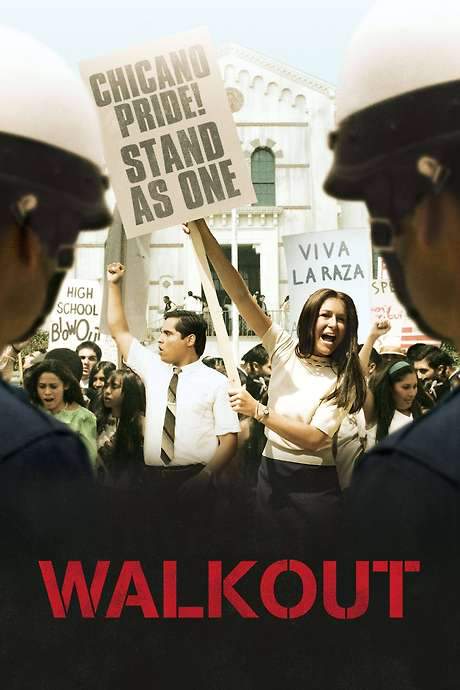
Walkout (2006) movie poster

Characters & Themes

Walkout (2006) Characters, Setting & Themes Explained

Release, runtime and language
2006 · 110 mins · English
JustWatch #29,797 1
Starring
P.J. Byrne, Michael Peña, Edward James Olmos, Laura Harring, Jesse Garcia, Douglas Spain

Based on true events, the film follows Sal Castro, a young Mexican‑American teacher in East Los Angeles who guides his students as they organize a peaceful walkout to demand better conditions and equal treatment in the public schools. Set amid the 1968 civil‑rights era, the story highlights their courage, the fight for justice and empowerment.

On this page (8)
  1. 1 Where to watch
  2. 2 Characters explained (12)
  3. 3 Where & when it takes place
  4. 4 Themes & meaning (3)
  5. 5 Character & meaning questions
  6. 6 Movie threads
  7. 7 Movies like Walkout
  8. 8 Every angle

Where to watch

Where to Watch Walkout (2006)

Where can you watch Walkout? Stream, rent or buy it in the US, including on HBO Max, Amazon Video and Apple TV Store: current JustWatch availability with up-to-date prices.

Streaming availability powered by JustWatch

12 main characters · contains spoilers

Walkout Characters Explained: Who Is Who

The main characters of Walkout (2006), heroes and villains: what drives them, how they change over the course of the story and what each of them reveals about the film's bigger ideas.

  • Paula Crisostomo

    played by Alexa PenaVega

    A determined student who challenges unequal treatment in East LA schools and emerges as a leader among the walkouts. She organizes surveys and pushes for concrete changes despite opposition from authorities and her father. Her courage drives the movement and she bears personal costs for speaking up for her peers.

    • ✊ Activist
    • 🎓 Student Leader
    • 🌆 Community
  • Sal Castro

    played by Michael Peña

    A Chicano teacher who inspires Paula and guides the student activists. He remains a steady mentor, challenging the system while navigating institutional pressures. His involvement anchors the movement in a classroom-to-community continuum.

    • 🎓 Teacher
    • 🧭 Mentor
  • Armando Lopez

    played by Jesse Garcia

    A member of the student group who shares in the movement and supports the organizing effort. He contributes to the surveys and helps sustain momentum among his peers. He embodies the collaboration and risk-taking of the student activists.

    • 👥 Ally
    • ✊ Activist
  • Vickie Castro

    played by Tonantzin Esparza

    A fellow student and ally within the movement who participates in organizing efforts. She represents the broader involvement of peers and family networks in supporting the cause. Her participation helps widen the movement’s reach.

    • 👭 Ally
    • 🌆 Community
  • Mickey Fernandez

    played by Pablo Santos

    Another student in the group who contributes to the walkout planning and survey distribution. He helps maintain group cohesion and executes tasks essential to the protest strategy.

    • 🎯 Student Leader
    • 🧭 Ally
  • Lloyd Hurley

    played by David Warshofsky

    A school administrator who embodies resistance to the proposed reforms. His stance highlights the friction between authorities and students seeking change.

    • 🏛️ Authority
    • 🚫 Opponent
  • Principal Ingles

    played by Holmes Osborne

    The school principal who warns of expulsion and upholds the administrative framework. He represents the top-down control that the students challenge.

    • 🏫 School Authority
    • 🗺️ Gatekeeper
  • Robert

    An undercover LAPD officer who informs the police about the group’s plans, complicating the students’ efforts. His involvement adds a layer of tension and betrayal to the movement.

    • 🕵️ Informant
  • Julian Nava

    played by Edward James Olmos

    A real-life civic figure who appears in the film and interacts with the education community during the movement. He represents the broader context of community leadership within the school system.

    • 🏛️ Civic Leader
    • 👥 Community Figure
  • Francis Crisostomo

    played by Laura Harring

    Paula’s mother, who navigates the tension between family concerns and the students’ activism. She embodies familial support and worry in a time of upheaval.

    • 👩‍👧 Family
    • 🗣️ Voice of Reason
  • Bobby Verdugo

    played by Efren Ramirez

    A student involved in the movement, contributing to the collective effort with peers as part of the walkout coalition.

    • 👥 Student
    • 🎭 Involvement
  • Payaso

    played by Luis Chávez

    A clown figure featured in protests, serving as a symbolic presence within the demonstrations and media portrayals.

    • 🎭 Symbol
    • 🤡 Protest Symbol

Last updated: October 04, 2025 at 12:23

Was this helpful?

Setting

Where and When Does Walkout Take Place?

The setting of Walkout (2006): the year and time period, the places and locations, and how they shape the characters, the mood and the tension of the story.

Time period

1968

Set during the late 1960s, the story sits within a climate of civil rights and Chicano movement activism. Students organize walkouts to demand fair treatment, bilingual resources, and better school policies. The period's tension is reflected in media coverage, police response, and the students’ escalating demands.

Location

East Los Angeles, Los Angeles

The events unfold across East Los Angeles high schools, showcasing a dense urban setting where Hispanic students face discrimination. The area is portrayed as a tight-knit, working-class community deeply connected to its schools and local culture. The film highlights the neighborhood's role as a center for activism and collective action in pursuit of educational justice.

  • ✊ East Los Angeles
  • 🏙️ Urban community
  • 🎓 Education inequity

Last updated: October 04, 2025 at 12:23

Was this helpful?

3 major themes

Walkout Meaning: Themes & Message Explained

What is Walkout (2006) really about? The emotional, social and philosophical themes the film keeps returning to, its symbolism and the message beneath the surface.

  • Activism

    The core of the film is student-led activism, with Paula and her peers organizing walkouts to pressure the school system. Their actions mobilize across multiple campuses and draw attention from the community and media. The narrative examines the personal risks and collective resolve involved in challenging authority.

  • Education Inequality

    The story exposes disciplinary practices that target Hispanic students, including punishments for speaking Spanish and locked bathrooms. Surveys are used to push for reform, but the school board resists change. The movement highlights systemic inequities in resources and access to higher education.

  • Community & Solidarity

    Families and community members join the protests, broadening the movement beyond students. This solidarity strengthens the push for dialogue with authorities and sustains momentum through collective action. The epilogue ties the protests to real-world outcomes, including increased Hispanic enrollment in colleges.

Last updated: October 04, 2025 at 12:23

Was this helpful?

Character & theme questions

Walkout Characters & Meaning: Your Questions Answered

The questions people ask about Walkout (2006): who the characters really are, their relationships, what the symbols mean, where it takes place and what the movie is really about. Each answer contains spoilers.

Q1

When does Walkout take place?

Walkout is set in 1968, during the late 1960s civil rights era and the height of the Chicano movement. This timing is significant because it was a period when minority communities across America were organizing to demand equal rights and systemic changes.

  • 1968
  • chicano movement
  • civil rights era
  • historical setting
  • 1960s
Q2

Where is Walkout set?

The film takes place in East Los Angeles, a densely populated urban working-class community with a predominantly Hispanic population. The story unfolds across several high schools in East LA, portraying the neighborhood as both a center of cultural identity and a hotspot for activism.

  • east los angeles
  • east la
  • setting
  • location
  • urban community
  • california
Q3

What is the Chicano movement depicted in Walkout?

The Chicano movement was a grassroots effort by Mexican-American communities in the 1960s and 1970s to fight for political rights, cultural recognition, and an end to discrimination. In Walkout, students organize peaceful walkouts to protest unequal treatment in schools, demanding bilingual education, better resources, and an end to racist disciplinary practices.

  • chicano movement
  • mexican american
  • civil rights
  • activism
  • protest
  • bilingual education
Q4

Who is Paula Crisostomo in Walkout?

Paula Crisostomo is the main protagonist and student leader of the East LA walkouts. Based on a real person, she organizes surveys to document unequal treatment at her school and becomes the face of the student movement, despite facing opposition from both authorities and her own father. Her determination drives the film's narrative.

  • paula crisostomo
  • student leader
  • protagonist
  • activist
  • alexa penavega
Q5

Who is Sal Castro in Walkout?

Sal Castro is a Chicano teacher at the East LA high school who becomes the mentor and guiding force behind the student activists. He inspires Paula and her peers, helping them channel their frustrations into organized action while navigating pressure from the school administration. He represents the bridge between classroom education and community activism.

  • sal castro
  • teacher
  • mentor
  • michael pena
  • chicano educator
Q6

What does Walkout say about education inequality?

Walkout exposes systemic inequities faced by Hispanic students in 1960s Los Angeles schools, including punishments for speaking Spanish, inadequate bathroom facilities, and limited access to college-preparatory courses. The film shows how surveys documenting these disparities became powerful tools for demanding reform from a resistant school board.

  • education inequality
  • school discrimination
  • spanish language ban
  • unequal treatment
  • bilingual resources
Q7

How does community support play a role in Walkout?

Community and solidarity are central to the film's message. Families and local residents join the student protests, transforming the walkouts from a school-based movement into a broader community effort. This collective action strengthens the students' negotiating position and ultimately contributes to real changes, including increased Hispanic college enrollment.

  • community support
  • solidarity
  • families
  • collective action
  • neighborhood
  • protests
Q8

What were the East LA walkouts of 1968?

The East LA walkouts were a series of peaceful student protests in March 1968 where thousands of Mexican-American students left their classes to demand equal educational opportunities. The real-life movement challenged discriminatory policies and became a landmark event in Chicano history, inspiring similar protests across the Southwest.

  • east la walkouts
  • 1968 walkouts
  • student protests
  • chicano protests
  • east los angeles protests
Q9

What role does activism play in Walkout?

Activism is the core theme of Walkout, depicting how students organized coordinated walkouts across multiple campuses to challenge institutional racism. The film examines the personal risks involved in speaking out, the strategic use of surveys and media attention, and the determination required to sustain a movement against powerful opposition.

  • activism
  • student activism
  • protest
  • organizing
  • resistance
  • civil disobedience
Q10

Who is the undercover cop in Walkout?

Robert is an undercover LAPD officer who infiltrates the student group, gathering information about their plans and passing it to authorities. His presence represents the surveillance and tension between the police and the activist community, adding an element of betrayal that complicates the students' efforts and heightens the stakes of their protest.

  • undercover cop
  • robert
  • lapd
  • police infiltration
  • betrayal
  • surveillance
Q11

Does Walkout have a happy or sad ending?

Walkout ends on a bittersweet note. The students achieve a meaningful victory, they secure reforms and their actions contribute to increased Hispanic college enrollment in subsequent years. However, the victory comes after experiencing betrayal, police violence, arrests, and significant personal costs to the activists and their families.

  • ending
  • resolution
  • victory
  • outcomes
  • legacy
  • bittersweet
Q12

Why does Paula's father oppose her activism?

Paula's father opposes her involvement in the walkouts because he fears for her safety and worries about the consequences of challenging authority. His resistance represents the tension between older generations who survived discrimination by staying quiet and the younger generation willing to risk everything for change. This conflict adds personal drama to the political story.

  • paula's father
  • family conflict
  • generational divide
  • parental concerns
  • fear of repercussions

Movie threads

More Movies Like Walkout, by Mood & Story

Curated lists built around what makes Walkout tick: the same mood, the same kind of story or the same emotional payoff. Each list explains why these movies belong together.

Movies about youth protest movements like Walkout

Stories where young people risk everything to fight for justice. If you liked the student activism in Walkout, explore more movies about young people fighting for justice. These similar dramas feature tense protests, high-stakes consequences, and the emotional weight of youth-led revolutions against systemic injustice.

  • urgent
  • tense
  • hopeful
  • inspiring
  • empowering
  • anxious
  • Tone: hopeful, tense
  • Pacing: steady, urgent
Why these movies?

The story pattern: These stories typically follow a clear arc: awakening to injustice, organizing a collective movement, facing severe consequences from authorities, and achieving a hard-won but meaningful victory. The focus is on the moral and emotional growth of the young leaders under extreme pressure.

Why they belong together: Movies in this thread share a high-intensity, hopeful tone driven by the energy of youth confronting powerful systems. They combine heavy emotional weight with inspiring acts of courage, creating a specific, potent mix of tension and empowerment.

Movies with bittersweet victories like Walkout

Where the fight for change leaves deep scars alongside the hope. Find more films like Walkout that explore the bittersweet cost of justice. These dramas show that major social change often comes with personal sacrifice, blending hopeful outcomes with the emotional residue of a difficult fight.

  • bittersweet
  • somber
  • hopeful
  • inspiring
  • heavy
  • reflective
  • Tone: bittersweet, hopeful
  • Pacing: steady, deliberate
Why these movies?

The story pattern: The narrative pattern involves a long, arduous struggle against injustice where the protagonists ultimately succeed in their tangible goals, but not without suffering betrayal, violence, or profound personal loss. The ending acknowledges the success while honoring the pain endured to achieve it.

Why they belong together: These films are grouped by their shared emotional conclusion: a victory that feels earned yet is tempered by the high cost paid to get there. They deliver a powerful, complex emotional payload that is both inspiring and sobering.

If you liked this

Movies Like Walkout

Similar movies to Walkout: the same genre, themes or kind of story. Each one comes with its own plot summary, timeline and ending explained.

Browse all movie summaries

Every angle

Walkout (2006) Explained: Plot, Timeline & Characters

Everything about Walkout in one place: what happens in the plot summary, the timeline in chronological order, the characters and meaning and a spoiler-free summary. What's After the Movie adds the cast, box office and post-credit scenes.

Coming soon on iOS and Android

The Plot Explained Movie Summary App

Plot summaries, endings explained and timelines on your phone. Catch up on any movie in minutes, save your favorites and never miss a twist again.

Be the first to know when we launch. Your email stays private, always.

Learn more about the app