Plot Explained Spoilers guaranteed!
Plot Explained

Browse by genre

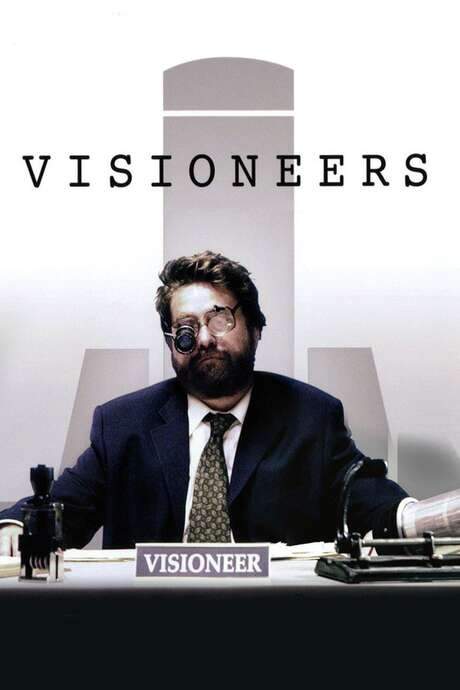
Visioneers (2008) movie poster

Timeline

Visioneers (2008) Timeline Explained – Every Event in Order

Release, runtime and language
2008 · 90 mins · English
Loading streaming availability…
Directed by
Jared Drake
Starring
Judy Greer, Zach Galifianakis, Fay Masterson, Aubrey Morris, Mía Maestro, Nancy De Mayo

Ever feel like you’re about to explode? In this slightly futuristic black comedy, Visioneer George Washington Winsterhammerman lives a comfortable but monotonous life. When explosions begin sweeping society and George shows early signs, he is forced to reexamine his job, marriage, aversion to life coaching, and happiness through activity.

On this page (6)
  1. 1 Where to watch
  2. 2 Events in order (14)
  3. 3 Timeline questions answered
  4. 4 Movie threads
  5. 5 Movies like Visioneers
  6. 6 Every angle
Loading streaming availability…

14 events in order · contains spoilers

Visioneers Timeline: Events in Chronological Order

Every key event of Visioneers (2008) in order, scene by scene, with when and where it takes place. Use it to untangle flashbacks, time jumps and parallel storylines, to refresh your memory before the sequel or to find the exact scene you are thinking of.

  1. Corporate dystopia under Jeffers

    In a near-future dystopia, the Jeffers Corporation looms as the dominant force in everyday life. Its creed claims that productivity equals happiness, and society worships relentless efficiency. The company even uses a middle-finger logo as the standard greeting, symbolizing the suppression of independent thought and intimacy.

  2. George's role and condition

    George Washington Winsterhammerman is a Level-3 'tunt' employee at Jeffers, a symbol of the system's quiet hierarchy. He suffers from overeating and impotence as a consequence of alienation within this culture. His body and mind reflect the cost of living under a machine-driven happiness.

  3. George's dreams begin

    George begins experiencing dreams in which he is the first President of the United States, wrestling with the fear of losing the Revolutionary War. He contemplates surrender to the British and wrestles with concepts of freedom and betrayal. These dreams feel like dangerous echoes of a past life that the society tries to erase.

  4. Dreams mistaken as stress and explosive danger

    Authorities tell him that dreams are a symptom of stress that leads to spontaneous bodily explosions, a problem that is spreading around the world. The state and Jeffers reinforce the official narrative, labeling inner visions as threats to public safety. The tension between dreaming and compliance grows.

  5. Inhibitors introduced to control explosions

    Government efforts to curb explosions intensify, culminating in neck-worn inhibitors created by the Jeffers Corporation. Even as the devices spread, people like George's coworker Todd continue to explode, illustrating the system's failure to root out the danger. The inhibitors become a symbol of control over personal inner life.

  6. Charisma fired; George reconnects with the café Charisma

    After Charisma, George's friend and superior, is fired, George discovers she now works at a café. He seeks her out there in an attempt to avoid unhappiness and reconnect with something human. The café setting becomes a small oasis amidst the corporate tyranny.

    Where
    Café
  7. Charisma reveals she shares dreams

    Charisma confides that she too has dreams and that they involve George and them running away together. The dreams hint at a shared longing for intimacy that the inhibitors cannot extinguish. Their conversation plants a fragile hope that love might still exist.

    Where
    Café
  8. Family fractures

    After his wife and son leave due to their own unhappiness, George feels the weight of personal loss. The breakdown of his family mirrors the larger breakdown of authentic connection in society. The personal becomes a political crisis in this dystopia.

  9. Mr. Jeffers probes George and signals purge

    Mr. Jeffers visits George, asking why he drew a sunset and expressing belief that George could be a nearly perfect Jeffers drone. He is impressed by George's potential and signals readiness to purge his dreams to end his anger and desire. He hints that removing what George loves most would silence the inner rebellion.

    Where
    George's home
  10. George reunites with Charisma; she is brainwashed

    George returns to Charisma and finds her brainwashed by the inhibitor program. The bond they once shared has been submerged beneath a wave of corporate control. The reunion exposes how deeply the inhibitors reshape personal relationships.

    Where
    Charisma's environment
  11. A yacht mission to kill Charisma

    To carry out the purge, George takes Charisma on a yacht with the intent of killing her, attempting to eradicate the source of his longing. The voyage becomes a twisted test of his will against the system's demands. The yacht scene marks a climactic turn in his struggle between love and obedience.

    Where
    Yacht
  12. Attempt to rekindle intimacy by removing the inhibitor

    During the voyage, George makes a final attempt to rekindle the intimacy they shared by removing Charisma's inhibitor. He hopes that freeing her will also free his own feelings. The act blurs the line between murder and mercy in a world that values control over emotion.

    Where
    Yacht
  13. Charisma's memory returns

    Charisma initially cannot remember George, but gradually recalls him and breaks into tears. The inhibitors' manufactured obedience collapses as genuine memory resurfaces. Their emotional release reveals a stubborn spark of humanity beneath the corporate sheen.

    Where
    Yacht
  14. Final embrace and vision of hope

    They embrace and spend the night together, a small victory for personal connection. In a final dreamlike moment, George imagines George Washington crossing in a canoe, salutes him, and basks in the sun. The scene leaves open whether true freedom can ever emerge from a society built on productivity.

Last updated: October 09, 2025 at 11:01

Was this helpful?

Timeline questions answered

Visioneers Timeline Explained: Your Questions Answered

When does it happen, and why in that order? The questions people ask about the chronology of Visioneers (2008): time jumps, flashbacks, cause and effect between scenes and the correct order of events, each answered with spoilers.

Q1

Why does George have dreams about being the first President?

George begins experiencing dreams where he is George Washington, the first U.S. President, wrestling with the fear of losing the Revolutionary War and even contemplating surrender to the British. These dreams represent his subconscious resistance to the oppressive Jeffers Corporation system. In the dystopian world of the film, such dreams are treated as dangerous symptoms of stress that can lead to spontaneous bodily explosions, making them a threat to the regime's control.

Foreshadowing: Early in the film, George is established as a direct descendant of the nation's first president, foreshadowing the symbolic connection to his ancestor.

  • george washington
  • dreams
  • president
  • ancestor
  • resistance
Q2

What causes the spontaneous explosions in the film?

The explosions are depicted as a physical manifestation of suppressed emotions and stress in a society that represses individuality and spontaneity. The Jeffers Corporation and government authorities claim these explosions result from uncontrolled inner feelings and dreams. While inhibitors are introduced to suppress these urges, they don't address the underlying emotional suppression, they merely dampen the symptoms. Even with inhibitors, people like George's coworker Todd continue to detonate, showing the system's fundamental failure.

Foreshadowing: The film establishes early that the oppressive corporate culture and suppression of emotion are the root causes, with authorities using the threat of explosions to justify greater social control.

  • explosions
  • stress
  • emotions
  • inhibitors
  • suppression
Q3

Why does Mr. Jeffers tell George to kill the thing he loves?

Mr. Jeffers visits George after seeing his sunset drawing, interpreting it as a sign of hidden creative potential and emotional depth. Believing George could become a 'nearly perfect Jeffers drone,' Mr. Jeffers suggests that purging his dreams and desires would eliminate his inner rebellion. The instruction to 'kill the thing he loves' is the system's solution to George-threatening the controlled order with his suppressed emotions and creativity. It represents the regime's belief that destroying personal connections is necessary for societal stability.

Foreshadowing: Mr. Jeffers' interest is piqued specifically by George's sunset drawing, which symbolizes hope and individuality in a world designed to squash such expression.

  • mr jeffers
  • purge
  • dreams
  • killing love
  • control
Q4

Why does George take Charisma on the yacht?

George takes Charisma on the yacht with the intent of killing her, following the system's demand that he 'kill the thing he loves' to purge his dreams and desires. He believes destroying their bond will silence his inner rebellion and make him compliant with the Jeffers way of life. The yacht mission represents George's internal conflict between obeying the system and honoring his genuine connection with Charisma. However, instead of killing her, he ultimately attempts to rekindle their relationship by removing her inhibitor.

Foreshadowing: This mission directly follows Mr. Jeffers' instruction to purge George of his emotions, showing how the system weaponizes love against its citizens.

  • yacht
  • charisma
  • kill
  • murder
  • purge
Q5

What happens when George removes Charisma's inhibitor?

When George removes Charisma's inhibitor, she initially cannot remember him due to the device's memory-suppressing effects. However, as George persists, buried memories resurface and Charisma begins to cry, recalling their past connection. The inhibitor's manufactured obedience collapses as genuine memory breaks through, allowing their emotional bond to reawaken. This moment demonstrates that authentic human connection cannot be fully erased by technological control, it survives beneath the surface.

Foreshadowing: Earlier, Charisma had revealed she also had dreams about George, hinting that their connection existed beyond what the inhibitors could suppress.

  • inhibitor
  • charisma
  • memory
  • removal
  • reconnection
Q6

Why does Charisma work at the café after being fired?

Charisma is fired from the Jeffers Corporation, and she subsequently finds work at a café, a setting that represents a small pocket of resistance and authentic human connection outside corporate control. The café becomes a gathering place for those who have been marginalized by the system. When George seeks her out there, he is attempting to reconnect with something human and meaningful in a world that has systematically stripped away intimacy and individual expression.

Foreshadowing: The film establishes Charisma as someone who once shared George's sense of purpose at Jeffers, making her departure and new life a logical continuation of her character's arc.

  • charisma
  • cafe
  • fired
  • job
  • resistance
Q7

What is the significance of the sunset drawing George makes?

George draws a sunset, which Mr. Jeffers interprets as a sign of unforeseen potential and creativity, qualities that threaten the controlled Jeffers system. The sunset symbolizes hope, beauty, and a future beyond the constraints of corporate productivity. Mr. Jeffers sees this drawing as evidence that George possesses an inner life that could either be harnessed or eliminated. The drawing represents the spark of individuality that the regime fears and seeks to extinguish.

Foreshadowing: This moment directly triggers Mr. Jeffers' interest in George and sets up the film's climactic conflict between conformity and authentic expression.

  • sunset
  • drawing
  • mr jeffers
  • hope
  • creativity
Q8

Why does George's wife and son leave him?

George's wife and son depart because they are unhappy in the oppressive society that the Jeffers Corporation has created. Their departure reflects the broader breakdown of family bonds and authentic connections in this dystopian world. The family's fracture mirrors the societal erosion of intimate relationships, showing how the system's emphasis on productivity over emotional fulfillment destroys personal lives. George's inability to prevent their leaving highlights his powerlessness within the regime.

Foreshadowing: The film establishes early that George suffers from overeating and impotence, symptoms of the alienation that ultimately drives his family away.

  • family
  • wife
  • son
  • leaving
  • divorce
Q9

What does George's final vision of George Washington crossing a river mean?

In the final scene, George experiences a vision of George Washington crossing a river in a canoe, saluting the horizon, and basking in the sun. This dreamlike moment represents hope and symbolic liberation. Just as Washington crossed the Delaware River to fight for independence, George symbolically crosses into a new phase of resistance through his connection with Charisma. The sun represents hope for freedom, though the film leaves open whether this represents true liberation or a small personal victory within an unchanged oppressive system.

Foreshadowing: George's dreams throughout the film have consistently featured George Washington, building toward this symbolic culmination of ancestral resistance.

  • final vision
  • washington river
  • sun
  • salute
  • freedom
Q10

What is the Jeffers Corporation in Visioneers?

The Jeffers Corporation is the dominant corporate entity that controls every aspect of society in the dystopian near-future. Its philosophy 'productivity equals happiness' has replaced genuine human fulfillment with relentless efficiency. The company uses a crude middle-finger logo as its greeting, symbolizing conformity and the suppression of independent thought. The corporation collaborates with the government to enforce social control through inhibitors and the suppression of dreams, creating a society that values output over human connection.

Foreshadowing: The film's opening establishes Jeffers as the heartbeat of daily life, with its philosophy woven into every aspect of society.

  • jeffers corporation
  • dystopia
  • corporate control
  • productivity
  • society
Q11

Why do inhibitors fail to prevent all explosions?

Inhibitors are neck-worn devices created by the Jeffers Corporation to suppress impulses and prevent the spontaneous bodily explosions blamed on stress and uncontrolled emotions. However, they fail to address the root cause of emotional suppression, they merely dampen symptoms. People like George's coworker Todd continue to explode despite wearing inhibitors, demonstrating that the devices cannot truly eliminate the human need for authentic expression and connection. The inhibitors represent the system's flawed approach of treating symptoms rather than understanding deeper human needs.

Foreshadowing: The film shows inhibitors being pushed as a universal solution, while simultaneously showing their limitations through ongoing explosions.

  • inhibitors
  • explosions
  • failure
  • suppression
  • treatment

Movie threads

More Movies Like Visioneers, by Mood & Story

Curated lists built around what makes Visioneers tick: the same mood, the same kind of story or the same emotional payoff. Each list explains why these movies belong together.

Satirical corporate dystopias like Visioneers

Stories where absurd corporate control exposes the fragility of modern life. If you liked the dystopian office life in Visioneers, explore more movies like it that blend dark comedy with critiques of corporate control. This collection features similar genre films where absurd futures reflect our own anxieties about society and work.

  • satirical
  • anxious
  • oppressive
  • dystopian
  • defiant
  • corporate
  • Tone: dark, satirical
  • Pacing: steady, observational
Why these movies?

The story pattern: The narrative often follows an ordinary individual who begins to crack under the weight of an oppressive, systematized society. Their small acts of rebellion or moments of clarity expose the absurdity of the system, leading to a personal crisis that questions the very foundations of their controlled world.

Why they belong together: Movies in this thread share a specific tone: a darkly comedic and anxious vibe born from depicting exaggerated yet recognizable systems of control. They connect through their focus on themes of individuality versus conformity and the psychological toll of living in a meticulously managed, but emotionally sterile, world.


Movies about quiet rebellion like Visioneers

Character-driven stories of small, personal defiance against overwhelming control. Find more films with characters like George from Visioneers, who engage in quiet rebellion. These movies like Visioneers explore similar themes of suppressed emotion and small acts of defiance within oppressive systems, often with a bittersweet tone.

  • reflective
  • defiant
  • anxious
  • claustrophobic
  • melancholic
  • hopeful
  • Tone: reflective, bittersweet
  • Pacing: steady, character-driven
Why these movies?

The story pattern: The journey is internal and methodical. A protagonist, suffocated by monotony or control, experiences a gradual awakening. Their rebellion is not explosive but quiet—a secret shared, a rule bent, a moment of genuine connection—that carries great personal risk but offers a fragile sense of hope and self.

Why they belong together: These films are grouped by their shared emotional arc: a meditative, steady-paced exploration of individualism that manifests in subtle ways. They resonate through a similar mood of reflective anxiety and a bittersweet ending feel, where a small personal win is achieved within a largely unchanging, oppressive structure.

If you liked this

Movies Like Visioneers

Similar movies to Visioneers: the same genre, themes or kind of story. Each one comes with its own plot summary, timeline and ending explained.

Browse all movie summaries

Every angle

Visioneers (2008) Explained: Plot, Timeline & Characters

Everything about Visioneers in one place: what happens in the plot summary, the timeline in chronological order, the characters and meaning and a spoiler-free summary. What's After the Movie adds the cast, box office and post-credit scenes.

Coming soon on iOS and Android

The Plot Explained Movie Summary App

Plot summaries, endings explained and timelines on your phone. Catch up on any movie in minutes, save your favorites and never miss a twist again.

Be the first to know when we launch. Your email stays private, always.

Learn more about the app