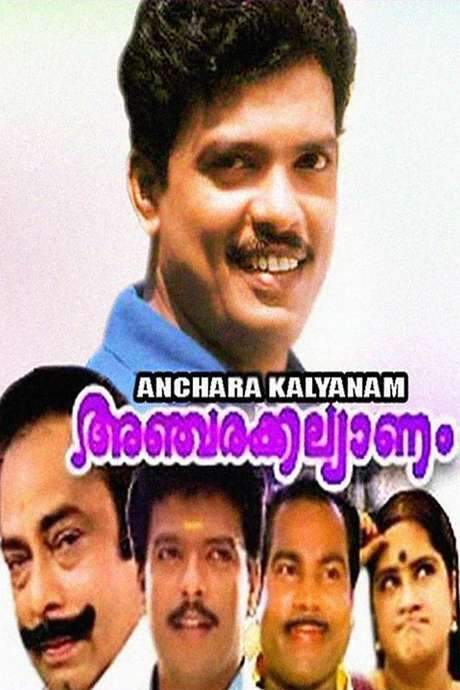
Three lifelong friends, Mahendran Thampi, Narendra Prasad, Omanakuttan Pillai, Jagathy Sreekumar, and Abraham Thomas, Oduvil Unnikrishnan, retire from their government posts and decide that a drama troupe could give their days a new spark. What begins as a shared hobby quickly turns into a larger project, as they recruit a writer and a manager to shape their venture. The trio enlist Attakulangara Ambujakshan, Oduvil Unnikrishnan for his experience and a steady hand with words, and Kattanam Kuttikrishnan, Indrans, to run the practical side of things. Their dream is to breathe life into stage performances and to prove that retirement can be a vibrant new chapter.
The search for performers leads them to Rajani, Kanaka, a young woman who is returning to the acting world to support her ailing father. Rajani’s warmth and talent quickly win the troupe over, and she steps into the lead role with a mixture of nerves and resolve. To guide them off stage and help polish the act, they rely on the wisdom of Odanavattom Omana, Philomina, a senior actress who becomes something of a mentor to Rajani and the younger performers. Yet it’s not long before old wounds and new temptations test the unity of the troupe.
Rajani’s past is not completely clean. Through Omana, the troupe learns that her earlier departure from acting was tied to troubles involving her husband, Vysakhan, Madhupal, though they are initially inclined to discount these warnings when Vysakhan appears to be a decent man. The troupe’s first show is a resounding success, and bookings roll in as audiences respond to the fresh energy and camaraderie on stage. Encouraged, the three founders push forward with renewed enthusiasm, hoping the streak will continue and that the troupe will become a lasting home for their artistic ambitions.
But life on the road is never simple. One of the supporting actresses elopes with Omanakuttan’s elder son, Santhosh, introducing a personal ripple that threatens the troupe’s stability. Simultaneously, lead actor Alexander quits after Rajani rebukes him for misbehaving with her, forcing Jayamohan Thampi, Manoj K Jayan, a former college-era talent who joins the troupe, to step in as the new lead. His return to performance rekindles his own long-lost passion for acting, and he begins to see the troupe as something more than a stopgap—it's a genuine community where his gifts can shine again.
Just as the troupe seems to be finding its footing, a dark truth erupts. Vysakhan reappears and, in a fit of rage, assaults Rajani, exposing his true predatory nature. Rajani, bruised but not defeated, makes the difficult decision to quit the troupe for her safety and future. The crisis deepens when Rajani’s father, [Gopi], reveals the full backstory: Vysakhan is his former disciple, a man who married Rajani only to squander her future, mounting debts and dangerous pressures that forced her into performing. This revelation reframes Rajani’s choice and underscores the stakes for everyone involved—the troupe’s survival, Rajani’s personal safety, and the risk to Jayamohan’s own happiness.
In the aftermath, Jayamohan makes a bold choice to stand by Rajani, despite the danger and family opposition. Rajani, torn between love and the well-being of those she has grown to care for, refuses a divorce at the court to protect Jayamohan and the troupe from further turmoil. Vysakhan retaliates with threats, hinting at fatal consequences if Rajani refuses to return. The tension comes to a head when Harinarayanan, Rajani’s father, [Gopi], makes a desperate move at the court and stabs Vysakhan to death, sacrificing himself to sever the danger looming over his daughter and her new life.
Years pass, and the bonds formed through trial and tragedy endure. Jayamohan and Rajani are now married, with Rajani pregnant, and they cross paths with Thampi, Omanakuttan, and Thomas—the trio's founders who have continued to nurture their drama troupe and prepare for a new production. The encounter is quiet but meaningful: it marks the continuation of a dream that survived heartbreak, betrayal, and danger, and it reaffirms the enduring power of friendship and art.
In the end, the story celebrates resilience. The troupe remains a living, breathing organism, a testament to what happens when retired friends turn to the stage not as a last act but as a renewed purpose. The film blends warmth, struggle, and a touch of nostalgia to show how communal art can heal old wounds and forge new futures, all while keeping true to its roots in theater, loyalty, and the stubborn, shared dream of three men who refused to fade away.