Year: 1951
Runtime: 102 mins
Language: English
Director: Lewis Allen
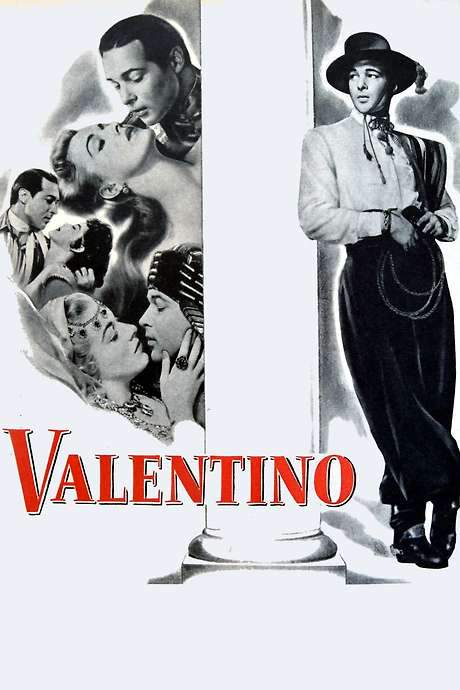
The film offers an authorized behind‑the‑scenes look at the life of Italian immigrant Rudolph Valentino, whose magnetic on‑screen presence made him a silent‑era icon adored by countless women. It traces his rapid ascent in Hollywood and the personal conflict that arises when his demanding career clashes with the woman he loves, exposing the tension between fame and romance.
Warning: spoilers below!
Haven’t seen Valentino yet? This summary contains major spoilers. Bookmark the page, watch the movie, and come back for the full breakdown. If you're ready, scroll on and relive the story!
Explore the full timeline and setting of Valentino (1951). Follow every major event in chronological order and see how the environment shapes the story, characters, and dramatic tension.
Last updated: October 04, 2025 at 14:20
Meet the key characters of Valentino (1951), with detailed profiles, motivations, and roles in the plot. Understand their emotional journeys and what they reveal about the film’s deeper themes.
Last updated: October 04, 2025 at 14:20
Explore the central themes of Valentino (1951), from psychological, social, and emotional dimensions to philosophical messages. Understand what the film is really saying beneath the surface.
Last updated: October 04, 2025 at 14:20
Browse frequently asked questions about Valentino (1951) focused on characters, relationships, themes, symbols, setting, and story context. This movie info FAQ gives spoiler-aware explanations for character arcs, world details, and thematic interpretation so readers can better understand what the film is really about.
Valentino is set during the 1910s through the mid-1920s, spanning the silent film era. The narrative captures Rudolph Valentino's rise from a penniless dancer to a Hollywood icon during this transformative period in cinema history, reflecting the era's rapid changes in celebrity culture and public fascination with film stars.
The story unfolds across multiple locations, beginning on a passenger ship voyage from Naples to New York, then moving to New York's nightlife, followed by Hollywood film studios, and later scenes in Malibu and Rudolph Valentino's Falcon's Lair estate. These locations trace the immigrant journey from arrival in America to rise to fame and the private life behind the public image.
Valentino explores three interconnected themes: Ambition, which drives Valentino's relentless pursuit of stardom from dancer to movie star and highlights the costs of meteoric success; Romance, which centers on his relationships with Joan and Lila, testing whether affection can endure fame and public scrutiny; and Fame and Scandal, which examines the tension between private desire and public spectacle, showing how media attention both fuels and threatens a celebrity's legacy.
Rudolph Valentino is the film's central figure, an Italian immigrant who rises from dancer to become one of cinema's first global icons. His magnetic charm fuels his rapid ascent in Hollywood, yet his relationships are constantly tested by fame and public scrutiny. The narrative follows his artistic triumphs, personal conflicts, and his untimely death, cementing his lasting legacy as a silent film star.
Bill King is a film director portrayed by Richard Carlson who discovers Rudolph Valentino in a club and pushes for him to star in films. He is married to actress Joan Carlisle, making him both a gatekeeper in casting decisions and a figure caught between professional and personal loyalties. His role illustrates Hollywood's power dynamics and how personal relationships intersect with career trajectories.
Joan Carlisle is an actress portrayed by Eleanor Parker who captiates Rudolph Valentino and influences casting decisions. She is married to director Bill King, creating a complex love triangle. Her relationship with Rudolph becomes a focal tension that affects both careers and personal choices, reflecting the complexities of love within the film industry.
Lila Reyes is a friend portrayed by Patricia Medina who becomes Rudolph Valentino's partner and later fiancée. She supports his career and personal decisions throughout his rise to fame. Her loyalty underscores the personal networks that accompany stardom, and she plays a crucial role in Rudolph's life as he navigates the challenges of celebrity.
Valentino offers an authorized behind-the-scenes look at the silent film industry, showing the transition from vaudeville and dance halls to Hollywood studios. The film depicts the era's rapid changes in fame, the emergence of celebrity culture, and the tabloid-style scrutiny that accompanied stardom. It captures both the excitement of rising fame and the personal costs that came with public obsession.
Falcon's Lair is Rudolph Valentino's private estate in Malibu, California, representing the pinnacle of his success in Hollywood. The location symbolizes the gap between his public image as a wealthy star and the private struggles behind that persona. Later scenes set at Falcon's Lair highlight the tension between his professional triumphs and personal life.
Luigi Verducci is a waiter portrayed by Joseph Calleia who befriends Rudolph on the voyage from Naples to America and later becomes his assistant in Hollywood. He lends Rudolph money for a tuxedo early in their journey and shares in the challenges of early fame. Luigi represents loyalty and practical support, serving as a steady friend amid the turbulence of the entertainment industry.
The film examines how fame creates a destructive cycle where public attention fuels a star's rise while simultaneously threatening their reputation. The narrative shows how photographers and gossip columns can destabilize celebrities, culminating in Valentino's highly visible death and memorial. The legacy endures as the film explores how fame shapes memory and public perception of celebrities.
Valentino traces Rudolph's journey from Italy to America, beginning with his voyage on a passenger ship from Naples to New York as a penniless immigrant. The film follows his struggle to find opportunity in the new world, eventually rising to fame through the emerging film industry. This immigrant narrative underscores the themes of ambition and the pursuit of the American Dream.
Discover curated groups of movies connected by mood, themes, and story style. Browse collections built around emotion, atmosphere, and narrative focus to easily find films that match what you feel like watching right now.
Biopics about luminous figures whose fame leads to a heartbreaking personal cost.Discover movies like Valentino that explore the lives of iconic stars destined for fame but doomed to tragedy. If you were drawn to the glamour and melancholy of Valentino's story, these films offer similar journeys of ambition, adoration, and the heavy price of stardom.
These stories follow a linear or episodic rise-to-fame structure, where initial success and public adoration are gradually undercut by personal demons, ill-fated relationships, or the immense pressure of fame, culminating in a tragic or sorrowful conclusion that reflects on the cost of a celebrated life.
Movies in this thread share a core formula: the glamorous allure of fame is inextricably linked with profound personal loss. They are united by a melancholic tone, a heavy emotional weight, and a narrative focus on the conflict between public persona and private suffering.
Intense romantic relationships shattered by external pressures and tragic fate.If the ill-fated romance in Valentino captivated you, explore these movies featuring passionate but doomed love stories. This collection highlights films where a powerful connection is tested by fame, circumstance, or tragedy, set against beautiful, often historical backdrops.
The narrative follows a couple whose deep love is challenged by an external conflict—be it fame, war, illness, or class division. The central tension arises from the clash between personal happiness and external pressures, leading to a separation or tragic end that leaves a lasting sense of yearning and loss.
These films are connected by their core emotional conflict: a great love story doomed from the start. They share a heavy emotional weight, high romance score, a melancholic or bittersweet tone, and a focus on the bittersweet beauty of a love that could not survive its circumstances.
Don't stop at just watching - explore Valentino in full detail. From the complete plot summary and scene-by-scene timeline to character breakdowns, thematic analysis, and a deep dive into the ending - every page helps you truly understand what Valentino is all about. Plus, discover what's next after the movie.
Read a complete plot summary of Valentino, including all key story points, character arcs, and turning points. This in-depth recap is ideal for understanding the narrative structure or reviewing what happened in the movie.
Track the full timeline of Valentino with every major event arranged chronologically. Perfect for decoding non-linear storytelling, flashbacks, or parallel narratives with a clear scene-by-scene breakdown.
Discover movies like Valentino that share similar genres, themes, and storytelling elements. Whether you’re drawn to the atmosphere, character arcs, or plot structure, these curated recommendations will help you explore more films you’ll love.
Valentino (1951) Plot Summary & Movie Recap
Valentino (1951) Scene-by-Scene Movie Timeline
Valentino (1951) Spoiler-Free Summary & Key Flow
Movies Like Valentino – Similar Titles You’ll Enjoy
The Barefoot Contessa (1954) Detailed Story Recap
Love (2025) Plot Summary & Ending Explained
My Secret Valentine (2018) Complete Plot Breakdown
Very Valentine (2019) Spoiler-Packed Plot Recap
Valentina (1982) Film Overview & Timeline
A Society Sensation (1918) Film Overview & Timeline
A Man in Love (1987) Ending Explained & Film Insights
Valentino Returns (1989) Plot Summary & Ending Explained
La Valentina (1966) Spoiler-Packed Plot Recap
Valentino (1977) Ending Explained & Film Insights
The Isle of Love (1920) Plot Summary & Ending Explained
Valerie Inside Outside (1972) Detailed Story Recap
Moonlight and Valentino (1995) Plot Summary & Ending Explained
A Place for Lovers (1968) Ending Explained & Film Insights
Vicenta (1920) Film Overview & Timeline