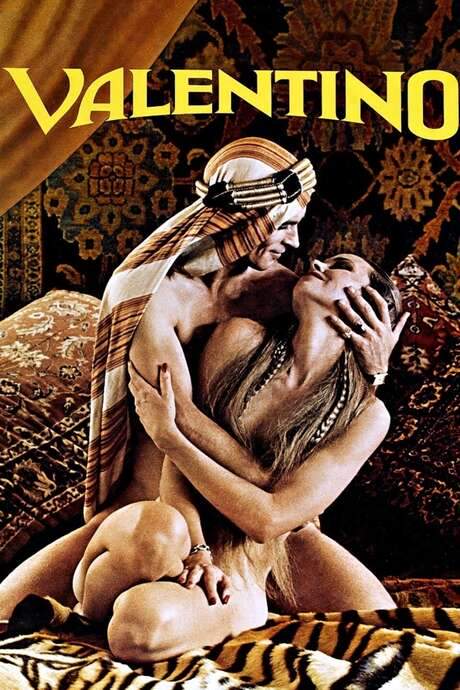
Valentino

Valentino

Year: 1951

Runtime: 102 mins

Language: English

Director: Lewis Allen

RomanceDrama

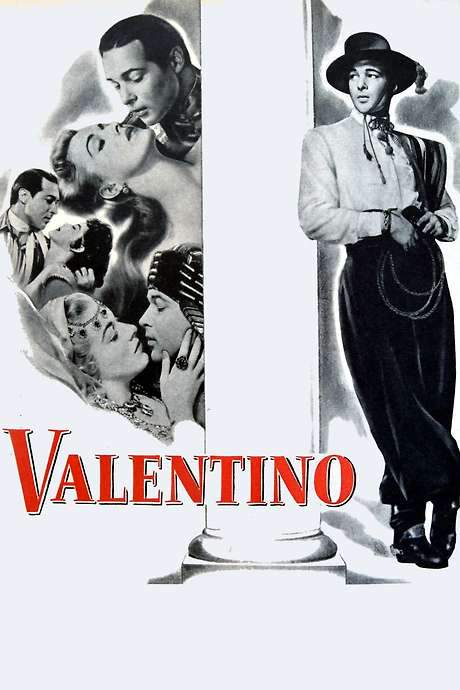
The film offers an authorized behind‑the‑scenes look at the life of Italian immigrant Rudolph Valentino, whose magnetic on‑screen presence made him a silent‑era icon adored by countless women. It traces his rapid ascent in Hollywood and the personal conflict that arises when his demanding career clashes with the woman he loves, exposing the tension between fame and romance.

Warning: spoilers below!

Haven’t seen Valentino yet? This summary contains major spoilers. Bookmark the page, watch the movie, and come back for the full breakdown. If you're ready, scroll on and relive the story!

Valentino (1951) – Full Plot Summary & Ending Explained

Read the complete plot breakdown of Valentino (1951), including all key story events, major twists, and the ending explained in detail. Discover what really happened, and what it all means.

This romantic biopic traces the life of Rudolph Valentino, the Italian-born performer who comes to the United States and rises to become a movie star, all while navigating love, ambition, and the price of fame. The story begins with a voyage from Italy to New York, where the young artist works as a dancer and crosses paths with Joan Carlisle — who is traveling under the alias Sarah Gray — and the pair quickly fall into a tender, transformative romance. Yet jealousy brews within the troupe, as Maria Torres’s leadership over the dance ensemble casts a shadow over Rudolph’s early dream, and she dismisses him in a moment of insecurity and pride.

Once in New York, Rudolph finds himself penniless and starts over as a dishwasher, befriending waiter Luigi Verducci. A fierce brawl lands him in trouble, but Luigi’s loyalty endures as Rudolph borrows money to buy a tuxedo and starts landing work as a nightclub dancer. Rudolph’s refined European dance style charms the club’s patrons and catches the eye of high-society women, while a pivotal evening brings film director Bill King into the room with Joan, hinting at a possible big break in Hollywood. Inspired by the scene, Rudolph agrees to give acting a try, nudging himself toward a future beyond nightclub performances.

The next steps bring him into the film world, where he appears in a small role opposite Lila Reyes and forges a friendship that will influence his career. Lila explains the behind-the-scenes influence Joan holds over casting, prompting Rudolph to secure a meeting with her. Their alliance soon deepens into a charged relationship, even as Joan’s feelings become tangled with her marriage and career. When Joan learns of Rudolph’s awareness of her influence, she accuses him of courting her merely for advantage, and Rudolph, feeling misunderstood, leaves in a mix of indignation and resolve.

Driven by ambition, Rudolph heads west to Hollywood. He starts with modest parts, dreaming bigger as he learns the rhythms of the studio system. A key audition for the lead role in The Four Horsemen of the Apocalypse becomes a turning point: Rudolph and Lila stage a bold, character-matching performance at a party hosted by Mark Towers, and the risk pays off when Towers agrees to cast him. The movie’s success vaults Rudolph into stardom and convinces him to bring Luigi to Hollywood as his assistant, a partnership that deepens his control over his own ascent and widens his circle in the industry.

As fame grows, Rudolph’s romance with Joan rekindles, though she remains connected to King in a different capacity. They briefly reconcile on a beach vacation, but Rudolph makes his own confession — he loves Joan but does not want marriage at that moment. The call to be the best man at King’s wedding to Joan soon follows, complicating the pair’s delicate balance of honesty and duty. Rudolph’s career becomes even louder with the announcement that he will star in a new romantic drama, The Sheik, with Bill King directing and Joan as the female lead. The tension between on-screen romance and off-screen reality intensifies during rehearsals, forcing both actors to confront the limits of their chemistry and the weight of audience expectations.

The Sheik becomes a blockbuster, yet the friction intensifies as Towers questions why Rudolph refuses to shoot a sequel with Joan. To escape the mounting pressure, Rudolph travels with Luigi, hoping for respite, but abdominal pain signals something more serious. A doctor diagnoses appendicitis and recommends rest and surgery, even as journalist Eddie Morgan watches for any hint of scandal around Rudolph and Joan. Morgan’s fascination with the couple leads him to spy on them, heightening the sense of impending trouble behind the scenes.

Towers again presses for a working reunion between Rudolph and Joan, who meet in Malibu and admit lingering feelings while acknowledging they can no longer pretend otherwise. Photographers capture the two together, provoking a confrontation that exposes the precariousness of their relationship. To shield Joan from scandal, Rudolph conceals his true situation and invites Joan to consider a future free of danger, publicly announcing an engagement to Lila, with Lila herself ready to support the claim. Morgan agrees to drop the sensational angle after the revelation, but the personal peril continues to mount.

On the road to New York, Rudolph collapses and dies soon after, leaving a city and a world in shock. When Joan reads the news, she confronts the possibility that King may have known her feelings all along, and King reassures her that he did, in his own way. Rudolph’s funeral becomes a monumental public moment, and a woman dressed in black keeps vigil at his grave each year, a quiet, persistent reminder of the enduring mystique and tragedy surrounding a legend who rose to fame too quickly and left too soon.
Last updated: October 09, 2025 at 14:10

Was this helpful?

Valentino (1951) Plot Questions Answered – Summary FAQ

Explore frequently asked questions about Valentino (1951) with spoiler-rich answers covering the full plot summary, major story beats, character motivations, hidden details, and ending meaning. This movie summary FAQ helps explain confusing scenes, plot twists, and narrative decisions in clear, searchable detail.

Q1

Why did Rudolph leave after Joan accused him of using her for her casting influence?

A.

Rudolph left because he felt insulted and misunderstood. When Joan confronted him, saying he had been courting her only to advance his career, Rudolph was offended by the accusation and stormed off in indignation. The misunderstanding stemmed from Joan learning that Rudolph knew about her influence over casting decisions, leading her to question his sincerity. This created a rift that only deepened as both pursued separate paths in their careers.

Earlier, Lila had explained to Rudolph how much influence Joan held over casting decisions in Hollywood, setting up the later misunderstanding.

rudolph valentinojoan carlislehollywoodcastingrelationship conflict
Q2

Why did Rudolph agree to be best man at Bill King's wedding to Joan?

A.

Rudolph agreed to be best man despite his ongoing feelings for Joan because his career had become his primary focus. By this point, he had achieved significant stardom and wanted to maintain professionalism while still remaining close to Joan. The invitation also came after Rudolph had confessed his love to Joan but told her he wasn't ready for marriage, making the situation emotionally complicated.

Their earlier beach reconciliation showed Rudolph confessing love but refusing marriage, foreshadowing this awkward dynamic.

bill kingjoan carlislebest manweddingrudolph valentino
Q3

Why did Rudolph refuse to shoot a Sheik sequel with Joan?

A.

Rudolph refused the sequel because the tension between him and Joan had become unbearable. During the filming of The Sheik, the on-screen romance required retakes due to their off-screen discomfort with each other. The chemistry that audiences expected felt forced, and the mounting pressure from the studio, combined with their complicated history, made working together impossible for Rudolph.

The production notes mention that both actors felt uneasy during love scene rehearsals, hinting at the underlying tension.

the sheiksequeljoan carlislefilm productionstudio pressure
Q4

Why did Rudolph pretend to be engaged to Lila?

A.

Rudolph staged a fake engagement to Lila to protect Joan from a scandal. After photographers captured Rudolph and Joan together in Malibu, journalist Eddie Morgan was digging for gossip about their affair. To shield Joan from damage to her reputation and marriage, Rudolph lied about being engaged to Lila, and Lila cooperated by backing his story. This allowed Morgan to drop the sensational angle and protected Joan's public standing.

Eddie Morgan's continued spying throughout the trip established the threat of scandal that prompted Rudolph's deception.

lila reyesfake engagementscandaleddie morganjoan carlisle
Q5

What caused Rudolph Valentino's death?

A.

Rudolph Valentino died from appendicitis. While traveling on the road to New York, he experienced severe abdominal pain. A doctor diagnosed him with appendicitis and recommended surgery and rest, but his condition deteriorated rapidly. He collapsed en route and died in a hospital at the tragically young age of 31, cutting short a brilliant career that had made him an international star.

The film showed Rudolph experiencing abdominal pain during his trip, which the doctor identified as appendicitis requiring immediate attention.

appendicitisdeathhospitalrudolph valentinoillness
Q6

Why did Rudolph tell Joan he didn't want to marry her?

A.

Rudolph told Joan he didn't want marriage because his career had become his primary focus. At that point in his life, he was rapidly ascending to stardom and deeply invested in his Hollywood success. The demands of fame, the pressures of the studio system, and his ambitions left little room for the stability marriage would require. Despite still loving Joan, he prioritized his rising career over settling down.

This confession occurred during their beach reconciliation after Rudolph had relentlessly pursued her, showing his conflicting desires.

marriageconfessioncareerjoan carlislebeach vacation
Q7

How did Rudolph get cast in The Four Horsemen of the Apocalypse?

A.

Rudolph secured the role through a bold strategy. After moving to Hollywood and playing minor parts, he learned about an audition for the character Julio in The Four Horsemen of the Apocalypse. Together with Lila Reyes, he staged an elaborate performance at a party hosted by producer Mark Towers, demonstrating his dancing skills and natural charisma. Their character-matching display convinced Towers to cast him in the lead, launching his path to stardom.

Rudolph's refined European dance style had been attracting attention at the nightclub, setting the stage for this breakthrough.

the four horsemen of the apocalypsemark towerslila reyesauditionbreakout role
Q8

What was the nature of Joan's relationship with both Bill King and Rudolph?

A.

Joan had complicated relationships with both men. Bill King was a film director who became romantically involved with Joan and eventually married her. Simultaneously, Joan shared a deep but turbulent connection with Rudolph. Their relationship spanned years, marked by separations, reconciliations, and unspoken feelings. Bill King was aware of Joan's lingering feelings for Rudolph but chose to marry her anyway, creating a triangle of professional and personal ties.

The early nightclub scene where Bill King arrived with Joan established the three-way dynamic that would define the love triangle.

bill kingjoan carlislelove triangledirectormarriage
Q9

Why did Rudolph bring Luigi to Hollywood as his assistant?

A.

Rudolph brought Luigi to Hollywood because of their strong friendship and Luigi's loyalty. When Rudolph first arrived penniless in New York, Luigi, a waiter, stood by him through difficult times, including a brawl that led to Rudolph's firing. When Rudolph achieved success with Four Horsemen, he wanted to repay Luigi's faithfulness by giving him a position in his new life. Luigi's presence also helped Rudolph maintain a sense of connection to his roots as he navigated Hollywood.

Luigi's steadfast friendship during Rudolph's early struggles in New York established the bond that justified this career move.

luigi verducciassistanthollywoodfriendshiployalty
Q10

Why did photographers capturing Rudolph and Joan together cause such a scandal?

A.

The photos caused scandal because Joan was still married to Bill King at the time. The publicity threatened to expose their affair and damage Joan's reputation and her marriage. The era's moral standards meant that a married woman being seen with another man could ruin her career and public image, which is why Rudolph moved quickly to contain the situation by staging the fake engagement.

Eddie Morgan's pursuit of gossip throughout the film built toward this moment of exposure.

photographersscandalaffairjoan carlislereputation
Mobile App Preview

Coming soon on iOS and Android

The Plot Explained Mobile App

From blockbusters to hidden gems - dive into movie stories anytime, anywhere. Save your favorites, discover plots faster, and never miss a twist again.

Sign up to be the first to know when we launch. Your email stays private, always.

Explore Movie Threads

Discover curated groups of movies connected by mood, themes, and story style. Browse collections built around emotion, atmosphere, and narrative focus to easily find films that match what you feel like watching right now.

Tragic Hollywood biopics like Valentino

Biopics about luminous figures whose fame leads to a heartbreaking personal cost.Discover movies like Valentino that explore the lives of iconic stars destined for fame but doomed to tragedy. If you were drawn to the glamour and melancholy of Valentino's story, these films offer similar journeys of ambition, adoration, and the heavy price of stardom.

tragicglamorousdoomedsoberingnostalgicyearningmelancholic

Narrative Summary

These stories follow a linear or episodic rise-to-fame structure, where initial success and public adoration are gradually undercut by personal demons, ill-fated relationships, or the immense pressure of fame, culminating in a tragic or sorrowful conclusion that reflects on the cost of a celebrated life.

Why These Movies?

Movies in this thread share a core formula: the glamorous allure of fame is inextricably linked with profound personal loss. They are united by a melancholic tone, a heavy emotional weight, and a narrative focus on the conflict between public persona and private suffering.

Romantic tragedies with doomed lovers like in Valentino

Intense romantic relationships shattered by external pressures and tragic fate.If the ill-fated romance in Valentino captivated you, explore these movies featuring passionate but doomed love stories. This collection highlights films where a powerful connection is tested by fame, circumstance, or tragedy, set against beautiful, often historical backdrops.

doomed romancetragicyearningmelancholicglamorousheartbreakingpassionate

Narrative Summary

The narrative follows a couple whose deep love is challenged by an external conflict—be it fame, war, illness, or class division. The central tension arises from the clash between personal happiness and external pressures, leading to a separation or tragic end that leaves a lasting sense of yearning and loss.

Why These Movies?

These films are connected by their core emotional conflict: a great love story doomed from the start. They share a heavy emotional weight, high romance score, a melancholic or bittersweet tone, and a focus on the bittersweet beauty of a love that could not survive its circumstances.

Unlock the Full Story of Valentino

Don't stop at just watching - explore Valentino in full detail. From the complete plot summary and scene-by-scene timeline to character breakdowns, thematic analysis, and a deep dive into the ending - every page helps you truly understand what Valentino is all about. Plus, discover what's next after the movie.

Valentino Timeline

Track the full timeline of Valentino with every major event arranged chronologically. Perfect for decoding non-linear storytelling, flashbacks, or parallel narratives with a clear scene-by-scene breakdown.

Valentino Timeline

Characters, Settings & Themes in Valentino

Discover the characters, locations, and core themes that shape Valentino. Get insights into symbolic elements, setting significance, and deeper narrative meaning - ideal for thematic analysis and movie breakdowns.

Characters, Settings & Themes in Valentino

Valentino Spoiler-Free Summary

Get a quick, spoiler-free overview of Valentino that covers the main plot points and key details without revealing any major twists or spoilers. Perfect for those who want to know what to expect before diving in.

Valentino Spoiler-Free Summary

More About Valentino

Visit What's After the Movie to explore more about Valentino: box office results, cast and crew info, production details, post-credit scenes, and external links - all in one place for movie fans and researchers.

More About Valentino

Similar Movies to Valentino

Discover movies like Valentino that share similar genres, themes, and storytelling elements. Whether you’re drawn to the atmosphere, character arcs, or plot structure, these curated recommendations will help you explore more films you’ll love.