

Plot Explained Spoilers guaranteed!
Plot Explained

Browse by genre

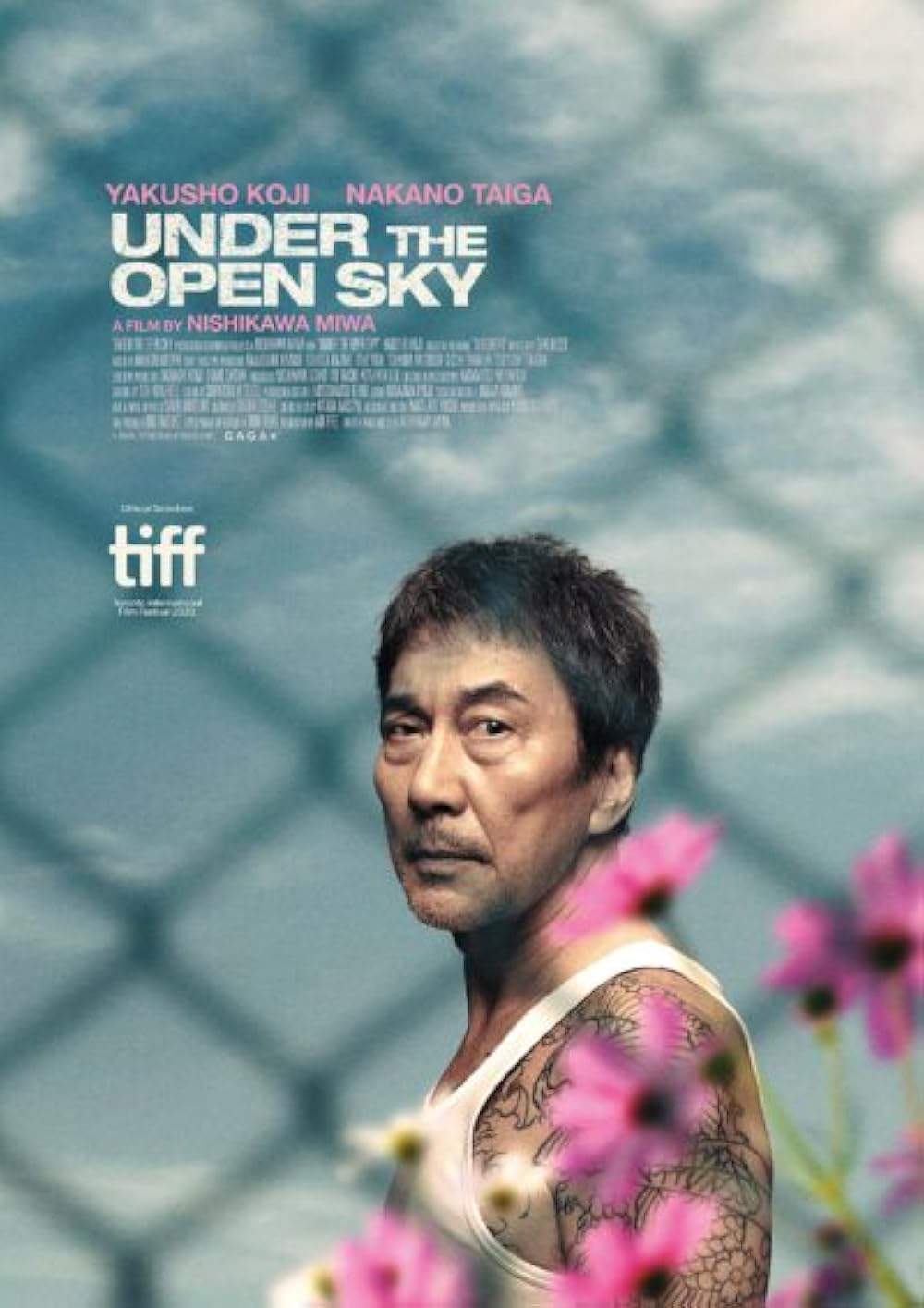
Under the Open Sky (2025) movie poster

Timeline

Under the Open Sky (2025) Timeline Explained – Every Event in Order

Release, runtime and language
2025 · 2 h 6 m · Japanese
Echo score 78
Starring
Masami Nagasawa, Kôji Yakusho, Yukiya Kitamura, Isao Hashizume, Hakury, Meiko Kaji

After serving thirteen years in prison, a man seeks out the mother who left him as a child. Now free, he must confront his past as a Yakuza while navigating the challenges of adjusting to life outside of prison.

On this page (5)
  1. 1 Where to watch
  2. 2 Events in order (15)
  3. 3 Timeline questions answered
  4. 4 Movie threads
  5. 5 Every angle

Where to watch

Where to Watch Under the Open Sky (2025)

Where can you watch Under the Open Sky? Stream, rent or buy it in the US, including on Kanopy: current JustWatch availability with up-to-date prices.

Streaming availability powered by JustWatch

15 events in order · contains spoilers

Under the Open Sky Timeline: Events in Chronological Order

Every key event of Under the Open Sky (2025) in order, scene by scene, with when and where it takes place. Use it to untangle flashbacks, time jumps and parallel storylines, to refresh your memory before the sequel or to find the exact scene you are thinking of.

  1. Masao Mikami's Release from Prison

    Masao Mikami, a former yakuza member, is released after serving 13 years in prison for murder. His first action upon release is to send his inmate files to a TV company, seeking to locate his estranged mother.

  2. Dinner with Lawyer and Wife

    After his release, Mikami meets with his lawyer and wife, where they have dinner at their home. This gathering is a stark reminder of his past life and the relationships he once had.

  3. Struggles with Welfare Application

    Mikami attempts to apply for welfare benefits, but a case worker threatens to deny his application due to his violent history. Overwhelmed by the system's rejection, he suffers a meltdown and collapses, leading to a hospital visit.

    Where
    Welfare Office
  4. Hospital Visit and Doctor's Advice

    In the hospital, a doctor advises Mikami to take better care of himself, warning him about the risks of a heart attack or stroke. This moment underscores the fragility of his new life away from crime.

    Where
    Hospital
  5. Interview with Tsunoda

    Tsunoda, a young TV director, reaches out to Mikami for an interview, documenting his life story as part of a television project. The interview prompts Mikami to reflect on his past decisions and their consequences.

  6. Flashback to the Past

    Mikami recalls a traumatic event involving his ex-wife, Kumiko, during a trial flashback. He remembers how a gang member had harassed Kumiko at their hostess bar, leading him to commit a violent act of stabbing in a fit of rage.

    Where
    Hostess Bar
  7. Visit to Ex-Wife's Apartment

    Mikami visits Kumiko's apartment, only to discover she has remarried and they have a daughter. He learns that this child is not his own, leading to feelings of loss and regret.

    Where
    Kumiko's Apartment
  8. Accusation of Shoplifting

    While at a grocery store, Mikami is wrongly accused of shoplifting, which he vehemently denies. After proving his innocence, the accusing employee gives him food and walks him home, highlighting Mikami's continuing struggle to adapt.

    Where
    Grocery Store
  9. Failed Driving Test

    Mikami attempts to renew his expired driver's license but fails the driving test. This failure serves as another reminder of how he's out of sync with normal life.

    Where
    Licensing Center
  10. Dinner with Tsunoda and Filming Plans

    During a dinner meeting, Tsunoda and his boss inform Mikami that his life story will be filmed. While Mikami is skeptical about the attention, he understands that this could help him find his mother.

  11. Violent Encounter on the Street

    On his way home, Mikami witnesses a mugging. Despite his attempts to intervene peacefully, he ends up resorting to violence, which raises concerns for Tsunoda about broadcasting his story.

    Where
    City Street
  12. Reunion with Akimasa

    Mikami travels to meet Akimasa and learns about the decline of the yakuza organization. This visit raises questions about his past life and whether he will return to that world.

    Where
    Akimasa's House
  13. Visit to the Orphanage

    Mikami and Tsunoda visit the orphanage where Mikami grew up, only to find that much of his past is lost. This disappointment reinforces Mikami's feelings of disconnection from his own history.

    Where
    Orphanage
  14. Employment Opportunity

    Mikami receives assistance from a case worker, who helps him secure a trainee position in a nursing home. This job offers him a glimmer of hope for a stable future.

    Where
    Nursing Home
  15. Final Collapse

    In a tragic turn, Mikami collapses in his apartment while holding flowers given to him by a coworker. Tsunoda arrives too late, witnessing the aftermath of Mikami's untimely death, surrounded by friends and sorrow.

    Where
    Mikami's Apartment

Last updated: January 14, 2025 at 19:25

Was this helpful?

Timeline questions answered

Under the Open Sky Timeline Explained: Your Questions Answered

When does it happen, and why in that order? The questions people ask about the chronology of Under the Open Sky (2025): time jumps, flashbacks, cause and effect between scenes and the correct order of events, each answered with spoilers.

Q1

Why does Mikami reach out to a TV company to find his mother?

After serving 13 years in prison, Mikami has no other way to locate his mother who abandoned him as a child. He sends his inmate files and personal details to the television company hoping that their resources and reach can help track down his estranged mother, whom he has not seen since childhood.

Foreshadowing: Earlier in the film, his search for his mother is established as his primary motivation for reaching out to the media.

  • masao mikami
  • mother
  • search
  • tv company
  • prisoner
Q2

What happened at the hostess bar that sent Mikami to prison?

During his trial, Mikami recalls how a gang member harassed his ex-wife Kumiko at their hostess bar. In a fit of rage, he stabbed and killed the man, which resulted in his 13-year prison sentence. This violent act to defend Kumiko ultimately cost him his freedom.

Foreshadowing: The tragic events at the hostess bar are revealed through flashbacks throughout the film, showing how this moment defined Mikami's life.

  • hostess bar
  • kumiko
  • murder
  • yakuza
  • stabbing
Q3

Why did Mikami collapse at the welfare office?

When Mikami applies for welfare benefits, the case worker threatens to deny his application because of his violent criminal history as a former yakuza member. Overwhelmed by the system rejecting him and the stress of readjusting to society after 13 years, he suffers an emotional collapse and is hospitalized.

Foreshadowing: The doctor's warning about his heart condition earlier establishes his vulnerability to stress-related health crises.

  • welfare
  • collapse
  • hospital
  • rejection
  • stress
Q4

Why is Kumiko's daughter not Mikami's child?

When Mikami visits Kumiko's apartment, he discovers she has remarried and has a daughter with her new husband. The girl is not Mikami's child, which adds to his sense of lost time and severed connections during his 13 years in prison.

Foreshadowing: This painful realization reinforces the theme of how prison isolates a person from their former life.

  • kumiko
  • daughter
  • ex-wife
  • remarried
Q5

Why does Mikami intervene in the mugging on the street?

When Mikami witnesses a mugging, he attempts to intervene to help the victim. However, the encounter triggers his old yakuza instincts and primal rage, causing him to violently attack the muggers. This moment reveals that despite his efforts to change, his violent past remains part of him.

Foreshadowing: Tsunoda's earlier question about whether Mikami feels remorse foreshadows this violent relapse.

  • mugging
  • violence
  • intervention
  • street
  • yakuza
Q6

What happens when Mikami visits Akimasa?

Mikami travels to meet Akimasa, a figure from his former yakuza life. During this visit, he learns about the decline of the yakuza organization. The meeting raises questions about whether Mikami will return to his old life and provides context about how much the criminal world has changed during his incarceration.

Foreshadowing: This visit represents Mikami's conflicted relationship with his past and whether he truly wants to leave the yakuza behind.

  • akimasa
  • yakuza
  • visit
  • organization
  • decline
Q7

Why does Mikami fail his driving test?

Mikami's driver's license has been expired for ten years while he was in prison. When he tries to renew it, he fails the driving test because he is out of practice and cannot adjust to the rules and skills required for modern driving after being isolated from society for so long.

Foreshadowing: This failure symbolizes how Mikami's time in prison has made him incompatible with everyday life.

  • driving test
  • license
  • fail
  • prison
  • reintegration
Q8

Why does Mikami choose not to retaliate against the boys harassing his disabled colleague?

When Mikami sees two boys taunting a disabled colleague at his new job, he experiences a violent urge to retaliate, visualizing extreme revenge. However, he chooses to control his anger and restrain himself, demonstrating significant personal growth and his commitment to breaking his cycle of violence.

Foreshadowing: This moment contrasts with his earlier violent reactions, showing his potential for change.

  • retaliation
  • anger
  • control
  • growth
  • disabled colleague
Q9

What does Mikami find at the orphanage?

Mikami and Tsunoda visit the orphanage where Mikami grew up, hoping to find records about his past and his mother. However, they discover that all records of his history have vanished, leaving Mikami without any tangible connection to his origins or proof of his childhood.

Foreshadowing: This disappointment reinforces Mikami's feeling of disconnection from his own identity.

  • orphanage
  • records
  • childhood
  • missing
  • history
Q10

What causes Mikami's death at the end of the film?

Throughout the film, doctors warn Mikami about his health risks, including potential heart issues and strokes, made worse by stress. After all his struggles, bureaucratic rejections, failed tests, violent outbursts, and the emotional weight of his past, Mikami collapses and dies from these health complications while holding flowers given to him by a coworker.

Foreshadowing: The doctor explicitly warned Mikami about his heart condition early in the film, making his death a tragic but foreshadowed conclusion.

  • death
  • collapse
  • heart
  • flowers
  • tragic ending
Q11

Why does Tsunoda want to film Mikami's life story?

Tsunoda, a young TV director, becomes interested in Mikami's unique story, his release after 13 years in prison, his attempts to find his mother, and his struggle to reintegrate into society. He believes Mikami's journey of redemption and struggle would make compelling documentary content for television audiences.

Foreshadowing: Tsunoda's growing interest in Mikami's files establishes his motivation for the documentary project.

  • tsunoda
  • filming
  • documentary
  • tv
  • life story
Q12

Why does Mikami say he doesn't feel remorse for his past?

When Tsunoda questions Mikami about remorse for his past crimes, Mikami firmly denies feeling any. This hardened exterior reflects his psychological coping mechanism after years in prison, a way to protect himself from the emotional weight of his violent actions and the guilt of lost time.

Foreshadowing: This denial sets up the tension in the film between his claimed lack of remorse and his deeper emotional struggles.

  • remorse
  • denial
  • tsunoda
  • interview
  • psychological

Movie threads

More Movies Like Under the Open Sky, by Mood & Story

Curated lists built around what makes Under the Open Sky tick: the same mood, the same kind of story or the same emotional payoff. Each list explains why these movies belong together.

Movies about ex-con redemption like Under the Open Sky

Stories of former convicts grappling with freedom and a past that won't let go. If you liked the emotional journey of an ex-con in Under the Open Sky, explore these similar stories. This thread features movies about former prisoners seeking a new path, facing societal rejection, and wrestling with their past in quiet, character-driven dramas.

  • gritty
  • lonely
  • reflective
  • heavy
  • quiet
  • frustrating
  • Tone: melancholic, gritty, reflective
  • Pacing: slow, deliberate, character-focused
Why these movies?

The story pattern: The narrative typically follows a linear path from release to an uncertain future, focusing on small, often bureaucratic obstacles and fleeting human connections. The journey is internal, defined by reflection on past trauma and the systemic barriers to a normal life, often culminating in a tragic or bittersweet resolution that questions the very possibility of redemption.

Why they belong together: Movies are grouped here for their shared focus on the psychological aftermath of incarceration, a melancholic and gritty tone, and a slow-burn pacing that allows for deep character immersion. They explore themes of identity, loss, and the crushing reality that some pasts are inescapable.

Slow burn tragic dramas like Under the Open Sky

Where quiet character studies build inevitably towards a sorrowful conclusion. For viewers who appreciated the slow, melancholic build-up and tragic ending of Under the Open Sky, this collection features similar films. Discover movies with a deliberate pace, heavy emotional weight, and stories that unfold with a sense of doomed inevitability, leading to a sad or bleak conclusion.

  • melancholic
  • heavy
  • tragic
  • bleak
  • slow burn
  • gritty
  • Tone: melancholic, bleak, heavy
  • Pacing: slow burn, gradual, deliberate
Why these movies?

The story pattern: These narratives are less about plot twists and more about the gradual accumulation of small failures, missed connections, and internal struggles. The structure is often straightforward, emphasizing cause and effect from a troubled past to a hopeless present. The ending feels earned, not sudden, serving as the final, somber note in a symphony of despair.

Why they belong together: These films are united by their shared slow pacing, heavy emotional weight, and profoundly sad endings. They prioritize mood and character depth over fast-paced action, creating an immersive and emotionally draining experience for the viewer who appreciates a gritty, realistic, and tragic arc.

Every angle

Under the Open Sky (2025) Explained: Plot, Timeline & Characters

Everything about Under the Open Sky in one place: what happens in the plot summary, the timeline in chronological order, the characters and meaning and a spoiler-free summary. What's After the Movie adds the cast, box office and post-credit scenes.

Coming soon on iOS and Android

The Plot Explained Movie Summary App

Plot summaries, endings explained and timelines on your phone. Catch up on any movie in minutes, save your favorites and never miss a twist again.

Be the first to know when we launch. Your email stays private, always.

Learn more about the app