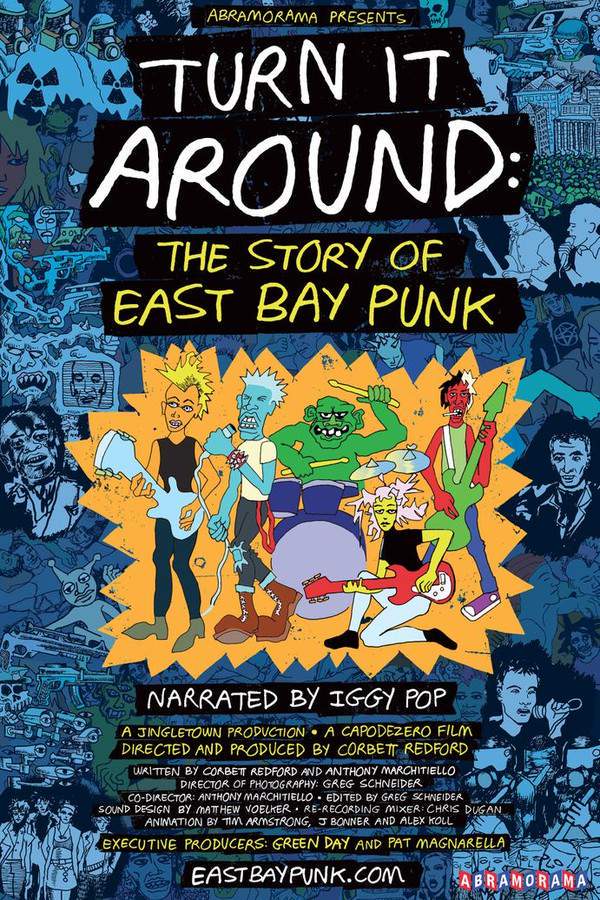
This documentary explores the vibrant and influential East Bay punk scene, narrated by Iggy Pop. Focusing on the pivotal role of 924 Gilman Street, the film chronicles three decades of music and culture. Through interviews and performances, it captures the raw energy and rebellious spirit of legendary punk bands, revealing the stories and voices that shaped this iconic movement.
Find where to stream, rent, or buy Turn It Around: The Story of East Bay Punk (2017) in the US with current JustWatch availability, up-to-date pricing, and platform listings for subscription, rental, and digital purchase options.
Warning: spoilers below!
Haven’t seen Turn It Around: The Story of East Bay Punk yet? This summary contains major spoilers. Bookmark the page, watch the movie, and come back for the full breakdown. If you're ready, scroll on and relive the story!
Trace every key event in Turn It Around: The Story of East Bay Punk (2017) with our detailed, chronological timeline. Perfect for unpacking nonlinear stories, spotting hidden connections, and understanding how each scene builds toward the film’s climax. Whether you're revisiting or decoding for the first time, this timeline gives you the full picture.
Last updated: October 25, 2024 at 10:59
Find frequently asked questions about the Turn It Around: The Story of East Bay Punk (2017) timeline, including chronological order, nonlinear jumps, cause-and-effect links, and scene sequence clarifications. This timeline FAQ helps explain when key events happen, how moments connect, and why the story unfolds in that specific order.
924 Gilman Street served as the heart of the East Bay punk movement because it was an all-volunteer venue that operated on a strict DIY (do-it-yourself) ethos. Founded in Berkeley, the club provided a space where bands could perform without the pressure of commercial success, fostering creative freedom and inclusivity. It became a gathering point for misfits and musicians who wanted to keep punk authentic and远离 mainstream influences, ultimately shaping the distinctive sound and values of East Bay punk.
Earlier punk venues in San Francisco had become associated with violence and commercialization, creating a need for an alternative space.
MaximumRocknRoll was a fanzine that transformed punk from a local San Francisco phenomenon into a global movement. Founded in 1984, it connected bands and fans across different cities and countries through interviews, reviews, and scene reports. The zine promoted underground music, encouraged independent record labels, and helped spread punk culture beyond the Bay Area, making it one of the most influential punk publications in history.
The East Bay punk scene developed as a reaction to the problems plaguing San Francisco's punk scene, including increasing violence, corruption, and racist elements. As the San Francisco punk community became more hostile, musicians and fans across the Bay Bridge in Berkeley and Oakland created their own inclusive spaces that embraced radical politics and welcomed diverse participants. This resulted in a more politically conscious and community-oriented punk style.
The timeline notes mention the 'Shadow of Violence and Corruption' affecting the punk scene before the East Bay response emerged.
Green Day and Rancid represented the mainstream breakthrough of East Bay punk, but their success was built on decades of grassroots work by earlier bands. Both bands emerged from the 924 Gilman scene and absorbed its DIY values. Their popularity brought national attention to East Bay punk, though the documentary emphasizes that their success was just the 'tip of the iceberg', representing a small part of a much deeper, more radical legacy that included hundreds of bands and venues.
The DIY ethos was essential because punk musicians rejected the commercial music industry entirely, choosing to create their own records, booking their own shows, and publishing their own fanzines. This self-sufficient approach empowered artists to maintain complete creative control over their music and message. It also built community, fans were encouraged to become participants, not just consumers, which strengthened the punk scene's resilience and authenticity.
The early East Bay punk community confronted multiple obstacles, including societal rejection, limited resources, and internal conflicts. The scene had to contend with external pressures like police crackdowns, venue closures, and mainstream skepticism. Internally, debates over politics, music style, and commercial viability created tensions. The documentary highlights that overcoming these struggles, both external and internal, is what made the movement's victories meaningful.
The East Bay punk legacy persists through contemporary bands who embrace DIY values, through venues like 924 Gilman that still operate, and through the ongoing influence of fanzines and independent labels. The inclusive, politically conscious approach pioneered in Berkeley inspired subsequent punk and alternative movements worldwide. The documentary argues this influence extends beyond music into activist culture, demonstrating that the scene's commitment to radical ideas and community organization remains relevant.
Iggy Pop was selected as narrator because of his legendary status as a pioneer of punk and proto-punk music. As the frontman of The Stooges, one of the most influential punk bands in history, he carries credibility within the punk community. His deep, distinctive voice and authentic connection to punk's underground origins made him a fitting choice to tell the story of another seminal punk scene without appearing commercial or outside the movement's ethos.
The Dead Kennedys were among the first major punk bands to emerge from the San Francisco Bay Area in the late 1970s, helping establish the region as a punk epicenter. Known for their satirical lyrics, theatrical performances, and sharp political commentary, they proved punk could be both entertaining and intellectually challenging. Their success paved the way for subsequent East Bay bands and demonstrated that punk could address serious social and political themes.
The documentary's use of over 35,000 archival photos and flyers, combined with footage from hundreds of live performances, provides authenticity and depth that distinguishes it from typical music documentaries. This massive collection, drawn from over 180 interviews with scene participants, allows the film to tell the story through the actual voices and visuals of those who lived it rather than relying on outside narration alone. It also preserves a historical record that might otherwise be lost.
Inclusivity in East Bay punk meant actively welcoming people who felt excluded from mainstream punk scenes, particularly people of color, women, and LGBTQ+ individuals. Unlike the San Francisco scene which had developed racist and violent elements, East Bay punk consciously built a community around radical political beliefs including anti-racism, feminism, and socialist or anarchist politics. This commitment to inclusivity helped define the distinctive character of Berkeley's punk culture.
East Bay punk seamlessly blended music with political activism by using lyrics, zines, and performances to promote radical social causes. Bands addressed issues like economic inequality, nuclear power, police brutality, and government corruption. The DIY ethic extended to organizing benefits, protests, and political events. This integration of politics and music distinguished East Bay punk from more apolitical punk scenes and helped attract socially conscious musicians and fans.
Discover curated groups of movies connected by mood, themes, and story style. Browse collections built around emotion, atmosphere, and narrative focus to easily find films that match what you feel like watching right now.
Films that capture the spirit and history of a music scene through its people.If you liked 'Turn It Around: The Story of East Bay Punk,' explore more movies like it that dive into the history of influential music scenes. These documentaries capture the spirit of musical movements, from punk and hip-hop to rock and electronic, through interviews and rare footage, telling the stories of the communities that shaped the sound.
The narrative typically unfolds as a historical chronicle, tracing the origins, peak, and legacy of a musical genre or local scene. It focuses on the interconnected stories of artists, venues, and fans, showing how a shared DIY ethos and rebellious energy can create a powerful cultural force that resonates for decades.
These films are grouped together because they share a focus on music as a catalyst for community and identity. They all possess a raw, energetic vibe and a neutral-to-celebratory tone that honors their subject matter, using a steady pace to methodically build a comprehensive and inspiring picture of a cultural moment.
Stories of outsider groups building something powerful against the odds.Fans of the community spirit in 'Turn It Around: The Story of East Bay Punk' will enjoy these similar movies about underdog groups building their own world. These stories, whether documentaries or narratives, focus on creative collectives, DIY ethics, and the inspiring power of united outsiders making their mark.
The plot follows a collective rather than a single hero, showcasing their struggles to establish a space or voice for themselves. Conflict arises from external pressures and internal dynamics, but the core journey is one of solidarity and triumphs, big and small, that prove the value of their shared vision.
This thread groups movies that share an inspiring, defiant, and energetic mood centered on community. They possess a moderate to high intensity driven by passionate characters and a steady, engaging pace that allows you to become invested in the group's journey and ultimate, often hopeful, success.
Don't stop at just watching - explore Turn It Around: The Story of East Bay Punk in full detail. From the complete plot summary and scene-by-scene timeline to character breakdowns, thematic analysis, and a deep dive into the ending - every page helps you truly understand what Turn It Around: The Story of East Bay Punk is all about. Plus, discover what's next after the movie.
Read a complete plot summary of Turn It Around: The Story of East Bay Punk, including all key story points, character arcs, and turning points. This in-depth recap is ideal for understanding the narrative structure or reviewing what happened in the movie.
Discover the characters, locations, and core themes that shape Turn It Around: The Story of East Bay Punk. Get insights into symbolic elements, setting significance, and deeper narrative meaning - ideal for thematic analysis and movie breakdowns.
Get a quick, spoiler-free overview of Turn It Around: The Story of East Bay Punk that covers the main plot points and key details without revealing any major twists or spoilers. Perfect for those who want to know what to expect before diving in.
Discover movies like Turn It Around: The Story of East Bay Punk that share similar genres, themes, and storytelling elements. Whether you’re drawn to the atmosphere, character arcs, or plot structure, these curated recommendations will help you explore more films you’ll love.
Turn It Around: The Story of East Bay Punk (2017) Plot Summary & Movie Recap
Turn It Around: The Story of East Bay Punk (2017) Scene-by-Scene Movie Timeline
Turn It Around: The Story of East Bay Punk (2017) Spoiler-Free Summary & Key Flow
Movies Like Turn It Around: The Story of East Bay Punk – Similar Titles You’ll Enjoy
The Decline of Western Civilization (1981) Film Overview & Timeline
American Hardcore (2006) Full Summary & Key Details
Turn It Up (2000) Ending Explained & Film Insights
Murder in the Front Row: The San Francisco Bay Area Thrash Metal Story (2019) Story Summary & Characters
Rage: 20 Years of Punk Rock West Coast Style (2001) Story Summary & Characters
Punk the Capital: Building a Sound Movement (2019) Detailed Story Recap
You Weren’t There: A History of Chicago Punk 1977–1984 (2007) Complete Plot Breakdown
Punk’s Not Dead (2007) Ending Explained & Film Insights
Punk: Attitude (2005) Movie Recap & Themes
Punk and Its Aftershocks (1980) Plot Summary & Ending Explained
The Punk Rock Movie (1978) Spoiler-Packed Plot Recap
Punk in London (1977) Movie Recap & Themes
Punking Out (1978) Complete Plot Breakdown
Punk Can Take It (1979) Complete Plot Breakdown
One Nine Nine Four (2009) Detailed Story Recap