Plot Explained Spoilers guaranteed!
Plot Explained

Browse by genre

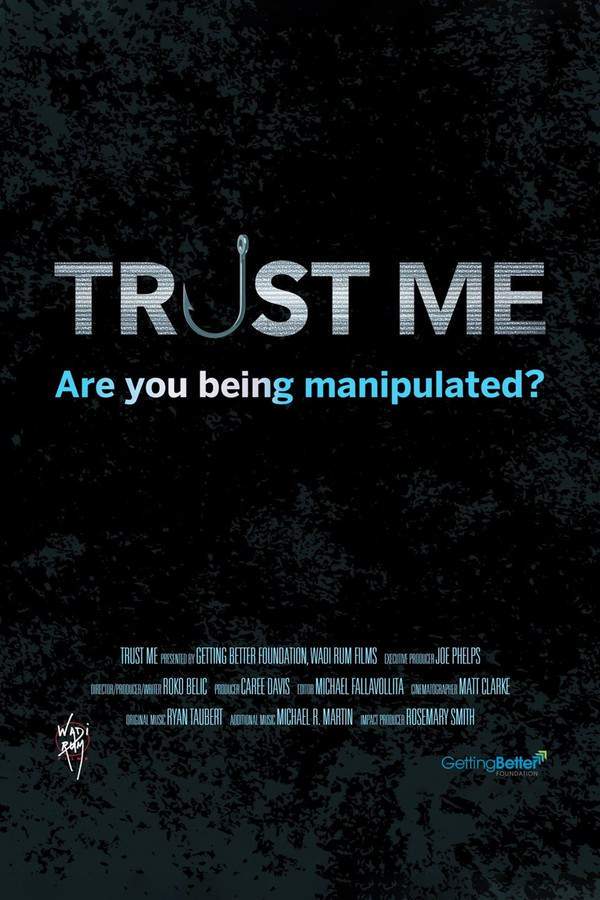
Trust Me (2014) movie poster

Plot Summary

Trust Me (2014) Plot Summary Explained

Release, runtime and language
2014 · 90 min · English
Starring
Clark Gregg, Allison Janney, William H. Macy, Niecy Nash, Molly Shannon, Felicity Huffman

Filmmaker Roko Belic explores the challenges of contemporary existence in this drama-comedy. The film examines how technology influences modern life and blurs the distinction between truth and fabrication. As misinformation and manipulation shape our perceptions, Belic’s work reflects the uncertainties of the era, prompting viewers to question the nature of reality and seek clarity amidst confusion.

On this page (5)
  1. 1 What happens: full plot
  2. 2 Plot questions answered
  3. 3 Movie threads
  4. 4 Movies like Trust Me
  5. 5 Every angle

Full plot summary · contains spoilers

What Happens in Trust Me: Full Plot Summary

The whole story of Trust Me (2014) explained, from the opening scene to the final frame: every key event, every twist and what it all adds up to. Read it as a quick recap before the sequel, to check a scene you missed, or to finally understand what really happened.

Howard Holloway is a former child star who has grown into a down-on-his-luck agent, specializing in representing young actors. He works in a high-stakes, sometimes cutthroat world where success is measured in the size of the next paycheck and loyalty is earned, tested, and often traded in a heartbeat. His persistent feud with the sharper, more successful agent Aldo Stankas has cost him several clients who were on the verge of a breakthrough, fueling a cycle of professional disappointment and personal stubbornness that defines his career.

After losing a client, the arc of Howard’s day brightens briefly when he meets Lydia, a highly talented thirteen-year-old with an extraordinary exposure to talent. Lydia’s father, Ray, is protective to the point of overbearing, and he immediately warns Howard away, insisting that he has no place in his daughter’s life. This tension sets up the central moral and professional dilemma of the story: Howard believes in Lydia’s potential and feels drawn to her as a talent, but Ray’s authority and Lydia’s family situation complicate any straightforward professional arrangement.

As Howard navigates this delicate balance, he starts courting a sense of normalcy with his neighbor Marcy, who provides a steadier, more grounded counterpoint to his chaotic professional life. Lydia, meanwhile, receives a formal offer to audition for the lead in a forthcoming big-budget film series adapted from a popular line of young adult vampire novels. In the negotiating room, Lydia names Howard as her agent, which Howard leverages into a lucrative deal that reflects both his savvy and his reliance on her star power. Lydia’s career momentum strengthens his own position, but it also binds him more deeply to her fate and to the conflict with Ray.

Lydia’s trust in Howard is tested when her father and the producers attempt to dump him in favor of Aldo, threatening the very stability of the film deal and Lydia’s opportunity for independence. As the audition rehearsals continue, a troubling scene upends Howard’s professional composure: while they practice lines, Lydia reacts with anger when he touches her arm, hinting at underlying issues of control and boundary violations. Later, in a hotel room, Howard discovers Lydia sobbing while Ray is in the shower, and he confronts a horrifying possibility: he suspects Ray is sexually abusing Lydia. This realization thrusts Howard into a moral crisis about what is right for Lydia and what risks compromising the film’s future.

Howard discusses the situation with Marcy, who knows a lawyer who specializes in family law. The fear of destabilizing Lydia’s career makes the path forward feel precarious; he worries that an attempt to remove Lydia from Ray could backfire and derail the money Lydia needs to gain her independence. Yet the stakes are too high to ignore, and Howard ultimately decides to pursue Lydia’s emancipation, hiring a lawyer to petition for her emancipation from her father. Ray initially objects, but Howard accuses him of molestation. Ray denies the accusation, offering a different explanation—that Lydia was abused by a former agent while she was in her mother’s custody. The legal maneuver proceeds with the aim of safeguarding Lydia, and Ray agrees to the emancipation to avoid charges.

On the day the film’s cast is to be announced in a press conference at Grauman’s Chinese Theatre, Howard learns Lydia has left his apartment where she had been staying. At the theatre, Lydia appears in a highly sexualized fashion with Aldo as her new manager, signaling a striking shift in her public image and in Howard’s professional standing. Lydia explains that she wanted to distance herself from her father because his drunken behavior had cost her a previous role. She also implies that she lied about her father’s abuse and confirms Ray’s story about being abused by a former agent. Howard is left shielded by uncertainty, confessing that he doesn’t know what to believe anymore, as the uneasy truth of Lydia’s situation collides with the spectacle of a movie industry press event.

As they enter the theater, Ray makes a desperate attempt to break through the security cordon. In the ensuing chaos, he grabs one of the guards’ guns, and a gunshot wounds Howard, a moment that crystallizes the danger and fragility threaded through Lydia’s ascent. Lydia and Marcy cradle the injured agent as he lies dying, and in his final visions he imagines himself sprouting wings and taking flight, a bittersweet echo of the movie’s world of fame and fantasy. The story closes on a note of tragic ambiguity, leaving Lydia, her guardian, and the people who have shaped her career to face the consequences of a system where power, fame, and vulnerability intersect in the most unpredictable ways.
Last updated: October 09, 2025 at 16:17

Was this helpful?

Plot questions answered

Trust Me Plot Explained: Your Questions Answered

The questions people ask most about Trust Me (2014): what happens in the confusing scenes, why the characters do what they do, the twists, hidden details and what the ending means. Each answer contains spoilers.

Q1

Why did Lydia lie about her father abusing her?

Lydia fabricated the abuse allegations to distance herself from her father Ray, whose drunken behavior had previously cost her a acting role. She confirms Ray's claim that she was actually abused by a former agent while in her mother's custody. By lying, she aimed to gain legal emancipation and break free from Ray's controlling influence without revealing the true source of her trauma.

Foreshadowing: Earlier in the film, Lydia reacts with intense anger when Howard touches her arm during rehearsal, hinting at her history of boundary violations by authority figures.

  • lydia lie
  • abuse allegations
  • ray
  • emancipation
  • former agent
Q2

Why was Lydia wearing a sexualized outfit at the press conference?

Lydia deliberately chose a highly sexualized appearance to transform her public image and signal her independence from Howard and her father. By appearing with Aldo as her new manager, she intentionally distanced herself from the protective figures who had controlled her career, embracing a more provocative persona typical of the industry's exploitation of young talent.

Foreshadowing: The film established that Lydia's father Ray was controlling and that the entertainment industry pressures young actors into inappropriate roles.

  • lydia outfit
  • press conference
  • aldo
  • sexualized
  • image change
Q3

Why did Lydia switch to Aldo as her manager instead of Howard?

Lydia chose Aldo to separate herself from her father Ray, who had been a destructive force in her career due to his drunkenness. She also wanted to distance herself from the traumatic situation involving the abuse investigation. The switch represented her calculated decision to start fresh with someone unconnected to the painful events, even if it meant abandoning the mentor who had believed in her.

Foreshadowing: The tension between Howard's protection and Lydia's desire for autonomy was established when she initially refused to abandon Howard during the negotiation disputes.

  • lyda
  • aldo
  • manager
  • howard
  • switch
Q4

What really happened to Lydia? Was she actually abused?

The film reveals that Lydia was genuinely abused, but not by her father Ray. She was sexually abused by a former agent while under her mother's custody. Ray was controlling and drank excessively, which cost her a previous role, but he was not the abuser. This revelation explains her traumatic reaction to physical contact and her desperate need to escape both her father's control and her past.

Foreshadowing: Lydia's angry reaction when Howard touches her arm during rehearsal directly hints at her history of abuse by a former agent.

  • lydia abuse
  • former agent
  • ray
  • trauma
  • truth
Q5

Why did Ray agree to emancipation so easily?

Ray agreed to Lydia's emancipation to avoid formal charges of molestation that Howard had publicly accused him of. Although Ray denied the allegations and offered the alternative explanation about the former agent, he recognized that fighting the accusations would risk exposing the family's problems and potentially derailing Lydia's career. Agreeing to emancipation allowed him to avoid a painful legal battle and protect the film deal.

Foreshadowing: The film establishes Ray's primary concern was Lydia's career success, which he believed his own behavior had already jeopardized.

  • ray
  • emancipation
  • charges
  • agreement
  • lawsuit
Q6

Why does Howard get shot at Grauman's Chinese Theatre?

Ray forcibly attempts to break through the security cordon at Grauman's Chinese Theatre to reach Lydia during the press conference. In the ensuing struggle with security guards, Ray grabs one of the guard's guns. During the chaos, the gun discharges and Howard is struck by the bullet, dying in Lydia and Marcy's arms.

Foreshadowing: Howard's persistent involvement in Lydia's life and his accusation against Ray had created an increasingly volatile confrontation that the film built toward.

  • ray
  • shot
  • gun
  • security
  • theatre
  • howard dies
Q7

What does Howard's final vision of flying mean?

In his dying moments, Howard imagines himself sprouting wings and taking flight, a direct reference to the fantasy elements of the vampire film series Lydia was cast in. This vision represents his release from the dark, exploitative world of Hollywood talent agencies that defined his struggling career. It symbolizes transcendence and escape from a life consumed by manipulation, betrayal, and the tragic consequences of his involvement with Lydia.

Foreshadowing: The film repeatedly contrasted the glamorous fantasy of the entertainment industry with its corrupting reality throughout Howard's journey.

  • howard
  • flight
  • wings
  • vision
  • death
  • transcendence
Q8

Why did Lydia react so angrily when Howard touched her arm during rehearsal?

Lydia's violent reaction to Howard touching her arm stems from her past trauma as a victim of sexual abuse by a former agent. The unexpected physical contact triggered memories of the boundary violations she suffered. This moment serves as the catalyst for Howard's suspicion that Lydia is being abused, leading him to investigate further and eventually confront the hotel room situation.

Foreshadowing: This incident directly leads to Howard's discovery of Lydia sobbing in the hotel room, убеждая him that abuse was occurring.

  • lydia
  • arm touch
  • reaction
  • trauma
  • rehearsal
  • abuse
Q9

Why does Howard pursue emancipation despite the risks to Lydia's career?

Howard decides to pursue Lydia's emancipation because he genuinely believes she is being sexually abused by her father Ray. Despite warnings that pursuing legal action could derail the film deal and cost Lydia the money she needs for independence, Howard cannot ignore what he witnessed in the hotel room. His moral compass compels him to protect Lydia from further abuse, even at the cost of her career opportunities.

Foreshadowing: Howard's history of professional failures and his growing attachment to Lydia as a client he believed in made him willing to risk everything for her safety.

  • howard
  • emancipation
  • risks
  • career
  • protection
  • lyda
Q10

Why was Ray so protective and controlling of Lydia?

Ray's overprotective behavior stems from guilt and fear following Lydia's abuse by a former agent while she was in her mother's custody. Rather than addressing the trauma properly, Ray responded with excessive control over her career and personal life, becoming possessive to the point of damaging her opportunities. His drinking and controlling nature ultimately cost Lydia a previous role, creating the very instability he sought to prevent.

Foreshadowing: Ray's aggressive warning to Howard to stay away from Lydia hints at his desperate need to maintain control over her life.

  • ray
  • protective
  • controlling
  • lyda
  • former agent
  • guilt
Q11

What happened to Lydia's film deal after the controversy?

Despite the abuse allegations, emancipation proceedings, and Howard's death, Lydia's career in the vampire film series continued. She appeared at the press conference with Aldo as her new manager, confirming the film deal remained intact. The industry moved forward with her casting, demonstrating how the entertainment world prioritizes talent and revenue over personal scandals involving young performers.

Foreshadowing: The producers' earlier willingness to dump Howard in favor of Aldo showed their priority was the successful continuation of the project.

  • lydia
  • film deal
  • career
  • vampire
  • series
  • continues
Q12

Why does Howard accuse Ray of molestation?

Howard accuses Ray of molestation based on what he witnesses in the hotel room: Lydia sobbing alone while Ray is in the shower, combined with her earlier angry reaction to physical contact. These observations lead Howard to believe Lydia is being sexually abused by her father. The accusation becomes his legal strategy to pursue emancipation and remove Lydia from what he perceives as a dangerous home situation.

Foreshadowing: Howard's discovery in the hotel room follows the disturbing rehearsal incident where Lydia's reaction to arm contact seemed to reveal past trauma.

  • howard
  • ray
  • accusation
  • molestation
  • hotel room
  • lyda

Movie threads

More Movies Like Trust Me, by Mood & Story

Curated lists built around what makes Trust Me tick: the same mood, the same kind of story or the same emotional payoff. Each list explains why these movies belong together.

Movies about Hollywood corruption like Trust Me

Stories exposing the dark underbelly of fame, power, and exploitation in the entertainment industry. If you liked the dark examination of fame and exploitation in Trust Me, you'll find similar stories in this thread. These movies explore the grim realities behind the spotlight, featuring talent agents, child stars, and the devastating moral dilemmas that arise in the cutthroat world of entertainment.

  • cynical
  • unsettling
  • morally complex
  • desperate
  • tragic
  • anxious
  • Tone: dark, cynical, unsettling
  • Pacing: steady, deliberate
Why these movies?

The story pattern: Stories in this thread typically follow a protagonist—an agent, a manager, or a performer—who enters or is already entrenched in the entertainment industry. They become entangled in a system that prioritizes success over ethics, often leading to a central moral crisis involving the exploitation of the vulnerable. The narrative arc usually involves a descent into complicity, a struggle for redemption, or a tragic collapse under the weight of systemic corruption.

Why they belong together: These films are grouped together by their shared thematic focus on the dark side of fame and the entertainment business. They create a cohesive experience through their cynical tone, exploration of power dynamics, and portrayal of characters facing heavy moral choices in a glamorous yet predatory world.

Slow burn paranoid dramas like Trust Me

Character-driven dramas where anxiety builds steadily towards a devastating, morally complex conclusion. For viewers who appreciated the steady, anxious build and tragic payoff of Trust Me, this thread features similar character studies. These movies use a deliberate pace to explore morally gray areas, where characters become consumed by doubt and manipulation, leading to heavy emotional consequences and bittersweet or bleak endings.

  • anxious
  • paranoid
  • unsettling
  • morally complex
  • desperate
  • tragic
  • Tone: dark, tense, anxious
  • Pacing: steady, slow burn
Why these movies?

The story pattern: The narrative pattern here is a gradual unraveling. A character, often well-intentioned or ambitious, finds themselves in a situation where the truth becomes blurred. As they delve deeper, their certainty erodes, replaced by suspicion and anxiety. The plot avoids sudden twists in favor of a consistent, escalating pressure that challenges the character's morals and sanity, frequently ending with a sense of profound loss or tragic realization.

Why they belong together: Movies in this thread share a specific emotional and structural DNA: a steady pacing that creates palpable anxiety, a dark tone that engages with difficult themes, and a narrative that leads to a heavy, impactful ending. The similarity lies in the overall viewing experience—a patient, tense, and emotionally draining journey.

If you liked this

Movies Like Trust Me

Similar movies to Trust Me: the same genre, themes or kind of story. Each one comes with its own plot summary, timeline and ending explained.

Browse all movie summaries

Every angle

Trust Me (2014) Explained: Plot, Timeline & Characters

Everything about Trust Me in one place: what happens in the plot summary, the timeline in chronological order, the characters and meaning and a spoiler-free summary. What's After the Movie adds the cast, box office and post-credit scenes.

Coming soon on iOS and Android

The Plot Explained Movie Summary App

Plot summaries, endings explained and timelines on your phone. Catch up on any movie in minutes, save your favorites and never miss a twist again.

Be the first to know when we launch. Your email stays private, always.

Learn more about the app