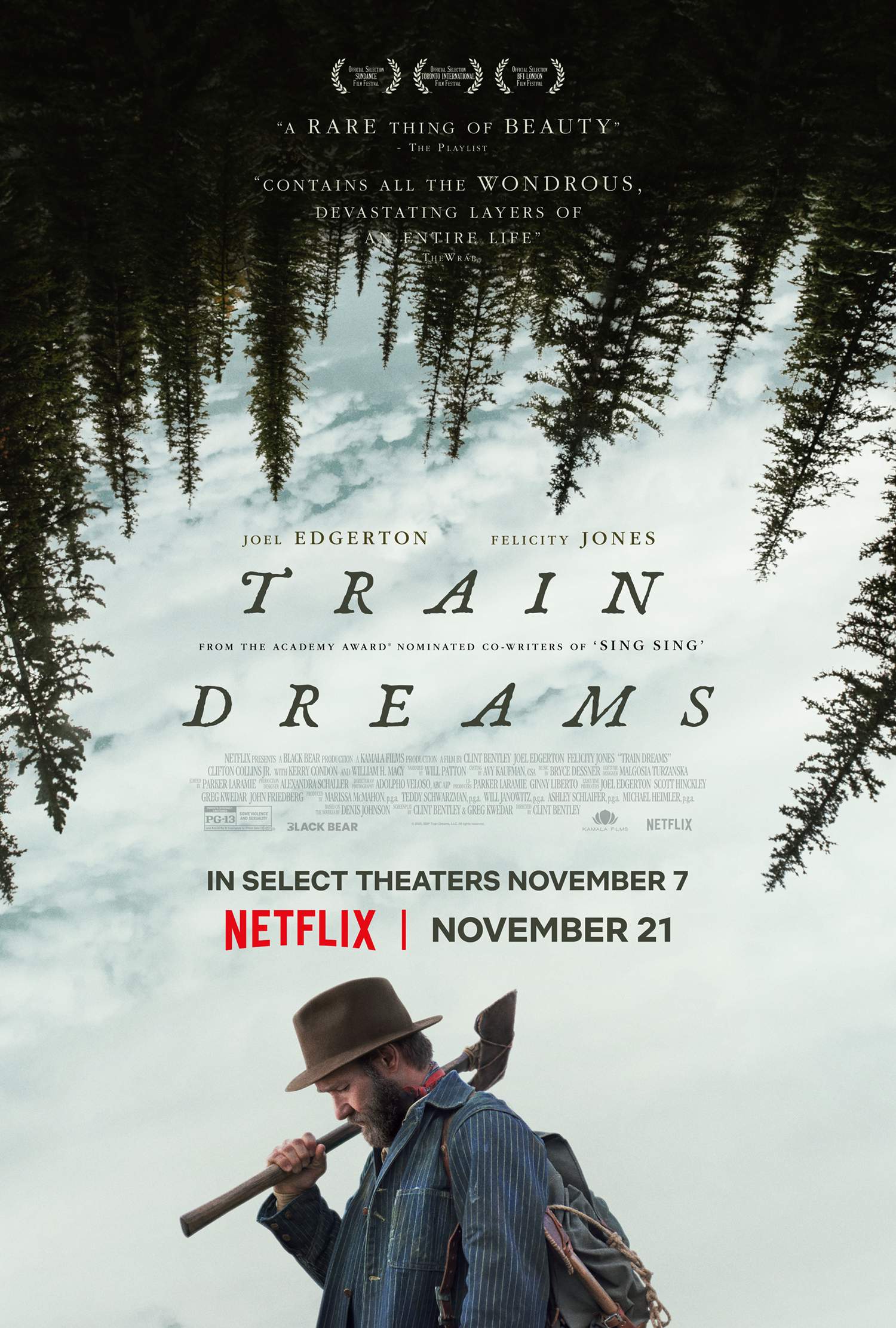
Robert Grainier grows up as an orphan arriving near Bonners Ferry, Idaho, aboard the Great Northern Railway. He drifts through his youth without direction until a life-changing meeting with Gladys Grainier leads to a steady, weathered life built on wood and land. They marry, settle into a log cabin along the Moyie River, and welcome a daughter, Kate. The early days are simple and stubborn, framed by the quiet rhythm of seasons and the hard labor that keeps a family fed. The film traces the texture of their days, the small rituals that keep hope alive, and the stubborn faith that a life built with sweat and care can endure.
Robert’s work soon takes him into railroad construction for the Spokane International Railway, a world of iron, timber, and risk. A single, brutal incident—where a Chinese worker is shoved from a bridge by a group of white workers—haunts him and seeds disturbing visions of the man, as if the memory of that moment could derail him at any time. The haunting sense of danger follows him into the next chapter of his life, reminding him of the fragility of every choice and every breath.
As time passes, he moves into seasonal logging, a life that pulls him away from Gladys and Kate for long stretches. Along the way he meets many men who imprint themselves on his memory, yet the work is riddled with tragedy. A vigilante, seeking to avenge a brother’s murder, claims a life; other workers fall to the dangers of the forest, and their graves are starkly marked by a pair of boots nailed to a tree—a haunting symbol of loss and memory that lingers in the timber and in the mind. In this harsh world, he grows close to a fellow logger, Arn Peeples, whose own fate is sealed by a falling branch.
With the post-World War I economy, Robert tries to pull his life closer to home. He and Gladys decide to farm and even plan a lumber mill so he can quit logging. But when he returns from his final season, the cabin is scorched by a wildfire, and Gladys and Kate are missing. A desolate Robert finds a quiet companion in his friend, Ignatius Jack, who stays by his side as he rebuilds the cabin and steels himself for whatever comes next.
He tries to chart a path that keeps him tethered to the land, but the world around him keeps changing. He returns to logging only to discover he’s out of place among newer technologies and rougher, younger men, and so he makes the difficult choice to step back entirely. A new line of work calls him, this time as a carriage driver for townspeople. In town he meets Claire Thompson of the United States Forest Service, who is in town to conduct a survey and encourages him to see new possibilities beyond the trees and timber. Her encouragement plants a faint hope that life can bend toward something steadier, something that doesn’t demand the brutal pace of the woods.
Even as the days grow longer and the world changes around him, he walks the woods with a quiet, almost spiritual resolve, sometimes believing he hears the faint voices of his wife and daughter among the pines. He clings to the possibility that they might return, and sometimes a dream seems to offer a glimpse. One night he believes he sees an injured Kate return to the cabin and tends to her wounds, but by morning there is no sign she was ever there. He chooses to remain in the cabin, convinced that staying might keep them close if they ever come back.
As the years roll on, the world shifts from steam to space-age television. He rides the Great Northern into Spokane and bears witness to John Glenn’s flight into space, a distant shimmer of the future painted on a small screen. The life he has lived—woven with love, loss, hard labor, and the quiet endurance of a man who refused to abandon the land—culminates in a final, upward moment. In a spring day that feels like a last, luminous memory, he climbs into a biplane. As the plane loops over the valley, the sights and sounds of a lifetime cascade through his mind. The narrator concludes with the sense that the man who lived so long, lived so fully, dies in his sleep in the cabin in November 1968, leaving no heirs, yet in that spring moment, he feels himself finally, completely, connected to it all.