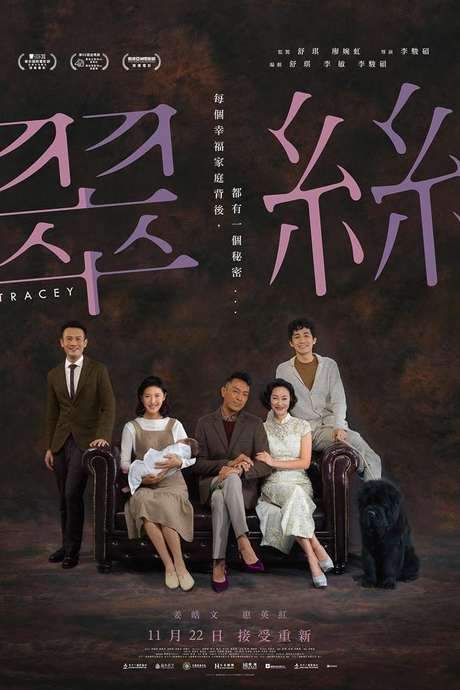
Travis Tung Philip Keung Ho-Man's family unfolds in a mix of warmth and tension: his wife Kara Wai Ying-Hung Anne, their son Ng Siu-Hin Vincent, and daughter Brigitte Jennifer Yu Brigitte, who lives with her husband Aaron Chow Jeffrey. The household is quietly marked by Brigitte’s observation that Vincent’s mother can be both mysophobic and briefly racist toward their housekeeper, a detail that sits alongside the fact that Tung and Anne sleep in separate rooms. Beneath the surface, Tung guards a private truth: he secretly changes into women’s underwear beneath their clothes, a habit that reveals a long-suppressed gender identity and a longing for a life not constrained by traditional expectations.
During a routine walk with their dog Bowie, a momentary sense of reunion with an old friend dissolves into tragedy when Bowie falls ill and dies. The family’s grief is compounded when Brigitte, who is pregnant, chooses to stay the night rather than wake her husband. The plot widens as Tung learns that his childhood friend Ko Ching has died overseas; with the help of their friend Chi Jun Eric Kot Man-Fai, Tung travels to the airport to collect Ching’s ashes, while Bond Tann River Huang speaks frankly about the discrimination surrounding sexuality in Hong Kong, calling the city “a backwards country.”
At a small opera performance that includes Anne, the group reconnects with an old confidant: Brother Darling, also known as Fa Yim-hung Ben Yuen, a Cantonese actor renowned for playing women’s roles in operas. Tung recalls a pivotal childhood moment—an infamous “peeper” incident in the ladies’ room that actually involved Brother Darling—before Brother Darling reveals that, despite being born male, they are, in truth, a woman and cannot pee standing up. This moment deepens Tung’s awareness of gender fluidity and the social risks of living openly.
Back home, the family’s conversations turn to Brigitte’s options as Jeffrey’s fidelity is questioned and Brigitte contemplates abortion or divorce. Anne pushes back on the idea that she would have nothing if Brigitte leaves, while Vincent heads off to be with his girlfriend, a tattoo artist who asserts ownership of her body through her art. The emotional stakes rise as Tung visits Bond in his hotel room and the two women and men in their circle confront shared longing and fear. They cry beside the door, then find a way to confront their past—Tung and Bond recall a mutual, unacted love from youth, a moment that never fully blossomed but has lingered as a quiet ache between them.
The two reconnect by a pond—the place where the trio used to meet—where Tung finally comes out: “I am a woman, not outside, but deep inside.” They acknowledge early signs of difference, initially mistaking their own feelings as mere gay desire, and admit the lifelong habit of hiding who they are, including wearing bras, tucking, and changing into lingerie at work because of a body that felt wrong. Tung’s sense of duty toward family grows heavier after his father is murdered, thrusting him into being the “man” of the house in a world that mistrusts gender nonconformity.
Anne’s suspicions intensify when she finds receipts from a lingerie store that Tung frequents. Tung struggles to explain, even fabricating stories about relatives, until he admits that he isn’t merely gay but that he is a transgender woman in the process of self-acceptance. Tung, Bond, and Chi Jun later travel to sea to spread Ching’s ashes, and Tung comes out to Chi Jun—who accepts them and Ching’s sexuality with quiet grace.
The trio then introduce Brother Darling, and the group embraces a transformation: they go to a club dressed as trans women, with full hair and dress. The experience is exhilarating—Brother Darling proclaims that she “can finally use the ladies’ room”—but joy turns to tragedy when Brother Darling collapses and dies in a hospital. Vincent, who has been largely distant, confronts his own hypocrisy as his girlfriend calls him out: it’s not okay for others to be gay if his own family is.
Back at home, Tung attempts to come out to Anne, but she responds with hostility, insisting that Tung is sick and selfish. In a moment of despair, Tung contemplates self-harm, cutting away at her own body in a futile search for wholeness.
Seven months later, Brigitte has given birth, and Tung has become a grandmother. On Vincent’s advice, Tung attends Anne’s latest performance, hoping for a breakthrough, but Anne stubbornly refuses to sign divorce papers, lamenting to her son, “why force me to accept this?” Another seven months pass, and Tung undergoes gender-affirmation surgery, shedding the name Travis Tung for Tracey. Tracey and Bond reconnect after a gallery visit, and the two become physically intimate again. Tracey also finds time to visit her blind mother, who affirms with quiet, enduring love that gender does not diminish the bond of family: “Male or female, you’re always my child.”
The film culminates in a resonant meditation on identity, acceptance, and the enduring ties that bind a family through upheaval and transformation. Its emotional arc lingers on the courage it takes to live authentically, even when that truth upends expectations and unsettles the people you love most. As Tracey’s journey closes, the story leaves viewers with a poignant reminder that love, in all its forms, can endure beyond labels and time. > "Male or female, you're always my child."