Plot Explained Spoilers guaranteed!
Plot Explained

Browse by genre

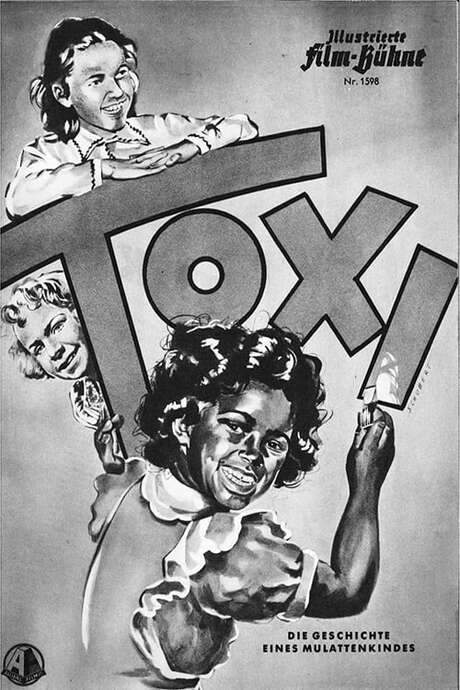
Toxi (1952) movie poster

Characters & Themes

Toxi (1952) Characters, Setting & Themes Explained

Release, runtime and language
1952 · 79 mins · German
Loading streaming availability…
Directed by
Robert A. Stemmle
Starring
Johanna Hofer, Carola Höhn, Katharina Brauren, Paul Bildt, Elisabeth Flickenschildt, Erika von Thellmann

Set in post‑war Germany, the drama follows Toxi, a mixed‑heritage child of an African‑American G.I. and German mother. After her mother’s death she is placed with her American father, who struggles to provide for her and his two children. Toxi is sent to an orphanage, exposing the prejudice faced by the thousands of “mischlings” born in that era.

On this page (8)
  1. 1 Where to watch
  2. 2 Characters explained (3)
  3. 3 Where & when it takes place
  4. 4 Themes & meaning (2)
  5. 5 Character & meaning questions
  6. 6 Movie threads
  7. 7 Movies like Toxi
  8. 8 Every angle
Loading streaming availability…

3 main characters · contains spoilers

Toxi Characters Explained: Who Is Who

The main characters of Toxi (1952), heroes and villains: what drives them, how they change over the course of the story and what each of them reveals about the film's bigger ideas.

  • Uncle Theodor (actor unknown)

    Uncle Theodor initially exhibits racial prejudice, feeling uncomfortable with Toxi staying in his home and disapproving of her interaction with his daughters. His character demonstrates societal biases that are ultimately challenged as he recognizes Toxi’s maturity and goodness, leading to personal growth.

    • 🤔 prejudice
    • 👨‍👩‍👧‍👦 family
    • 👶 maturity
  • Toxi (character details not specified)

    Toxi is a mature, well-behaved young girl who faces abandonment and societal discrimination due to her race. Her inherent goodness, maturity, and resilience challenge the prejudiced views of those around her, making her a symbol of innocence and strength amid social bias.

    • 🧒🏿 innocence
    • 💪 resilience
    • 🌟 symbol
  • Toxi's father (character details not specified)

    Toxi's father is a former American soldier who comes to reclaim her, representing the complex identities of 'Brown Babies' and the enduring impacts of war on families and individuals. His presence emphasizes themes of belonging and cultural ties across nations.

    • 🧓 parent
    • 🌎 cultural ties
    • 🛫 migration

Last updated: August 19, 2025 at 05:04

Was this helpful?

Setting

Where and When Does Toxi Take Place?

The setting of Toxi (1952): the year and time period, the places and locations, and how they shape the characters, the mood and the tension of the story.

Time period

1950s

The story takes place during the 1950s, a decade characterized by rebuilding and confronting past traumas in Germany. This period saw significant social challenges, including dealing with the repercussions of war and racial discrimination, which are central themes in the film. The decade also reflects societal tensions and gradual progress toward acceptance of marginalized groups like 'Brown Babies'.

Location

Germany, post-war society

The movie is set in a middle-class German household during the 1950s, a period marked by post-World War II recovery and societal reflection. The setting highlights the social tensions and cultural shifts occurring in Germany as it grapples with its recent history. It provides a backdrop for exploring themes of acceptance, racial prejudice, and societal change.

  • 🏰 Post-war
  • 🇩🇪 German society
  • 🏘️ Middle-class neighborhood

Last updated: August 19, 2025 at 05:04

Was this helpful?

2 major themes

Toxi Meaning: Themes & Message Explained

What is Toxi (1952) really about? The emotional, social and philosophical themes the film keeps returning to, its symbolism and the message beneath the surface.

  • Racial Prejudice

    The film examines the racial prejudices faced by Toxi, a young Afro-German girl, highlighting the societal biases and discrimination present in post-war Germany. It explores how race influences social acceptance and personal relationships during this era. The narrative ultimately challenges these prejudices through the family's transformation and acceptance of Toxi.

  • Acceptance & Change

    A key theme is the family's evolving acceptance of Toxi, reflecting broader societal shifts in understanding and tolerance. The film portrays how personal and societal prejudices can be challenged and changed through compassion and understanding. It underscores the importance of empathy in overcoming racial and social divides.

Last updated: August 19, 2025 at 05:04

Was this helpful?

Character & theme questions

Toxi Characters & Meaning: Your Questions Answered

The questions people ask about Toxi (1952): who the characters really are, their relationships, what the symbols mean, where it takes place and what the movie is really about. Each answer contains spoilers.

Q1

Where is the movie set?

The film is set in a middle-class German household in the 1950s, during the period of post-World War II recovery. This setting highlights the social tensions and cultural shifts occurring in Germany as it grapples with its recent history. The domestic environment serves as a backdrop for exploring themes of acceptance, racial prejudice, and societal change.

  • germany setting
  • post-war germany
  • middle-class german household
Q2

What time period does the film take place in?

The story is set in the 1950s, a decade characterized by rebuilding and confronting past traumas in Germany. This era saw significant social challenges, including dealing with the repercussions of war and racial discrimination. The decade reflects societal tensions and gradual progress toward acceptance of marginalized groups like 'Brown Babies'.

  • 1950s
  • post-war era
  • germany 1950s
Q3

What are the main themes in the movie?

The film explores two primary themes: racial prejudice and acceptance. It examines the societal biases and discrimination faced by Toxi, an Afro-German girl, highlighting how race influences social acceptance during post-war Germany. The narrative also portrays the family's evolving acceptance of Toxi, reflecting broader societal shifts in tolerance and compassion.

  • racial prejudice
  • acceptance
  • post-war racism
  • german society themes
Q4

What does the film say about racial prejudice?

The film examines the racial prejudices faced by Toxi, exposing the discrimination present in post-war German society. It explores how race influences social acceptance and personal relationships during this era. The narrative ultimately challenges these prejudices through the family's transformation and acceptance of Toxi, showing that personal and societal biases can be overcome.

  • racial discrimination
  • afro-german child
  • prejudice in germany
Q5

Who is Toxi as a character?

Toxi is a young Afro-German girl of mixed heritage, the daughter of an African-American G.I. and a German mother. She is portrayed as mature, well-behaved, and resilient despite facing abandonment and societal discrimination due to her race. Her inherent goodness and maturity challenge the prejudiced views of those around her, making her a symbol of innocence and strength amid social bias.

  • toxi character
  • afro-german girl
  • brown baby
Q6

Who is Uncle Theodor in the story?

Uncle Theodor is a family member who initially exhibits racial prejudice toward Toxi. He feels uncomfortable with her staying in his home and disapproves of her interaction with his daughters. His character demonstrates the societal biases present in post-war Germany that are ultimately challenged as he recognizes Toxi's maturity and goodness, leading to personal growth and acceptance.

  • uncle theodor
  • prejudiced family member
  • german family racism
Q7

Who is Toxi's father in the film?

Toxi's father is a former American soldier, an African-American G.I., who comes to reclaim her after her mother's death. He represents the complex identities of 'Brown Babies' and the enduring impacts of war on families. His presence emphasizes themes of belonging and cultural ties across nations, highlighting the transatlantic connections left by the war.

  • toxi father
  • american soldier
  • brown babies
  • mischlingskinder
Q8

How does the movie address acceptance and change?

A key theme is the family's evolving acceptance of Toxi, reflecting broader societal shifts in understanding and tolerance. The film portrays how personal and societal prejudices can be challenged and changed through compassion and understanding. It underscores the importance of empathy in overcoming racial and social divides, showing that acceptance requires personal growth.

  • family acceptance
  • personal growth
  • overcoming prejudice
Q9

What is the historical context of the film?

The film is set in post-war Germany and addresses the real historical issue of 'Mischlingskinder' (mixed-heritage children) born to German mothers and African-American soldiers. These children faced significant discrimination and abandonment. The movie reflects the social challenges of the 1950s, including dealing with the repercussions of war and racial discrimination against marginalized groups.

  • mischlingskinder
  • post-war germany
  • afro-german children
  • historical context
Q10

What kind of society does the film depict?

The film depicts 1950s German society as a period of recovery marked by cultural shifts and social tensions. It shows a middle-class household grappling with issues of race and identity in the aftermath of World War II. The setting highlights how post-war Germany struggled with its recent history while confronting new social challenges related to acceptance and diversity.

  • german society
  • post-war recovery
  • 1950s social tensions

Movie threads

More Movies Like Toxi, by Mood & Story

Curated lists built around what makes Toxi tick: the same mood, the same kind of story or the same emotional payoff. Each list explains why these movies belong together.

Movies about innocence confronting prejudice like Toxi

Stories where a child's perspective exposes the harsh realities of societal prejudice. If you liked Toxi, this list features other movies where a child's innocent perspective exposes deep societal prejudices. These similar drama stories explore themes of racism, belonging, and social stigma through the eyes of the young, offering heartfelt and thought-provoking narratives.

  • heartfelt
  • somber
  • thought-provoking
  • melancholic
  • hopeful
  • resilient
  • Tone: bittersweet, heartfelt, somber
  • Pacing: steady, character-driven
Why these movies?

The story pattern: The narrative often follows a linear path, introducing a child into a prejudiced environment. The central conflict arises from the clash between the child's inherent innocence and the adults' biases, leading to internal struggles, moral dilemmas, and, ultimately, a potential for growth and acceptance, though often tinged with sadness.

Why they belong together: These films are grouped together because they share a powerful emotional engine: using a child's point of view to explore heavy themes of racism and social exclusion. They typically feature a steady, character-driven pace and a bittersweet tone, balancing the heartbreak of prejudice with moments of human tenderness and resilience.

Post-war social dramas with heavy themes like Toxi

Character-driven dramas exploring the lingering social wounds in the aftermath of war. Find more movies like Toxi that explore the complex social landscape after a war. These similar dramas focus on the human cost of conflict, tackling heavy themes like prejudice, loss, and the struggle for belonging in a fractured society, often with a steady pace and bittersweet tone.

  • somber
  • thought-provoking
  • melancholic
  • unsettling
  • resilient
  • heartfelt
  • Tone: somber, bittersweet, thought-provoking
  • Pacing: steady, deliberate
Why these movies?

The story pattern: Narratives in this thread are typically grounded and steady, using a specific family or community as a microcosm for a larger society grappling with its recent trauma. The plot is driven by internal and social conflicts—such as prejudice, guilt, or abandonment—rather than action, leading to endings that are often ambiguous or bittersweet, reflecting the incomplete nature of healing.

Why they belong together: These movies share a common setting and thematic focus: the psychological and social aftermath of war. They are united by a somber, thought-provoking mood, a steady pacing that allows for deep character exploration, and a willingness to confront difficult, disturbing themes related to loss and societal breakdown.

If you liked this

Movies Like Toxi

Similar movies to Toxi: the same genre, themes or kind of story. Each one comes with its own plot summary, timeline and ending explained.

Browse all movie summaries

Every angle

Toxi (1952) Explained: Plot, Timeline & Characters

Everything about Toxi in one place: what happens in the plot summary, the timeline in chronological order, the characters and meaning and a spoiler-free summary. What's After the Movie adds the cast, box office and post-credit scenes.

Coming soon on iOS and Android

The Plot Explained Movie Summary App

Plot summaries, endings explained and timelines on your phone. Catch up on any movie in minutes, save your favorites and never miss a twist again.

Be the first to know when we launch. Your email stays private, always.

Learn more about the app