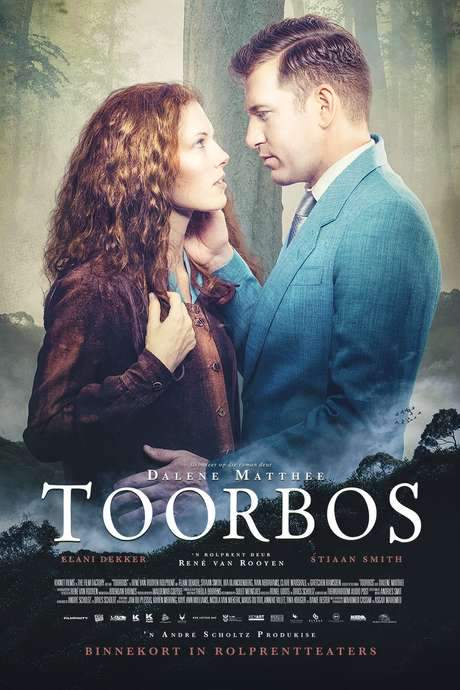
Year: 2019
Runtime: 120 mins
Language: English
Director: Rene van Rooyen
The film portrays the displacement of a young woman and her community, depicting the final days of the forest inhabitants within South Africa’s Knysna forest in the 1930s. It explores themes of cultural disruption and the loss of a traditional way of life as the forest dwellers are forced to relocate.
Warning: spoilers below!
Haven’t seen Toorbos yet? This summary contains major spoilers. Bookmark the page, watch the movie, and come back for the full breakdown. If you're ready, scroll on and relive the story!
Explore the full timeline and setting of Toorbos (2019). Follow every major event in chronological order and see how the environment shapes the story, characters, and dramatic tension.
Last updated: February 20, 2026 at 00:11
Meet the key characters of Toorbos (2019), with detailed profiles, motivations, and roles in the plot. Understand their emotional journeys and what they reveal about the film’s deeper themes.
Last updated: February 20, 2026 at 00:11
Explore the central themes of Toorbos (2019), from psychological, social, and emotional dimensions to philosophical messages. Understand what the film is really saying beneath the surface.
Last updated: February 20, 2026 at 00:11
Browse frequently asked questions about Toorbos (2019) focused on characters, relationships, themes, symbols, setting, and story context. This movie info FAQ gives spoiler-aware explanations for character arcs, world details, and thematic interpretation so readers can better understand what the film is really about.
Toorbos is set in the Knysna forest region of South Africa. The story contrasts the magical, spiritual forest world with the nearby town of Knysna, representing two contrasting ways of life - the traditional forest-dwelling community versus modern urban society.
The narrative unfolds in the 1930s, a pre-World War II era when rural communities in South Africa faced poverty and changing social norms. This period represents a transition time where tradition and emerging modernity collide.
The Freedom theme centers on Karoliena's loss and longing for personal autonomy. The forest represents spiritual and communal liberty, while the town promises escape through wealth and status. The film questions what true freedom costs, exploring the price of conformity and cages disguised as progress.
The story examines rigid gender expectations that push Karoliena toward subservience within marriage. Women are defined by appearances and obedience rather than desires or agency. The tension between her forest-rooted identity and town-imposed roles reveals how tradition can be weaponized to control individuals.
The Knysna forest is more than a backdrop - it embodies memory, culture, and serves as a counterpoint to urban greed. Its spiritual resonance contrasts with the town's money-driven mentality. The film suggests that severing ties with nature risks losing identity and belonging.
Karoliena is a young woman from a poverty-stricken, forest-connected community who is drawn to the promise of a better life with Johannes. She moves to Knysna to be trained as a respectable lady, learning to perform a subservient role within marriage, ultimately sensing she has traded precious freedom for a cage.
Johannes Stander is a successful businessman from the town who lures Karoliena with the prospect of wealth and status. He embodies modernization and social ambition, expecting Karoliena to adapt to a life of privilege and submission while disregarding her forest origins and values.
The Dominee is a town minister representing traditional authority and moral order in the new social arrangement. He embodies the established norms that guide behavior, influence marriage, and regulate community life, underscoring the conflict between faith, social pressure, and personal freedom.
Bothatjie is a member of the Knysna forest community, representing the voices and ties of the forest world Karoliena leaves behind. He anchors the forest's cultural memory and serves as a reminder of the values and connections that define her roots.
The forest represents a traditional way of life for subsistence farmers and foresters, offering spiritual connection and communal freedom. The town embodies modern wealth and social ambition. Karoliena moves between these two environments, with place shaping her identity and sense of freedom.
The film portrays the displacement of a young woman and her community, depicting the final days of forest inhabitants. It explores cultural disruption and the loss of a traditional way of life as forest dwellers are forced to relocate, highlighting the irreversible loss of culture and spiritual connection.
Discover curated groups of movies connected by mood, themes, and story style. Browse collections built around emotion, atmosphere, and narrative focus to easily find films that match what you feel like watching right now.
Powerful stories of communities and individuals displaced from their ancestral lands.If you were moved by the story of Karoliena in 'Toorbos', this list features similar films about characters and communities grappling with the loss of their homeland and the erosion of their traditional way of life.
These narratives often follow a character or community whose idyllic or spiritually rich existence is threatened by external forces. The plot traces their resistance, the inevitable displacement, and the subsequent disillusionment and search for identity in a new, often oppressive, reality.
Movies are grouped here because they share a deep thematic focus on the trauma of cultural dislocation. They evoke a heavy, melancholic mood and feature protagonists who experience a profound spiritual and emotional rift as their world is taken from them.
Stories of women trapped in seemingly comfortable but spiritually suffocating lives.For viewers who appreciated the 'gilded cage' narrative in 'Toorbos', this collection features other films exploring female protagonists disillusioned by the confines of marriage and the loss of personal and spiritual freedom.
The narrative pattern involves a woman entering a marriage or situation that offers material security but demands the suppression of her true self, desires, or connection to a previous life. The story charts her growing disillusionment and the internal conflict as she realizes the high cost of her comfortable prison.
These films are connected by their exploration of female agency within restrictive social structures, particularly marriage. They share a slow-burn pace, a melancholic or oppressive tone, and a focus on the heavy emotional weight of personal sacrifice and spiritual suffocation.
Don't stop at just watching - explore Toorbos in full detail. From the complete plot summary and scene-by-scene timeline to character breakdowns, thematic analysis, and a deep dive into the ending - every page helps you truly understand what Toorbos is all about. Plus, discover what's next after the movie.
Read a complete plot summary of Toorbos, including all key story points, character arcs, and turning points. This in-depth recap is ideal for understanding the narrative structure or reviewing what happened in the movie.
Track the full timeline of Toorbos with every major event arranged chronologically. Perfect for decoding non-linear storytelling, flashbacks, or parallel narratives with a clear scene-by-scene breakdown.