Plot Explained Spoilers guaranteed!
Plot Explained

Browse by genre

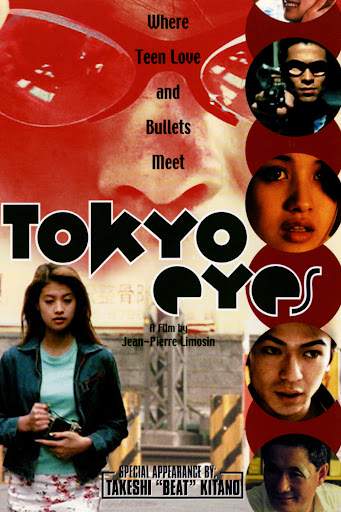
Tokyo Eyes (2001) movie poster

Timeline

Tokyo Eyes (2001) Timeline Explained – Every Event in Order

Release, runtime and language
2001 · 97 min · Japanese
Loading streaming availability…
Directed by
Jean-Pierre Limosin

A thrilling pursuit unfolds as Tokyo's elite detectives hunt "Four Eyes," a shadowy shooter known for creating havoc. Simultaneously, a teenage girl discovers a potential clue, leading her into a playful chase with K, a mysterious individual resembling the suspect. As the investigation progresses, unexpected connections emerge, intertwining trust, romance, and danger, and blurring the distinction between those who hunt and those who are pursued.

On this page (5)
  1. 1 Where to watch
  2. 2 Events in order (11)
  3. 3 Timeline questions answered
  4. 4 Movie threads
  5. 5 Every angle
Loading streaming availability…

11 events in order · contains spoilers

Tokyo Eyes Timeline: Events in Chronological Order

Every key event of Tokyo Eyes (2001) in order, scene by scene, with when and where it takes place. Use it to untangle flashbacks, time jumps and parallel storylines, to refresh your memory before the sequel or to find the exact scene you are thinking of.

  1. The Rise of the Vigilante

    In the bustling streets of Japan, a talented debugger and programmer named K adopts a secret vigilante persona during the night. Known for his meticulous strategies, K takes on the nickname 'Four-eyes' due to his unusual ritual of wearing thick glasses before each action.

    Where
    Japan
  2. Hinano's Discovery

    17-year-old hairdresser Hinano Yoshikawa rides the subway and witnesses a young man stealthily filming other passengers. Intrigued by his actions, she decides to follow him, enlisting the help of her friend Naomi to uncover the mystery.

    Where
    Subway
  3. The Encounter with K

    Hinano and Naomi's hunt leads them to K, where they unexpectedly form a friendship. As they spend time together, Hinano is drawn into K's world of trance music and video games, further deepening their bond.

  4. Witnessing Nighttime Justice

    As Hinano’s connection with K grows stronger, she witnesses one of his non-lethal confrontations. This experience forces her to confront the moral implications of K’s nighttime vigilante routine, leading to deeper questions about justice and morality.

  5. The Truth About the Glasses

    During a pivotal discussion, K reveals to Hinano the true purpose of his glasses: they enable him to maintain emotional distance from his targets. This insight highlights his desire to document the world rather than simply observe it, deepening Hinano's understanding of K's complex personality.

  6. A Dark Mistake

    In a turn of events, K accidentally shoots a man during an altercation while he’s breaking up with his girlfriend. This incident adds to Hinano's internal conflict regarding K's activities and the risk involved in his vigilante actions.

  7. The Yakuza Encounter

    K's solitary existence takes a dramatic twist when he encounters a minor yakuza member, leading to a tense confrontation. In the chaos, a borrowed gun discharges, inflicting a wound on K’s lower abdomen, escalating the already precarious situation.

  8. Enduring Pain for Connection

    Despite his severe injury, K chooses to forgo medical attention and instead meets Hinano, showcasing the undeniable bond they've formed. Together, they navigate the vibrant, yet perilous, urban landscape of Tokyo amidst K's escalating pain.

    Where
    Tokyo
  9. A Date Above the Clouds

    K invites Hinano to the observation deck of Tokyo, a breathtaking locale that symbolizes their evolving relationship. While they share this moment, K's injury begins to take a visible toll on him, creating a sense of urgency and foreboding.

    Where
    Tokyo Observation Deck
  10. The Balance of Destiny

    As they stand at the edge of a bustling street, K's condition deteriorates, leaving him teetering on the brink of danger. The scene captures a moment where he embodies both hope and despair, drawing Hinano deeper into his tumultuous world.

    Where
    Tokyo Streets
  11. The Ambiguous Conclusion

    The film culminates in a suspenseful and ambiguous ending, leaving viewers to ponder the fate of K. International versions of the film include additional footage that might provide more clarity, yet the core message of the narrative remains intact.

Last updated: November 22, 2024 at 18:43

Was this helpful?

Timeline questions answered

Tokyo Eyes Timeline Explained: Your Questions Answered

When does it happen, and why in that order? The questions people ask about the chronology of Tokyo Eyes (2001): time jumps, flashbacks, cause and effect between scenes and the correct order of events, each answered with spoilers.

Q1

Why does Four-eyes wear thick glasses before shooting?

The glasses serve as a psychological tether for K. They allow him to maintain emotional distance from his targets by avoiding direct eye contact, which helps him perform his vigilante actions without the psychological burden of witnessing the impact on his victims. This ritual also connects to his deeper desire to document the world through video rather than simply observe it, creating a barrier between himself and the violent acts he commits.

Foreshadowing: Earlier in the film, K is shown filming passengers on the subway, establishing his preference for observation over direct engagement.

  • four-eyes
  • glasses
  • vigilante
  • psychological
  • K
Q2

Why does K modify his pistol to be inaccurate?

K deliberately alters his pistol to be inaccurate so that his shots never actually strike his targets. This ensures his vigilante activities remain non-lethal, allowing him to administer psychological justice to wrongdoers without causing physical harm. The modified weapon reflects his philosophy of creating fear and psychological impact rather than true violence.

Foreshadowing: K's meticulous nature as a programmer and debugger is shown in his daytime work, suggesting a person who plans everything carefully.

  • gun
  • pistol
  • non-lethal
  • vigilante
  • modified weapon
Q3

Why does K refuse to seek medical help after being shot?

After being shot in the lower abdomen by a yakuza member, K chooses not to seek professional medical treatment. Instead, he decides to meet Hinano, prioritizing his connection with her over his own survival. This decision highlights the depth of his feelings for Hinano and his willingness to embrace his fate rather than retreat from the world he has inhabited.

Foreshadowing: The scene occurs shortly after K expresses a desire to abandon his Four-eyes persona, suggesting he is ready to let go of his vigilante identity.

  • injury
  • medical treatment
  • yakuza
  • K
  • survival
Q4

Why does Hinano become involved with K despite knowing he's Four-eyes?

Hinano becomes increasingly drawn to K after witnessing his nighttime activities. Their connection deepens through shared experiences in trance music and video games, and she finds herself captivated by his complex persona. Despite the moral dilemma his vigilante activities present, her curiosity and growing emotional bond override her initial concerns, leading her to pursue a relationship with him.

Foreshadowing: Hinano's initial curiosity about the man filming passengers on the subway establishes her investigative nature and willingness to engage with mystery.

  • Hinano
  • K
  • relationship
  • romance
  • connection
Q5

Does K die at the end of the movie?

The film ends ambiguously regarding K's fate. After being shot and refusing medical attention, he is shown staggering dangerously along the edge of a bustling Tokyo street while Hinano watches. The ending leaves viewers uncertain whether he has died. International versions include seven additional minutes that may offer more clarity, but the core narrative deliberately maintains this uncertainty.

Foreshadowing: K's decision to forego medical treatment after being shot establishes the life-threatening nature of his injury.

  • ending
  • death
  • fate
  • ambiguous
  • K
Q6

Why does K become a vigilante?

K adopts the Four-eyes vigilante persona to administer justice to wrongdoers while maintaining his own moral code. His background as a programmer and debugger, someone who identifies and corrects problems, translates into his nighttime activities where he targets criminals. The vigilante identity allows him to intervene in society's problems while keeping his daytime life separate.

Foreshadowing: The opening establishes K's daytime work as a debugger, suggesting a personality oriented toward identifying and fixing errors.

  • vigilante
  • Four-eyes
  • justice
  • motivation
  • K
Q7

What is the significance of the observation deck scene?

K takes Hinano to Tokyo's highest observation deck, a location that symbolizes the pinnacle of their relationship and offers a metaphorical height from which to view the city. The scene represents a moment of intimacy and connection between them, but it is overshadowed by K's worsening physical condition from his gunshot wound, creating a poignant blend of romance and impending tragedy.

Foreshadowing: The invitation to the observation deck follows K's decision to abandon his Four-eyes identity, suggesting he wants to experience a normal relationship.

  • observation deck
  • Tokyo
  • date
  • Hinano
  • K
Q8

Why does K decide to stop being Four-eyes?

K expresses his desire to abandon the Four-eyes persona during a conversation with Hinano, indicating his growing desire to distance himself from his vigilante identity. This decision appears motivated by his deepening connection with Hinano and perhaps by the psychological burden of his dual existence. The moment offers Hinano relief, though the timing of his decision comes after many of the film's key events have already unfolded.

Foreshadowing: Hinano's moral confrontation with K after witnessing his non-lethal altercation creates pressure on their relationship and on K's vigilante activities.

  • Four-eyes
  • vigilante
  • quit
  • decision
  • K
  • Hinano
Q9

Why does K accidentally shoot a man during an altercation?

K mistakenly shoots a man who was in the process of breaking up with his girlfriend for someone else. This accidental shooting represents a departure from his normally meticulous approach and introduces a darker turn in the narrative. The incident adds to Hinano's moral conflict about K's vigilante activities and demonstrates how his actions can have unintended consequences.

Foreshadowing: Earlier scenes establish K's careful, strategic approach to his vigilante work, making this accident an unusual deviation.

  • accident
  • shooting
  • mistake
  • victim
  • K
Q10

How does Four-eyes get his media nickname?

The media dubs K "Four-eyes" because of his distinctive ritual of wearing thick glasses before each vigilante action. This eccentricity becomes his trademark and helps create the public persona that surrounds the mysterious shooter. The nickname reflects the film's themes of observation and performance, as K adopts a visual symbol to separate his vigilante identity from his everyday self.

Foreshadowing: The film opens by establishing K's glasses as a key part of his Four-eyes ritual.

  • Four-eyes
  • nickname
  • media
  • glasses
  • vigilante

Movie threads

More Movies Like Tokyo Eyes, by Mood & Story

Curated lists built around what makes Tokyo Eyes tick: the same mood, the same kind of story or the same emotional payoff. Each list explains why these movies belong together.

Moral Ambiguity Thrillers like Tokyo Eyes

Thrillers where the hunter and hunted blur in a morally grey cityscape. If you liked the ambiguous cat-and-mouse game in Tokyo Eyes, explore more movies like it. This section features thrillers and crime stories where the line between hunter and hunted is blurred, set against morally complex urban backdrops.

  • suspenseful
  • mysterious
  • urban
  • thought-provoking
  • morally grey
  • tense
  • Tone: tense, contemplative
  • Pacing: steady, character-driven
Why these movies?

The story pattern: Stories in this thread typically follow a pursuit—be it a detective, a vigilante, or an amateur investigator—that becomes personally complicated. The narrative structure is less about clear-cut resolution and more about the psychological interplay and moral questions raised by the chase, often leading to ambiguous conclusions.

Why they belong together: These movies are grouped by their shared tense tone, urban setting, and focus on the ethical gray areas of justice. They balance thriller pacing with character-driven moments, creating a specific, thought-provoking vibe centered on identity and observation.


Quiet Urban Thrillers similar to Tokyo Eyes

Stories where city life amplifies quiet tension and unexpected connections. For viewers who enjoyed the atmospheric tension and character connections of Tokyo Eyes, this section collects similar movies. Discover other steady-paced, urban-set stories that blend suspense with thoughtful character studies and a moody, mysterious feel.

  • mysterious
  • urban
  • thought-provoking
  • anxious
  • dreamlike
  • character-driven
  • Tone: tense, mysterious, slightly whimsical
  • Pacing: steady, atmospheric
Why these movies?

The story pattern: The narrative pattern involves characters navigating feelings of isolation or anonymity within a large city, often stumbling into a mystery or connection that disrupts their routine. The journey is introspective, focusing on the characters' internal states and the evolving dynamics between them as much as the external plot.

Why they belong together: They share a specific mood: a blend of suspenseful mystery and dreamlike contemplation, all set against an urban landscape. The pacing is steady, the emotional weight is medium, and the tone is consistently tense yet infused with quirky or philosophical character moments.

Every angle

Tokyo Eyes (2001) Explained: Plot, Timeline & Characters

Everything about Tokyo Eyes in one place: what happens in the plot summary, the timeline in chronological order, the characters and meaning and a spoiler-free summary. What's After the Movie adds the cast, box office and post-credit scenes.

Coming soon on iOS and Android

The Plot Explained Movie Summary App

Plot summaries, endings explained and timelines on your phone. Catch up on any movie in minutes, save your favorites and never miss a twist again.

Be the first to know when we launch. Your email stays private, always.

Learn more about the app