





Plot Explained Spoilers guaranteed!
Plot Explained

Browse by genre

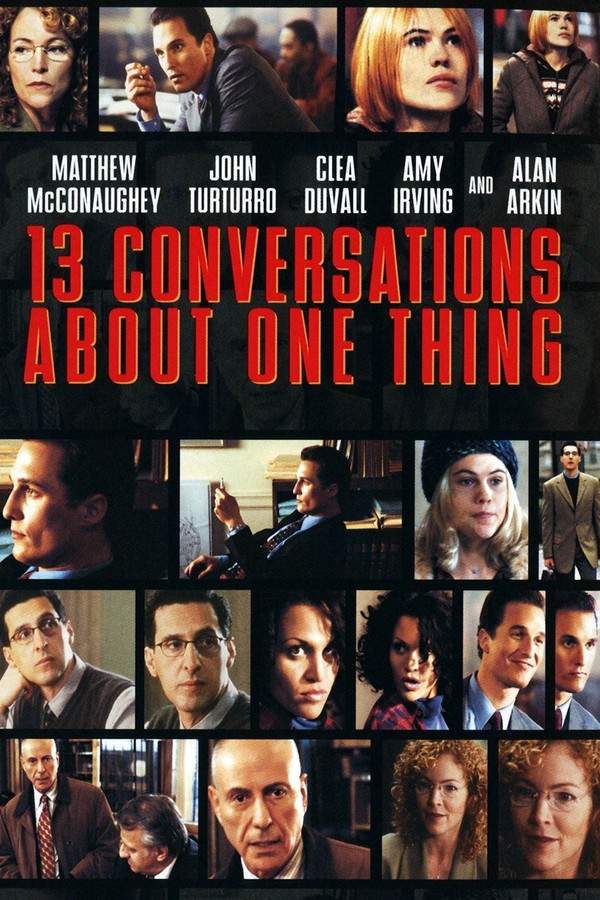
Thirteen Conversations About One Thing (2002) movie poster

Timeline

Thirteen Conversations About One Thing (2002) Timeline Explained – Every Event in Order

Release, runtime and language
2002 · 104 min · English
Directed by
Jill Sprecher
Starring
John Turturro

Amidst the bustling environment of Manhattan, the lives of five individuals unexpectedly intertwine. A man searches for a new direction, a lawyer deals with unforeseen difficulties, a woman grapples with infidelity in her marriage, and a businessman seeks retribution. Meanwhile, a cleaner maintains a hopeful outlook, demonstrating how interconnected lives can be, even in a city of millions. Each person’s journey reveals the complexities of relationships and the search for meaning.

On this page (6)
  1. 1 Where to watch
  2. 2 Events in order (15)
  3. 3 Timeline questions answered
  4. 4 Movie threads
  5. 5 Movies like Thirteen Conversations About One Thing
  6. 6 Every angle

Where to watch

Where to Watch Thirteen Conversations About One Thing (2002)

Where can you watch Thirteen Conversations About One Thing? Stream, rent or buy it in the US, including on YouTube Free, Amazon Video and Apple TV Store: current JustWatch availability with up-to-date prices.

Streaming availability powered by JustWatch

15 events in order · contains spoilers

Thirteen Conversations About One Thing Timeline: Events in Chronological Order

Every key event of Thirteen Conversations About One Thing (2002) in order, scene by scene, with when and where it takes place. Use it to untangle flashbacks, time jumps and parallel storylines, to refresh your memory before the sequel or to find the exact scene you are thinking of.

  1. Walker's Struggles

    As the story opens, Professor Walker is depicted in a somber state, bearing the marks of a recent mugging. His strained dinner with his emotionally distant wife, Patricia, highlights his struggles with self-worth and the fragility of life, setting the tone for the deep introspective journey that follows.

    Where
    Walker's home
  2. Silent Dissonance

    During dinner, Walker attempts to connect with Patricia, sharing his feelings of inadequacy and a longing for understanding. However, Patricia's inability to engage emotionally only deepens the silence and estrangement between them, emphasizing the weight of their relationship troubles.

    Where
    Dining table
  3. Barroom Confrontation

    The narrative shifts to a bar in New York City, where Gene English expresses his cynical views on happiness during a conversation with the exuberant Troy. This meeting serves as a backdrop to Troy’s poignant reflections on success and the fleeting nature of joy, as he recounts a cautionary tale about a lottery winner.

    Where
    New York City bar
  4. Troy's Optimism

    Despite Gene's admonitions, Troy champions the pursuit of happiness and revels in his position as a District Attorney. He believes that true success is unburdened by misfortune, raising a toast to his achievements amid their conversation's gloom.

    Where
    Bar
  5. Tragic Collision

    After leaving the bar, Troy's drive home takes a dark turn when he hits the brakes to avoid a sudden figure on the road. His shock escalates as he exits the car to discover a lifeless body on the street, shattering his momentary confidence and filling him with a profound sense of isolation.

    Where
    West Village
  6. A Moment of Despair

    Upon returning home, Troy indulges in a scotch while reflecting on the chaos of his life, with cuts on his hands symbolizing his internal turmoil. These moments of despair highlight his struggle to manage the weight of his responsibilities and his personal demons.

    Where
    Troy's home
  7. Professional Challenges

    Troy's relentless struggle is interrupted by a summons from his boss regarding a high-profile homicide case. Torn between his professional duties and personal battles, he feels the stress of impending decisions growing heavier on him.

    Where
    Office
  8. Beatrice's Solitude

    In another part of the city, Beatrice drifts through her apartment, haunted by her past while connecting with her friend Dorrie. Their conversation reveals Beatrice’s longing for understanding as they tidy up and recall fond memories.

    Where
    Beatrice's apartment
  9. Symbols of Memory

    Dorrie's discovery of a doll's head in Beatrice's apartment sparks feelings of nostalgia and reflection. This seemingly mundane relic becomes a poignant representation of Beatrice's past struggles, reminding her that even in darkness, redemption is attainable.

    Where
    Beatrice's apartment
  10. Walker at Columbia

    The narrative then shifts back to Professor Walker, who exudes authority in his lectures at Columbia University. His stern demeanor and refusal to compromise on students’ responsibilities highlight his unwavering commitment to his role as an educator.

    Where
    Columbia University
  11. Affair and Escapism

    Struggling with his separation from Patricia, Walker finds solace in an affair with a colleague. This liaison represents a temporary escape from his inner chaos, further complicating his already tumultuous emotional state.

    Where
    Colleague's apartment
  12. Reflections on Life

    Amidst cleaning another apartment with Dorrie, Beatrice opens up about her experiences with mortality. Each memory shared fosters a deeper bond between them, reminding her that life's goodness persists even in the face of hardship.

    Where
    Another apartment
  13. Night of Tragedy

    During an unexpected turn of events, Beatrice suffers a devastating fall that leaves her injured. Disturbingly, Troy, unaware of this incident, drives away in his turmoil, further intertwining their fates in a moment of shared grief.

    Where
    City street
  14. Gene's Despair

    As fate unfolds, Gene grapples with personal loss as his own son faces incarceration. The compounded burdens of his failing company and familial strains illustrate the depths of despair enveloping his life.

    Where
    Gene's home
  15. Intertwining Lives

    By the story's conclusion, the lives of Walker, Troy, Beatrice, and Gene intersect in a poignant exploration of redemption and hope. As their stories merge, they each navigate the complexities of human connection, grief, and the search for a second chance at happiness.

Last updated: November 17, 2024 at 13:46

Was this helpful?

Timeline questions answered

Thirteen Conversations About One Thing Timeline Explained: Your Questions Answered

When does it happen, and why in that order? The questions people ask about the chronology of Thirteen Conversations About One Thing (2002): time jumps, flashbacks, cause and effect between scenes and the correct order of events, each answered with spoilers.

Q1

Why does Troy hit the woman with his car?

While driving home from the bar, Troy sees a figure (described as a specter) flit across his windshield. He slams on the brakes but collides with the steering wheel and discovers a lifeless body on the street. The woman is Beatrice, whom he unknowingly hits in a hit-and-run incident. Troy is left in shock and drives away, unaware of exactly what happened.

  • hit and run
  • troy
  • beatrice
  • car accident
  • west village
Q2

What happens to Beatrice after she's hit by the car?

After being struck by Troy's car, Beatrice's body crumples against the pavement with her head bleeding. She survives the accident but is left severely injured. The film shows her in a hospital room with wilting flowers, symbolizing her struggle with the physical and emotional changes she faces after this traumatic event.

  • beatrice
  • hospital
  • injury
  • accident
  • recovery
Q3

Why is Gene so pessimistic about happiness?

Gene English sits alone in a bar expressing a cynical view that happiness is a fleeting illusion unworthy of pursuit. He shares his pessimistic philosophy with Troy, who challenges this worldview. Gene's outlook appears connected to his real-life struggles: his company is failing and his son faces incarceration. These personal tragedies have shaped his belief that pursuing joy leads only to disappointment.

  • gene english
  • happiness
  • pessimism
  • lottery story
  • philosophy
Q4

Why does Walker have an affair with his colleague?

Walker is struggling with deep marital problems. At dinner with his wife Patricia, he expresses feelings of inadequacy and a longing for understanding about what makes life valuable. Patricia remains emotionally distant, creating a suffocating silence in their relationship. This estrangement drives Walker to seek comfort elsewhere, leading to an affair with a colleague that serves as a temporary refuge from his inner chaos.

  • walker
  • patricia
  • affair
  • marriage
  • colleague
  • estrangement
Q5

How are all the characters in the movie connected?

The film weaves together five individuals in Manhattan whose lives intersect in subtle ways. The most significant connection occurs when Troy, after leaving a bar, accidentally hits Beatrice with his car while she's walking home. By the story's conclusion, their fates become intertwined through this traumatic event. Walker's teachings at Columbia, Gene's observations about life, and Beatrice's hopeful outlook all thematically connect to questions of choice, consequence, and redemption.

  • ensemble
  • interconnected
  • lives
  • manhattan
  • troy
  • beatrice
  • walker
  • gene
Q6

What does the title "Thirteen Conversations About One Thing" refer to?

The title reflects the film's thematic exploration of how different people grapple with the same fundamental questions about life, meaning, happiness, and redemption. Each character has their own conversations and introspective moments, Walker contemplates existence at his dinner table, Gene discusses happiness at the bar, Beatrice reflects on mortality with Dorrie. Despite their different circumstances, all thirteen conversations ultimately circle back to the same core questions about what makes life valuable and whether redemption is possible.

  • title meaning
  • theme
  • philosophy
  • redemption
  • happiness
Q7

What is happening between Walker and his wife Patricia?

Walker and Patricia are experiencing severe marital estrangement. At their dinner table, Walker bears visible marks from a recent mugging, but Patricia remains emotionally distant despite being physically present. Walker tries to connect by sharing his struggles with self-worth and asking what makes life valuable, but Patricia cannot provide comfort. This growing divide leads Walker to seek emotional connection elsewhere, ultimately beginning an affair with a colleague.

  • patricia
  • marriage
  • estrangement
  • walker
  • wife
  • mugging
Q8

Why does Troy tell the lottery winner story at the bar?

When Gene expresses his belief that happiness is not worth pursuing, Troy responds by defending his own success as a District Attorney. He recounts a colleague's tale of winning $2 million in the lottery, which became a curse, family and friends claimed the money, legal troubles followed, and the windfall brought chaos rather than joy. Troy uses this story to argue that hard-earned success is different from lucky fortune and therefore unburdened by misfortune, raising a toast to his achievements.

  • lottery
  • troy
  • success
  • money
  • district attorney
  • cautionary tale
Q9

What is the significance of the doll's head in Beatrice's apartment?

Dorrie discovers a doll's head on Beatrice's shelf, which becomes a poignant symbol of Beatrice's past struggles. The doll represents her life-altering experience when she was rescued from the depths of despair. Beatrice whispers to the doll, remembering how even in darkness, redemption is possible. This relic serves as a reminder of her past and her current optimistic outlook that life, despite its hardships, holds inherent goodness.

  • beatrice
  • doll
  • memory
  • redemption
  • past
  • hopeful
Q10

What happens to Troy after the hit-and-run accident?

After hitting Beatrice, Troy is filled with shock and isolation. He returns home, pours himself scotch, and examines cuts on his hands while barely sleeping for days. He's summoned to handle a high-profile homicide case at work but turns down a colleague's offer of a ride home, revealing his newfound aversion to driving. Troy remains unaware that the woman he hit was Beatrice, but the incident contributes to his ongoing existential turmoil throughout the film.

  • troy
  • guilt
  • trauma
  • hit and run
  • conscience
  • district attorney
Q11

Why does Beatrice collect the white lily petals?

In her apartment, Beatrice is captivated by the sweet scent of white lilies on her nightstand. She gathers their fallen petals and releases them into the night air, each petal symbolizing fleeting beauty. This moment reflects Beatrice's philosophical outlook, she acknowledges that nothing is ever perfect (as evidenced by a small hole in her favorite white shirt), yet she maintains hope and finds meaning in life's transient moments.

  • beatrice
  • white lilies
  • beauty
  • imperfection
  • hope
  • symbolism
Q12

Why is Gene's son in jail?

Gene English's world continues to spiral as he grapples with the fallout from his failing company. His son faces incarceration, adding to Gene's personal loss and despair. This familial tragedy compounds Gene's pessimistic outlook on happiness and life, illustrating why he believes misfortune follows those who seek joy. The specific crime leading to his son's imprisonment is not detailed in the film.

  • gene
  • son
  • jail
  • incarceration
  • family
  • despair

Movie threads

More Movies Like Thirteen Conversations About One Thing, by Mood & Story

Curated lists built around what makes Thirteen Conversations About One Thing tick: the same mood, the same kind of story or the same emotional payoff. Each list explains why these movies belong together.

Movies about interconnected lives like Thirteen Conversations About One Thing

Stories of disparate city dwellers whose quiet lives unexpectedly converge. If you liked the poignant, interconnected narratives in Thirteen Conversations About One Thing, explore more movies that weave together the separate stories of city dwellers. These films capture the serendipity and melancholy of urban life, where characters grapple with similar themes of fate, consequence, and quiet desperation.

  • interconnected
  • melancholic
  • contemplative
  • urban isolation
  • somber
  • reflective
  • Tone: melancholic, contemplative, bittersweet
  • Pacing: slow, reflective
Why these movies?

The story pattern: Movies in this thread typically use an ensemble structure, following several characters who may not initially know each other. Their individual struggles—often involving existential crises, moral choices, or personal loss—gradually intersect, highlighting the fragile and unexpected ways people impact one another's lives. The narrative often builds towards a moment of collective realization or shared emotional consequence.

Why they belong together: These films are grouped together for their shared focus on the architecture of coincidence and the emotional weight of urban solitude. They possess a similar pensive, melancholic tone, a deliberate pacing that allows for character depth, and a thematic core that questions how we are connected in a world that feels isolating.


Philosophical dramas with bittersweet endings like Thirteen Conversations About One Thing

Character studies where heavy moral choices lead to a glimmer of hope. For viewers who appreciated the deep moral and existential questions in Thirteen Conversations About One Thing, this collection highlights movies with a similar philosophical weight. These stories often follow characters facing consequences for their actions, leading to endings that are not purely happy or sad, but thoughtfully bittersweet.

  • philosophical
  • bittersweet
  • contemplative
  • morally complex
  • redemption
  • existential
  • Tone: bittersweet, melancholic, contemplative
  • Pacing: slow, deliberate
Why these movies?

The story pattern: The narrative pattern revolves around characters confronting the consequences of their actions—be it a lie, a crime, or a moral failure. The journey is one of introspection and reckoning, where the central conflict is often internal. The conclusion typically avoids tidy resolutions, instead offering a nuanced ending that balances sorrow with a hard-won sense of acceptance or a small measure of hope.

Why they belong together: These films share a specific emotional mix: a heavy emotional weight derived from serious themes, a contemplative and slow pacing that allows for deep thought, and a uniquely bittersweet tone that feels authentic to life's complexities. They are united by their ambition to explore 'big questions' through intimate human stories.

If you liked this

Movies Like Thirteen Conversations About One Thing

Similar movies to Thirteen Conversations About One Thing: the same genre, themes or kind of story. Each one comes with its own plot summary, timeline and ending explained.

Browse all movie summaries

Every angle

Thirteen Conversations About One Thing (2002) Explained: Plot, Timeline & Characters

Everything about Thirteen Conversations About One Thing in one place: what happens in the plot summary, the timeline in chronological order, the characters and meaning and a spoiler-free summary. What's After the Movie adds the cast, box office and post-credit scenes.

Coming soon on iOS and Android

The Plot Explained Movie Summary App

Plot summaries, endings explained and timelines on your phone. Catch up on any movie in minutes, save your favorites and never miss a twist again.

Be the first to know when we launch. Your email stays private, always.

Learn more about the app