Plot Explained Spoilers guaranteed!
Plot Explained

Browse by genre

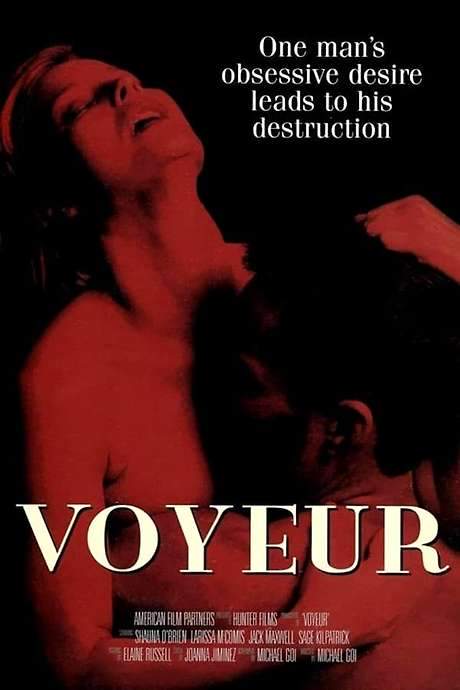
The Voyeur (1994) movie poster

Timeline

The Voyeur (1994) Timeline Explained – Every Event in Order

Release, runtime and language
1994 · 98 mins · Italian
Loading streaming availability…
Directed by
Tinto Brass
Starring
Frank Finlay, Antonio Salines, Stefania Sandrelli, Franco Branciaroli, Martine Brochard, Ted Rusoff

At a Roman university, a depressed professor nicknamed Dodo is reeling after his stunningly beautiful wife abandons him for another man. Obsessed with winning her back, he indulges in erotic daydreams of her. When a striking young student from his class asks for a ride home and seduces him, Dodo remains tormented by thoughts of his wife and her lover.

On this page (6)
  1. 1 Where to watch
  2. 2 Events in order (12)
  3. 3 Timeline questions answered
  4. 4 Movie threads
  5. 5 Movies like The Voyeur
  6. 6 Every angle
Loading streaming availability…

12 events in order · contains spoilers

The Voyeur Timeline: Events in Chronological Order

Every key event of The Voyeur (1994) in order, scene by scene, with when and where it takes place. Use it to untangle flashbacks, time jumps and parallel storylines, to refresh your memory before the sequel or to find the exact scene you are thinking of.

  1. Dodo's class in Rome

    After his French literature class in Rome, Dodo contemplates the quiet, tense household he inhabits. He shares the apartment with his bedridden father Alberto, tended by nurse Fausta, and the atmosphere hints at sexuality that repels him. The scene establishes his withdrawn, observational stance within a charged family dynamic.

    When
    Afternoon
    Where
    Rome - university classroom
  2. Home life with Alberto and Fausta

    Dodo's father is bedridden and Fausta tends to his medical and sexual needs. Dodo is repelled by the open sexuality surrounding the elderly man and withdraws into his own thoughts. The scene sets up the claustrophobic, morally charged home environment.

    When
    Evening
    Where
    Rome - Dodo's apartment
  3. Memories of his mother and shared husband

    Dodo reflects on his late mother, who was deeply involved with his father and other lovers. The memory suggests a complicated family history that haunts his every move. The reflection deepens his sense of entrapment within his parents' intimate life.

    When
    Past
    Where
    Dodo's apartment (memory)
  4. Silvia's disappearance

    Silvia, Dodo's wife, has vanished with another man, leaving him in turmoil and a quiet, unsettled life. The absence heightens his detachment and fuels his fantasies. The blank space in his world becomes the stage for later events.

    When
    Unknown
    Where
    Rome - Dodo's apartment
  5. Pascasie invites Dodo to her flat

    After a class, Pascasie, an African student, invites him back to her flat and strips off, inviting him to photograph her. Dodo, the observer, is drawn to the moment but does not participate. The invitation disrupts his routine and introduces a new sexual dynamic into the narrative.

    When
    Afternoon
    Where
    Pascasie's flat, Rome
  6. The flatmate confrontation and lesbian encounter

    When the flatmate returns, there is initial tension over the presence of a strange man. The two girls begin making love, and Dodo watches as an onlooker rather than a participant. The scene intensifies his sense of detachment and voyeurism.

    When
    Evening
    Where
    Pascasie's flat, Rome
  7. Dodo's fantasies about Silvia and his parents

    As the evening unfolds, Dodo's mind drifts into fantasies about Silvia and the sex lives of his parents. He remains physically distant while these thoughts become his main form of escape. The fantasies reveal his inability to engage with the real relationships around him.

    When
    Night
    Where
    Pascasie's flat
  8. A mysterious woman in Alberto's bedroom

    One night, a mystery woman is found in Alberto's bedroom, startling everyone. Fausta claims she must have been Silvia because she still has a key, tying Silvia's return to the mystery. The moment deepens the overlap between fantasy and reality.

    When
    Night
    Where
    Alberto's bedroom, Dodo's father's apartment
  9. Fausta implicates Silvia via the door key

    In the morning, Fausta asserts it must have been Silvia due to the key she still has. This deduction creates tension as the family tries to piece together who has been entering who’s room. It sharpens the question of Silvia's possible return.

    When
    Morning
    Where
    Alberto's bedroom, Dodo's father's apartment
  10. Silvia signals she wants to return

    Silvia unexpectedly says she wants to come back to the apartment. The announcement interrupts the fragile balance of the household and raises questions about the nature of her disappearance. Dodo's reaction is one of cautious curiosity rather than relief.

    When
    Morning
    Where
    Dodo's apartment, Rome
  11. Dodo contemplates the situation

    Dodo continues to observe and analyze the unfolding developments rather than actively engaging. The idea of Silvia's return, along with the ongoing memory of his parents’ sex lives, keeps him in a state of uneasy detachment. The timeline hinges on this unresolved tension.

    When
    Unspecified
    Where
    Rome – family apartment
  12. Silvia's return to the apartment (implied ending)

    The film closes with Silvia's return looming, leaving the domestic space charged with desire, secrecy, and unresolved desire. Dodo's perspective remains that of an observer, anticipating how the relationship between Silvia and the others will evolve. The ending leaves the future of the household uncertain.

    When
    Ending
    Where
    Rome – family apartment

Last updated: February 17, 2026 at 19:58

Was this helpful?

Timeline questions answered

The Voyeur Timeline Explained: Your Questions Answered

When does it happen, and why in that order? The questions people ask about the chronology of The Voyeur (1994): time jumps, flashbacks, cause and effect between scenes and the correct order of events, each answered with spoilers.

Q1

Why did Silvia leave Dodo?

Silvia left Dodo for another man, abandoning their marriage and leaving him devastated. The summary describes her as beautiful and magnetic, but does not specify the exact reasons for her departure. Her abandonment triggers Dodo's deep depression and his subsequent obsession with erotic fantasies, suggesting the departure was sudden and emotionally shattering for him.

  • silvia
  • abandonment
  • marriage
  • departure
  • betrayal
Q2

Why does Dodo watch rather than participate in sexual situations?

Dodo exhibits voyeuristic tendencies rooted in his psychological makeup. His childhood was shaped by his mother sharing his father with multiple lovers, leaving him with a complicated relationship to sexuality and intimacy. He observes life from a distance, preferring fantasy over real engagement, evident when he watches Pascasie and her flatmate rather than joining them, and when he retreats into erotic daydreams about his wife instead of confronting his reality.

Foreshadowing: Earlier scenes establish his withdrawn, observational stance within his own household, where he watches Fausta tend to his father's needs without engaging himself.

  • voyeurism
  • passivity
  • fantasy
  • sexuality
  • observation
Q3

Who was the mysterious woman in Alberto's bedroom?

The film leaves this ambiguous. When a mysterious woman is discovered in Alberto's bedroom one night, Fausta speculates it must have been Silvia because she still has a key to the apartment. This moment blurs the line between reality and Dodo's fantasies, and the audience is never given definitive confirmation of the woman's identity.

Foreshadowing: The mystery is set up by Silvia's earlier disappearance and the unresolved question of whether she has been secretly visiting the apartment.

  • mystery woman
  • alberto
  • bedroom
  • key
  • reality vs fantasy
Q4

Why does Silvia suddenly want to return to the apartment?

The film does not explicitly explain Silvia's motivation for wanting to return. After her disappearance and the mysterious night visit, she announces her desire to come back, creating tension in the household. Her return represents a potential rekindling of the old dynamics, but Dodo reacts with cautious curiosity rather than enthusiasm, suggesting the relationship remains fundamentally unresolved.

Foreshadowing: The mystery of her earlier departure and the suggestion of her secret visit set up this unexpected turn.

  • silvia return
  • reconciliation
  • apartment
  • resolution
Q5

What is the significance of Dodo's memories of his mother?

Dodo's memories of his late mother reveal a foundational trauma: she was inseparable from his father but had to share him with a revolving door of other women. This childhood experience of witnessing his mother's acceptance of infidelity shaped Dodo's inability to engage meaningfully in his own relationships. The memory haunts his present, making normal marital life feel both alluring and alien to him.

Foreshadowing: This backstory is established early, explaining his withdrawn nature and his difficulty with intimacy throughout the film.

  • mother
  • childhood
  • infidelity
  • memory
  • trauma
Q6

Why is Dodo repulsed by his father's sexuality?

Dodo is repulsed by the open sexuality surrounding his elderly father because it forces him to confront the same dynamics that damaged him as a child, his father openly engaging with multiple women while his mother accepted it. Seeing Fausta tend to both his father's medical and sexual needs triggers visceral discomfort in Dodo, representing everything he finds troubling about sexual candor and familial dysfunction.

Foreshadowing: This repulsion is established in early home scenes and connects directly to his mother's memories.

  • father
  • sexuality
  • repulsion
  • fausta
  • dysfunction
Q7

What does Pascasie's invitation represent for Dodo?

Pascasie's invitation to her flat and her offer for Dodo to photograph her represents a direct challenge to his voyeuristic tendencies. She strips and invites him into an intimate situation, but he remains a spectator, watching her and her flatmate together rather than participating. The encounter intensifies his pattern of observing sexual situations from a distance while being unable to engage physically or emotionally.

Foreshadowing: The scene follows his class interaction and establishes early that he cannot break his passive observational pattern even when actively invited.

  • pascasie
  • invitation
  • photography
  • seduction
  • observer
Q8

What is Fausta's role in Dodo's household?

Fausta is the nurse caring for Dodo's bedridden father Alberto, providing both medical care and sexual services with practical frankness. She lives in the cramped apartment and represents the overt sexuality that pervades Dodo's home environment. Her provocative advances toward Dodo consistently meet his discomfort, and she later speculates about the mysterious visitor, adding her voice to the household's sexual tension.

Foreshadowing: Her presence and behavior are established in early scenes, setting the tone for the sexually charged domestic atmosphere.

  • fausta
  • nurse
  • alberto
  • household
  • caregiver
Q9

How does the film blur fantasy and reality?

The film deliberately blurs fantasy and reality through Dodo's pervasive erotic daydreams. His fantasies about Silvia blend with his observations of actual sexual situations, making it unclear what is real. The mysterious woman in Alberto's bedroom epitomizes this ambiguity, Fausta believes it was Silvia due to her key, but the audience cannot confirm whether this was real or another of Dodo's imagined scenarios.

Foreshadowing: Dodo's fantasizing about Silvia and his parents is established as a recurring pattern throughout the middle section of the film.

  • fantasy
  • reality
  • dream
  • ambiguity
  • perception
Q10

What is the main theme of The Voyeur?

The Voyeur explores sexual obsession as a response to emotional trauma and abandonment. Dodo's depression following his wife's departure drives him into a world of fantasy and observation rather than action. The film examines how childhood experiences with parental infidelity shape adult intimacy, and how looking at desire from a distance can become a coping mechanism, or a prison.

  • voyeurism
  • obsession
  • trauma
  • theme
  • desire

Movie threads

More Movies Like The Voyeur, by Mood & Story

Curated lists built around what makes The Voyeur tick: the same mood, the same kind of story or the same emotional payoff. Each list explains why these movies belong together.

Movies about melancholic obsession like The Voyeur

Character studies where a single fixation unravels a world of fantasy and grief. A collection of psychologically complex dramas similar to The Voyeur, focusing on characters grappling with erotic fixation and grief. If you liked the dreamlike exploration of obsession in The Voyeur, these films offer a similar mood of introspective melancholy.

  • obsessive
  • melancholic
  • introspective
  • voyeuristic
  • dreamlike
  • erotic
  • Tone: melancholic, obsessive, introspective
  • Pacing: slow, deliberate
Why these movies?

The story pattern: The narrative typically follows a character consumed by an unhealthy obsession, often triggered by a personal loss. Their journey is internal, characterized by voyeuristic tendencies, vivid fantasies, and a passive engagement with reality, leading to a psychologically complex and often ambiguous resolution.

Why they belong together: These films are grouped by their intense focus on a protagonist's internal psychological landscape, shared melancholic tone, and the central theme of obsession as a response to trauma or loss. They create a specific, immersive mood of detached longing.


Slow-burn psychological dramas like The Voyeur

Deliberate character-driven stories that explore complex relationships and hidden desires. Find more movies with a similar deliberate pacing and intense focus on character psychology as seen in The Voyeur. These films share a slow-burn approach to storytelling, exploring themes of infidelity and family dysfunction with emotional depth.

  • slow burn
  • psychological
  • character study
  • introspective
  • sensual
  • dysfunctional relationships
  • Tone: melancholic, sensual, introspective
  • Pacing: slow, character-driven
Why these movies?

The story pattern: The plot unfolds gradually, driven by character interactions and internal monologues rather than external events. The conflict is primarily psychological, revolving around themes like infidelity, memory, and the gap between desire and reality, often culminating in an emotionally ambiguous conclusion.

Why they belong together: This thread connects films that share a specific, patient rhythm and a deep focus on the psychological underpinnings of relationships. The similarity lies in the immersive, contemplative experience and the exploration of complex emotional states like grief and obsession.

If you liked this

Movies Like The Voyeur

Similar movies to The Voyeur: the same genre, themes or kind of story. Each one comes with its own plot summary, timeline and ending explained.

Browse all movie summaries

Every angle

The Voyeur (1994) Explained: Plot, Timeline & Characters

Everything about The Voyeur in one place: what happens in the plot summary, the timeline in chronological order, the characters and meaning and a spoiler-free summary. What's After the Movie adds the cast, box office and post-credit scenes.

Coming soon on iOS and Android

The Plot Explained Movie Summary App

Plot summaries, endings explained and timelines on your phone. Catch up on any movie in minutes, save your favorites and never miss a twist again.

Be the first to know when we launch. Your email stays private, always.

Learn more about the app