Year: 2019
Runtime: 91 mins
Language: Hungarian
Director: László Illés
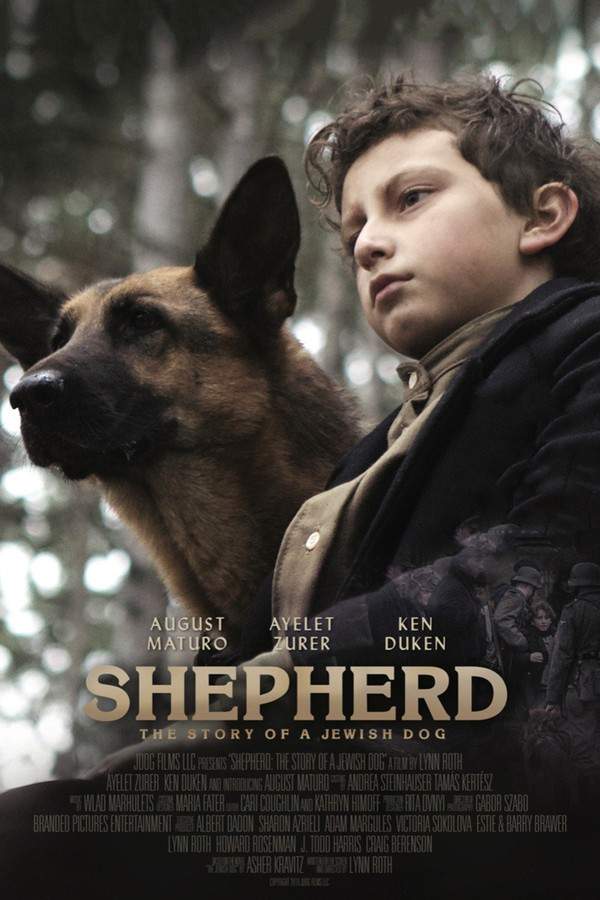
Hungary, 1944. An elderly shepherd living a solitary life on his ranch is consumed by grief after the tragic loss of his daughter at the hands of Nazi soldiers. Driven by sorrow, he resolves to risk everything to protect and shelter Jewish people facing persecution, embarking on a dangerous mission of compassion and defiance.
Warning: spoilers below!
Haven’t seen The Shepherd yet? This summary contains major spoilers. Bookmark the page, watch the movie, and come back for the full breakdown. If you're ready, scroll on and relive the story!
Read the complete plot breakdown of The Shepherd (2019), including all key story events, major twists, and the ending explained in detail. Discover what really happened—and what it all means.
On a frosty Christmas Eve in 1957, a De Havilland Vampire pilot is returning from RAF Celle in northern Germany to RAF Lakenheath in Suffolk when a complete electrical failure yanks his flight instruments offline. The mid‑flight crisis leaves him tangled in thick fog over the North Sea, with dwindling fuel, no working compass, and no radio to call for help. He begins tracing a series of small triangles in the sky, a deliberate pattern meant to catch the eye of air traffic control enough to “shepherd” him toward the nearest safe landing, the closest airstrip he can recall—Merriam St. George.
In the shrouded murk he unexpectedly encounters a World War II–era De Havilland Mosquito fighter‑bomber. The Mosquito’s pilot, recognizable by the nose art that bears the letters JK, communicates with hand signals, guiding the Vampire through the danger of the fog. Observers might call it a strange relay of fate: the old warbird becomes a beacon for a modern night flyer. At one tense moment the Vampire pilot catches a glimpse of the Mosquito’s nose, and the signals align with the hope of a safe landing.
As the situation grows desperate, the Mosquito pilot’s signals indicate an oncoming runway. Miraculously, the runway lights flick on through the fog, and the Vampire lands—barely—on empty fuel, the craft purring to a final, precarious stop. Expecting the usual emergency response—a fire truck, an ambulance, a full ground crew—the pilot instead finds a quiet, almost forgotten scene: a lone car arriving at the airstrip, driven by an older flight lieutenant. The station at which he lands is not the active base he had imagined; it is RAF Minton, long closed to operations and now serving as a storage depot. With Christmas leave in effect for the clerks who would normally man the post, only the flight lieutenant and a 70‑year‑old civilian mess steward named Joe are on duty.
The flight lieutenant explains that the runway lights had remained connected and were accidentally left on, a detail that saved the pilot from disaster. A late‑night phone call to RAF Merriam St. George reveals another twist: no local pilots were authorized to fly that foggy evening, which means the air traffic control tower was unmanned and no shepherding request had actually gone out. A subsequent call to the meteorological squadron yields another surprise—the Mosquito aircraft had been scrapped three months earlier. With these pieces in hand, the pilot starts to rationalize a chilling possibility: someone could have acquired one of the old Mosquitos, flown on Christmas Eve, and somehow directed the distressed Vampire to the storage depot that housed the closest landing strip.
Inside the dim room the pilot is offered hospitality by Joe, who lights a fire and plates hot food. Joe, who has spent two decades working at RAF Minton, shares memories that stretch back to wartime days. He points to a framed photograph of a young pilot beside a Mosquito, a nose art bearing the initials JK. Joe explains that during the war, John Kavanaugh, the pilot in the photo, would refuel his Mosquito and venture out alone to guide crippled bombers back to safety. The implication hangs in the air: Kavanaugh’s dedication echoes across generations, a living legend that may have transcended time.
As the conversation unfolds, the pilot faces the stark truth that Kavanaugh’s story did not end with the war. Joe reveals a heartbreaking detail the room has kept for years: on Christmas Eve, 1943, John Kavanaugh died when his plane went down in the North Sea. The revelation reframes the night’s eerie sequence—the triangular flight patterns, the guidance from a warbird, the quiet storage depot on a forgotten airfield—as more than mere coincidence. It suggests a haunting continuity of duty and remembrance, where past and present converge in a single Christmas‑tide moment.
In the end, The Shepherd paints a meditation on courage, memory, and the quiet, enduring idea that some guardians of the skies never truly leave us. The pilot’s safe landing becomes less about equipment or terrain and more about a lineage of steadfast protectors who, across decades, have continued to shepherd crews home when the weather, time, and truth align in the most improbable ways. The night closes with a poignant acknowledgment: the bravest acts may be those carried out by those who came before, returning in memory to light the way for those who follow.
Last Updated: October 01, 2025 at 13:04
Discover curated groups of movies connected by mood, themes, and story style. Browse collections built around emotion, atmosphere, and narrative focus to easily find films that match what you feel like watching right now.
Stories of isolated individuals finding purpose through profound personal loss in times of conflict.Explore movies like The Shepherd where solitary characters, burdened by grief, find resilience in quiet acts of wartime defiance. These somber dramas share a melancholic tone, slow pacing, and a focus on how personal loss fuels a profound sense of duty and sacrifice.
The narrative typically follows a solitary protagonist, often in a remote or atmospheric setting, whose life is defined by a recent or past tragedy. This grief becomes the emotional core that drives them to undertake a risky, compassionate mission, leading to a resolution that blends sacrifice with a glimmer of hope.
Movies are grouped here for their shared focus on solitude as a crucible for courage, a melancholic and reflective tone, and the central theme of transforming personal anguish into a defiant, moral stand. The pacing is deliberate, allowing the emotional weight of grief and duty to resonate fully.
Melancholic tales where a quiet, deliberate pace builds towards an emotionally complex resolution.Discover movies like The Shepherd that feature a slow-burn, atmospheric style and a bittersweet ending. These films use a deliberate pace to build emotional depth, leading to conclusions that intertwine sadness with a sense of purpose or quiet hope.
Stories in this thread unfold with a deliberate, often slow pace that emphasizes atmosphere and internal emotion over external plot. The narrative structure allows for deep character reflection, building towards a conclusion that is not purely tragic or happy, but instead meaningfully bittersweet, acknowledging loss while finding a sliver of redemption or purpose.
These films are grouped by their shared commitment to a specific mood and pacing. The atmospheric, slow-burn approach creates a meditative viewing experience, and the consistent pattern of bittersweet endings provides a cohesive emotional payoff that feels authentic and resonant.
Don't stop at just watching — explore The Shepherd in full detail. From the complete plot summary and scene-by-scene timeline to character breakdowns, thematic analysis, and a deep dive into the ending — every page helps you truly understand what The Shepherd is all about. Plus, discover what's next after the movie.
Track the full timeline of The Shepherd with every major event arranged chronologically. Perfect for decoding non-linear storytelling, flashbacks, or parallel narratives with a clear scene-by-scene breakdown.
Discover the characters, locations, and core themes that shape The Shepherd. Get insights into symbolic elements, setting significance, and deeper narrative meaning — ideal for thematic analysis and movie breakdowns.
Get a quick, spoiler-free overview of The Shepherd that covers the main plot points and key details without revealing any major twists or spoilers. Perfect for those who want to know what to expect before diving in.
Visit What's After the Movie to explore more about The Shepherd: box office results, cast and crew info, production details, post-credit scenes, and external links — all in one place for movie fans and researchers.
Discover movies like The Shepherd that share similar genres, themes, and storytelling elements. Whether you’re drawn to the atmosphere, character arcs, or plot structure, these curated recommendations will help you explore more films you’ll love.
The Shepherd (2019) Scene-by-Scene Movie Timeline
The Shepherd (2019) Movie Characters, Themes & Settings
The Shepherd (2019) Spoiler-Free Summary & Key Flow
Movies Like The Shepherd – Similar Titles You’ll Enjoy
Shepherd (2022) Spoiler-Packed Plot Recap
Surviving with Wolves (2007) Ending Explained & Film Insights
End of the Lonely Farm Berhof (1984) Detailed Story Recap
Angry Harvest (1985) Ending Explained & Film Insights
The Palace (1980) Story Summary & Characters
The Revolt of Job (1983) Movie Recap & Themes
Pigeon’s Milk (2021) Movie Recap & Themes
Under the Olive Tree (1950) Full Summary & Key Details
The Shepherd of the Hills (1941) Detailed Story Recap
The Beloved Of The Shepherdess (1955) Full Summary & Key Details
Hungarian Rhapsody (1979) Complete Plot Breakdown
The Maiden and the Wolves (2008) Movie Recap & Themes
The Man from the Oak Forest (1964) Movie Recap & Themes
My Way Home (1965) Full Movie Breakdown
Saviors in the Night (2009) Ending Explained & Film Insights