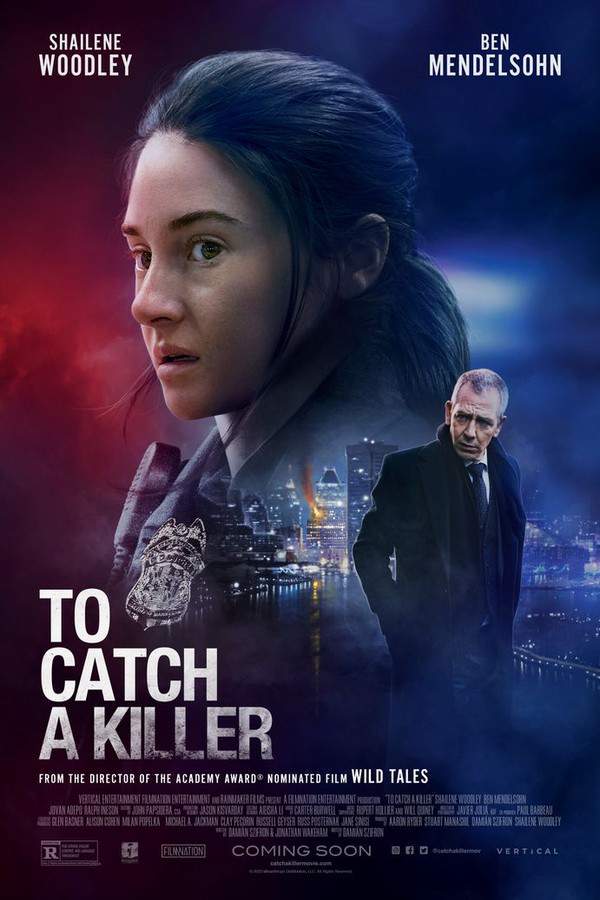
In Seattle, the Man, a criminology professor, is pulled into a high-stakes probe when Detective Dave Reichert asks for his help profiling a serial killer preying on prostitutes in the Seattle area. The request places him at the center of a dangerous cat-and-mouse game, one that strains his personal life as his wife Sande grows tired of his obsession with crime scene investigations.
As the case unfolds, Keppel navigates a difficult balance between professional duty and domestic pressure. He agrees to lend his expertise, hoping that science and careful observation can illuminate a pattern behind a brutal spree. The investigation widens as authorities race to understand the killer’s methods, motives, and the elusive rhythm of the crimes.
A startling twist arrives when Keppel receives a letter from Ted Bundy, the infamous killer he helped send to death row. Bundy offers to “consult” on the case, promising insights from a mind shaped by violence. Keppel conducts a series of interviews with Bundy under the guise of seeking his expertise, yet the true aim is more personal: to glean details of Bundy’s own murders before his execution. The exchanges are chilling and revealing, but Bundy proves only partially helpful for building a profile of the Seattle killer. He dubs the killer “The Riverman” and, in his own way, exposes a disturbing pathology—an overwhelming need to possess his victims, even to the point of necrophilia. The conversations grow increasingly unsettling as Bundy’s confessions reveal a history that complicates any neat psychological picture, and he uses the chance to delay his own death.
Meanwhile, Reichert and Keppel press forward on the investigative front, submitting DNA samples and pursuing leads that could connect a suspect to the crimes. The spotlight shifts toward Gary Ridgway, a suspect whose eventual notoriety would force the investigators to reassess the case in light of evolving science. The tension between profiling and hard scientific evidence drives the narrative, as the team weighs behavioral clues against the precision of DNA technology.
Years pass, and the story’s threads converge in a way that reshapes the case’s legacy. The DNA evidence, gathered long before, becomes a pivotal element in the push to convict Ridgway, transforming a series of seemingly disconnected homicides into a coordinated, prosecutable murder investigation. The film thus traces a complex arc—from academic curiosity and personal strain to high-stakes crime solving—where the pursuit of truth tests both professional ethics and human endurance.
Throughout, the drama is anchored by the careful, methodical approach of the investigators, the psychological tension surrounding Bundy’s unsettling exchanges, and the real-world consequences of forensic science in a case that spans years. The narrative remains grounded in its restrained, documentary tone, offering a clear-eyed look at how one team’s dedication to rigor and evidence can crack a case that has haunted a city for years.