Plot Explained Spoilers guaranteed!
Plot Explained

Browse by genre

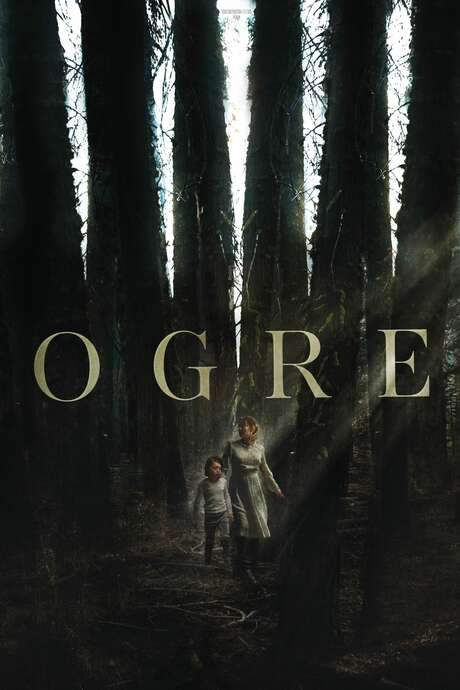
The Ogre (1996) movie poster

Timeline

The Ogre (1996) Timeline Explained – Every Event in Order

Release, runtime and language
1996 · 113 mins · German
Directed by
Volker Schlöndorff
Starring
Simon McBurney, John Malkovich, Dieter Laser, Marianne Sägebrecht, Joachim Paul Assböck, Sylvie Huguel

Abel Tiffauges, a simple‑minded French mechanic, is falsely accused of child abuse. When World War II erupts, he is conscripted into the French army, only to be captured early in the conflict. He is transported deep into Nazi Germany, where his naiveté and unjust accusation shape a harrowing wartime ordeal.

On this page (5)
  1. 1 Events in order (14)
  2. 2 Timeline questions answered
  3. 3 Movie threads
  4. 4 Movies like The Ogre
  5. 5 Every angle

14 events in order · contains spoilers

The Ogre Timeline: Events in Chronological Order

Every key event of The Ogre (1996) in order, scene by scene, with when and where it takes place. Use it to untangle flashbacks, time jumps and parallel storylines, to refresh your memory before the sequel or to find the exact scene you are thinking of.

  1. Childhood at a brutal Catholic school

    Abel Tiffauges grows up in a brutal Catholic boarding school in France. He prays to Saint Christopher that the prison-like school will burn down. When his friend Nestor accidentally sparks a fire during punishment, the chapel burns as he wished. From that moment, he believes fate will protect him.

    When
    Pre-1940
    Where
    France, Catholic school
  2. The chapel fire cements his belief in fate

    The chapel blaze becomes a turning point for Abel, reinforcing his superstition that luck favors him. He interprets the disaster as proof that destiny will intervene on his behalf. The world seems to conspire to keep him out of harm's way from then on.

    When
    Pre-1940
    Where
    Catholic school, France
  3. 1940 Paris: false accusation and conscription

    In 1940, Abel works as a car mechanic in Paris and photographs local children. A girl named Martine steals his camera, he scolds her, and she falsely accuses him of assault. The police believe the accusation, and he is arrested and tried. With Germany invading France, he is conscripted into the army as punishment.

    When
    1940
    Where
    Paris, France
  4. POW camp in East Prussia and the hunting cabin

    Abel is sent to a prisoner-of-war camp in East Prussia. He secretly slips away to a forest hunting cabin, where he feeds a blind moose. The routine of escape and care gives him a dangerous sense of independence amid captivity.

    When
    1940-1941
    Where
    East Prussia
  5. A German officer and the moose nickname

    A German officer visits him at the cabin and is intrigued by Abel's affinity for animals. He explains the moose is known as the Ogre to locals and advises Abel to return to the camp. The encounter plants the seed for a new path Abel will follow.

    When
    1941
    Where
    Forest near East Prussia
  6. Transfer to Göring's hunting lodge

    Weeks later, the officer returns and takes Abel from the camp to Hermann Göring's hunting lodge. The Chief Forester assigns him the job of looking after the estate's animals. Abel senses that power and cruelty can coexist with his love for animals.

    When
    1941
    Where
    Göring's hunting lodge, East Prussia
  7. Göring's temper and a new assignment

    Göring arrives with a cheerful facade but soon shows a volatile, sadistic temper. He fires the entire staff, including Abel, before leaving. The Chief Forester arranges for Abel to be reassigned to Kaltenborn Castle, a Nazi boys' academy nearby.

    When
    Shortly after arrival
    Where
    Göring's hunting lodge
  8. Kaltenborn Castle and Abel's new status

    At Kaltenborn Castle, Abel quickly becomes popular with the cadets and is treated as a privileged servant. He is tasked with recruiting local boys into the academy. Locals whisper about the Ogre and pamphlets warn parents to watch for him.

    When
    1942
    Where
    Kaltenborn Castle
  9. Locals' fear and the Ogre nickname

    The castle housekeeper, Mrs. Netta, explains that locals fear Abel for taking the boys and have published pamphlets about the Ogre. The nickname sticks as he recruits more children. Tension grows as the community questions the morality of his assignment.

    When
    1942
    Where
    Kaltenborn Castle
  10. Training accident reveals the danger

    During a training exercise, one cadet is left horribly burned after standing behind another as a comrade fires a Panzerfaust. The incident shakes Abel and deepens his doubts about the Nazi program. He begins to see the regime's violence more clearly.

    When
    1942-1943
    Where
    Kaltenborn Castle
  11. Count Kaltenborn's plot and arrest

    Count Kaltenborn is exposed as part of a plot to kill Hitler and is arrested. He is taken away in a car and never seen again. The castle becomes unstable as the inner circle collapses.

    When
    1943-1944
    Where
    Kaltenborn Castle
  12. Red Army advances; front-line mobilization

    News spreads that the Red Army has crossed into East Prussia. Officers in charge and the oldest cadets are sent to the front, leaving the castle with a skeleton staff. The war outside intensifies and the outlook of the Nazi dream deteriorates.

    When
    1944-1945
    Where
    East Prussia
  13. Abel finds Ephraim and hides him

    One night, Abel discovers a boy named Ephraim barely alive beneath a pile of corpses on the road and brings him to the castle attic. He hides the boy there, sheltering him from discovery. This act binds Abel to Ephraim as the war closes in.

    When
    1944-1945
    Where
    Kaltenborn Castle attic
  14. Soviets arrive, battle, and escape

    The Soviets arrive and demand the castle's surrender as Raufeisen leads veteran soldiers in a final stand. The castle is set ablaze during the fighting, and none of the defenders survive. Abel escapes with Ephraim across the marshes, ending the tale as he recalls the road's grim journey.

    When
    1945
    Where
    Kaltenborn Castle and surrounding marshes

Last updated: October 05, 2025 at 12:42

Was this helpful?

Timeline questions answered

The Ogre Timeline Explained: Your Questions Answered

When does it happen, and why in that order? The questions people ask about the chronology of The Ogre (1996): time jumps, flashbacks, cause and effect between scenes and the correct order of events, each answered with spoilers.

Q1

Why was Abel Tiffauges falsely accused of assault?

Abel was accused after scolding a young girl named Martine who had stolen his camera. She retaliated by falsely accusing him of assault, and the police believed her account over his, leading to his arrest and trial.

Foreshadowing: The false accusation mirrors the injustice Abel experiences throughout the film, setting up his displacement into the war machine.

  • abel
  • martine
  • false accusation
  • camera
  • arrest
Q2

How did Abel end up at the Nazi academy in Kaltenborn Castle?

After being transferred from Göring's hunting lodge (where Göring fired all staff), the Chief Forester arranged for Abel to be reassigned to Kaltenborn Castle, a Nazi academy for boys. An SS officer named Raufeisen was impressed by Abel's ability to recruit local boys and gave him that task.

Foreshadowing: Abel's initial movement through the Nazi system, first to Göring's lodge then to the academy, establishes his gradual integration into increasingly sinister roles.

  • kaltenborn castle
  • raufeisen
  • chief forester
  • nazi academy
  • recruitment
Q3

Why do the locals call Abel "The Ogre"?

The locals called Abel "The Ogre" because he was tasked with bringing local boys to the Nazi academy. Pamphlets circulated warning parents about the man who was taking their children, earning him this frightening nickname.

Foreshadowing: The nickname foreshadows the film's title and the moral ambiguity of Abel's role in the Nazi system.

  • ogre
  • nickname
  • locals
  • pamphlets
  • parents
  • recruitment
Q4

Why did Abel hide the boy Ephraim in the attic?

Abel found Ephraim barely alive among corpses on a road after a massacre. Despite knowing the danger of harboring a potential enemy or逃脱者, Abel couldn't leave the boy to die and brought him to the castle attic, hiding him from the Nazis.

Foreshadowing: This act of compassion contrasts with Abel's previous role in the Nazi system and represents his moral awakening.

  • ephraim
  • attic
  • hidden
  • corpses
  • rescue
  • compassion
Q5

What happened to Count Kaltenborn at the castle?

Count Kaltenborn was revealed to be part of a plot to assassinate Hitler. He was arrested by the Nazis and taken away in a car, never to be seen again. His disappearance removed a key figure from the castle's leadership.

Foreshadowing: The Count's arrest shows the内部 betrayal within the Nazi ranks and marks the beginning of the castle's decline.

  • count kaltenborn
  • hitler plot
  • arrest
  • disappearance
  • assassination
Q6

Why did Hermann Göring fire everyone at his hunting lodge?

After receiving alarming news that the German army had failed at Stalingrad, Göring abruptly departed for Berlin and fired all the lodge staff before leaving. His departure was sudden and left everyone unemployed.

Foreshadowing: Göring's erratic behavior and the news of Stalingrad signal the beginning of Germany's military decline.

  • göring
  • fired
  • staff
  • stalingrad
  • berlin
  • hunting lodge
Q7

Why did the cadets at Kaltenborn Castle turn against Abel?

As the Soviets advanced and defeat seemed certain, Abel urged the boys to evacuate, trying to save them from the doomed last stand. However, the boys misinterpreted his words as betrayal and turned on him, seeing him as a traitor.

Foreshadowing: This moment reveals how completely the boys had been indoctrinated and the impossibility of reasonedescape in such circumstances.

  • boys
  • cadets
  • traitor
  • betrayal
  • evacuation
  • turn against
Q8

How does Abel escape from Kaltenborn Castle?

During the Soviet assault, Abel regains consciousness as the castle burns and the defenders are killed. He finds Ephraim in the attic and escapes with him across the marshes, leaving the burning castle behind as the Soviets take control.

Foreshadowing: Abel's escape mirrors his earlier escapes from the POW camp, using the forest and marshes as paths to freedom.

  • escape
  • marshes
  • castle burning
  • soviets
  • ephraim
  • final escape
Q9

What is the significance of Saint Christopher in the film?

As a child, Abel prayed to Saint Christopher at his brutal boarding school, wishing for it to burn down. When his friend accidentally caused that fire, Abel became convinced fate would protect him. At the end, as he escapes with Ephraim, he reflects on Saint Christopher's legend of carrying others across dangerous waters.

Foreshadowing: The Saint Christopher motif bookends the film, symbolizing Abel's belief in destiny and his role as a protector.

  • saint christopher
  • fire
  • boarding school
  • fate
  • destiny
  • protection
Q10

Why does Abel believe he is protected by fate?

Abel became convinced of fate's protection after the chapel fire at his boarding school. When his wish for the school to burn came true through his friend's accident, he interpreted it as proof that destiny would shield him from harm, a belief that shapes his seemingly naive outlook throughout the war.

Foreshadowing: This delusional belief in fate underlies Abel's passive acceptance of events and his survival despite being embedded in the Nazi machine.

  • fate
  • belief
  • chapel fire
  • protection
  • naivety
  • destiny
Q11

Why was Abel conscripted into the French army despite his trial?

Just as Abel's trial for the false assault accusation was proceeding, Germany invaded France. Rather than continuing his prosecution, the authorities drafted him into the army as punishment for the alleged crime, pulling him into the larger machinery of the war.

Foreshadowing: This twist of fate, punishment becoming salvation, sets Abel on his path through the Nazi system.

  • conscripted
  • army
  • trial
  • invasion
  • france
  • punishment
Q12

What happened during the training accident at Kaltenborn Castle?

During a training exercise, a cadet fired a Panzerfaust while another boy stood behind him. The boy in front was unharmed, but the boy behind was left horribly burned. This incident deeply disturbed Abel and opened his eyes to the violence inherent in the Nazi program.

Foreshadowing: The accident represents the casual brutality of the Nazi system and marks a turning point in Abel's understanding of what he's involved in.

  • training accident
  • burned
  • panzerfaust
  • cadet
  • exercise
  • violence

Movie threads

More Movies Like The Ogre, by Mood & Story

Curated lists built around what makes The Ogre tick: the same mood, the same kind of story or the same emotional payoff. Each list explains why these movies belong together.

Movies about naive protagonists corrupted by war like The Ogre

Simple souls exploited and crushed by terrible historical forces. If you were captivated by Abel's story in The Ogre, these movies feature similar journeys of innocent characters whose simplistic worldview is shattered by historical brutality. They explore themes of exploitation and the tragic collision of naivety with dark, unforgiving realities.

  • tragic
  • fatalistic
  • somber
  • grim
  • anxious
  • oppressive
  • Tone: dark, tragic, melancholic
  • Pacing: steady, methodical descent
Why these movies?

The story pattern: The narrative typically follows a linear path where a well-meaning but simple protagonist is swept into a larger, violent conflict or ideology. Their initial misinterpretation of events as fate or good fortune gives way to a harrowing realization of their role in a terrible machine, leading to a crisis of conscience and a costly survival.

Why they belong together: Movies in this thread share a core character archetype—the innocent—and a narrative structure focused on their disillusionment. They are united by a heavy emotional weight, a dark tone, and themes of manipulation, creating a specific, devastating viewing experience.


Movies about a steady moral collapse like The Ogre

Methodical journeys where characters become complicit in atrocity. For viewers who appreciated the grim moral journey in The Ogre, this thread gathers films that explore a character's gradual slide into complicity. These stories feature a steady pacing, high emotional intensity, and a focus on the psychological toll of participating in a corrupt and violent world.

  • grim
  • oppressive
  • fatalistic
  • somber
  • anxious
  • psychological
  • Tone: dark, grim, psychologically complex
  • Pacing: steady, deliberate, unfolding tragedy
Why these movies?

The story pattern: The plot unfolds with a steady, relentless pace, following a character who, often through a desire for survival or belonging, makes a series of small compromises. These choices slowly erode their moral foundation, leading them to participate in or enable acts they once would have condemned, resulting in a bittersweet or bleak reckoning.

Why they belong together: This thread groups films based on a shared narrative arc of moral decay and a consistent mood of grim inevitability. They are connected by their steady pacing, high intensity, dark tone, and focus on the psychological unraveling of a character caught in an inescapable ethical nightmare.

If you liked this

Movies Like The Ogre

Similar movies to The Ogre: the same genre, themes or kind of story. Each one comes with its own plot summary, timeline and ending explained.

Browse all movie summaries

Every angle

The Ogre (1996) Explained: Plot, Timeline & Characters

Everything about The Ogre in one place: what happens in the plot summary, the timeline in chronological order, the characters and meaning and a spoiler-free summary. What's After the Movie adds the cast, box office and post-credit scenes.

Coming soon on iOS and Android

The Plot Explained Movie Summary App

Plot summaries, endings explained and timelines on your phone. Catch up on any movie in minutes, save your favorites and never miss a twist again.

Be the first to know when we launch. Your email stays private, always.

Learn more about the app