Plot Explained Spoilers guaranteed!
Plot Explained

Browse by genre

The Mercenary (1968) movie poster

Characters & Themes

The Mercenary (1968) Characters, Setting & Themes Explained

Release, runtime and language
1968 · 101 mins · Italian
Loading streaming availability…
Directed by
Sergio Corbucci
Starring
Julio Peña, Franco Nero, Jack Palance, Fernando Villena, Ángel Álvarez, José Canalejas

He trades death to the highest bidder. A Mexican revolutionary hides as a U.S. rodeo clown while a cynical Polish mercenary, who once trained an idealistic peasant, narrates his alliance with a committed female activist to save guerrilla leader Paco. In the 1910s Mexicans rise against a repressive regime and powerful landowners. Tracked by the vengeful Curly, Paco frees villages yet is tempted by bandit loot, a lure Kowalski revels in.

On this page (8)
  1. 1 Where to watch
  2. 2 Characters explained (6)
  3. 3 Where & when it takes place
  4. 4 Themes & meaning (3)
  5. 5 Character & meaning questions
  6. 6 Movie threads
  7. 7 Movies like The Mercenary
  8. 8 Every angle
Loading streaming availability…

6 main characters · contains spoilers

The Mercenary Characters Explained: Who Is Who

The main characters of The Mercenary (1968), heroes and villains: what drives them, how they change over the course of the story and what each of them reveals about the film's bigger ideas.

  • Sergei Kowalski (Franco Nero)

    A polished, ruthless mercenary who treats revolution as a business. He is driven by greed and a talent for negotiation, aided by a Hotchkiss M1914 machine gun. He skillfully manages others to maximize reward while keeping his own ambitions in check. His relationship with Paco oscillates between mentorship and manipulation.

    • 💼 Mercenary
    • 💰 Greed
    • 🧭 Pragmatic
  • Paco Roman (Tony Musante)

    A peon who rebels against his boss and joins the revolution. He evolves from a participant in violence to a capable leader, driven by a mix of idealism and pragmatism. He relies on Kowalski's skills but asserts his own authority, and his bond with Columba deepens as the movement unfolds.

    • 🧭 Idealist
    • 🗡️ Violent
    • 🤝 Collaboration
  • Columba (Giovanna Ralli)

    A prisoner freed by the revolutionaries who initially resents Paco's methods but grows into a key ally. She helps navigate danger with careful strategy and eventually aids Kowalski and Paco in escaping, wielding influence behind the scenes.

    • 💃 Survivor
    • 🕊️ Complex
    • 🤝 Loyal
  • Curly (Jack Palance)

    A flamboyant American rival who murders Garcia’s brothers and relentlessly pursues revenge. He embodies the volatile edge of the conflict and becomes a catalyst for clashes between Kowalski and Paco.

    • 🗡️ Rival
    • 🧭 Ambitious
    • 🥃 Violent
  • Elias Garcia (Vicente Roca)

    Owner of the silver mine and a key power broker who funds the movement’s cross-border moves. He represents the mining wealth that fuels the scheme and the danger of letting greed guide decisions.

    • 👑 Boss
    • 🪙 Wealth
    • 🧭 Power
  • Alfonso García (Eduardo Fajardo)

    Colonel and military authority who commands Garcia's troops. He embodies the state force arrayed against the revolution, presenting a formidable obstacle to the protagonists' plans.

    • 🛡️ Officer
    • 💥 Authority
    • ⚔️ Military

Last updated: October 04, 2025 at 14:52

Was this helpful?

Setting

Where and When Does The Mercenary Take Place?

The setting of The Mercenary (1968): the year and time period, the places and locations, and how they shape the characters, the mood and the tension of the story.

Time period

Location

Mexico–United States border, Elias Garcia's silver mine

Action unfolds along the Mexico–United States border and centers on a silver mine owned by Elias Garcia. The border setting provides a backdrop for cross-border schemes, mercenary deals, and rapid shifts in allegiance. The mine itself becomes the crucible where power, money, and survival intersect.

  • 🗺️ Border region
  • 💎 Mining
  • ⚔️ Conflict

Last updated: October 04, 2025 at 14:52

Was this helpful?

3 major themes

The Mercenary Meaning: Themes & Message Explained

What is The Mercenary (1968) really about? The emotional, social and philosophical themes the film keeps returning to, its symbolism and the message beneath the surface.

  • Revolution

    The movie treats rebellion as a perilous business, where mercenaries profit from conflict and ideology is a bargaining chip. Loyalties are negotiated as if they were shares in a deal, and betrayals constantly reshape the battlefield. The friendship between Kowalski and Paco tests whether 'dreams' survive in the face of money, risk, and the lure of power.

  • Greed

    Kowalski's financial calculus drives most choices, from price negotiations to the distribution of loot. The cross-border raids and the mine's wealth turn the revolution into a currency game rather than a purely moral struggle. The film shows how greed can corrode solidarity and escalate violence.

  • Loyalty

    Amid violence, the two men form a fragile pact built on mutual dependence rather than trust. Columba's presence and her tactical moves test the boundaries between loyalty to a person and loyalty to a cause. The ending emphasizes choosing a personal code over immediate profit.

Last updated: October 04, 2025 at 14:52

Was this helpful?

Character & theme questions

The Mercenary Characters & Meaning: Your Questions Answered

The questions people ask about The Mercenary (1968): who the characters really are, their relationships, what the symbols mean, where it takes place and what the movie is really about. Each answer contains spoilers.

Q1

Where does the story take place?

The movie unfolds along the Mexico–United States border, with the action centered on a silver mine owned by Elias Garcia. The border setting creates a backdrop for cross-border schemes, mercenary deals, and rapid shifts in allegiance between factions.

Foreshadowing: The mine's location near the border becomes crucial for planning escape routes and negotiating with different powers.

  • mexico-us border
  • setting
  • elias garcia mine
  • location
Q2

What time period does the film depict?

The story is set during the 1910s, a period when Mexicans were rising against a repressive regime and powerful landowners. This era of revolution and social upheaval provides the historical backdrop for the characters' conflicts and alliances.

Foreshadowing: The description establishes the revolutionary context from the start, grounding the film's political violence in historical reality.

  • 1910s
  • mexican revolution
  • era
  • time period
  • history
Q3

What does the movie say about revolution?

The film treats rebellion as a perilous business where mercenaries profit from conflict and ideology becomes a bargaining chip. Loyalties are negotiated like shares in a deal, and betrayals constantly reshape the battlefield, questioning whether true revolutionary ideals can survive alongside personal ambition.

Foreshadowing: Kowalski's mercenary approach from the start establishes that profit motive will repeatedly clash with revolutionary goals.

  • revolution
  • ideology
  • rebellion
  • revolution themes
Q4

How does greed drive the story?

Kowalski's financial calculus dominates most choices, from price negotiations to distributing loot. The cross-border raids and the mine's wealth turn the revolution into a currency game rather than a purely moral struggle, showing how greed can corrode solidarity and escalate violence.

Foreshadowing: The mine's silver wealth is introduced early as the primary motivation for multiple factions.

  • greed
  • money
  • profit
  • wealth
  • corruption
Q5

What role does loyalty play in the movie?

Amid the violence, fragile pacts form between characters built on mutual dependence rather than trust. Columba's presence tests the boundaries between loyalty to a person versus loyalty to a cause, and the ending emphasizes choosing a personal code over immediate profit.

Foreshadowing: The uneasy alliance between Kowalski and Paco hints that their partnership rests on necessity, not genuine trust.

  • loyalty
  • trust
  • alliance
  • partnership
  • betrayal
Q6

Who is Kowalski?

Sergei Kowalski is a polished, ruthless mercenary who treats revolution as a business. He is driven by greed and a talent for negotiation, using a Hotchkiss M1914 machine gun. His relationship with Paco oscillates between mentorship and manipulation, making him a morally ambiguous force in the story.

Foreshadowing: The description establishes from the beginning that Kowalski sees revolution as a profitable enterprise.

  • kowalski
  • sergei kowalski
  • mercenary
  • franco nero
  • character
Q7

Who is Paco?

Paco Roman is a peasant who rebels against his boss and joins the revolution. He evolves from a participant in violence to a capable leader, driven by a mix of idealism and pragmatism. He relies on Kowalski's skills but asserts his own authority, and his bond with Columba deepens as the movement unfolds.

Foreshadowing: Paco's transformation from peon to leader mirrors the broader revolutionary arc of the story.

  • paco
  • paco roman
  • peasant
  • leader
  • tony musante
  • character
Q8

Who is Columba?

Columba is a prisoner freed by the revolutionaries who initially resents Paco's violent methods but grows into a key ally. She helps navigate danger with careful strategy and eventually aids both Kowalski and Paco in escaping, wielding significant influence behind the scenes.

Foreshadowing: Her initial resentment of Paco's methods sets up her eventual transformation into a crucial supporter.

  • columba
  • giovanna ralli
  • female character
  • prisoner
  • ally
Q9

Who is Curly?

Curly is a flamboyant American rival who murders Garcia's brothers and relentlessly pursues revenge. He embodies the volatile, violent edge of the conflict and serves as a catalyst for clashes between Kowalski and Paco, representing the unpredictable danger surrounding the revolution.

Foreshadowing: His introduction as a vengeful killer establishes him as an immediate threat to all factions.

  • curly
  • jack palance
  • antagonist
  • revenge
  • rival
Q10

What is the significance of the silver mine?

The silver mine owned by Elias Garcia serves as the crucible where power, money, and survival intersect. It represents the mining wealth that fuels the cross-border schemes and attracts mercenaries, becoming the economic center of the conflict.

Foreshadowing: The mine is introduced early as the primary objective that draws multiple factions together.

  • silver mine
  • elias garcia
  • wealth
  • mining
  • power
Q11

What is the relationship between Kowalski and Paco?

Their relationship is a complex mix of mentorship and manipulation. Kowalski once trained the idealistic peasant, and their bond tests whether dreams survive in the face of money, risk, and the lure of power. The ending shows their partnership dissolving as they part ways, emphasizing the cost of their respective dreams.

Foreshadowing: Kowalski's narrative framing device establishes he's recounting past events, hinting their partnership was always temporary.

  • kowalski
  • paco
  • relationship
  • partnership
  • mentorship
  • manipulation
Q12

What is the overall tone of the movie?

The film carries a consistently tense tone, fueled by the precarious alliance between the idealistic Paco and the cynical Kowalski. The ever-present threat of the Mexican army and constant life-or-death stakes create a stressful atmosphere balanced with moments of dark humor.

Foreshadowing: The non-linear framing device of Kowalski's recollection adds a reflective, detached layer to the otherwise action-driven narrative.

  • tone
  • atmosphere
  • tension
  • mood
  • style

Movie threads

More Movies Like The Mercenary, by Mood & Story

Curated lists built around what makes The Mercenary tick: the same mood, the same kind of story or the same emotional payoff. Each list explains why these movies belong together.

Movies with Revolutionary Odd Couples like The Mercenary

Stories where hardened pragmatists and fiery idealists forge uneasy alliances. If you enjoyed the fiery alliance between Kowalski and Paco in The Mercenary, you'll find similar dynamics in these films. This collection features stories of cynical mercenaries, world-weary soldiers, or pragmatic criminals who form unlikely partnerships with committed revolutionaries or idealistic fighters, set against intense political conflict.

  • tense
  • cynical
  • action-packed
  • ruthless
  • ideological
  • unlikely alliance
  • Tone: tense, cynical
  • Pacing: fast, driven by conflict
Why these movies?

The story pattern: The narrative pattern follows a 'reluctant partnership' arc, where two opposing characters—one driven by principle, the other by profit or survival—are thrown together by circumstance. Their journey is defined by conflict, reluctant cooperation, and often a final, bittersweet parting of ways as their fundamental differences resurface after the immediate crisis has passed.

Why they belong together: These movies are grouped together because they share a core focus on the emotional and philosophical tension between two archetypes. The experience is defined by sharp dialogue, moral ambiguity, and action sequences that serve as a crucible for the central relationship, rather than just spectacle.
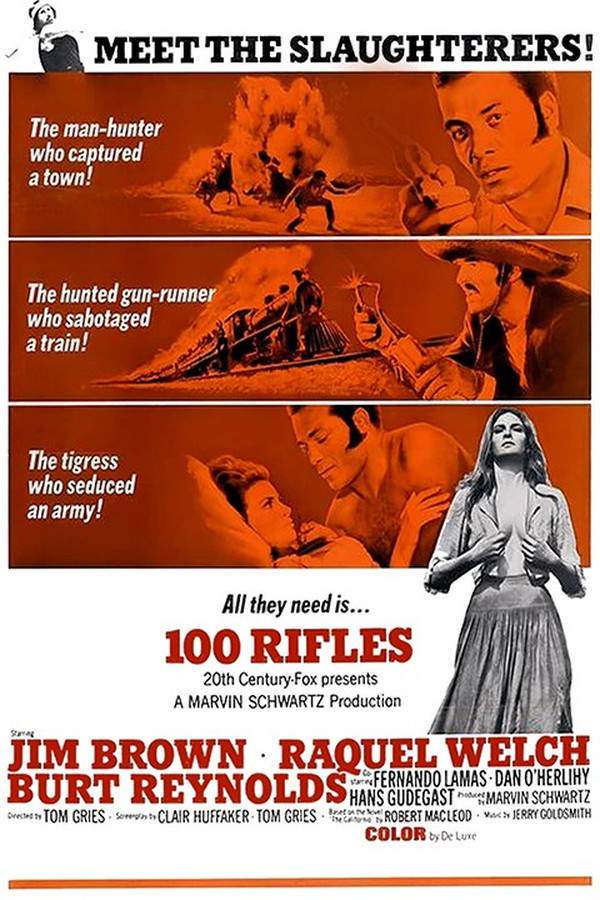
Gritty Political Westerns like The Mercenary

Westerns where the desert landscape is a backdrop for revolution and moral decay. Fans of The Mercenary's revolutionary setting and gritty action will appreciate these similar spaghetti westerns. This list features films that use the western genre to explore themes of political unrest, betrayal, and the clash between idealism and cynicism, all with a fast-paced, tense, and violent style.

  • gritty
  • brutal
  • tense
  • cynical
  • revolutionary
  • action-packed
  • Tone: gritty, tense, bleak
  • Pacing: fast, action-driven
Why these movies?

The story pattern: The narrative journey typically follows a lone, skilled fighter—often a mercenary or bounty hunter—who gets entangled in a larger political conflict they initially have no stake in. The plot is driven by shifting allegiances, betrayals, and large-scale skirmishes, culminating in an ending that underscores the futility or high cost of the struggle, rather than a clean victory.

Why they belong together: These films are united by a specific subgenre blend: the visual and stylistic tropes of the spaghetti western (dirty landscapes, close-ups, stylized violence) fused with the complex themes of political drama. They share a distinct mood of nihilism, historical grounding, and a fast, action-oriented pace.

If you liked this

Movies Like The Mercenary

Similar movies to The Mercenary: the same genre, themes or kind of story. Each one comes with its own plot summary, timeline and ending explained.

Browse all movie summaries

Every angle

The Mercenary (1968) Explained: Plot, Timeline & Characters

Everything about The Mercenary in one place: what happens in the plot summary, the timeline in chronological order, the characters and meaning and a spoiler-free summary. What's After the Movie adds the cast, box office and post-credit scenes.

Coming soon on iOS and Android

The Plot Explained Movie Summary App

Plot summaries, endings explained and timelines on your phone. Catch up on any movie in minutes, save your favorites and never miss a twist again.

Be the first to know when we launch. Your email stays private, always.

Learn more about the app