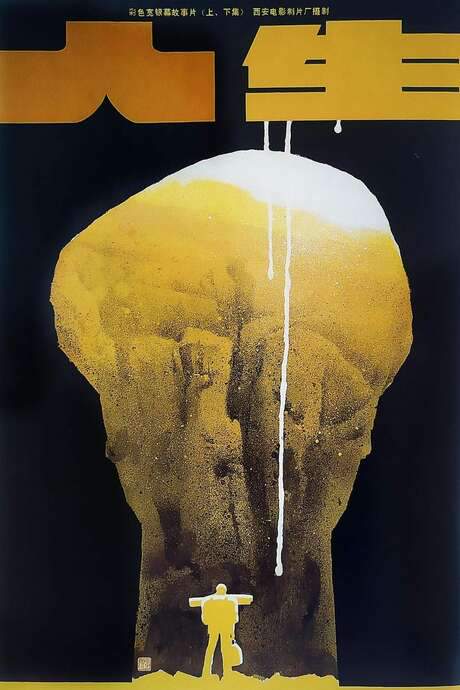
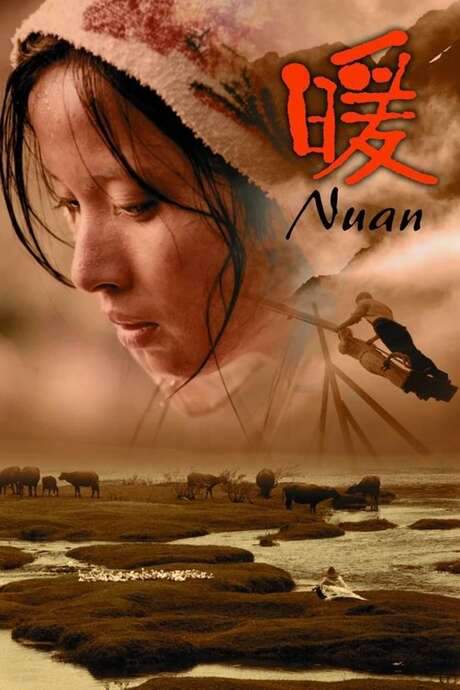
In autumn of 1980, an elderly Chinese American entrepreneur, Xu Jingyou Liu Qiong returns to China and discovers his son, Xu Lingjun Zhu Shimao, a herdsman working at Chilechuan Ranch in northwestern China. The father longs to bring his son to the United States so he can inherit his assets, but the bond between them is frayed; the son remains distant and wary. The root of their estrangement runs deep—more than thirty years earlier, the father abandoned his wife and son to chase business in America, leaving behind a mother who later died of illness and a family that was left to drift apart.
Xu Jingyou’s life unfolds against a long arc of hardship and resilience. After finishing high school, Xu becomes a teacher, but the political storms of China push him into misfortune: in 1957 he is labeled a “rightist” and sent to toil at a ranch in the impoverished northwest. When the labor penalty ends in 1962, he stays on as a herdsman, weathering despair to the point of a suicide attempt. Yet the community around him—fellow ranchers like Grandpa and Grandma Dong and Guo Zi—grounds him with steadfast friendship and support. During the Cultural Revolution, Guo Zi and others shield him from political persecution, allowing him to endure and persist.
The story then shifts to the family’s quieter, more intimate past. In 1972, Xu marries Li Xiuzhi, a village girl who fled famine in Sichuan, and they welcome a son, Little Qingqing. The family enjoys a period of relative happiness, even as the nation continues to heal and redefine itself. Xu Jingyou is rehabilitated in 1979 and returns to his former post as a teacher, a symbolic turn that signals both personal closing of old wounds and a reweaving of family ties.
One evening, Xu Lingjun—now settled at the ranch and distant from his father—meets his father at a Peking Restaurant. The moment becomes the hinge of the film: Xu Lingjun’s heart is unsettled as he confronts the gravity of his past and the trust his mother placed in his father’s return. This memory crystallizes his decision to remain in China rather than seek a life abroad, and it softens the rift that had grown between father and son. The elder Xu, moved by the weight of time and the family history they share, comes to understand his son’s choices, and the two begin to rebuild their kinship.
As the narrative draws to a close, the reconciliation between father and son becomes the quiet center of the film: after the farewell at the ranch, Xu Jingyou returns to his circle of friends and family, choosing to stay rooted in the land that has shaped him and his son. The film leaves viewers with a portrait of endurance—how memory, duty, and a renewed sense of belonging can bridge decades of separation and reshape a family’s future.
- Little Qingqing Chao Fang plays a pivotal role in the family’s history, representing the innocence and continuity that tie generations together.
- The central duo—Xu Jingyou Liu Qiong and Xu Lingjun Zhu Shimao—drives the emotional core of the story, a meditation on reconciliation, loyalty, and the pull of homeland over impulse.