Plot Explained Spoilers guaranteed!
Plot Explained

Browse by genre

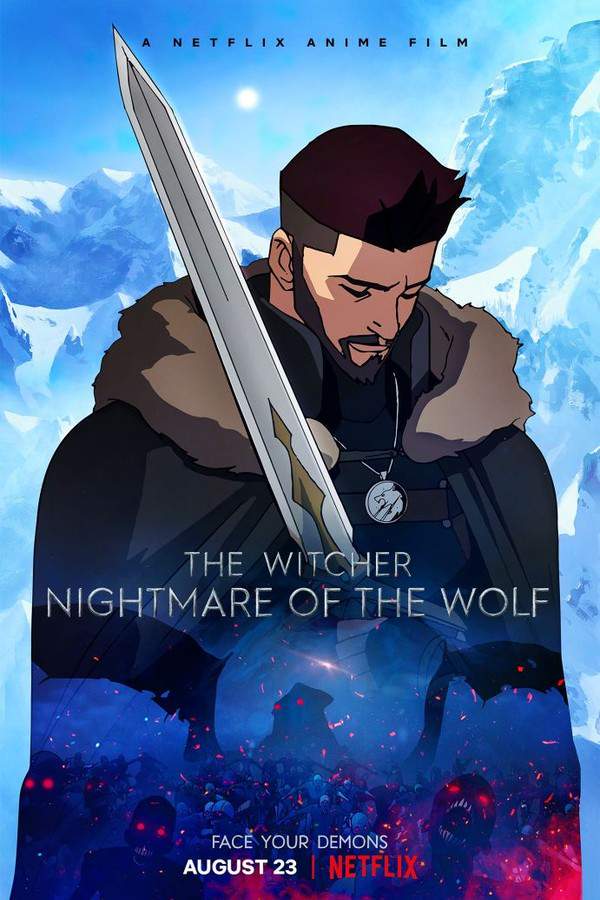
The Witcher: Nightmare of the Wolf (2021) movie poster

Plot Summary

The Witcher: Nightmare of the Wolf (2021) Plot Summary & Ending Explained

Release, runtime and language
2021 · 81 min · English
Echo score 70
JustWatch #10,248 16
Directed by
Kwang Il Han
Starring
Kim Bodnia

This anime origin story follows Vesemir, a predecessor to Geralt of Rivia, as he undertakes a dangerous mission to stop a shadowy threat terrorizing a kingdom. As a skilled and adventurous young witcher, he confronts challenges that force him to reckon with his past and battle both external monsters and inner demons in his pursuit of victory.

On this page (8)
  1. 1 Where to watch
  2. 2 What happens: full plot
  3. 3 Plot questions answered
  4. 4 How it ends
  5. 5 The book behind the movie
  6. 6 Movie threads
  7. 7 Movies like The Witcher: Nightmare of the Wolf
  8. 8 Every angle

Where to watch

Where to Watch The Witcher: Nightmare of the Wolf (2021)

Where can you watch The Witcher: Nightmare of the Wolf? Stream, rent or buy it in the US, including on Netflix and Netflix Standard: current JustWatch availability with up-to-date prices.

Streaming availability powered by JustWatch

Full plot summary · contains spoilers

What Happens in The Witcher: Nightmare of the Wolf: Full Plot Summary

The whole story of The Witcher: Nightmare of the Wolf (2021) explained, from the opening scene to the final frame: every key event, every twist and what it all adds up to. Read it as a quick recap before the sequel, to check a scene you missed, or to finally understand what really happened.

The tale unfolds with Geralt's mentor and fellow witcher, Vesemir, rescuing a noble child from a Lechen in the wooded outskirts of Ard Carraigh, the capital of Kaedwen. Just before its demise, the Lechen utters a cryptic message to Vesemir.

The narrative then rewinds several years, showcasing a younger Vesemir, who, alongside his close friend Illyana, begins his journey as a servant to a noble whose mistress has mysteriously succumbed to madness. A witcher named Deglan deduces that the lady is under the influence of a Mahr and, with Vesemir's assistance, successfully exorcises the monster. Before departing, he generously gifts a portion of his fee to the young Vesemir and hints at the possibility of him becoming a witcher.

Prompted by this invitation, Vesemir travels to Kaer Morhen. After enduring years of harsh training and transformative experiments, he emerges as a competent witcher, renowned for his skill with a blade as much as for his brash demeanor.

Fast forward to the present, Vesemir receives a visit from the Elf Filvandrel, who reveals that the Lechen spoke in an ancient, forbidden language, indicating that the forest is ensnared by a powerful curse. Meanwhile, Tetra Gilcrest, a Sorceress from the Kaedwen Court, ventures to persuade the King into wiping out the witchers, branding them as abominations. However, her pleas fall on deaf ears, thanks to the dedicated efforts of Lady Zerbst, who sympathizes with the witchers and their plight.

Upon returning to Kaer Morhen, Vesemir uneasily oversees the training of a youthful Geralt, Coën, Lambert, and Ezekiel. Soon after, Vesemir and another witcher, Luca, find themselves arrested for the murder of two knights who had insulted them during a skirmish. Tetra urges the King to impose capital punishment on the captured witchers, but Lady Zerbst convinces him to send Vesemir along with Tetra to cleanse the forest of its curse instead.

As they navigate through the forest, Vesemir and Tetra encounter a hybrid humanoid named Kitsu, who unleashes a Basilisk upon them. Vesemir bravely vanquishes the beast, but ultimately fails to intercept Kitsu as she retreats deeper into the woods.

Pursuing Kitsu, the duo stumbles upon an abandoned Elven school, where they discover the remains of numerous female elves. They manage to rescue Filvandrel, who departs with a young hybrid girl, vowing that if she ever causes harm, he’ll call upon Vesemir's blade.

In a significant revelation, Vesemir learns that the creatures they encountered were genetically engineered using arcane knowledge only accessible to the Mages of Kaer Morhen. Returning to confront his mentor, Deglan, Vesemir is met with shocking news: Deglan admits to the creation of these monsters owing to a decline in witcher jobs, resulting from a scarcity of real monsters. But before Vesemir can act on this revelation, the fort is besieged by the townsfolk of Ard Carraigh and swarms of monsters from the marshes, all orchestrated by Tetra, who reveals her allegiance with Kitsu.

Lady Zerbst, ultimately unveiled as an aged Illyana, helps usher the young wards of Kaer Morhen to safety while the witchers resolutely defend their home. Despite their courage, they are overwhelmed by the sheer force of monsters and enraged humans. Witnessing the futility of their fight, Deglan attempts to stave off the onslaught as Vesemir confronts Tetra, who has imprisoned the mages within the depths of Kaer Morhen.

Kitsu ensnares Vesemir in an illusion, showing him a life where he had married Illyana and fathered a child. Seeing through this deception, he ultimately kills Kitsu. In a final confrontation, Tetra ambushes Vesemir from behind, unveiling her bitter past where she witnessed a witcher slay her mother, inciting her deep-seated hatred. Just as she seems poised to finish Vesemir off, Deglan intercedes and ends her life, urging Vesemir to guide the children to become "better men" before succumbing to his wounds.

Eventually, Vesemir takes Illyana to a lake—fulfilling a wish she had once shared with him in their youth. They share an ephemeral moment before Illyana passes away peacefully. With a heavy heart, Vesemir reunites with the children, offering them their witcher medallions and empowering them with a choice: to embrace the life of a witcher or walk away.

Geralt voices the common sentiment of disdain towards them, prompting Vesemir to smirk and reply, > "There will always be more monsters, Geralt." The boys ponder Vesemir's words, ultimately deciding to take up their medallions and embark on their own witcher journey.
Last updated: November 15, 2024 at 18:21

Was this helpful?

Plot questions answered

The Witcher: Nightmare of the Wolf Plot Explained: Your Questions Answered

The questions people ask most about The Witcher: Nightmare of the Wolf (2021): what happens in the confusing scenes, why the characters do what they do, the twists, hidden details and what the ending means. Each answer contains spoilers.

Q1

Why did Deglan create the monsters in the forest?

Deglan confesses that he created the genetically engineered monsters because witcher jobs had dramatically declined due to a scarcity of real monsters. With fewer contracts to earn money, he used forbidden arcane knowledge to manufacture threats, essentially creating demand for the witchers' services. This dark revelation exposes the corruption within Kaer Morhen and forces Vesemir to confront the moral decay of his own institution.

Foreshadowing: Earlier scenes show the witchers struggling for work, setting up Deglan's desperation.

  • deglan
  • monsters
  • kaer morhen
  • created
  • witcher jobs
Q2

What is Tetra's backstory and why does she hate witchers?

Tetra reveals during her final confrontation with Vesemir that she witnessed a witcher kill her mother when she was a child. This traumatic eventFueled her deep-seated hatred toward all witchers and led her to orchestrate the destruction of Kaer Morhen. Her political maneuvering at court and alliance with Kitsu were both part of her vendetta against the witcher order.

Foreshadowing: Tetra's persistent efforts to convince the king to eliminate witchers hint at personal animosity beyond politics.

  • tetra
  • hatred
  • witchers
  • mother
  • backstory
  • revenge
Q3

What was the Lechen's cryptic message to Vesemir?

The Lechen spoke to Vesemir in an ancient, forbidden language that only elves would recognize. Filvandrel later reveals this language indicates the forest is ensnared by a powerful curse created by the elves. The message serves as a warning about the supernatural corruption spreading through Kaedwen's forests.

Foreshadowing: The story later connects this warning to the abandoned elven school and the cursed hybrid creatures.

  • lechen
  • message
  • cryptic
  • forest
  • curse
  • language
Q4

How is Lady Zerbst actually Illyana?

Lady Zerbst is revealed to be Illyana, Vesemir's close friend from his youth who he thought had died. She used magical disguise to age herself and infiltrate the Kaedwen Court as a noblewoman to protect witchers. She helps Vesemir throughout the story while hiding her true identity, only revealing herself during the siege when she aids the young witchers in escaping.

Foreshadowing: Lady Zerbst's unusual sympathy for witchers and her mysterious demeanor hint at a deeper connection.

  • lady zerbst
  • illyana
  • identity
  • vesemir
  • disguised
  • revealed
Q5

What did Kitsu show Vesemir in her illusion?

Kitsu traps Vesemir in an illusion showing an alternate life where he married Illyana and had a child, representing the peaceful life he could have had outside the witcher path. This was meant to break his resolve, but Vesemir recognizes it as deception and kills Kitsu, choosing his reality despite its hardships over a false happiness.

Foreshadowing: Vesemir and Illyana's shared memories earlier in the film establish their emotional connection.

  • kitsu
  • illusion
  • vision
  • illyana
  • alternate life
  • trap
Q6

Why did Vesemir decide to become a witcher?

After helping Deglan exorcise a Mahr from a noble's mistress, Vesemir was gifted a portion of the witcher's fee and invited to Kaer Morhen. The combination of financial opportunity and the adventure of monster hunting appealed to the young servant seeking escape from his humble origins. Deglan's suggestion planted the seed that would transform his entire life trajectory.

Foreshadowing: The opening rescue scene shows the seasoned Vesemir, contrasting with his humble beginnings.

  • vesemir
  • become witcher
  • decision
  • deglan
  • invitation
  • training
Q7

Why did the townspeople attack Kaer Morhen?

Tetra orchestrated the siege by revealing to the townsfolk of Ard Carraigh that the witchers had been creating the monsters terrorizing the region. Enraged by this manipulation and fearing the witchers as abominations, the citizens joined forces with the monster hordes to destroy Kaer Morhen. Tetra used the witchers' own secrets against them, turning the kingdom against the fortress.

Foreshadowing: Tetra's earlier court appearances and her knowledge of monster creation foreshadow her conspiracy.

  • siege
  • kaer morhen
  • townspeople
  • attack
  • tetra
  • monsters
  • betrayed
Q8

What happens to Geralt and the other young witchers at the end?

After the destruction of Kaer Morhen, Vesemir gathers the surviving young witchers including Geralt, Coën, Lambert, and Ezekiel. He returns their medallions and gives them a choice: embrace the dangerous life of a witcher or walk away and live normal lives. All the boys choose to take up their medallions and continue their training, echoing Vesemir's final words about monsters always existing.

Foreshadowing: Vesemir's mentorship throughout the film establishes his investment in their future.

  • gerald
  • coën
  • lambert
  • ezekiel
  • ending
  • fate
  • medallion
  • choice
  • future
Q9

What was causing the curse in the forest?

The forest was corrupted by a curse created by the elves using their own forbidden knowledge. The abandoned elven school served as a facility where elves experimented on their own kind, creating hybrid creatures like Kitsu. These monsters were then released or escaped, spreading the curse throughout Kaedwen's forests. Filvandrel reveals this dark elven secret when he rescues the hybrid girl.

Foreshadowing: The discovery of the elven school with numerous dead female elves hints at the origin of these experiments.

  • forest
  • curse
  • elves
  • hybrid
  • kitsu
  • elven school
  • origin
Q10

How was Tetra connected to Kitsu?

Tetra reveals her allegiance with Kitsu during the siege of Kaer Morhen. She orchestrated the attack by coordinating the monster hordes from the marshes while simultaneously manipulating the court against the witchers. Their partnership was built on shared hatred of witchers, with Tetra using her political power and Kitsu providing supernatural forces to destroy the witcher order from within.

Foreshadowing: Tetra's insistence on accompanying Vesemir into the forest and her interest in the monster investigations hint at her duplicity.

  • tetra
  • kitsu
  • connection
  • alliance
  • betrayal
  • monsters
  • siege

Ending explained

What Happens at the End of The Witcher: Nightmare of the Wolf?

How The Witcher: Nightmare of the Wolf (2021) ends, in short: the final scene, the last twist and what it means for the characters. The full ending explained, with every spoiler, lives on its own page.

Read the full ending explained

The ending of The Witcher: Nightmare of the Wolf ties together Vesemir’s journey from a humble orphan in the Stronghold to a seasoned Witcher who significantly influences the future of the Witcher order. Throughout the film, Vesemir’s experiences of hardship, training, and confronting his past shape him into the mentor we see in later stories. As the story concludes, Vesemir’s benevolence and sense of duty shine through when he chooses to teach Geralt and others, cementing his role as a father figure for the next generation of Witchers. This act of mentorship is not just about passing on combat skills, but also about instilling the values and resilience needed to survive in their dangerous world. Ultimately, Vesemir’s sacrifices and efforts help clear the path for the Witcher legacy, making him a pivotal figure in the saga. The film closes on a hopeful note, illustrating how Vesemir’s perseverance and kindness continue to shape the future of the Witcher universe.

The Witcher: Nightmare of the Wolf ending explained in full

Movie threads

More Movies Like The Witcher: Nightmare of the Wolf, by Mood & Story

Curated lists built around what makes The Witcher: Nightmare of the Wolf tick: the same mood, the same kind of story or the same emotional payoff. Each list explains why these movies belong together.

Mature Animated Fantasy Movies like The Witcher: Nightmare of the Wolf

Visually stunning adult animation that tackles grim, emotionally complex stories. If you enjoyed the dark, violent, and emotionally heavy world of The Witcher: Nightmare of the Wolf, explore other adult-oriented animated films. These movies share a similar grim tone, high-stakes action, and complex themes, proving animation is a powerful medium for mature storytelling.

  • dark fantasy
  • grim
  • violent
  • mythic
  • tragedy
  • epic
  • Tone: dark, grim, melancholic
  • Pacing: fast, action-driven
Why these movies?

The story pattern: These narratives often follow a protagonist through a gritty, fantastical world filled with danger and moral compromise. The journey is typically one of survival against overwhelming odds, forcing the hero to confront their past and make difficult choices that leave lasting scars, culminating in a bittersweet or tragic resolution.

Why they belong together: Movies are grouped here because they use animation as a vehicle for mature, dark fantasy stories. They share a high-intensity, action-packed vibe, a dark and often melancholic tone, and a willingness to explore heavy emotional and philosophical questions within their mythic settings.

Bittersweet Origin Stories like The Witcher: Nightmare of the Wolf

Stories of how a legendary figure's rise is forged in trauma and loss. For viewers who appreciated the tragic backstory of Vesemir in The Witcher: Nightmare of the Wolf, this section highlights similar movies about iconic characters. These films show how heroes are forged through loss, betrayal, and moral compromise, resulting in a poignant and emotionally complex origin.

  • tragic
  • melancholic
  • epic
  • grim
  • mythic
  • emotional
  • Tone: dark, bittersweet
  • Pacing: fast, with emotional reveals
Why these movies?

The story pattern: The narrative pattern follows a character's journey from a relative state of innocence into a hardened, skilled figure. This transformation is catalyzed by a catastrophic event—often involving the loss of a family or order—forcing them to confront a harsh world. The ending is rarely purely happy; instead, it's defined by survival, burden, and the somber acceptance of a new, difficult path.

Why they belong together: These films are connected by their focus on the 'origin' as a tragedy. They share a heavy emotional weight, a bittersweet ending feel, and themes of legacy, survival, and the high price of power. The tone is dark, and the journey is intensely personal, making the hero's future accomplishments feel earned through suffering.

If you liked this

Movies Like The Witcher: Nightmare of the Wolf

Similar movies to The Witcher: Nightmare of the Wolf: the same genre, themes or kind of story. Each one comes with its own plot summary, timeline and ending explained.

Browse all movie summaries

Every angle

The Witcher: Nightmare of the Wolf (2021) Explained: Plot, Ending, Timeline & Characters

Everything about The Witcher: Nightmare of the Wolf in one place: what happens in the plot summary, the timeline in chronological order, the characters and meaning, the ending explained and a spoiler-free summary. What's After the Movie adds the cast, box office and post-credit scenes.

Coming soon on iOS and Android

The Plot Explained Movie Summary App

Plot summaries, endings explained and timelines on your phone. Catch up on any movie in minutes, save your favorites and never miss a twist again.

Be the first to know when we launch. Your email stays private, always.

Learn more about the app