



Plot Explained Spoilers guaranteed!
Plot Explained

Browse by genre

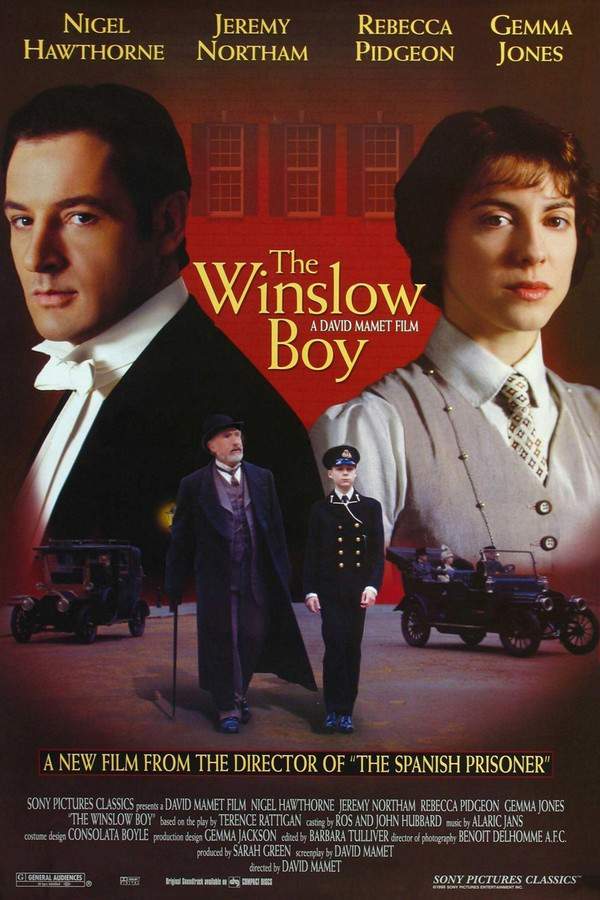
The Winslow Boy (1948) movie poster

Timeline

The Winslow Boy (1948) Timeline Explained – Every Event in Order

Release, runtime and language
1948 · 117 mins · English
Directed by
Anthony Asquith
Starring
Walter Fitzgerald, Francis L. Sullivan, Kathleen Harrison, Stanley Holloway, Noel Howlett, Robert Donat

In pre-WW1 England, a youngster is expelled from a naval academy over a petty theft, but his parents raise a political furor by demanding a trial.

On this page (6)
  1. 1 Where to watch
  2. 2 Events in order (13)
  3. 3 Timeline questions answered
  4. 4 Movie threads
  5. 5 Movies like The Winslow Boy
  6. 6 Every angle

Where to watch

Where to Watch The Winslow Boy (1948)

Where can you watch The Winslow Boy? Stream, rent or buy it in the US, including on FlixFling, Plex and Tubi TV: current JustWatch availability with up-to-date prices.

Streaming availability powered by JustWatch

13 events in order · contains spoilers

The Winslow Boy Timeline: Events in Chronological Order

Every key event of The Winslow Boy (1948) in order, scene by scene, with when and where it takes place. Use it to untangle flashbacks, time jumps and parallel storylines, to refresh your memory before the sequel or to find the exact scene you are thinking of.

  1. Arthur retires and settles into family life

    After 46 years at the bank, Arthur Winslow retires due to arthritis and returns to a quiet middle-class routine. His eldest son Dickie studies at Oxford, his daughter Catherine is a non-militant suffragette, and Ronnie is beginning cadet training at the Royal Naval College. Their neighbour John Watherstone asks for his daughter's hand, foreshadowing personal and social entanglements to come.

    When
    Retirement day, evening
    Where
    Winslow Home
  2. Ronnie returns soaked and burdened by a charge

    Ronnie arrives home drenched and wary, carrying a letter from the Royal Naval College that he fears to reveal. He is accused of stealing a five-shilling postal order, and an internal inquiry convicts him without a chance to defend himself. Arthur and Catherine sense injustice and the family begins to mobilize for a fight to prove his innocence.

    When
    Evening after Ronnie's return
    Where
    Winslow Home
  3. Private inquiry under way and legal strategy formed

    Realizing Ronnie's innocence, Arthur and Catherine hire Desmond Curry, a trusted solicitor, to investigate further. They begin briefing the best barrister in England, Sir Robert Morton, in preparation for a potential court case. The private investigation shifts the conflict from a family dispute to a public legal battle.

    When
    Immediately after the inquiry
    Where
    Winslow Home; Curry's offices
  4. Morton agrees to take the case

    After aggressive questioning of Ronnie and examining discrepancies in his recollection, Morton becomes convinced of Ronnie's innocence and agrees to take the case. His involvement brings formidable legal firepower and credibility to the defense. The team now has a real chance to overturn the official verdict.

    When
    Shortly after Ronnie's interrogation
    Where
    Morton's office
  5. MP raises the case in the House of Commons

    Arthur presents the matter to his Member of Parliament, who raises it in the House of Commons under the Magna Carta principle that no subject may be condemned without trial. The case enters the political arena and becomes a matter of civil liberties. Public scrutiny adds pressure on the government to respond.

    When
    Parliamentary session
    Where
    House of Commons
  6. Government yields after heated debates

    After intense debates, the government reluctantly agrees to allow the case to proceed. The decision represents a pivotal balance between state power and individual rights. The pursuit of justice thus moves forward into the courtroom.

    When
    Parliamentary session
    Where
    Government chambers / House of Commons
  7. Financial strain mounts as legal bills rise

    The legal bills climb to six hundred and thirty-four pounds, far beyond Arthur's overdraft limit. He is advised to cut his losses and abandon the case, but the fight for his son's honour compels him to persevere. The family faces economic pressure even as the legal battle continues.

    When
    Weeks of litigation preparation
    Where
    Winslow Home
  8. Trial begins; Morton discredits the evidence

    The case goes to court, and Morton uses his skill to challenge much of the prosecution's evidence. Critical inconsistencies in the prosecution emerge, casting serious doubt on Ronnie's guilt. The courtroom becomes the stage where truth, reputation, and the family's future hang in the balance.

    When
    Trial date
    Where
    Courtroom
  9. Charges withdrawn; apology to the family

    Following the defense's success in undermining the case, the government withdraws the charges against Ronnie. A profuse apology is issued to the Winslow family, restoring their public honour in a symbolic victory. Yet the cost of the ordeal is felt in every member of the family.

    When
    Shortly after trial conclusion
    Where
    Court / government venue
  10. Dickie leaves Oxford; starts a bank job in Reading

    Despite the victory, Dickie is compelled to leave Oxford due to financial strain and takes up a bank job in Reading. This marks a relocation and a new chapter for the family while the father’s fight has already reshaped their future. The personal costs of the case become plainly evident.

    When
    After verdict
    Where
    Oxford to Reading
  11. Catherine sacrifices her marriage plans

    Catherine loses her marriage settlement and her fiancé John, though there remains a spark with Morton. The private lives of the Winslow family are unsettled by the public battle, illustrating how justice for one son comes at a cost to relationships. Her prospects for the future are uncertain but emotionally charged.

    When
    Post-verdict
    Where
    Home / court
  12. Arthur's health declines but honour restored

    Arthur endures a physical toll from the long legal struggle, yet the family regains its honour in the eyes of society. He remains resolute in his fight for Ronnie, even at personal cost. The triumph is moral and symbolic, even as he pays a price in health.

    When
    After verdict
    Where
    Winslow Home / hospital
  13. Morton declines Lord Chief Justice; hints of romance

    Morton chooses to prosecute Ronnie and declines an appointment as Lord Chief Justice, a decision that cements his commitment to the case. The outcome also hints at a possible romantic tension, as Catherine’s affections are suggested to lean toward him. The resolution leaves a moral ambiguity: justice served, but personal costs linger.

    When
    Post-trial
    Where
    Morton's chambers / public life

Last updated: October 09, 2025 at 10:47

Was this helpful?

Timeline questions answered

The Winslow Boy Timeline Explained: Your Questions Answered

When does it happen, and why in that order? The questions people ask about the chronology of The Winslow Boy (1948): time jumps, flashbacks, cause and effect between scenes and the correct order of events, each answered with spoilers.

Q1

Why does Arthur Winslow refuse to accept Ronnie's expulsion from the naval college?

Arthur refuses because he genuinely believes Ronnie is innocent of stealing the five-shilling postal order. After 46 years as a banker, he cannot accept an injustice done to his youngest son, especially when the internal inquiry gave Ronnie no real chance to defend himself. His fight is about both clearing Ronnie's name and proving that the family's honor cannot be tarnished by a wrongful accusation.

Foreshadowing: Early scenes show Arthur as a man of principle who values truth and reputation above convenience.

  • arthur winslow
  • ronnie winslow
  • expulsion
  • naval college
  • injustice
Q2

Why does the British government resist opening the case against Ronnie?

The government resists because admitting wrongful accusation by the naval academy would embarrass the military establishment and set a precedent for challenging authority. The case becomes a matter of state power versus individual rights, with the government fearing that overturning the academy's decision would undermine military discipline and institutional credibility.

  • government
  • resistance
  • military
  • authority
  • parliament
Q3

What is the significance of the Magna Carta reference in the parliamentary debate?

The MP invokes the Magna Carta principle that no subject may be condemned without trial, arguing that Ronnie was found guilty through an internal inquiry with no proper defense opportunity. This frames the case as a matter of civil liberties rather than just a family dispute, turning it into a constitutional question that forces the government to respond publicly.

Foreshadowing: The neighbor John Watherstone asking to marry Catherine early on establishes the interconnected, reputation-conscious world they inhabit.

  • magna carta
  • civil liberties
  • trial
  • parliament
  • constitutional
Q5

Why does Dickie have to leave Oxford and work at a bank in Reading?

Dickie must leave Oxford because the legal bills have exhausted the family's finances. Arthur tells him he will pull him from university and find him a bank job instead. This represents one of the personal costs of the victory, Dickie's education and future prospects are sacrificed so the family can afford to continue fighting for Ronnie.

  • dickie winslow
  • oxford
  • reading
  • job
  • education
Q6

Why does Catherine lose her engagement to John Watherstone?

Catherine loses both her marriage settlement and her fiancé John because the prolonged legal battle drains the family's finances. John presumably cannot marry into a family facing such economic strain and public controversy. The case disrupts not just Ronnie's future but Catherine's personal life as well, showing how one son's justice comes at the cost of another family member's plans.

  • catherine winslow
  • john watherstone
  • engagement
  • marriage settlement
Q7

Why does Sir Robert Morton decline the Lord Chief Justice position?

Morton declines the promotion to Lord Chief Justice because he chooses to pursue Ronnie’s case instead. His decision reflects a commitment to justice over personal ambition. After working to prove Ronnie's innocence and seeing the family's sacrifices, he prioritizes the case over his own career advancement, though this leaves him with mixed feelings about what he has gained and lost.

  • robert morton
  • lord chief justice
  • promotion
  • career
  • ambition
Q8

Is the ending of the movie a true victory for the Winslow family?

The victory is bittersweet, the government withdraws charges and offers a formal apology, clearing Ronnie's name and restoring the family's honor. However, this comes at tremendous cost: Dickie leaves Oxford, Catherine loses her fiancé, Arthur's health declines, and the family faces lasting financial strain. Justice is served, but the personal damage is profound and irreversible.

  • victory
  • apology
  • charges withdrawn
  • family cost
  • honor
Q9

What evidence proves Ronnie's innocence in the theft case?

Morton's rigorous examination reveals discrepancies in the prosecution's case and discovers that Ronnie has a habit of copying a friend's signature, which could have been used by someone else to forge the theft. Morton becomes convinced this explains how the postal order could have been stolen without Ronnie being guilty, and his cross-examination succeeds in discrediting much of the prosecution's evidence.

  • ronnie winslow
  • innocence
  • evidence
  • signature
  • forgery
Q10

What is the nature of the connection between Catherine and Sir Robert Morton?

A romantic tension develops between Catherine and Morton during the case, though it remains ambiguous. Morton tells Catherine "How little you know men," hinting at deeper feelings and an understanding of male ambition and power dynamics. Despite this spark, the circumstances prevent them from being together, Catherine loses John while Morton chooses the case over his career advancement.

  • catherine morton
  • romance
  • feelings
  • tension
  • morton

Movie threads

More Movies Like The Winslow Boy, by Mood & Story

Curated lists built around what makes The Winslow Boy tick: the same mood, the same kind of story or the same emotional payoff. Each list explains why these movies belong together.

Methodical principle battles like in The Winslow Boy

Stories where a steadfast pursuit of justice unfolds through deliberate, costly steps. Movies like The Winslow Boy feature characters who wage a deliberate, intellectually-driven war against a rigid system. If you enjoyed the steady, costly fight for justice in The Winslow Boy, you'll find similar stories of resolute determination and procedural battles here.

  • methodical
  • tense
  • resolute
  • uphill battle
  • righteous anger
  • social pressure
  • Tone: bittersweet, resolute, tense
  • Pacing: steady, methodical
Why these movies?

The story pattern: The narrative pattern involves a clear, often intellectual, conflict against an established institution. The story progresses methodically, often through legal or political channels, focusing on the escalating personal costs and societal pressures faced by the protagonists rather than dramatic action sequences.

Why they belong together: These movies are grouped by their shared focus on a steady-paced, resolute struggle where principle is paramount. They create a specific mood of tense, methodical pressure, where the victory is often bittersweet, defined more by moral triumph than material gain.
Family sacrifice dramas like in The Winslow Boy

Narratives where a family unit is tested and bonded by a shared, draining cause. If you liked how The Winslow Boy portrayed a family's unwavering support and personal sacrifices during a protracted fight, explore these similar movies. They focus on the emotional toll and enduring bonds of familial devotion in the face of immense pressure.

  • familial devotion
  • sacrifice
  • emotional strain
  • resolute
  • social pressure
  • costly victory
  • Tone: bittersweet, poignant, resolute
  • Pacing: steady, character-driven
Why these movies?

The story pattern: The emotional journey follows a family as they rally around a common cause, often an injustice suffered by one member. The plot explores the individual and collective costs—financial, emotional, social—and how these trials either strengthen or fracture the family bonds, leading to a poignant re-evaluation of their priorities.

Why they belong together: These films are connected by their central theme of family as both a source of strength and a site of sacrifice. They share a medium emotional weight and a bittersweet tone, focusing on the quiet, profound drama of domestic life tested by external forces.

If you liked this

Movies Like The Winslow Boy

Similar movies to The Winslow Boy: the same genre, themes or kind of story. Each one comes with its own plot summary, timeline and ending explained.

Browse all movie summaries

Every angle

The Winslow Boy (1948) Explained: Plot, Timeline & Characters

Everything about The Winslow Boy in one place: what happens in the plot summary, the timeline in chronological order, the characters and meaning and a spoiler-free summary. What's After the Movie adds the cast, box office and post-credit scenes.

Coming soon on iOS and Android

The Plot Explained Movie Summary App

Plot summaries, endings explained and timelines on your phone. Catch up on any movie in minutes, save your favorites and never miss a twist again.

Be the first to know when we launch. Your email stays private, always.

Learn more about the app