Year: 2004
Runtime: 122 mins
Language: Spanish
Director: Luis Puenzo
A Spanish writer named Vera discovers an old chest containing photographs of an Argentine soldier who fought and perished in the Spanish Civil War and a mysterious woman. Determined to uncover their story, she journeys to the remote expanses of Argentine Patagonia, following the clues left behind and confronting the echoes of history across the stark landscape.
Warning: spoilers below!
Haven’t seen The Whore and the Whale yet? This summary contains major spoilers. Bookmark the page, watch the movie, and come back for the full breakdown. If you're ready, scroll on and relive the story!
Explore the full timeline and setting of The Whore and the Whale (2004). Follow every major event in chronological order and see how the environment shapes the story, characters, and dramatic tension.
Last updated: February 20, 2026 at 18:31
Meet the key characters of The Whore and the Whale (2004), with detailed profiles, motivations, and roles in the plot. Understand their emotional journeys and what they reveal about the film’s deeper themes.
Last updated: February 20, 2026 at 18:31
Explore the central themes of The Whore and the Whale (2004), from psychological, social, and emotional dimensions to philosophical messages. Understand what the film is really saying beneath the surface.
Last updated: February 20, 2026 at 18:31
Browse frequently asked questions about The Whore and the Whale (2004) focused on characters, relationships, themes, symbols, setting, and story context. This movie info FAQ gives spoiler-aware explanations for character arcs, world details, and thematic interpretation so readers can better understand what the film is really about.
The narrative unfolds across two main countries: present-day Spain where Vera lives, and Argentina, specifically Buenos Aires and the remote Patagonian town where Lola's story is anchored. Barcelona serves as the key historical setting from the 1930s, connecting the Spanish Civil War era to the present-day investigation.
The film operates on two temporal layers: Vera's contemporary storyline in present-day Spain, and flashbacks to the 1930s Spanish Civil War era. The historical thread centers on 1934 when Lola gains her freedom and 1939 when Emilio dies fighting in Barcelona, showing how the past continuously shapes the present.
The Spanish Civil War (1936-1939) serves as the pivotal historical backdrop. Emilio, an Argentine photographer, travels to Barcelona and dies in the fighting in 1939. His death marks the tragic endpoint of the 1930s storyline and becomes the central mystery that drives Vera's present-day investigation into his life and connections.
The film centers on three interconnected themes: Memory functions as a living archive where objects, places, and testimonies braid past and present, shaping identity and choices. Storytelling bridges generations as Vera reconstructs lives through others' memories, blurring the line between truth and invention. Loss saturates the narrative, driving characters' choices while also fueling stubborn hope.
Memory serves as a living archive that guides Vera as she uncovers Lola, Matilde, and Emilio's histories. Objects, places, and testimonies weave past and present together, shaping identity and decisions. The film suggests memory can both heal wounds and haunt the living, functioning as the primary mechanism connecting different generations.
Storytelling acts as a bridge between generations, transforming Lola's and Emilio's lives into narratives Vera can inhabit and reinterpret. The line between truth and invention blurs as characters' fates are reimagined through multiple accounts. Storytelling becomes a means of connection and reckoning, allowing the past to be reconstructed and understood.
Vera is a present-day Spanish writer who feels lost and estranged from her husband and child. Increasingly convinced she is ill, she embarks on an impulsive trip to Argentina to uncover the story of Argentine soldier Emilio. Her journey becomes a quest to reconstruct his life through others' memories, ultimately transforming her view of storytelling and her own sense of self.
Lola is a Spanish chorus girl whose freedom is bought by Emilio in 1934. She eventually ends up in a remote Patagonian town where she becomes a prostitute. Her fate becomes intertwined with the sea and a harpoon-wounded whale, turning tragedy into a key catalyst for the story's revelations about memory and loss.
Emilio is an Argentine photographer who fought and perished in the Spanish Civil War, dying in Barcelona in 1939. Through Vera's investigation, his life emerges as a tapestry of art, risk, and wartime fragility. His actions, capturing moments and influencing Lola's fate, reverberate through generations, becoming the central figure whose story Vera uncovers.
Matilde is an elderly woman hospitalized at the film's start, and the grandmother whose past reveals Lola's origins. Her life intersects with Lola's shadowy history as a former prostitute tied to a chain of memory that returns to the present. Her connection to Ernesto anchors the film's revelations about family secrets and generational links.
The plot is saturated with loss: Lola's fatal leap, Emilio's war death, and Vera's fear of losing family and herself. Grief drives choices and revelations throughout the narrative, yet also fuels a stubborn hope. The film frames sorrow as a force that compels memory to endure, connecting personal tragedies to larger historical losses.
The settings blend urban environments with war-era echoes, creating a tapestry of travel, exile, and remembrance. Barcelona represents both modern city life and the historical war trauma. Patagonia's remote, stark landscape mirrors themes of isolation and the weight of memory. The contrast between present-day Spain and Argentina's historical sites emphasizes how place carries generational trauma and meaning.
Discover curated groups of movies connected by mood, themes, and story style. Browse collections built around emotion, atmosphere, and narrative focus to easily find films that match what you feel like watching right now.
Characters seek truth by connecting fragmented pieces of a buried past.For viewers who enjoyed the investigative journey in The Whore and the Whale, this section highlights movies about characters piecing together forgotten histories, similar historical dramas, and films with intertwined timelines.
These narratives follow a protagonist, often a researcher, writer, or outsider, as they delve into a forgotten event or a stranger's life. The story unfolds through parallel timelines, where discoveries in the present reveal the emotional truths of the past.
This thread groups films that share a central investigative plot, a dual-timeline structure, and a focus on how uncovering history impacts the present. The emotional core lies in the connection forged across time.
Isolated protagonists confront personal loss in vast, atmospheric landscapes.If The Whore and the Whale resonated with its portrayal of grief and isolation, discover similar films about confronting loss, melancholic journeys, and character-driven dramas with heavy emotional weight.
The plot is less about external action and more about an internal, psychological journey. A character, often facing mortality or deep sadness, travels to a remote location, using the physical journey as a metaphor for processing their pain.
These films are connected by their heavy emotional weight, melancholic tone, and focus on a solitary protagonist's introspective battle with loss. The setting acts as a character, amplifying feelings of loneliness and reflection.
Don't stop at just watching - explore The Whore and the Whale in full detail. From the complete plot summary and scene-by-scene timeline to character breakdowns, thematic analysis, and a deep dive into the ending - every page helps you truly understand what The Whore and the Whale is all about. Plus, discover what's next after the movie.
Read a complete plot summary of The Whore and the Whale, including all key story points, character arcs, and turning points. This in-depth recap is ideal for understanding the narrative structure or reviewing what happened in the movie.
Track the full timeline of The Whore and the Whale with every major event arranged chronologically. Perfect for decoding non-linear storytelling, flashbacks, or parallel narratives with a clear scene-by-scene breakdown.
Discover movies like The Whore and the Whale that share similar genres, themes, and storytelling elements. Whether you’re drawn to the atmosphere, character arcs, or plot structure, these curated recommendations will help you explore more films you’ll love.
The Whore and the Whale (2004) Plot Summary & Movie Recap
The Whore and the Whale (2004) Scene-by-Scene Movie Timeline
The Whore and the Whale (2004) Spoiler-Free Summary & Key Flow
Movies Like The Whore and the Whale – Similar Titles You’ll Enjoy
The Whistlers (2020) Film Overview & Timeline
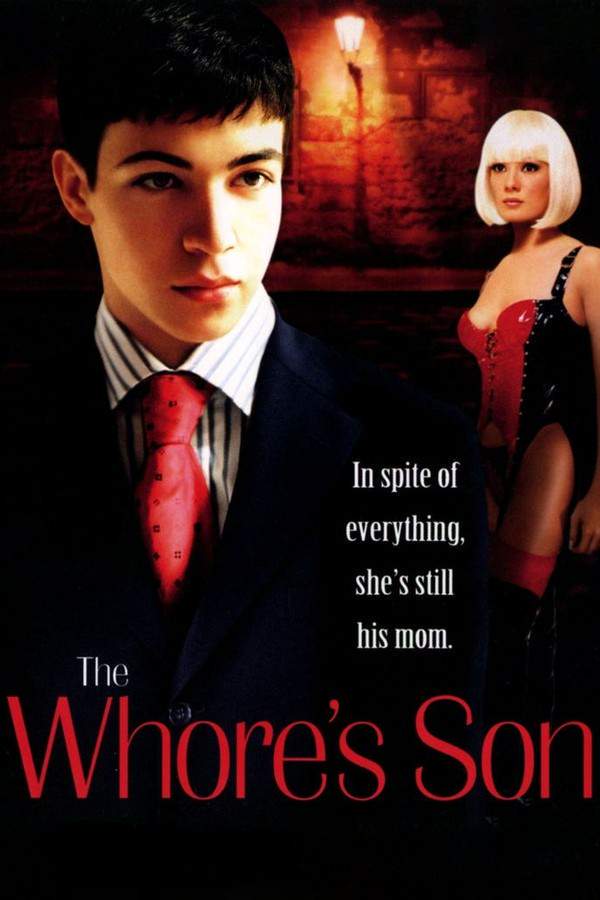
The Whore's Son (2006) Movie Recap & Themes
The Whistlers (2019) Complete Plot Breakdown
Caboblanco (1980) Film Overview & Timeline
Whore (1991) Full Summary & Key Details
The Heifer (1985) Story Summary & Characters
White Whales (1987) Spoiler-Packed Plot Recap
La Orca (1976) Ending Explained & Film Insights
Whirlpool (1970) Full Movie Breakdown
Female Animal (1970) Detailed Story Recap
A Matador’s Mistress (2008) Complete Plot Breakdown
Whore 2 (1994) Ending Explained & Film Insights
Mare Nostrum (1926) Movie Recap & Themes
Life Is to Whistle (1998) Spoiler-Packed Plot Recap
Woman, Woman (1979) Ending Explained & Film Insights