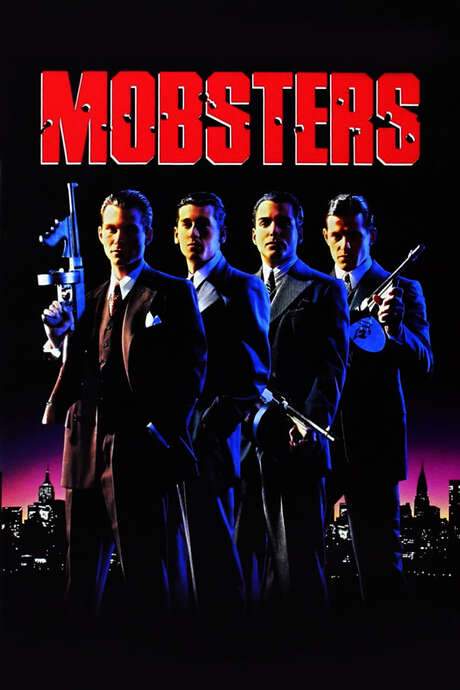
In the Atlanta Federal Penitentiary, an aging Joseph Valachi sits behind bars for heroin smuggling, while the crime boss Vito Genovese is housed nearby. Genovese suspects Valachi of being an informant and delivers the so-called “kiss of death,” a grim challenge that Valachi only returns with a wary, defiant gesture. The tension between them thickens after a violent shower attack days earlier, a stark reminder of the prison’s dangerous code.
Valachi’s world tilts when he accidentally shoots a fellow prisoner, a mistake that prompts federal agent Ryan to intervene. Ryan explains the error and pushes Valachi to become an informant, transferring him to Quantico so he can begin talking frankly about his life. From here, the narrative unfolds in a series of flashbacks that trace Valachi’s ascent from a young criminal to a made man entangled with the Mafia’s most powerful figures of the era.
In these memories, Valachi is drawn under the wing of Salvatore Maranzano, who initiates him into the family and assigns Gaetano Reina to oversee his early work. Valachi proves loyal and capable, until the Castellammarese War disrupts his stability when Reina is killed in a drive-by shooting. Stranded at Reina’s house, Valachi meets Reina’s daughter, Maria Reina Valachi, and a deep bond forms between them, changing Valachi’s priorities.
At Reina’s funeral, Maranzano offers a chilling consolation to Reina’s widow:
> I cannot bring back the dead. I can only kill the living.
The power struggle surrounding Reina’s death intensifies as Joe Masseria is himself assassinated by Lucky Luciano, reshaping the Mafia’s leadership and the fate of many who serve under it. Valachi’s personal life grows further complicated when he marries Maria, receiving the blessing of Letizia, Reina’s widow, and thus cementing his ties to the Reina faction.
Yet internal bloodletting never stops. Valachi’s relationship with his capo, Tony Bender, is strained, and Bender orders a brutal act against Valachi’s partner: Dominick, known as “The Gap,” Petrilli, for having affections with Genovese’s wife. In a clash of loyalties, Valachi shoots Dominick Petrilli to end the threat and to secure his own position within the violent ladder of the Mafia.
As the years move toward the present, Valachi’s life narrows to the truth he spills on a Senate committee. The moment is fraught with emotion as he battles despair and even contemplates suicide, yet the film’s framing makes it clear that he survives long enough to witness the aging Genovese die in prison. The story leaves viewers with a stark portrait of a man who becomes both witness and participant to a sprawling, brutal era of organized crime, where loyalty and betrayal walk hand in hand and where the line between informer and mobster remains perilously thin.