Year: 1939
Runtime: 98 mins
Language: English
Director: Irving Cummings
Alexander Graham Bell falls in love with deaf Mabel Hubbard while teaching the deaf and seeking a way to transmit the human voice by telegraph. Mabel urges him to delay marriage until his experiments succeed. He eventually invents the telephone, marries Mabel, achieves wealth and fame, but faces a scheming rival company determined to ruin him.
Warning: spoilers below!
Haven’t seen The Story of Alexander Graham Bell yet? This summary contains major spoilers. Bookmark the page, watch the movie, and come back for the full breakdown. If you're ready, scroll on and relive the story!
Trace every key event in The Story of Alexander Graham Bell (1939) with our detailed, chronological timeline. Perfect for unpacking nonlinear stories, spotting hidden connections, and understanding how each scene builds toward the film’s climax. Whether you're revisiting or decoding for the first time, this timeline gives you the full picture.
Last updated: October 05, 2025 at 11:50
Find frequently asked questions about the The Story of Alexander Graham Bell (1939) timeline, including chronological order, nonlinear jumps, cause-and-effect links, and scene sequence clarifications. This timeline FAQ helps explain when key events happen, how moments connect, and why the story unfolds in that specific order.
Bell grew increasingly interested in transmitting the human voice itself rather than just Morse code signals. During a wagon ride with Mabel Hubbard, he confided that his interest had evolved from the telegraph to something revolutionary, the telephone. Mabel's encouragement and belief in his abilities further motivated him to pursue this new direction, leading him to abandon the telegraph project entirely.
Earlier in the film, Bell demonstrates how sound works to skeptical party guests, hinting at his deeper fascination with voice transmission.
After Bell was forced out of his home and moved into assistant Thomas Watson's apartment, they struggled to fine-tune their device. A missing spring, left behind during a purchase mishap, became the key to their breakthrough. When Watson plucked a magnetized steel piece in frustration, it sent a tiny sound through their improvised device, proving that human voice could be transmitted electrically.
Bell was testing a receiver designed to translate electrical vibrations into audible sound. He placed water in the receiver cup to improve conductivity, then added a small amount of sulfuric acid for better conduction. During the intense experimentation, while working with the volatile mixture, he accidentally spilled acid on his leg, causing him to yell the famous first words spoken through the telephone: 'Mr. Watson, come here, I want you!'
Bell's earlier work on receivers modeled after the human ear set up this moment of trial and error.
When Bell staged his first public demonstration of the telephone, the audience laughed and mocked the invention because they could not yet conceive that human voice could be transmitted electrically. Many viewed it as a gimmick or party trick rather than a serious communication breakthrough, similar to how Bell's earlier ideas about sound had been treated at the opening party.
The opening scene establishes that Bell's genius was already mocked and underestimated by society.
After Bell's successful demonstration to Queen Victoria and the installation of a telephone at Buckingham Palace, Western Union formed a competing claim arguing that Bell's patent was questionable. They asserted that one of their engineers was the true inventor of the telephone, attempting to undermine Bell's claim and gain control of the lucrative new technology.
When Western Union accused Bell of patent fraud and the court demanded supporting paperwork, Bell faced a serious setback. Mabel arrived with crucial documentation that established Bell's rightful claim to the invention. This evidence proved authentic and helped dismantle Western Union's fraudulent assertion, leading them to drop the suit and eventually offer a business partnership instead.
Earlier, Mabel had encouraged Bell to finish the telephone and pursue a proper receiver, showing her continued involvement in his work.
England entrusted Bell with a demonstration for Queen Victoria, which represented a major opportunity to elevate the telephone from an American curiosity to a world-changing invention. After a successful presentation, Buckingham Palace was wired for the telephone, sparking global fascination and lending royal credibility to the invention, which helped overcome earlier skepticism.
Bell proposed to Mabel immediately after achieving the breakthrough transmission of his voice to Watson through the device. Motivated by his success and wanting to share his triumph with the person who had believed in him, he asked Mabel to marry him. She accepted, even though her father had concerns about Bell's finances and tendency to jump between ideas. Mabel urged him to complete the telephone before their wedding.
After Western Union's internal investigation revealed their engineer had fabricated the invention claim to undermine Bell, they dropped the lawsuit and offered a lucrative deal to continue using the telephone technology. Bell accepted this partnership, which provided financial security and ultimately made him wealthy, ending the legal threat while turning the rival company into a business ally.
At a party, Bell demonstrated his ability to teach a deaf child to communicate using a glove with letters on it. This demonstration impressed Gardiner Hubbard, who invited Bell to help his own deaf daughter Mabel. This connection led Bell into the Hubbard household, where his broader ideas about transmitting sound caught Mabel's interest. Her encouragement during wagon rides spurred Bell to shift from the telegraph to the revolutionary concept of transmitting the human voice.
Discover curated groups of movies connected by mood, themes, and story style. Browse collections built around emotion, atmosphere, and narrative focus to easily find films that match what you feel like watching right now.
Stories of visionary creators who persevere through doubt to achieve world-changing success.If you enjoyed the story of Alexander Graham Bell, you'll love these movies about famous inventors. Discover similar films featuring visionary creators, their romantic and professional struggles, and their ultimate world-changing achievements. Find more hopeful and inspiring stories of scientific discovery and perseverance.
These stories typically follow a linear, chronological path: a eureka moment, a period of intense development fraught with obstacles (financial, social, or technical), a climactic demonstration of success, and a final act defending the invention against rivals, culminating in well-deserved recognition and legacy.
Movies are grouped here for their shared focus on a single, brilliant protagonist driven by a vision. They share a hopeful, steady-paced tone, medium intensity from professional conflicts, and a satisfying, triumphant conclusion that affirms the power of perseverance and intellect.
Historical stories where a central romantic partnership supports a larger personal ambition.Looking for more movies like The Story of Alexander Graham Bell? Explore this collection of historical dramas that blend a supportive romantic partnership with a character's ambitious life goals. Find stories with a steady pace, hopeful tone, and a balance between personal love and professional triumph.
The narrative pattern involves a protagonist with a clear goal, whose romantic relationship develops in parallel. The partner often provides crucial emotional or practical support during low points. The central conflict (professional or historical) and the romantic arc are resolved together, reinforcing each other for a cohesive, satisfying ending.
These films share a specific mood mix: the excitement of historical achievement is emotionally grounded by a mature romance. The pacing is steady, allowing both the historical context and the relationship to develop naturally. The tone remains hopeful, with medium emotional weight derived from balancing ambition with personal connection.
Don't stop at just watching - explore The Story of Alexander Graham Bell in full detail. From the complete plot summary and scene-by-scene timeline to character breakdowns, thematic analysis, and a deep dive into the ending - every page helps you truly understand what The Story of Alexander Graham Bell is all about. Plus, discover what's next after the movie.
Read a complete plot summary of The Story of Alexander Graham Bell, including all key story points, character arcs, and turning points. This in-depth recap is ideal for understanding the narrative structure or reviewing what happened in the movie.
Discover the characters, locations, and core themes that shape The Story of Alexander Graham Bell. Get insights into symbolic elements, setting significance, and deeper narrative meaning - ideal for thematic analysis and movie breakdowns.
Discover movies like The Story of Alexander Graham Bell that share similar genres, themes, and storytelling elements. Whether you’re drawn to the atmosphere, character arcs, or plot structure, these curated recommendations will help you explore more films you’ll love.
The Story of Alexander Graham Bell (1939) Plot Summary & Movie Recap
The Story of Alexander Graham Bell (1939) Scene-by-Scene Movie Timeline
The Story of Alexander Graham Bell (1939) Spoiler-Free Summary & Key Flow
Movies Like The Story of Alexander Graham Bell – Similar Titles You’ll Enjoy
Alexander (2004) Plot Summary & Ending Explained
Bells Are Ringing (1960) Plot Summary & Ending Explained
The Silent Natural (2019) Movie Recap & Themes
Battle of the Brave (2004) Movie Recap & Themes
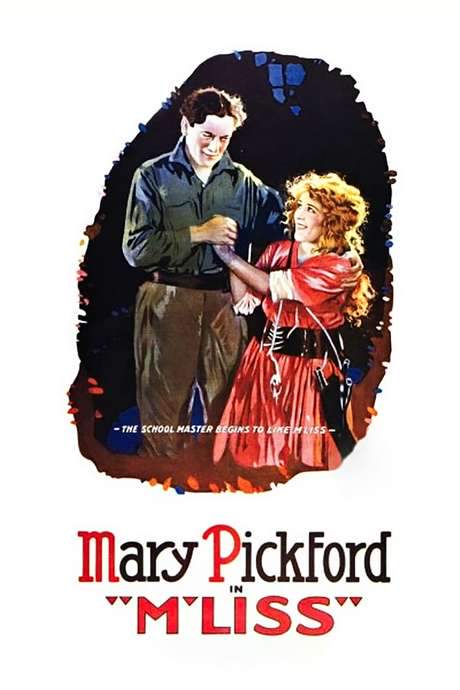
M’Liss (1918) Complete Plot Breakdown
Bell Diamond (1986) Movie Recap & Themes
The Bells (1926) Ending Explained & Film Insights
The Glenn Miller Story (1954) Film Overview & Timeline
Alexander Hamilton (1931) Story Summary & Characters
The Bellman (1945) Full Summary & Key Details
Alexander’s Ragtime Band (1938) Movie Recap & Themes
Her Highness and the Bellboy (1945) Complete Plot Breakdown
Such Men Are Dangerous (1930) Story Summary & Characters
Bell, Book and Candle (1958) Full Movie Breakdown
Alexander the Great (1956) Detailed Story Recap