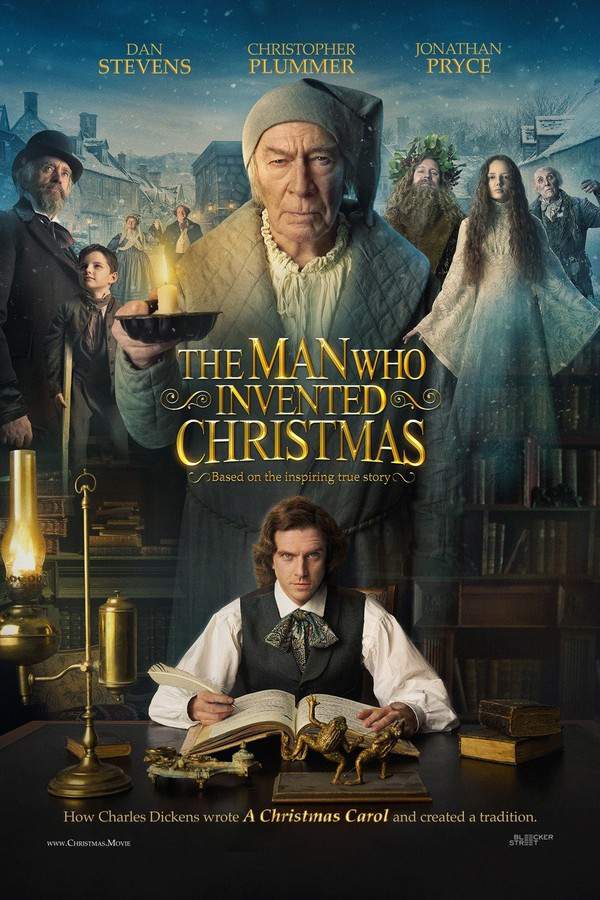
This biographical drama explores the inspiring story of Charles Dickens as he struggles to write A Christmas Carol. Facing financial hardship and seeking to recapture the joy of the holidays, Dickens draws upon his own life experiences and observations of London’s poverty to create the beloved characters of Ebenezer Scrooge and Tiny Tim. The resulting novella becomes an instant success, forever shaping how the holiday season is celebrated.
Warning: spoilers below!
Haven’t seen The Man Who Invented Christmas yet? This summary contains major spoilers. Bookmark the page, watch the movie, and come back for the full breakdown. If you're ready, scroll on and relive the story!
Read the complete plot breakdown of The Man Who Invented Christmas (2017), including all key story events, major twists, and the ending explained in detail. Discover what really happened—and what it all means.
As the year 1843 begins, Charles Dickens finds himself grappling with the fallout of three consecutive literary failures. With his publishers having rejected his latest works, he is determined to salvage his reputation by creating a new book, aiming for an independent publication—all within a challenging six-week deadline to ensure its release by Christmas. In the midst of a grim London backdrop, his inspiration springs from the stark disparity between a lavish funeral attended by only a handful of people and the sour demeanor of an elderly man who derisively labels him “Humbug.” This unexpected muse leads to the birth of A Christmas Carol, despite the skepticism from his contemporaries, who regard the festive period as inconsequential and its observance as a rare occurrence.
As Charles dives deeper into his storytelling, he becomes engulfed by the very characters that he conjures into existence. Ebenezer Scrooge (played by Christopher Plummer), the grumpy protagonist, starts to take on a life of his own, reminding Charles of the moral urgency that propels the narrative forward. The input of Tara (portrayed by Anna Murphy), the astute Irish nursemaid looking after his children, adds further depth to his creative process with her sharp observations and literary perspectives.
Yet, the arrival of Charles’ peculiar father, John Dickens, disrupts the flow of writing and reintroduces a dose of reality into his artistic pursuits. His father’s peculiar behavior serves as a painful reminder of their family’s ongoing financial troubles. As Charles tries to balance Scrooge’s redemption arc with his own harsh realities, he is faced with the limitations of his creative capacity. When Tara proposes the idea that perhaps Scrooge might save Tiny Tim, Charles finds himself at a standstill, grappling with a writer’s block caused by his profound doubts concerning humanity’s ability to change.
As the pressure of debts and personal obligations mounts, his relationships begin to unravel. A moment of fury drives both his parents and Tara away, leaving Charles in solitude to confront the repercussions of his actions. The following morning, regret consumes him for how he treated Tara, but it’s too late—she has vanished, enveloped by the fog of his own making. His wife, Catherine Dickens, holds him accountable for his reckless behavior and emotional volatility, expressing a deep-rooted concern that he places his art above everything else.
Through profound introspection, Charles’ bitterness towards his father is finally laid bare. His childhood was marred by the brutal reality of working in a blacking factory, a direct result of John Dickens’ financial blunders that led to their family’s incarceration for debt. This traumatic past left a lasting impact on Charles, intensifying his insecurities and resentment towards his father.
Despite this overwhelming burden, with Scrooge’s guidance, he embarks on a transformative journey of self-discovery. Charles learns that his narrative isn’t solely steeped in bitterness, but rather one of hope and renewal. Fueled by this newfound determination, he rushes home to finalize his manuscript, embodying the essence of his emotional evolution.
In an unexpected twist of fate, Tara appears at his door, returning a book he had lent her previously. Charles seizes this chance to apologize for his earlier outburst, inviting her back into his life. His wife encourages him to extend the same reconciliation gesture towards his father, who is preparing to leave London on a train.
Taking her wise counsel to heart, Charles reconnects with his father, paving the way for healing and reconciliation. With time slipping away, he submits his manuscript just in time for printing ahead of Christmas.
As the Dickens family revels in the holiday cheer, the world outside undergoes a transformation of its own. The success of Charles’ masterpiece, A Christmas Carol, spreads rapidly, leaving an indelible impact on the very fabric of Christmas as we celebrate it today. In a poignant conclusion, the lasting legacy of this cherished tale serves as a powerful testament to the significance of storytelling and the resilience of the human spirit.
Last Updated: November 22, 2024 at 14:50
Discover curated groups of movies connected by mood, themes, and story style. Browse collections built around emotion, atmosphere, and narrative focus to easily find films that match what you feel like watching right now.
Stories of artists battling internal blocks and past trauma to achieve greatness.If you enjoyed The Man Who Invented Christmas, you'll appreciate these other films about the creative process. Discover movies that explore similar themes of overcoming writer's block, drawing inspiration from personal hardship, and achieving a heartwarming creative breakthrough.
These stories typically follow a linear, character-driven arc where a creator faces a significant deadline or crisis. The central conflict is internal, pitting their talent against self-doubt, financial woes, or unresolved trauma. The narrative builds steadily through this struggle, often using flashbacks or imaginative sequences, and resolves with the successful completion of the work, which frequently mends personal relationships.
Movies are grouped here based on their shared focus on the creative psyche, a mix of melancholic struggle with a ultimately hopeful and uplifting tone, and a steady, reflective pacing that prioritizes character development over high-stakes action.
Festive tales that explore serious themes like redemption and family reconciliation.Looking for more thoughtful Christmas films like The Man Who Invented Christmas? This list features holiday stories that balance festive charm with explorations of serious themes such as financial hardship, creative struggle, and the power of reconciliation.
The narrative pattern involves a protagonist, often cynical or struggling, whose journey through the holiday season forces a confrontation with past mistakes or present hardships. The festive atmosphere contrasts with serious underlying issues, creating a bittersweet yet ultimately uplifting arc. The story leads to a moment of clarity and redemption, reinforcing the true, transformative meaning of the holiday.
These films share a specific vibe: a festive setting used as a backdrop for stories with medium emotional weight. They balance uplifting, hopeful outcomes with a steady pace and a focus on themes like redemption and personal growth, creating a more substantive holiday experience.
Don't stop at just watching — explore The Man Who Invented Christmas in full detail. From the complete plot summary and scene-by-scene timeline to character breakdowns, thematic analysis, and a deep dive into the ending — every page helps you truly understand what The Man Who Invented Christmas is all about. Plus, discover what's next after the movie.
Track the full timeline of The Man Who Invented Christmas with every major event arranged chronologically. Perfect for decoding non-linear storytelling, flashbacks, or parallel narratives with a clear scene-by-scene breakdown.
Discover the characters, locations, and core themes that shape The Man Who Invented Christmas. Get insights into symbolic elements, setting significance, and deeper narrative meaning — ideal for thematic analysis and movie breakdowns.
Get a quick, spoiler-free overview of The Man Who Invented Christmas that covers the main plot points and key details without revealing any major twists or spoilers. Perfect for those who want to know what to expect before diving in.
Visit What's After the Movie to explore more about The Man Who Invented Christmas: box office results, cast and crew info, production details, post-credit scenes, and external links — all in one place for movie fans and researchers.
Discover movies like The Man Who Invented Christmas that share similar genres, themes, and storytelling elements. Whether you’re drawn to the atmosphere, character arcs, or plot structure, these curated recommendations will help you explore more films you’ll love.
The Man Who Invented Christmas (2017) Scene-by-Scene Movie Timeline
The Man Who Invented Christmas (2017) Movie Characters, Themes & Settings
The Man Who Invented Christmas (2017) Spoiler-Free Summary & Key Flow
Movies Like The Man Who Invented Christmas – Similar Titles You’ll Enjoy
The Muppet Christmas Carol (1992) Complete Plot Breakdown
A Christmas Carol (2009) Full Movie Breakdown
A Christmas Carol (1938) Plot Summary & Ending Explained
Scrooge (1970) Film Overview & Timeline
Christmas Carol: The Movie (2001) Plot Summary & Ending Explained
The Man Who Saved Christmas (2002) Ending Explained & Film Insights
A Christmas Carol (2019) Movie Recap & Themes
A Christmas Carol (1982) Movie Recap & Themes
A Christmas Carol (1910) Full Movie Breakdown
The Man in the Santa Claus Suit (1979) Complete Plot Breakdown
A Christmas Carol (1954) Full Summary & Key Details
A Christmas Carol (1977) Movie Recap & Themes
The Stingiest Man in Town (1956) Story Summary & Characters
Scrooge (1951) Ending Explained & Film Insights
A Christmas Carol (1997) Film Overview & Timeline