








Plot Explained Spoilers guaranteed!
Plot Explained

Browse by genre

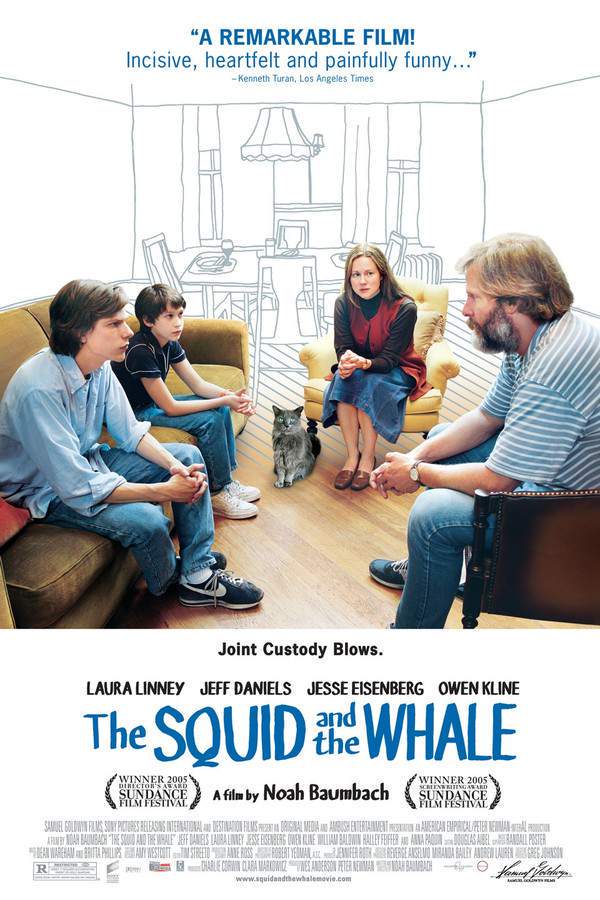
The Squid and the Whale (2005) movie poster

Timeline

The Squid and the Whale (2005) Timeline Explained – Every Event in Order

Release, runtime and language
2005 · 81 min · English
JustWatch #142 63
Directed by
Noah Baumbach
Budget
$1.5M

In this poignant comedy-drama set in 1980s Brooklyn, two young brothers grapple with their parents’ divorce. Walt, a teenager, finds himself drawn to his intellectual father’s difficulties, while his younger brother Frank quietly supports their mother as she gains recognition as a writer. Amidst the shifting family landscape, the boys confront personal challenges and search for their individual identities as they navigate a difficult and emotionally charged time.

On this page (6)
  1. 1 Where to watch
  2. 2 Events in order (15)
  3. 3 Timeline questions answered
  4. 4 Movie threads
  5. 5 Movies like The Squid and the Whale
  6. 6 Every angle

Where to watch

Where to Watch The Squid and the Whale (2005)

Where can you watch The Squid and the Whale? Stream, rent or buy it in the US, including on Netflix, Netflix Standard and Amazon Video: current JustWatch availability with up-to-date prices.

Streaming availability powered by JustWatch

15 events in order · contains spoilers

The Squid and the Whale Timeline: Events in Chronological Order

Every key event of The Squid and the Whale (2005) in order, scene by scene, with when and where it takes place. Use it to untangle flashbacks, time jumps and parallel storylines, to refresh your memory before the sequel or to find the exact scene you are thinking of.

  1. Introduction to Bernard Berkman

    In 1986, we meet Bernard Berkman, an increasingly arrogant novelist whose career is on the decline. Once a prominent figure in literature, he now struggles to find an agent for his work, highlighting the frustrations of his creative journey.

    When
    1986
  2. Joan's Accolades Rise

    As Bernard's career falters, his wife Joan begins to gain significant acclaim for her own writing. This rising success creates further tension in their already strained marriage, as Bernard grapples with feelings of jealousy and inadequacy.

  3. Announcement of Separation

    In a pivotal moment, Bernard and Joan reveal to their sons, Walt and Frank, their decision to separate. This news creates immediate turmoil within the family, as both boys are forced to confront the reality of their shifting family dynamics.

  4. Moving to a New Home

    Following the separation announcement, Bernard moves into a rental house across Prospect Park. The couple agrees on a joint custody arrangement, aiming to share equal parenting time with Walt and Frank, but tensions continue to mount.

    Where
    Prospect Park
  5. Joan's New Relationship

    As the separation takes its toll, Joan embarks on a romantic relationship with Ivan, who is Frank's tennis instructor. This development further complicates the family situation, as the boys must navigate their evolving allegiances.

  6. Bernard Finds Comfort

    In his new home, Bernard finds solace in the company of Lili, one of his students. This new relationship offers him an emotional escape but also adds to the complexity of his situation with Joan and their children.

  7. Divided Loyalties

    Caught in an emotional crossfire, Walt and Frank choose sides in their parents' escalating conflict. Frank aligns himself with Joan, while Walt idolizes Bernard, leading to growing tensions between the brothers as they navigate their divided loyalties.

  8. Frank's Risky Behavior

    Frank, overwhelmed by the separation, begins to engage in risky behaviors at school, including drinking beer. His actions reflect his inner turmoil as he attempts to cope with the emotional fallout from his parents' divorce.

    Where
    School
  9. Walt's Struggle

    Walt attempts to emulate his father, which strains his relationship with his girlfriend, Sophie. This emulation culminates in a talent show performance where he falsely claims authorship of 'Hey You' by Pink Floyd, leading to significant repercussions.

    Where
    Talent Show
  10. Meeting with Parents

    After Walt's deception is revealed, a meeting with Bernard and Joan is arranged to address his behavior. The discussion culminates in an agreement that Walt should seek therapy, aiming to help him navigate his emotions more effectively.

  11. Therapy and Self-Reflection

    During therapy, Walt begins to see his life from a more objective standpoint, detached from his father's biases. He recalls a memory of visiting the giant squid and whale exhibit at the American Museum of Natural History, revealing a shift in how he views his past with Joan.

    Where
    American Museum of Natural History
  12. Understanding and Growth

    As he discusses his memory in therapy, Walt's perception evolves from fear to fondness. This growth illustrates Joan's nurturing role, emphasizing the emotional void left by Bernard amid their family struggles.

  13. Climactic Custody Argument

    The mounting tension between Bernard and Joan erupts into a fierce argument over custody arrangements. This confrontation escalates dramatically, ultimately leading to Bernard's physical collapse outside their home.

  14. Hospital Scene

    After Bernard is rushed to the hospital, he requests that Walt remain by his side. However, in a moment of pivotal growth, Walt chooses to visit the Natural History Museum instead, symbolizing his desire for independence and understanding.

    Where
    Hospital
  15. Conclusion and Acceptance

    The film culminates with Walt standing before the giant squid and whale exhibit at the museum, a place he once feared. This moment signifies his emotional growth and newfound understanding of his family's complexities, showcasing his journey of acceptance.

    Where
    American Museum of Natural History

Last updated: November 16, 2024 at 16:47

Was this helpful?

Timeline questions answered

The Squid and the Whale Timeline Explained: Your Questions Answered

When does it happen, and why in that order? The questions people ask about the chronology of The Squid and the Whale (2005): time jumps, flashbacks, cause and effect between scenes and the correct order of events, each answered with spoilers.

Q1

Why does Walt choose to visit the Natural History Museum instead of staying with his collapsed father at the hospital?

Walt's choice represents a pivotal moment of emotional independence. Throughout the film, he has blindly idolized his father Bernard, even blaming his mother Joan for the divorce. However, during therapy, Walt begins to see his family situation more objectively. When Bernard collapses and begs Walt to stay, Walt realizes that his father has consistently failed to be emotionally present for him, while his mother provided genuine nurturing. Choosing the museum, where he recalls happy memories with Joan, signifies Walt's rejection of his father's manipulative emotional control and his own path to emotional maturity.

Foreshadowing: Earlier in therapy, Walt recalls the squid and whale exhibit as a positive memory connected to his mother, foreshadowing his ultimate choice.

  • walt
  • bernard
  • hospital
  • museum choice
  • independence
  • emotional growth
Q2

Why does Walt falsely claim to have written "Hey You" by Pink Floyd at the talent show?

Walt's lie stems from his desperate attempt to emulate his father Bernard. Throughout the film, Walt idolizes his father and tries to mirror his intellectual pursuits and artistic sensibilities. Bernard is a novelist who takes credit for his creative work, and Walt wants to impress his father by appearing similarly talented. The lie is also a cry for approval, he hopes that claiming authorship of a respected Pink Floyd track will earn him the admiration he craves from both his father and his peers. When the truth is exposed, it leads to his parents deciding he needs therapy.

Foreshadowing: Walt's pattern of blindly following his father is established early, as he sides with Bernard against his mother despite Bernard's obvious flaws.

  • walt
  • talent show
  • pink floyd
  • lie
  • father emulation
  • bernard
Q3

Why do Walt and Frank choose to side with different parents after the divorce?

The brothers choose opposite sides based on their existing relationships with each parent and their personalities. Walt, as the older teenager, has had more intellectual engagement with Bernard and is drawn to his father's literary pretensions. Frank, younger and more emotionally vulnerable, gravitates toward his mother Joan, who provides emotional stability. Additionally, Frank's tennis instructor Ivan becomes romantically involved with Joan, giving Frank a concrete connection to her new life. Their divided loyalty reflects how children in divorces often unconsciously split their allegiances based on which parent meets their specific emotional needs.

Foreshadowing: The boys' different personality types are established early, Walt is intellectual and impressionable, while Frank is quieter and more emotionally reactive.

  • walt
  • frank
  • divorce
  • sides
  • loyalty
  • brothers
Q4

Why does Bernard collapse after the custody argument with Joan?

Bernard collapses due to a combination of physical and emotional exhaustion from the intense custody battle. The argument represents the culmination of years of resentment, professional jealousy, and failed marriage. Bernard has been coping with his declining literary career, his wife's rising success, and his displacement from the family home. The fierce custody fight overwhelms his body, causing a physical breakdown. His collapse can also be seen as a final attempt at emotional manipulation, asking Walt to stay at the hospital is his way of maintaining control even in vulnerability.

Foreshadowing: Bernard's arrogance and inability to accept responsibility for the marriage's failure has been building tension throughout the film.

  • bernard
  • collapse
  • custody
  • argument
  • emotional breakdown
Q5

Why does Frank start drinking beer and behaving recklessly at school after the separation?

Frank's behavioral changes reflect his attempt to cope with the emotional trauma of his parents' divorce. As a 12-year-old, Frank lacks the intellectual framework that older brother Walt uses to process events. Instead, he acts out impulsively. His mimicking of Ivan, Frank's tennis instructor who is now dating his mother, suggests he's trying to connect with Joan's new romantic life. The drinking and risky behavior are classic signs of a child struggling with family disruption, expressing his pain through action rather than words. His side-taking with Joan may also create guilt or confusion that manifests as destructive behavior.

Foreshadowing: Frank quietly supporting his mother is established early, showing his emotional investment in her side of the conflict.

  • frank
  • school
  • drinking
  • behavior
  • divorce trauma
  • ivan
Q6

Why does Joan start gaining recognition as a writer during the marriage?

Joan's rise as a writer directly parallels Bernard's decline, creating the central tension that leads to the divorce. Bernard was once a successful novelist but has become arrogant and unable to adapt to changing literary tastes. His jealousy and resentment grow as Joan's writing gains acclaim, which he perceives as a threat to his masculinity and authority in the household. This dynamic, where the wife's success becomes a source of marital conflict rather than celebration, highlights Bernard's insecurity. Joan's success also gives her the financial and emotional independence to eventually leave the marriage.

Foreshadowing: The film opens by establishing Bernard's career decline and Joan's rising acclaim, setting up the fundamental power shift in the marriage.

  • joan
  • writer
  • success
  • career
  • bernard
  • jealousy
Q7

Why does Walt's memory of the squid and whale exhibit change from frightening to fond during therapy?

The memory itself doesn't change, Walt's interpretation of it does. In therapy, he recalls being frightened by the giant squid and whale exhibit as a young child, but when he tells the story, it transforms into a positive memory. This shift occurs because therapy allows Walt to separate from his father's biased perspective. Bernard's constant presence was often intimidating and lacking, so Walt is now able to recognize that his mother, who took him to the museum, provided genuine nurturing and comfort. The exhibit becomes a symbol of the safety and love Joan offered, which Walt couldn't fully appreciate while under his father's influence.

Foreshadowing: The therapy scene explicitly connects this memory to Walt's growing ability to see his mother more objectively.

  • walt
  • therapy
  • memory
  • squid
  • whale
  • american museum
  • mother
  • interpretation
Q8

Why does Walt's relationship with his girlfriend Sophie deteriorate?

Walt's relationship with Sophie suffers because he becomes increasingly obsessed with emulating his father Bernard. His identity and self-worth become tied to his father's approval, leaving little emotional room for his girlfriend. When he focuses on trying to be like Bernard, adopting his mannerisms, trying to write, and ultimately lying about the Pink Floyd song, he neglects the authenticity required for a healthy relationship. Sophie represents a normal teenage life that Walt is abandoning in his quest to be his father's clone. The lie at the talent show becomes the final rupture, as it reveals Walt's fundamental insecurity and inability to be genuine.

Foreshadowing: Walt's idolization of Bernard is established immediately, showing his pattern of prioritizing his father's image over his own relationships.

  • walt
  • sophie
  • relationship
  • father emulation
  • bernard
  • teenage romance
Q9

Why does Bernard move to a rental house just across Prospect Park from the family home?

Bernard moves to the rental house across Prospect Park as part of the custody arrangement, which requires him to live close enough for joint custody of the boys. This proximity allows Bernard to maintain regular contact with Walt and Frank while Joan remains in the family home. However, the short distance also means the boys are constantly reminded of their father's presence, and the physical closeness intensifies the ongoing conflict between Bernard and Joan. The park becomes a symbolic divide, close enough to share, yet representing the family's separation.

Foreshadowing: The joint custody arrangement is announced early, establishing the physical proximity that keeps the family tensions alive.

  • bernard
  • prospect park
  • rental house
  • custody
  • separation
  • proximity

Movie threads

More Movies Like The Squid and the Whale, by Mood & Story

Curated lists built around what makes The Squid and the Whale tick: the same mood, the same kind of story or the same emotional payoff. Each list explains why these movies belong together.

Raw family dysfunction movies like The Squid and the Whale

Unflinching portraits of families fracturing under the weight of unspoken tensions. If you appreciated the emotionally raw and authentic portrayal of a family dissolving in The Squid and the Whale, you'll find similar stories here. This thread gathers films that explore parental conflict, childhood trauma, and the quiet, uncomfortable moments of domestic life with a steady, observational pace and heavy emotional weight.

  • raw
  • uncomfortable
  • melancholic
  • tense
  • introspective
  • autumnal
  • Tone: melancholic, raw, uncomfortable
  • Pacing: steady, observational
Why these movies?

The story pattern: The narrative often centers on a family unit in crisis, typically seen through the perspective of children or adolescents. The plot unfolds without dramatic showdowns, instead building tension through subtle interactions, disappointments, and the gradual realization that the family foundation is unstable. The journey is one of painful adjustment and a search for identity amidst the collapse.

Why they belong together: Movies are grouped here because they share a commitment to portraying family strife with unvarnished honesty. They feature a melancholic tone, steady pacing, and a focus on the internal, psychological impact of external conflicts, creating a cohesive viewing experience for those interested in deeply human, character-driven dramas.

Bittersweet coming-of-age stories like The Squid and the Whale

Stories of adolescents grappling with adult-sized problems, finding wisdom in the wreckage. Fans of The Squid and the Whale's portrayal of Walt and Frank's difficult adolescence will find more films in this thread. These movies focus on young protagonists navigating family breakdowns, forming their identities under duress, and reaching a mature but bittersweet understanding of their circumstances by the end.

  • bittersweet
  • introspective
  • nostalgic
  • melancholic
  • uncomfortable
  • coming of age
  • Tone: bittersweet, melancholic, introspective
  • Pacing: steady, character-driven
Why these movies?

The story pattern: The narrative follows a young protagonist's emotional and psychological development in response to a destabilizing life event. The arc is not about achieving a clean, happy resolution, but about acquiring a more nuanced, often sadder, understanding of the world and their place in it. The ending acknowledges the pain endured while also hinting at the resilience gained.

Why they belong together: These films are united by their focus on the adolescent experience as a crucible formed by adult failures. They share a bittersweet ending feel, a moderate narrative complexity that delves into psychology, and a heavy emotional weight derived from watching innocence be replaced by a complex, sometimes painful, maturity.

If you liked this

Movies Like The Squid and the Whale

Similar movies to The Squid and the Whale: the same genre, themes or kind of story. Each one comes with its own plot summary, timeline and ending explained.

Browse all movie summaries

Every angle

The Squid and the Whale (2005) Explained: Plot, Timeline & Characters

Everything about The Squid and the Whale in one place: what happens in the plot summary, the timeline in chronological order, the characters and meaning and a spoiler-free summary. What's After the Movie adds the cast, box office and post-credit scenes.

Coming soon on iOS and Android

The Plot Explained Movie Summary App

Plot summaries, endings explained and timelines on your phone. Catch up on any movie in minutes, save your favorites and never miss a twist again.

Be the first to know when we launch. Your email stays private, always.

Learn more about the app