Plot Explained Spoilers guaranteed!
Plot Explained

Browse by genre

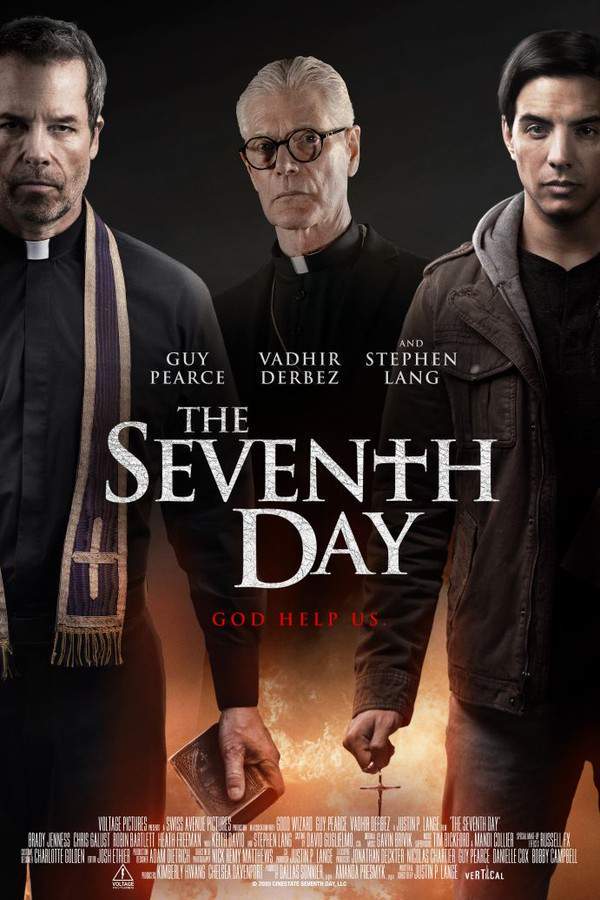
The Seventh Day (2021) movie poster

Plot Summary

The Seventh Day (2021) Plot Summary Explained

Release, runtime and language
2021 · 87 min · English
Echo score 33
Loading streaming availability…
Directed by
Justin P. Lange
Starring
Guy Pearce, Stephen Lang, Keith David, Hannah Alline, Robin Bartlett, Ben Hicks

A veteran exorcist, Father Peter, mentors a young apprentice as they face a particularly challenging case on a significant seventh day. Their mission takes them into a dark and perilous realm where the line between the spiritual and the demonic blurs. As they confront supernatural forces, both men are forced to examine their beliefs and grapple with their personal struggles, questioning the very essence of good and evil.

On this page (6)
  1. 1 Where to watch
  2. 2 What happens: full plot
  3. 3 Plot questions answered
  4. 4 Movie threads
  5. 5 Movies like The Seventh Day
  6. 6 Every angle
Loading streaming availability…

Full plot summary · contains spoilers

What Happens in The Seventh Day: Full Plot Summary

The whole story of The Seventh Day (2021) explained, from the opening scene to the final frame: every key event, every twist and what it all adds up to. Read it as a quick recap before the sequel, to check a scene you missed, or to finally understand what really happened.

Disillusioned from the rigorous experiences of the Crusades, knight Antonius Block, played by Guy Pearce, along with his cynical squire Jöns, portrayed by Stephen Lang, returns to a homeland deeply scarred by the devastating grip of the plague. The knight's journey takes an unexpected turn when he encounters Death and boldly challenges this ominous figure to a chess match, driven by a desperate hope that as long as he continues to play, he might postpone his ultimate fate.

As they traverse the countryside, Block and Jöns come across a wandering troupe of actors, featuring Jof and his wife Mia, along with their innocent newborn Mikael and the ambitious actor-manager Jonas Skat. One night, Jof awakens from a dreamlike vision where he sees Mary accompanied by the infant Jesus. Excitedly, he shares this revelation with a skeptical Mia, who listens with a mix of curiosity and disbelief.

Their journey leads them to a church housing a mural of the Danse Macabre, where the squire criticizes the artist for contributing to the ideological zeal that instigated the Crusade. Seeking redemption, Block confides in the priest during confession about his desire to accomplish "one meaningful deed" in what he now perceives as a life filled with futility. In an unexpected twist, the priest divulges a chess strategy that could save the knight's life, only for Block to realize he's been conversing with Death all along.

Stepping outside the confines of the church, Block finds himself speaking to a young woman who has been condemned to fiery execution for her supposed links to the Devil. Hoping to learn secrets of life beyond the grave, he instead discovers her to be profoundly insane.

In a forsaken village, Jöns heroically intervenes to rescue a mute servant girl from the clutches of Raval, a theologian who once persuaded Block to join the Crusades but now roams as a petty thief. Vowing to disfigure Raval should they meet again, Jöns shares a brief moment of connection with the servant girl, urging her to earn her freedom by becoming his servant, to which she reluctantly acquiesces. The group soon makes its way to the town, where they find the actors putting on a performance. However, the excitement is cut short when Skat is lured away by Lisa, the wife of the local blacksmith Plog. An ensuing procession led by a flagellant preacher then disrupts the festive atmosphere.

At the town inn, manipulation by Raval causes tension among the patrons, leading to Jöns stepping in and brutally slashing Raval's face, re-establishing order. As the narrative unfolds, Block's circle expands to include Jof's family and a contrite Plog, who enjoy a moment of blissful respite, feasting on milk and wild strawberries gathered by Mia. Block resolves to remember this heartfelt picnic as a cherished memory for the remainder of his days.

In a generous gesture, he invites Plog and the actors to seek refuge from the plague within the safety of his castle. However, while traversing the wooded landscape, they encounter Skat once more, where Lisa chooses to return to her husband, while Skat pretends to take his own life in a display of faux remorse. The scene shifts dramatically as Skat's hasty attempt at self-preservation meets its end when Death appears and mercilessly felled the tree he sought to hide in.

Facing an imminent tragedy, Block meets the condemned woman, asking her to call upon Satan, yearning to uncover the mysteries of God. Though she asserts she has summoned the dark figure, all Block witnesses is her sheer terror as she is prepared for her fate on the pyre.

As the plague strikes Raval, a crucial turning point emerges. Jöns adeptly restrains the servant girl from offering him help, leading to Raval's isolated demise. The unsettling tension reaches a boiling point when Jof sees Block engaged in an intense chess match against Death, prompting him to escape with his family. Meanwhile, Block remains trapped in a game against the omnipotent figure of Death.

During the pivotal moment, Block, in defiance, topples the chess pieces only for Death to restore them, reminding him that the game is far from over. Death boldly declares, "No one escapes me," before finally achieving victory, signaling the end of their match with the grim promise that their next encounter will signify the end for all involved. As Block ponders whether he has accomplished his desired "meaningful deed," he finds solace in the knowledge that he has.

Reunited with his beloved wife, the group shares a poignant last supper, abruptly interrupted by the inevitable arrival of Death. As each character introduces themselves, the mute servant girl echoes the finality of their situation uttering, "It is finished."

In the aftermath of the storm, Jof and his family find refuge in their caravan. Jof interprets the stormy chaos as the Angel of Death passing, and upon dawn, he witnesses a haunting vision of Block and his companions being led away in a somber Dance of Death across the hillside.
Last updated: December 13, 2024 at 06:47

Was this helpful?

Plot questions answered

The Seventh Day Plot Explained: Your Questions Answered

The questions people ask most about The Seventh Day (2021): what happens in the confusing scenes, why the characters do what they do, the twists, hidden details and what the ending means. Each answer contains spoilers.

Q1

Why does Block challenge Death to a chess match?

Block challenges Death to a chess match because he wants to postpone his fate. After returning from the Crusades and witnessing the devastation of the plague, Block has lost faith in life's meaning. He hopes that as long as the chess game continues, Death cannot claim him. The chess game becomes his desperate attempt to delay the inevitable while he searches for something meaningful to do with his remaining time.

  • block
  • death
  • chess game
  • postpone fate
  • crusades
Q2

How does Block discover the priest is actually Death?

During confession, the priest gives Block advice on a chess strategy that could save his life. Block then realizes the priest knows details about their chess game that only Death would know. When Block steps outside the church, he sees the real priest has vanished and understands he has been conversing with Death in disguise the entire time.

Foreshadowing: The earlier encounter establishes Death's ability to appear in different forms.

  • priest
  • death disguise
  • confession
  • chess strategy
Q3

Why does Jöns want the mute servant girl to become his servant?

Jöns rescues the mute servant girl from Raval, who was assaulting her. Despite barely knowing her, Jöns feels compelled to protect her and offers her a path to freedom by serving him. This reflects Jöns's底层 desire for meaningful connection and purpose after years of violence during the Crusades. The girl reluctantly agrees, suggesting she has little choice in the medieval society they inhabit.

  • jöns
  • servant girl
  • mute
  • rescue
  • freedom
Q4

Why does Jöns stop the servant girl from helping Raval when he has the plague?

Jöns restrains the servant girl from helping Raval because Raval was the theologian who originally persuaded Block to join the Crusades, the very campaign that destroyed Block's faith and led to so much suffering. Jöns holds Raval responsible for the ideological damage that fueled the Crusades. He allows Raval to die alone and isolated, untreated, as a form of poetic justice for the harm he caused.

Foreshadowing: Earlier, Jöns vows to disfigure Raval when they meet again.

  • jöns
  • raval
  • plague
  • revenge
  • crosses
Q5

What happens to Raval after he gets the plague?

After encountering Block and Jöns, Raval becomes afflicted with the plague. Jöns deliberately prevents the mute servant girl from offering him any assistance, allowing Raval to die alone and abandoned. His death serves as a consequence for his role in persuading Block to join the Crusades, which Jöns views as a great evil that caused immense suffering.

Foreshadowing: Jöns previously vowed vengeance against Raval for his actions.

  • raval
  • plague
  • death
  • consequence
  • crosses
Q6

What does Block consider his "meaningful deed"?

Throughout the film, Block seeks to accomplish one significant act before dying, a deed that would give meaning to his otherwise futile life after the traumatic Crusades. At the end, Block believes he has achieved this by sharing final moments of companionship, love, and kindness with his friends. By choosing connection over isolation in his last hours, he finds peace despite Death's inevitable victory.

  • block
  • meaningful deed
  • purpose
  • crusades
  • futility
Q7

What is the significance of Jof's vision of Mary and the infant Jesus?

Jof experiences a vision of Mary leading the infant Jesus, which represents hope and spiritual renewal in the midst of the plague's devastation. Unlike the other characters who are consumed by despair or cynicism, Jof maintains his faith and ability to see the divine. This vision contrasts sharply with the bleak surroundings and foreshadows the film's ending, where Jof and his family survive the immediate confrontation with Death.

  • jof
  • vision
  • mary
  • jesus
  • hope
  • faith
Q8

Why does Block remember the strawberry picnic as significant?

Block invites the actors to his castle for refuge, and before that, they share a peaceful moment eating wild strawberries and milk. For Block, this represents genuine human connection and beauty amid the surrounding death and despair. He explicitly states he will remember this picnic for the rest of his life, his final cherished memory. It is the "meaningful deed" he creates: a moment of love and companionship.

  • strawberries
  • picnic
  • block
  • mia
  • beauty
  • connection
Q9

What happens when Death wins the chess match?

Block attempts to defy Death by knocking over the chess pieces, but Death simply restores them and declares the game is not over. When Death finally wins, he announces they will meet again at the final moments of everyone's lives, signaling that the game's conclusion marks the beginning of the end for all the characters. Block accepts this outcome, believing he has accomplished his meaningful deed.

Foreshadowing: Death's earlier statement "No one escapes me" foreshadows this outcome.

  • death
  • chess
  • game over
  • inevitable fate
Q10

What does the mute servant girl mean when she says "It is finished"?

When each character introduces themselves to Death, the mute servant girl unexpectedly speaks for the first time, saying "It is finished." This Latin phrase ("It is finished") traditionally refers to Christ's final words on the cross, marking the completion of fate. Her sudden ability to speak, only at the moment of death, suggests a spiritual revelation or acceptance of their collective destiny.

  • mute girl
  • it is finished
  • death
  • acceptance
  • fate
Q11

What does Jof's final vision of the Dance of Death represent?

After the storm passes, Jof sees a vision of Block and his companions being led away in a Dance of Death across the hillside, a traditional medieval allegory depicting the inevitability of death for all people. This vision confirms that Block, Jöns, and the others have died. However, Jof and his family survive, suggesting that their faith and innocence protected them, or that they were simply not yet in Death's immediate grasp.

  • jof
  • dance of death
  • vision
  • allegory
  • death
Q12

Why does Block give herbs to the condemned woman before her execution?

Block approaches the condemned woman twice, first hoping she can summon the Devil to reveal secrets about God and the afterlife, and second giving her herbs to ease her pain during burning. Despite her insanity and her execution for supposed witchcraft, Block shows compassion. This act reflects his ongoing search for meaning and his attempt to find purpose through small kindnesses.

  • condemned woman
  • execution
  • herbs
  • compassion
  • block
Q13

Why does Skat pretend to kill himself in the forest?

When Skat is confronted in the forest after being lured away by Lisa (the blacksmith's wife), he pretends to hang himself as a dramatic display of remorse to win back the group's trust. However, this is merely performance, he quickly recovers. Death then punishes his deception by causing a tree to fall and kill him while he hides within it, demonstrating the film's theme that no one can escape death through trickery.

  • skat
  • suicide
  • deception
  • death
  • punishment

Movie threads

More Movies Like The Seventh Day, by Mood & Story

Curated lists built around what makes The Seventh Day tick: the same mood, the same kind of story or the same emotional payoff. Each list explains why these movies belong together.

Existential horror movies like The Seventh Day

Stories where supernatural forces expose bleak questions about faith and meaning. If you liked The Seventh Day's bleak exploration of faith and doubt in the face of supernatural evil, you'll find similar themes in these movies. This list features films where horror is intertwined with deep philosophical questions, creating a heavy, melancholic experience focused on existential dread and the fragility of belief.

  • existential
  • somber
  • oppressive
  • fatalistic
  • haunting
  • melancholic
  • Tone: bleak, somber, fatalistic
  • Pacing: slow burn, deliberate
Why these movies?

The story pattern: Narratives in this thread typically involve a protagonist, often a figure of faith or principle, facing a supernatural threat that systematically dismantles their worldview. The central conflict is as much internal as external, leading to a journey of disillusionment where victory, if it comes, is pyrrhic and offers little solace, often ending on a note of bleak acceptance or despair.

Why they belong together: These films are grouped by their shared commitment to using horror as a vehicle for profound philosophical inquiry. They prioritize a grim, reflective mood over jump scares, feature slow-burn pacing that allows dread to fester, and deliver endings that feel heavy and inconclusive, leaving audiences to grapple with the same unsettling questions as the characters.

Movies with grim mentorship like The Seventh Day

A seasoned veteran guides a novice through a dark and perilous initiation. Fans of The Seventh Day's dynamic between the veteran exorcist and his apprentice will appreciate these films. This collection highlights stories of tough, often bleak mentorship where a seasoned expert guides a rookie through a harrowing ordeal, testing their resolve and beliefs in a world of dark forces and moral ambiguity.

  • solemn
  • grim
  • mentorship
  • apprenticeship
  • burdened
  • traumatic
  • Tone: bleak, solemn, grim
  • Pacing: steady, character-driven
Why these movies?

The story pattern: The narrative pattern follows a journeyman structure, but through a dark lens. The mentor possesses hard-won, cynical expertise, while the apprentice represents fading idealism. Their shared journey into danger becomes a crucible that forces the apprentice to mature rapidly, often by adopting the mentor's world-weary perspective, culminating in an ending where innocence is lost and the cycle of grim duty continues.

Why they belong together: These movies are connected by the specific character archetype of the grim mentor and the fraught master-apprentice relationship set against a high-stakes, dark backdrop. They share a tone of solemn duty, a pacing that allows for character development amid tension, and an emotional weight derived from the costly passage of knowledge and the burden of responsibility.

If you liked this

Movies Like The Seventh Day

Similar movies to The Seventh Day: the same genre, themes or kind of story. Each one comes with its own plot summary, timeline and ending explained.

Browse all movie summaries

Every angle

The Seventh Day (2021) Explained: Plot, Timeline & Characters

Everything about The Seventh Day in one place: what happens in the plot summary, the timeline in chronological order, the characters and meaning and a spoiler-free summary. What's After the Movie adds the cast, box office and post-credit scenes.

Coming soon on iOS and Android

The Plot Explained Movie Summary App

Plot summaries, endings explained and timelines on your phone. Catch up on any movie in minutes, save your favorites and never miss a twist again.

Be the first to know when we launch. Your email stays private, always.

Learn more about the app