The Terror Rises Again. Rescued from the guillotine by his devoted dwarf Fritz, the Baron relocates to Carlsbruck, where he continues his gruesome experiments.
Find where to stream, rent, or buy The Revenge of Frankenstein (1958) in the US with current JustWatch availability, up-to-date pricing, and platform listings for subscription, rental, and digital purchase options.
Warning: spoilers below!
Haven’t seen The Revenge of Frankenstein yet? This summary contains major spoilers. Bookmark the page, watch the movie, and come back for the full breakdown. If you're ready, scroll on and relive the story!
Read the complete plot breakdown of The Revenge of Frankenstein (1958), including all key story events, major twists, and the ending explained in detail. Discover what really happened, and what it all means.
In 1860, Baron Victor Frankenstein, Peter Cushing, faces execution by guillotine but finds a chilling way to escape: a priest is beheaded in his place and buried in his stead with the crucial help of a hunchback named Karl. This improbable victory sets Victor on a grim path, and three years pass as he reemerges in a new identity, Dr. Victor Stein, a skilled physician operating in Carlsbrück. He earns a reputation among the wealthy while also tending to the poor in a paupers’ hospital, balancing two very different worlds with practiced ease.
The delicate balance begins to shift when Hans Kleve, a junior member of the medical council, recognizes Victor’s brilliance and privately admires his work. Hans seeks an apprenticeship, hoping to learn from the man who once stirred fear and fascination in equal measure. Victor agrees to take him on, and the collaboration is cemented by the involvement of Karl, the deformed helper who has become deeply entangled with the Baron’s ambitions. Together, they push forward with the long-simmering Baron’s experiment: transplanting a living brain into a new body—one crafted to be healthy and capable, not cobbled together from scraps. The plan also catches the eye of Margaret Conrad, the hospital’s charming new assistant, whose presence offers Karl a glimmer of humanity and a chance at a different future.
The transplant process is technically successful, but victory quickly spirals into peril. Hans, thrilled at the prospect of scientific glory, proclaims Karl a medical sensation, and Karl, overwhelmed by the sudden fame and his own fear, pleads with Margaret to help him escape. Hans warns that Victor had earlier experimented by transplanting a brain from an orangutan into a chimpanzee, a detail that foreshadows the unforeseen consequences of crossing lines that were never meant to be crossed. As Karl’s anxiety grows, Victor’s confidence remains unshaken, and he downplays Hans’ warnings as mere nerves.
Karl breaks away from the hospital and hides in Victor’s secluded laboratory, where he destroys the preserved hunchback that marked his former identity. A drunken janitor mistakes Karl for a burglar and attacks him, a fatal misjudgment that ends with the janitor’s death. Victor and Hans soon realize Karl is missing and begin a tense search that unsettles the quiet rhythm of their double life. The missing figure reappears the next morning, found in a distant stable belonging to Margaret’s aunt, but Karl quickly disappears again as night falls. He returns to strike, ambushing Gerda, a local girl, and then, in a crowd-filled reception, he makes a desperate appeal for help, calling himself Frankenstein before collapsing and dying.
The shock reverberates through Victor’s carefully constructed world. Despite Hans’ insistence that he flee the country to avoid exposure, Victor confronts the medical council publicly, denying that he is the infamous Frankenstein. The council—skeptical and hungry for truth—unearths what they believe to be his grave, only to discover the priest’s body instead and conclude that the infamous Frankenstein is indeed still alive. The revelation fans the flames of panic inside the hospital, where patients erupt in anger and violence toward Victor.
Hans acts quickly, running his mentor’s lifework back to the laboratory and revealing Victor’s dead body to the authorities. In a dramatic turn, Hans transplants Victor’s brain into a new body that Victor had prepared in advance—a body designed to resemble the original physician, now far from the man Victor once was. The tale concludes with a new chapter unfolding in London, where Hans, serving as a kind of caretaker and partner, helps Victor—who now calls himself Doctor Franck—greet new patients, suggesting that Frankenstein’s legacy has simply found a different stage and another set of lives to influence.
Last updated: October 09, 2025 at 11:00
Explore frequently asked questions about The Revenge of Frankenstein (1958) with spoiler-rich answers covering the full plot summary, major story beats, character motivations, hidden details, and ending meaning. This movie summary FAQ helps explain confusing scenes, plot twists, and narrative decisions in clear, searchable detail.
Karl, the hunchback assistant, had been deeply devoted to Victor ever since Victor rescued him from being ridicule and helped him find purpose in the laboratory. This loyalty drove Karl to risk everything to save Victor from execution, including orchestrating the substitution of a priest's corpse. Victor had given Karl a sense of belonging that he never found elsewhere, making him willing to commit this desperate act.
The priest was beheaded on the guillotine and buried in Victor's grave, allowing Victor to escape execution. The body was discovered later when the medical council exhumed what they believed to be Frankenstein's grave, only to find the priest's remains instead. This discovery confirmed that Victor had indeed faked his death and was still alive.
Karl volunteered because he wanted to escape his deformities and have a healthy, normal body. Margaret Conrad, the hospital's new assistant, offered him hope by suggesting that the transplant could give him a new life. Karl was desperate to leave behind his hunchback identity and the preserved specimen that represented his cursed existence, making him willing to take the risky experimental procedure.
Victor had previously transplanted a monkey brain into a chimpanzee, which then attacked and ate its mate, demonstrating dangerous behavioral changes. Hans Kleve cited this as a warning when Karl grew anxious after the successful transplant, foreshadowing that crossing species lines and tampering with the brain leads to unpredictable, violent consequences. Victor dismissed these concerns as nerves, but the experiment proved the foreshadowing was valid when Karl later killed the janitor.
The orangutan-chimpanzee experiment directly foreshadows Karl's violent breakdown after receiving the transplanted brain.
Karl was hiding in Victor's laboratory after fleeing the hospital when a drunken janitor mistook him for a burglar and attacked him. In the struggle, Karl killed the janitor, though it appears to have been a panicked act of self-defense rather than intentional murder. This incident marked Karl's descent into violence and forced him deeper into hiding.
The transplant was technically successful, but Karl began experiencing physical deterioration, including weakness in his arm and leg. This mirrored the earlier experiment where the chimpanzee with the orangutan brain exhibited violent, unpredictable behavior. Victor's experiments, while pioneering, produced unstable results, the new brain and body rejected each other or produced unforeseen complications that proved fatal.
After the council discovered the priest's corpse in Victor's supposed grave, they realized Frankenstein had faked his execution and was still alive. This revelation triggered a riot at the hospital where patients attacked Victor. Hans rushed Victor to the laboratory, but Victor died from his injuries. The authorities believed the case was closed when they saw Victor's dead body, not realizing it was his original body while his brain had already been preserved for transplantation.
Hans quickly transported Victor's dying body to the laboratory and transplanted Victor's brain into a new body that Victor had previously prepared, a body designed to resemble his original form. Victor had apparently planned for this contingency, creating a backup host in advance. Hans performed the procedure successfully, allowing Victor's consciousness to continue in a new physical form.
After Victor's brain was transplanted into the new body, he established himself as Doctor Franck in London to escape his notorious past. The new identity allowed him to continue practicing medicine while leaving behind the infamy associated with the name Frankenstein. Hans became his caretaker and partner, helping him welcome new patients. The name change represents Victor's eternal reinvention, always escaping consequences and finding new frontiers for his experiments.
The ending suggests that Victor Frankenstein will continue his experiments indefinitely, finding new locations and new identities to pursue his scientific ambitions. By establishing himself in London as Doctor Franck, the cycle simply continues in a different setting. The film implies that Victor's obsession with defying death and creating life cannot be stopped, he will always find ways to continue his work, making his legacy one of endless reinvention rather than redemption.
Margaret Conrad was the hospital's new assistant who became a catalyst for Karl's hopes and eventual downfall. She offered Karl sympathy and the promise of a new life after the transplant, encouraging him to volunteer for the procedure. After the transplant, she helped search for Karl and discovered him in her aunt's stable. Her presence represented humanity and hope, but she could not prevent the tragic outcome of Victor's experiment.
Hans Kleve, a junior member of the medical council, recognized Victor's brilliance and sought to learn from the legendary scientist. Despite knowing Victor was the infamous Frankenstein, Hans became his apprentice because of his admiration for Victor's work. Hans helped Victor escape detection, participated in the experiments, and ultimately saved Victor by transplanting his brain into the new body. Hans seemed driven by scientific curiosity and a belief in pushing the boundaries of medicine, even when those boundaries were ethically questionable.
Discover curated groups of movies connected by mood, themes, and story style. Browse collections built around emotion, atmosphere, and narrative focus to easily find films that match what you feel like watching right now.
Atmospheric tales of scientists crossing moral boundaries in shadowy settings.If you liked the sinister, atmospheric setting and themes of scientific hubris in The Revenge of Frankenstein, explore these movies. This thread gathers chilling tales of ambition gone wrong, featuring creepy experiments, gothic moods, and dark consequences, perfect for fans of classic monster horror.
Stories typically follow a brilliant but morally compromised protagonist whose groundbreaking experiments lead to disastrous and unintended consequences. The narrative structure is often a steady, inevitable decline from ambition to ruin, emphasizing cause and effect while exploring themes of identity and responsibility.
These films are grouped by their shared dark tone, heavy emotional weight from ethically fraught subject matter, and a brooding, atmospheric gothic or historical setting. They blend horror with philosophical questions, creating a consistently unsettling and thought-provoking experience.
Stories where physical transformation reflects a deeper psychological or ethical collapse.Fans of The Revenge of Frankenstein who appreciated its disturbing body horror and themes of identity will find similar chilling stories here. These movies focus on the horrific consequences of tampering with life, featuring graphic transformations that challenge what it means to be human.
The narrative often revolves around a central transgression—a surgical experiment, a deal, or an accident—that causes a physical metamorphosis. This bodily change becomes a catalyst for exploring psychological disintegration, societal rejection, and the blurring line between creator and creation, frequently leading to an ambiguous or bleak conclusion.
They share a high intensity derived from disturbing imagery and themes, a steady pacing that allows dread to build, and a heavy emotional weight. The focus is on the visceral and psychological impact of bodily violation and transformation, making them deeply unsettling.
Don't stop at just watching - explore The Revenge of Frankenstein in full detail. From the complete plot summary and scene-by-scene timeline to character breakdowns, thematic analysis, and a deep dive into the ending - every page helps you truly understand what The Revenge of Frankenstein is all about. Plus, discover what's next after the movie.
Track the full timeline of The Revenge of Frankenstein with every major event arranged chronologically. Perfect for decoding non-linear storytelling, flashbacks, or parallel narratives with a clear scene-by-scene breakdown.
Discover the characters, locations, and core themes that shape The Revenge of Frankenstein. Get insights into symbolic elements, setting significance, and deeper narrative meaning - ideal for thematic analysis and movie breakdowns.
Discover movies like The Revenge of Frankenstein that share similar genres, themes, and storytelling elements. Whether you’re drawn to the atmosphere, character arcs, or plot structure, these curated recommendations will help you explore more films you’ll love.
The Revenge of Frankenstein (1958) Scene-by-Scene Movie Timeline
The Revenge of Frankenstein (1958) Movie Characters, Themes & Settings
The Revenge of Frankenstein (1958) Spoiler-Free Summary & Key Flow
Movies Like The Revenge of Frankenstein – Similar Titles You’ll Enjoy
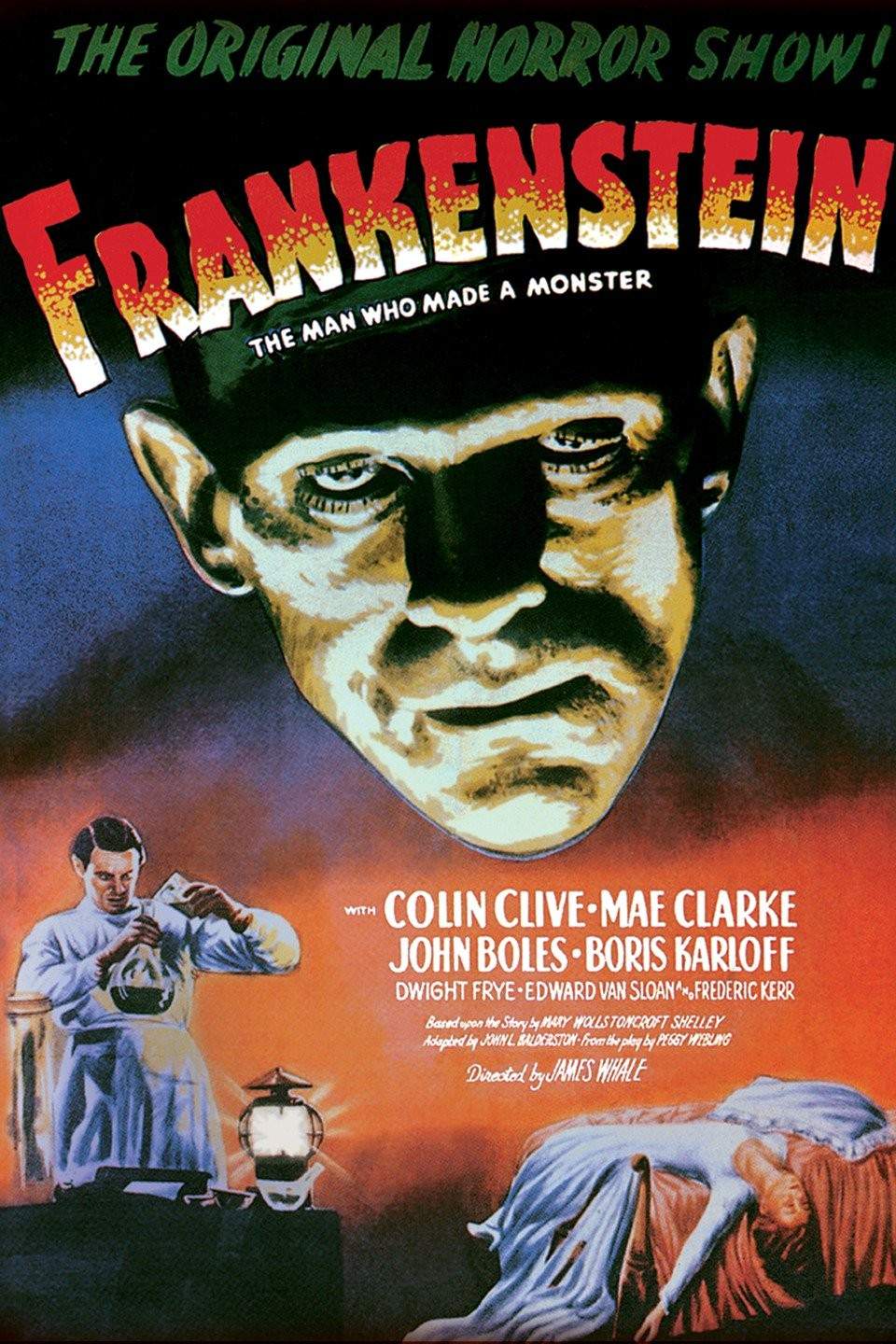
Frankenstein (1931) Full Movie Breakdown
Frankenstein (1000) Detailed Story Recap
The Horror of Frankenstein (1970) Complete Plot Breakdown
The Ghost of Frankenstein (1942) Full Summary & Key Details
Terror of Frankenstein (1977) Plot Summary & Ending Explained
Son of Frankenstein (1939) Story Summary & Characters
House of Frankenstein (1944) Ending Explained & Film Insights
I Was a Teenage Frankenstein (1957) Full Summary & Key Details
Frankenstein’s Bloody Terror (1968) Spoiler-Packed Plot Recap
Frankenstein’s Daughter (1958) Complete Plot Breakdown
The Evil of Frankenstein (1964) Plot Summary & Ending Explained
Frankenstein 1970 (1958) Plot Summary & Ending Explained
Frankenstein Reborn! (1998) Spoiler-Packed Plot Recap
Frankenstein Created Woman (1967) Spoiler-Packed Plot Recap
Frankenstein (2025) Detailed Story Recap